The smell gets loud when the cooking goes long and wet
Cauliflower contains sulfur compounds that become more noticeable with prolonged wet cooking. Shorter, hotter cooking keeps the smell quieter and the texture firmer.

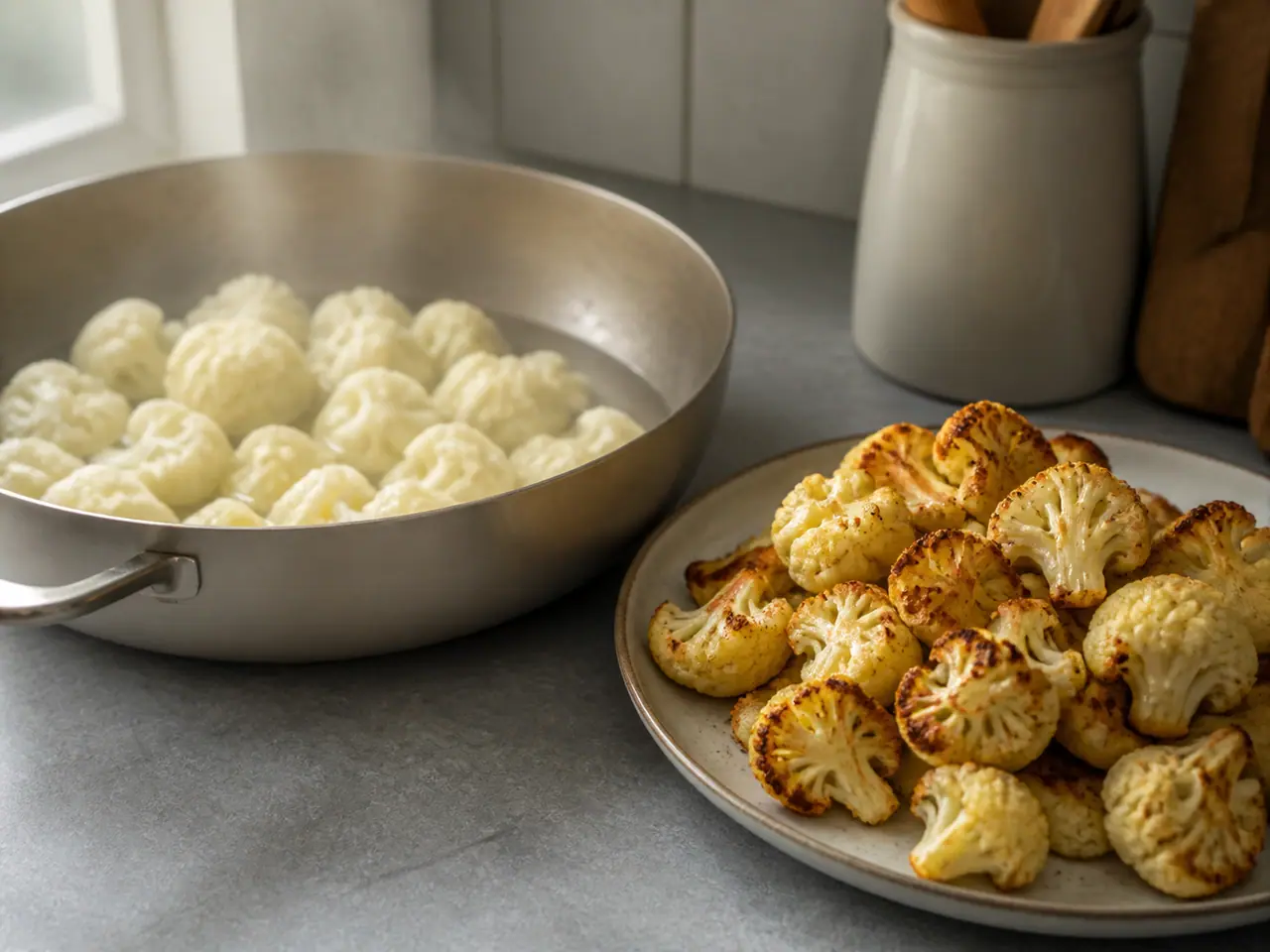
The cauliflower smell that fills the kitchen is usually not a mystery and not a sign that the vegetable was bad when you bought it. It is what happens when florets sit in hot water or trapped steam long enough for their sulfur compounds to become obvious. I compared a batch steamed until just tender with one left covered for another twelve minutes. The second batch was softer, wetter and much louder.
My fix is straightforward: use a shorter cook, keep the florets out of a deep bath when you can and uncover the pan once the centre is tender. Roasting is the quietest route for my kitchen because the surface dries and browns. If boiling is the right method, do it briefly and drain immediately.
The smell usually reaches me before I check the pan. Steam escapes around the lid, the kitchen turns sulphurous and I realise the florets became tender several minutes ago. I used to respond by cooking longer because the centre still felt firm in one large piece. Now I split the thick stems, test the largest floret and stop when it gives. The strong aroma is a timing message. It is asking for less wet heat, not another round of seasoning.
Where the smell comes from
Cauliflower is a brassica, and brassicas contain sulfur-containing compounds called glucosinolates. When plant cells are cut and heated, those compounds can break down into volatile molecules. A study of cooked cauliflower varieties linked several odorants, including dimethyl sulfide and methanethiol, with the sulfur smell people notice. The paper is technical, but the kitchen result is simple: time, heat and water change the aroma.
The published cauliflower flavour study also found that varieties differ, so two heads can smell different after the same cooking time. Read the cauliflower flavour study for the measured aroma compounds.
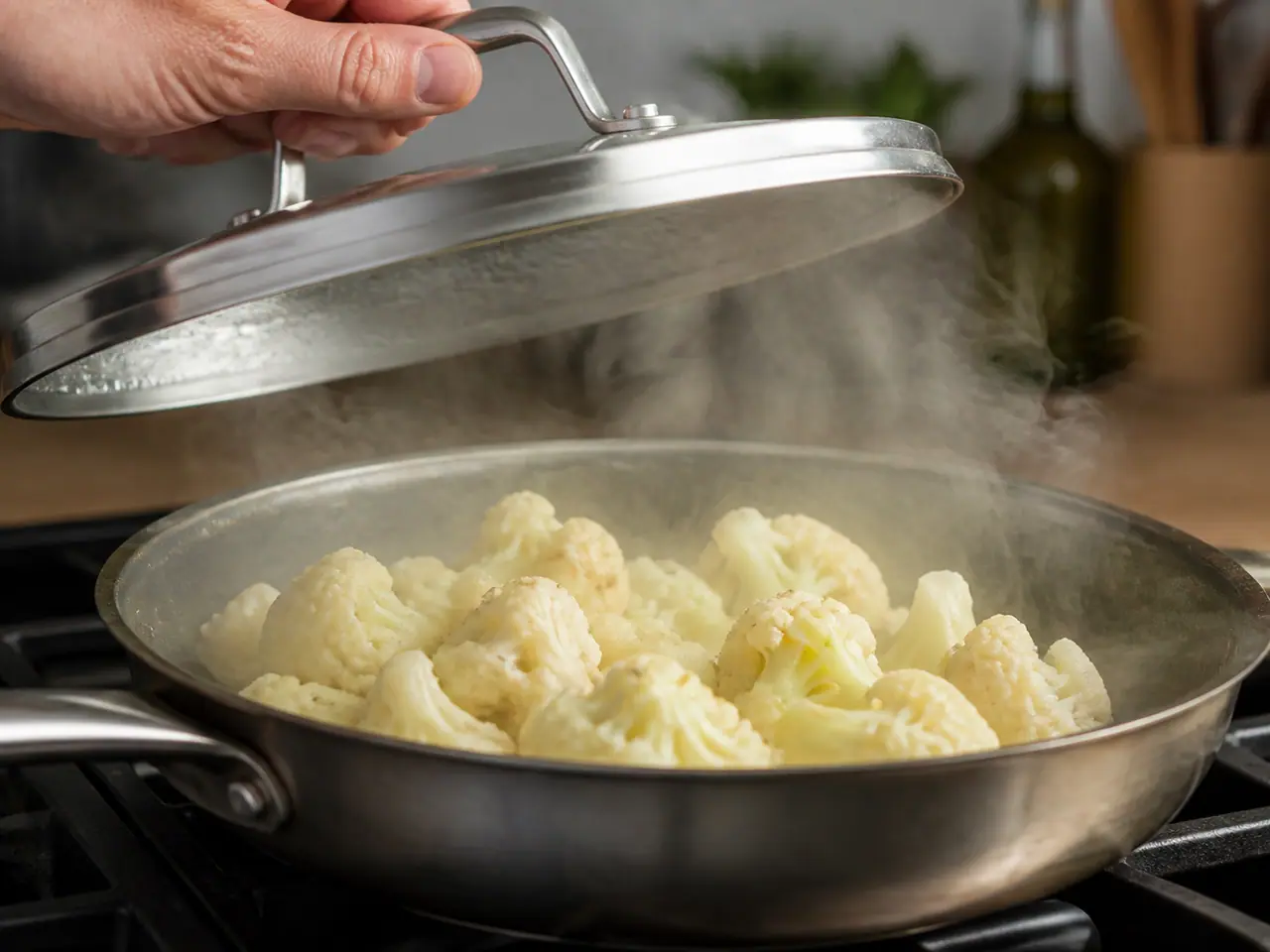
I do not need to eliminate every brassica smell. Fresh cauliflower has its own aroma, and a little steam is part of cooking. The problem is the flat, sulphurous cloud that arrives after the florets have already gone soft. That is the point where the lid comes off. A browned edge, lemon or a spiced oil can change the finished dish, but only a shorter cook changes the cause. I take the photograph as a reminder of the texture I am after, not as a decoration. The surface should show what the written method asks for: a dry cut, a browned fold, a firm curd or a leaf that has kept its shape. If the frame looks wet and crowded, I know the pan would have the same problem. If it looks pale but compact, I know the food may be ready for a different job. That is why I keep the vegetable visible while I cook. The cauliflower should make sense before any garnish arrives.
My short steam versus long steam test
Same florets, two cooking times
250 g cauliflower florets steamed in a covered pan, then tasted and smelled at two stopping points.
8 minutes
2
minutes after tenderness
✓ Less extra time
20 minutes
12
minutes after tenderness
The shorter batch was tender with a mild smell. The long batch was softer and its sulfur aroma was obvious as soon as I lifted the lid. The numbers describe my stopping points, not a universal timer.
Source: Maren Ashby kitchen test, 2026-08-28
I checked the centre with a thin knife instead of trusting the clock. Small florets were ready first, so the long batch was effectively overcooked for the pieces that mattered. The pan held a shallow layer of water and stayed covered. That combination made the smell more noticeable than the texture needed.
The same thing happens in a soup pot, only more slowly. The liquid stays hot around the cauliflower and the lid returns steam to the surface. The soup may taste fine after blending, but the kitchen has already received the strongest version of the aroma.
The pan can smell strong even when the food is still salvageable. I separate the aroma question from the quality question. A fresh firm floret with a sulphurous steam is a cooking problem. A soft, wet floret with a sour smell is a storage problem. The first needs a change of heat or time. The second needs a bin. Keeping those decisions separate stops me adding random ingredients to cover the wrong failure.
Why roasting smells different
Roasting drives moisture out of the cut surface instead of surrounding every floret with water. The outside can brown, and the inside softens without the whole vegetable sitting in a humid bath. The smell does not disappear, but it is joined by toasted aromas, so the final dish reads as nutty and savoury rather than boiled and sulfurous.
I use a wide tray and do not wash the florets into a puddle. Pat them dry, add a little oil and place them with one cut side down. If the tray is crowded, the released water has nowhere to go and the roast behaves like steam cooking. Space is part of the smell control.
The size of the floret changes the clock
A tiny floret can be tender before a large one has warmed through. If they share a pan, the small pieces become soft first and the smell follows. I split very large florets through the stem and leave small ones whole. The goal is not identical shapes; it is similar thickness at the centre.
For a puree, I cut smaller because texture is not the point. For roasting, I keep the pieces larger so there is enough middle to balance the browned surface. The cooking method should match the finish. Cauliflower rice needs a short, dry pan. A soup can take longer, but I keep the lid off once the florets are tender.
Four ways to keep the aroma calmer
- Steam shallow. Use a small amount of water and one layer of florets instead of a deep covered pot.
- Stop at tenderness. Test the thickest piece and drain or uncover as soon as the knife enters with slight resistance.
- Choose dry heat. Roasting or stir-frying gives the surface a chance to brown and keeps the flavour from becoming only boiled.
- Move the finished cauliflower. Do not leave it sitting in hot water or a covered pan while you prepare the rest of dinner.
What not to do
I do not add vinegar to the cooking water as a smell cure. It changes the flavour and does not fix a florets-too-long problem. I also do not cover roasted cauliflower to make it tender. The cover sends steam back onto the browned surface and turns a good roast soft.
If the smell is already strong, drain the cauliflower, spread it on a plate and season with lemon, herbs or a spiced oil. The aroma will not be reversed, but the dish can still taste balanced. Blending it with yogurt or beans makes a useful soup or mash. I would not keep cooking it for another half hour hoping the smell will cook away.
Variety and freshness still matter
The study on cooked cauliflower found differences between varieties, so the same method can produce different aroma levels. Freshness and storage also change the starting point. A head that has been warm, wet or held too long may smell stronger before it reaches the pan. I buy a dense head with fresh leaves and keep it dry in the fridge.
Cooking method is not a promise that every cauliflower will smell mild. It is a way to control the variables you can control. The research on cooking methods also shows that time and method affect cauliflower compounds; this review of cooking effects discusses why steaming can behave differently from boiling.
My reliable cauliflower method
For roasted cauliflower, cut a head into 4 cm florets and dry them. Toss with two teaspoons of oil per 400 g, place cut-side down on a metal tray and roast at 220°C fan for 25 to 30 minutes. Turn once. Pull the tray when the centre is tender and the underside is brown. For steaming, use a shallow pan, cover briefly and uncover as soon as the thickest stem is tender.
Do not judge the vegetable by the smell of the first steam cloud. Taste a piece. If it is firm and fresh, stop. If it is soft, wet and leaving an eggy smell in the room, the answer is not more time. Drain it and change the finish.
My verdict
Strong-smelling cauliflower is usually overcooked cauliflower, especially when it has spent too long covered and wet. Short, dry cooking keeps its centre useful and gives the surface another flavour to speak with. I roast when I have time, steam shallow when I do not and stop as soon as the thickest piece is tender. The smell is a timing clue.
Questions
Why does my cauliflower smell like sulfur?
How do I cook cauliflower without the smell?
Is strong-smelling cauliflower spoiled?
Does boiling make cauliflower smell worse?
More guides
All guides →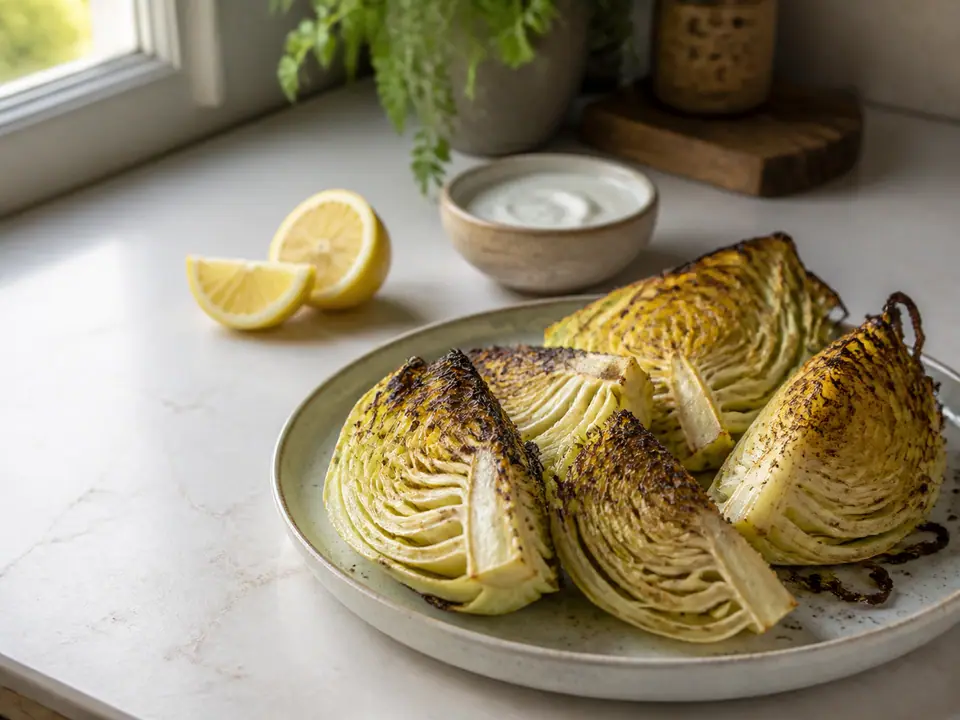
Why cabbage gets sweeter when its edges char
Charred cabbage is not burnt cabbage. A dry cut face and enough heat turn the edges savoury and sweet while the thick rib stays juicy.
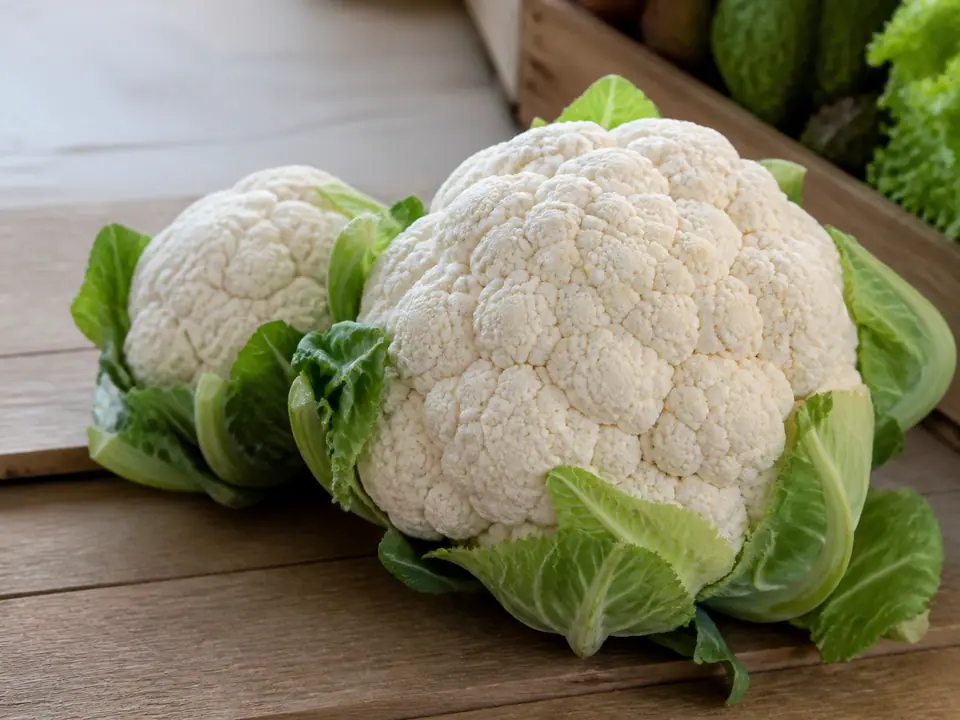
How to choose a dense cauliflower with fresh leaves
A good cauliflower feels heavy for its size, has a tight white curd and fresh leaves around a dry base. The leaves are the quickest freshness clue.
Why passata can taste flat straight from the carton
Flat passata usually needs concentration rather than more herbs. Reduce it in a wide pan, season in stages and finish with fat after the water has gone.