Passata needs a pan with enough heat and enough salt
Flat passata usually needs concentration rather than more herbs. Reduce it in a wide pan, season in stages and finish with fat after the water has gone.

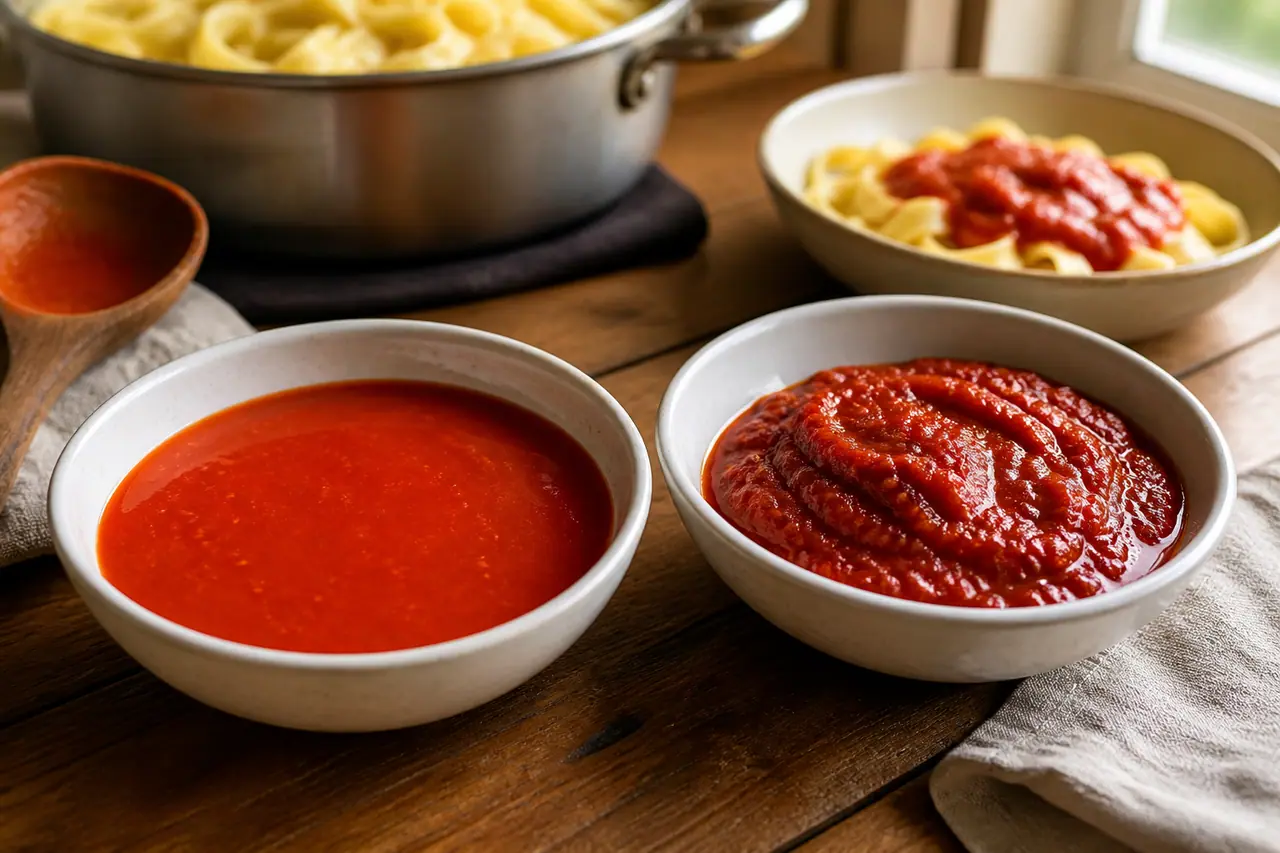
Passata straight from the carton tastes like red water because, in a sense, that is what it is: smooth tomato pulp carrying a lot of liquid, with no browned onion or reduced edges yet. The carton is a starting point, not the finished sauce. It is also cold, which makes the first taste misleading. Cold tomato reads sharper and thinner than the same puree warmed with onion, salt and oil. I keep a spoonful aside when testing a new carton, then taste it again after ten minutes in the pan. The second taste tells me what I actually bought. The first time I understood the difference, I had served the sauce over pasta and watched it run to the bottom of the bowl. The next night I reduced the same carton in a wide pan, and the leftovers clung to the noodles. Nothing new went in. The pan had finally done its job.
My fix takes fifteen minutes. Cook the onion properly, use a wide pan, leave the lid off and salt the tomato before it tastes ready. The last spoonful of oil comes after reduction, when it can soften the sharp edges instead of floating on top of a thin sauce.
How passata changes in the pan
One carton reduced uncovered in a wide pan, tasted at three points during cooking.
Straight from carton
1
out of 5 for sauce body
After 15 minutes
4
out of 5 for sauce body
✓ More concentrated
The improvement came from water leaving, not from adding sugar or a long list of herbs. A spoon track and a coated spoon are better signals than the clock, but the comparison shows what the pan is doing.
Source: Maren Ashby's passata reduction test, 2026-08-27
Passata has no texture to hide behind
With chopped tomatoes, a spoonful contains small pieces, pulp and juice. Your mouth reads several things at once. Passata is one smooth texture, so any weakness is obvious. If it is thin, you notice. If it lacks salt, there is no piece of tomato to distract you. I can usually diagnose the problem before tasting twice: a surface that looks glossy but moves like soup has not reduced, while a sauce that looks dull and heavy may need oil or a little cooking water later. The visual cue is not a rule, but it is a useful invitation to taste instead of seasoning by habit. I also scrape a spoon across the bottom rather than tasting only from the surface. The bottom tells me whether the puree is catching, and the spoon tells me whether the sauce has enough body. Those two checks take less time than correcting a pan that has turned bitter.
That smoothness is why passata works so well under eggs, fish or baked vegetables. It is also why the cooking setup matters. A small pot with a lid can keep the puree hot without reducing it, leaving you with a sauce that looks finished long before it tastes finished.
The fifteen-minute correction
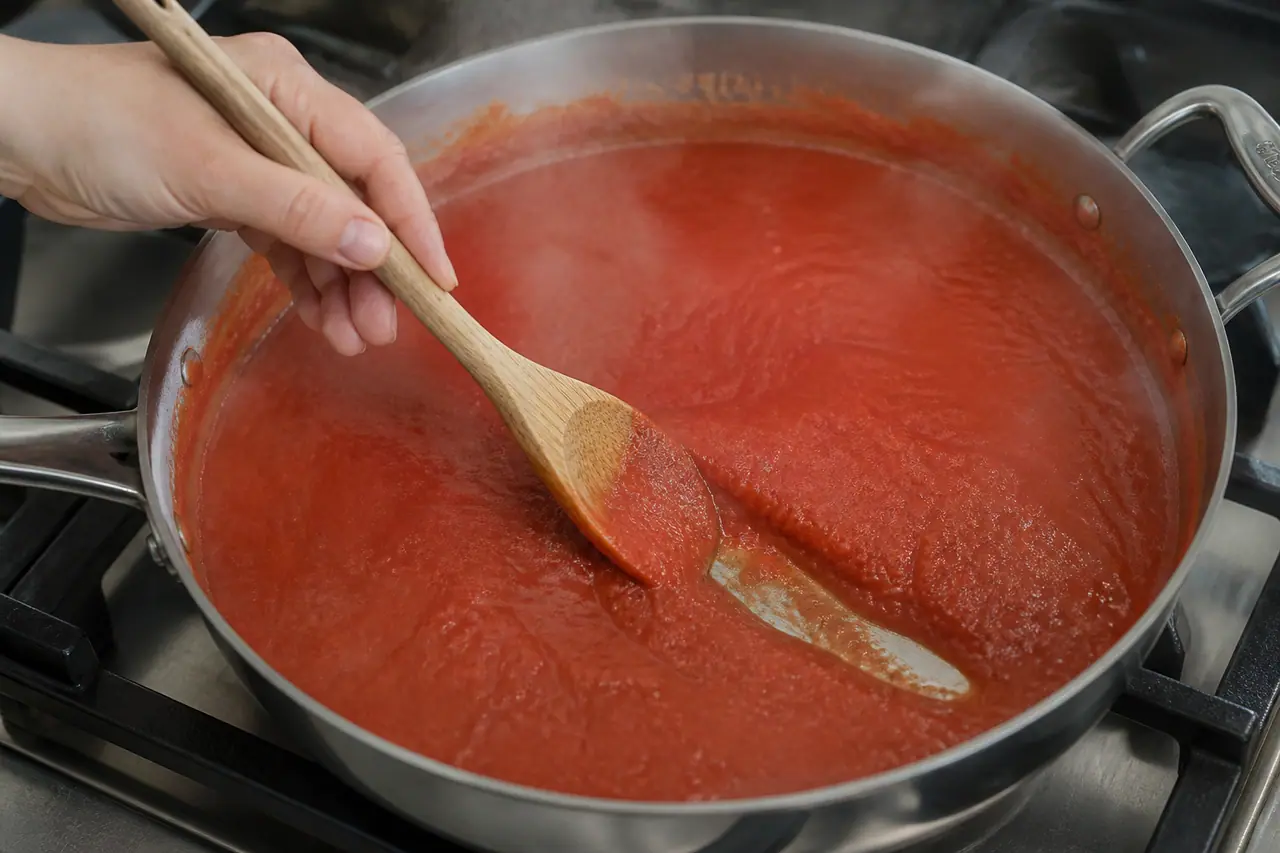
Warm olive oil in a wide pan and cook a finely chopped onion over medium heat until soft with a few golden edges. Add garlic for 30 seconds. Pour in the passata, add a pinch of salt and bring it to a steady simmer. Leave the pan uncovered.
After eight minutes, scrape the bottom and taste. It will still be sharp, but the tomato should have more weight. After another five to seven minutes, drag a spoon through the sauce. When the line takes a moment to close, turn off the heat. Stir in olive oil or a small piece of butter and taste again.
Why herbs rarely fix the first problem
Basil, oregano and chilli add aroma. They do not remove water. If the sauce is flat because it has not reduced, herbs make the top notes louder while the middle stays thin. That is why a heavily seasoned passata can still taste like nothing. I have made that mistake with dried oregano, piling it in while the sauce was still loose and then wondering why the whole pan tasted dusty. The better sequence is to fix the body first, then add the aroma you want. If the tomato still tastes empty after reduction, check salt and fat before reaching for another jar.
Add dried herbs early enough to soften in the sauce. Add fresh basil, parsley or lemon at the end. The timing keeps the sauce from tasting dusty, and it lets you judge the tomato without confusing the issue.
Salt in two stages
Salt a little when the passata enters the pan. Tomato tastes hollow when it is under-seasoned, and waiting until the end can make you add too much at once. Taste again after reduction because the water has changed the balance.
If the final sauce is sharp, do not reach for sugar first. Add oil, butter or a little grated cheese, then taste on pasta or bread. A few drops of vinegar or lemon may help a dull sauce, but acid is a finishing tool, not a replacement for cooking.
| What you taste | Likely cause | First fix |
|---|---|---|
| Thin and bland | Too much water | Reduce uncovered in a wide pan |
| Sharp but watery | Not enough cooking | Simmer before adding sugar |
| Bitter | Burnt garlic or onion | Move unburnt sauce to a clean pan |
| Heavy but dull | Needs salt or fat | Season, then finish with oil |
| Too salty | Reduced too far or salted early | Dilute with unsalted tomato or stock |
Source: Maren Ashby's passata troubleshooting test, 2026-08-27
Use the sauce before it goes too far
Reduced passata is useful under eggs, around beans or tossed with pasta. Spoon it over the crispy lemon potatoes and white beans, or use it as the smooth base for a quick chickpea dinner. If you reduce it until it is almost paste, loosen it with a little pasta water rather than plain water so the final sauce stays seasoned.
Once you understand that passata is water plus tomato body, the flat carton stops being a mystery. Give it surface area, time, salt and fat in that order. The bottle is not disappointing you; it has not finished cooking yet.
Questions
How long should I cook passata?
Can I add tomato paste to passata?
How do I make passata less acidic?
Why is my passata sauce watery after adding pasta?
More guides
All guides →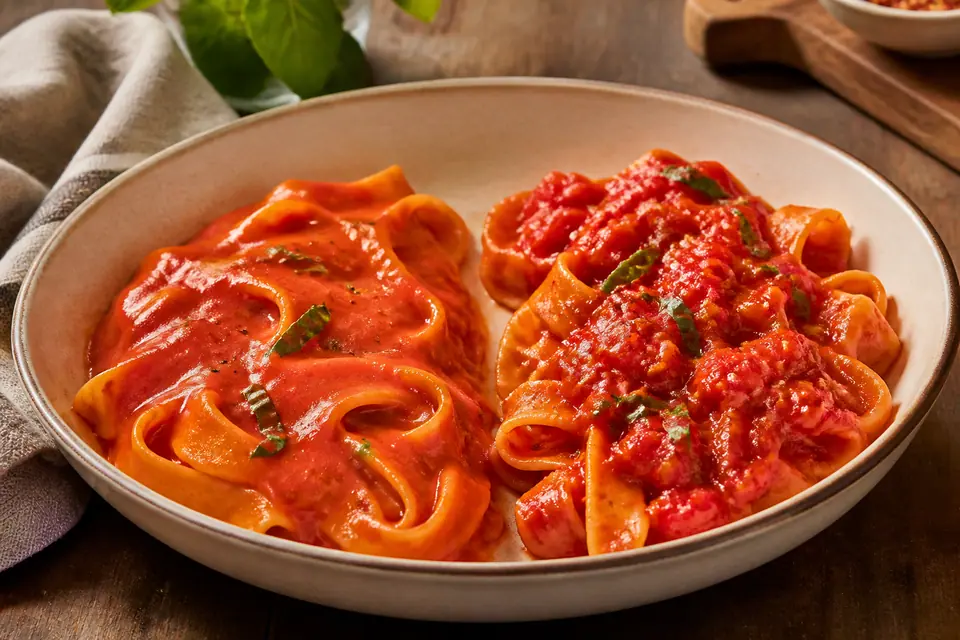
Passata vs crushed tomatoes: which gives the smoother sauce?
For the smoothest sauce with the least work, choose passata. Choose crushed tomatoes when you want a sauce that can reduce further and still taste full.
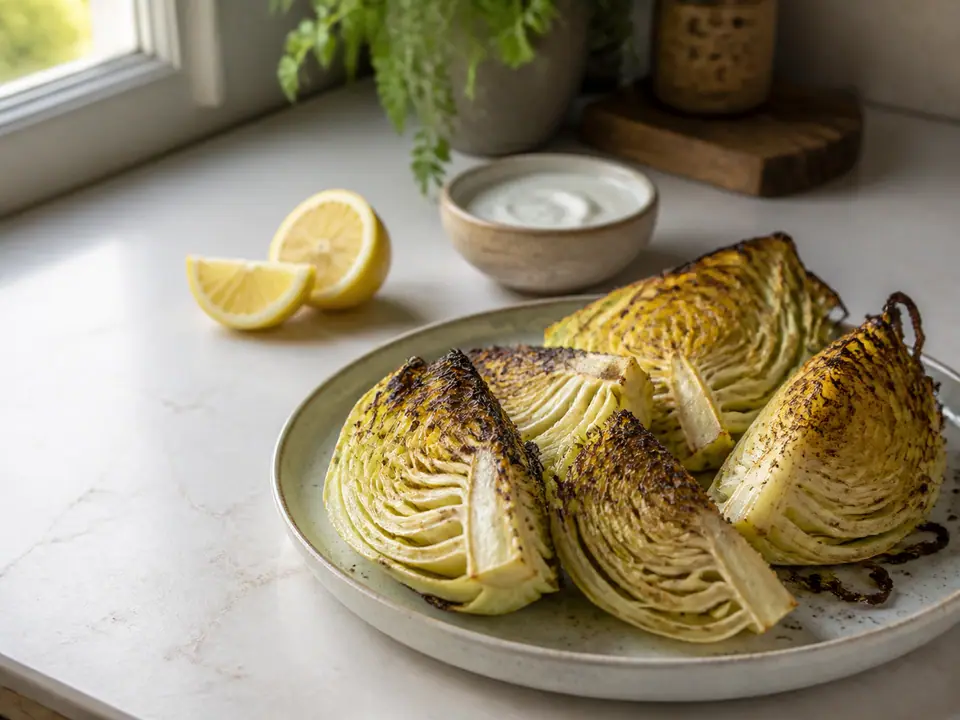
Why cabbage gets sweeter when its edges char
Charred cabbage is not burnt cabbage. A dry cut face and enough heat turn the edges savoury and sweet while the thick rib stays juicy.
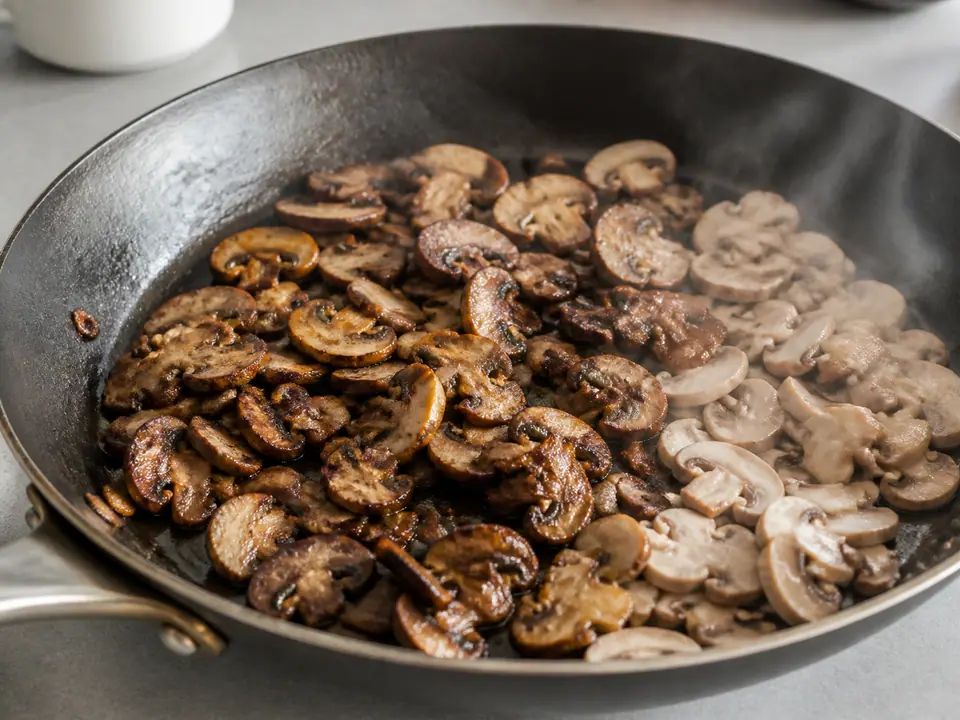
Why mushrooms steam instead of brown
Mushrooms release a surprising amount of water. Give them a dry surface, a wide pan and time before seasoning if you want colour instead of a grey simmer.