Passata starts smoother, but crushed tomatoes give you more control
For the smoothest sauce with the least work, choose passata. Choose crushed tomatoes when you want a sauce that can reduce further and still taste full.

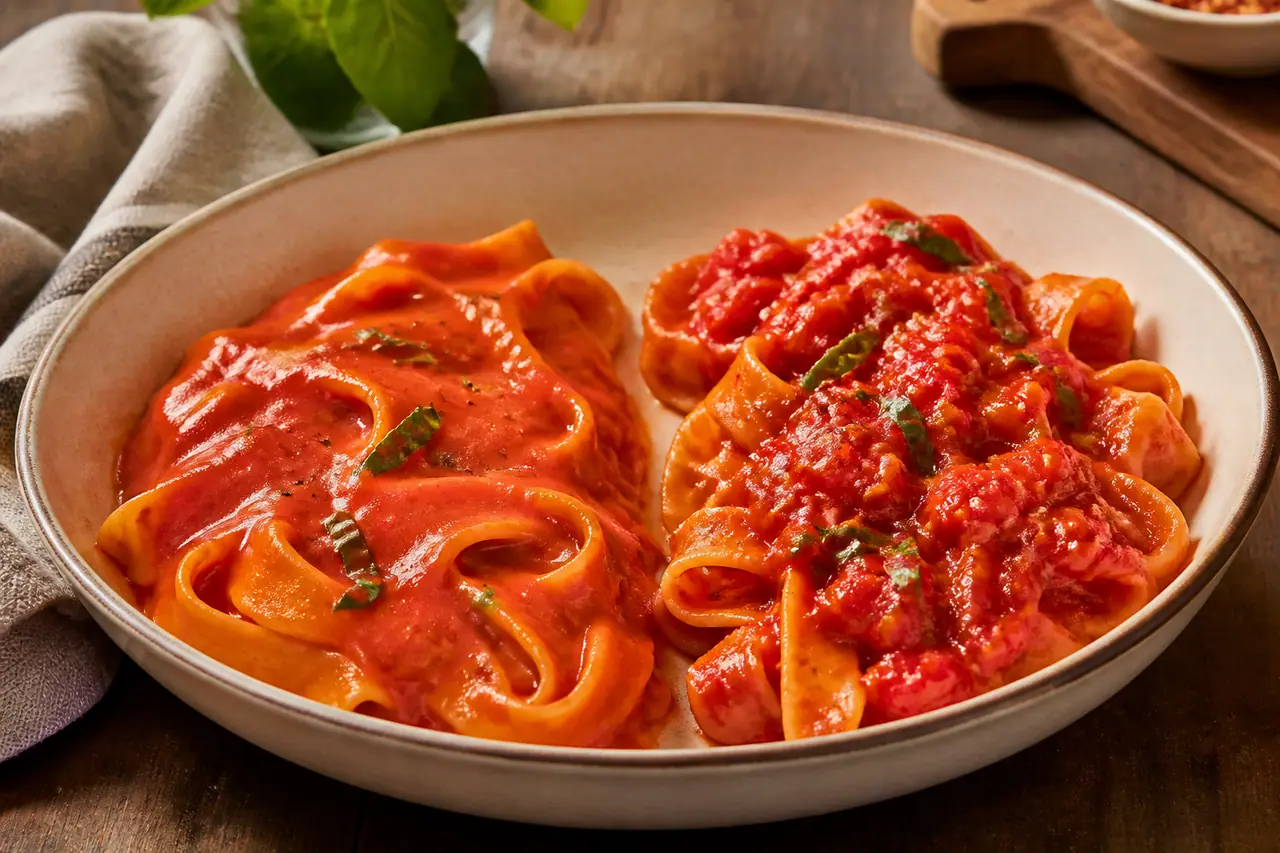
Passata wins the first glance. Tip it into a pan and it is already smooth. Crushed tomatoes look rougher, but they often make a sauce with more body because small pieces of tomato remain in the pan as the liquid reduces. The distinction becomes clear when the sauce has to carry something else. Passata disappears around eggs and fish. Crushed tomatoes leave enough pulp for chickpeas, peppers or mushrooms to sit in. That is not a contest between good and bad products; it is a choice about the shape of the dinner. I tested both with the same onion base and found that the crushed tomatoes looked less polished at minute five but tasted fuller at minute fifteen. Passata looked finished sooner and needed more care at the bottom of the pan. Smoothness is an opening advantage, not the entire result.
I use passata when the sauce needs to be smooth now. I use crushed tomatoes when I want to cook the sauce harder, add vegetables or beans, and decide the final texture myself. Both can make a smooth sauce. They arrive at different points on the road.
Texture before and after a short simmer
One 400 g pack, cooked uncovered in the same wide pan with oil, onion and garlic.
Passata
5
out of 5 for starting smoothness
✓ Smoother at the start
Crushed tomatoes
3
out of 5 for starting smoothness
Passata is smoother from the pack. After 25 minutes, the gap is small if the crushed tomatoes have been stirred and reduced properly. The practical winner depends on whether you want speed or control.
Source: Maren Ashby's side-by-side kitchen test, 2026-08-27
What passata does well
Passata is strained tomato puree. It has no obvious chunks and usually no skins, which makes it good for a sauce under baked food, a soup base or a quick pasta dinner. It also spreads evenly, so a thin layer on pizza is easier to achieve. In my kitchen it is the calmer starting point when children or guests do not want tomato pieces, and it is the faster choice when the sauce has to be ready before the pasta finishes. The carton removes one decision. You do not need to crush anything, pick out skins or blend the pan at the end. That is worth something on a night when attention is short.
The weakness is that smooth does not mean thick. A watery passata still makes a watery sauce; it only makes a smooth watery sauce. Because there are no pieces to break down, the pan can taste flat if you do not give it enough heat, salt and reduction. Crushed tomatoes can hide a little of that problem because the pulp gives your spoon something to catch. Passata cannot. You see every splash of stock, every lid that stayed on too long and every moment the burner was too low. That makes it less forgiving at the beginning, but also easy to diagnose. When the sauce is smooth, the track in the pan tells the truth.
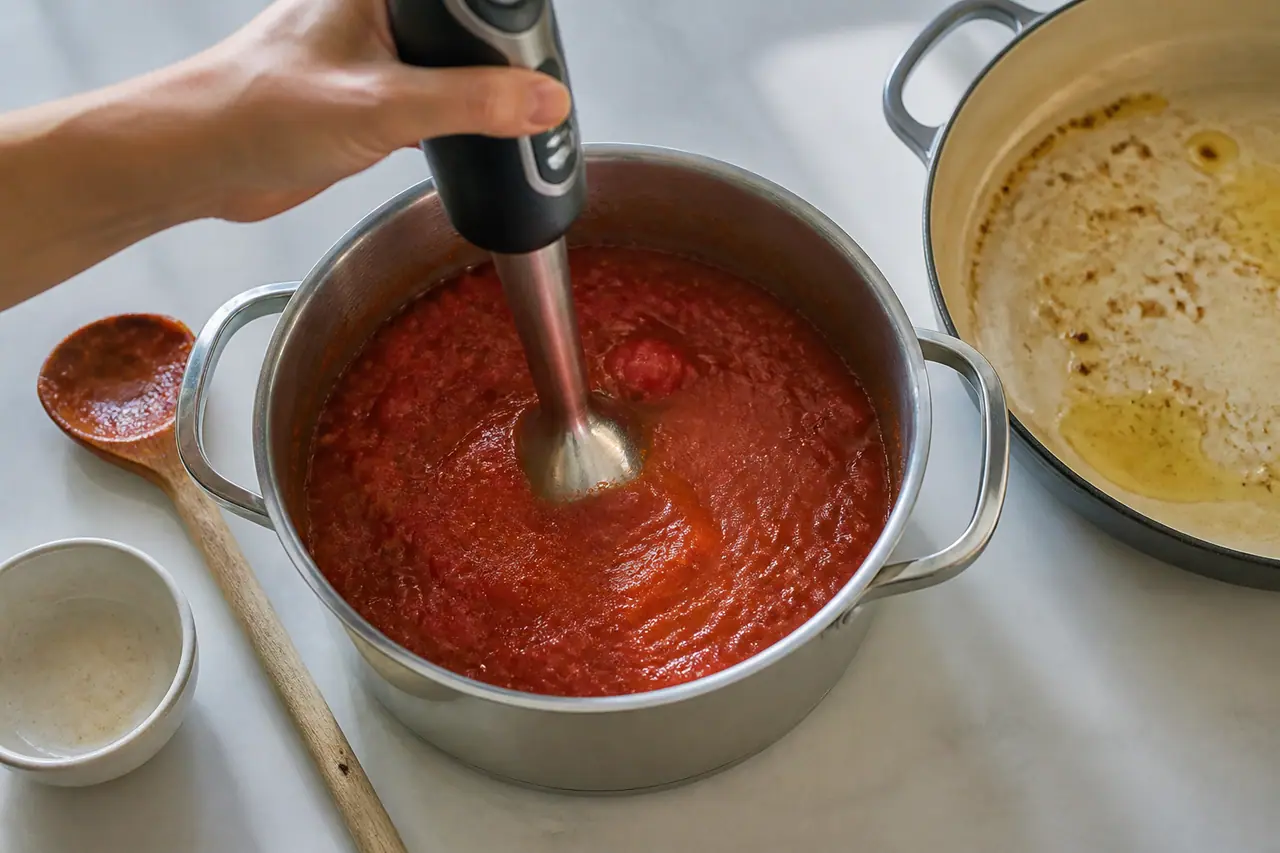
What crushed tomatoes bring
Crushed tomatoes are a mixture of pulp and juice. The pieces may be tiny or surprisingly coarse, depending on the brand. That unevenness is an advantage in a sauce where you want a little texture, because the pulp thickens as the liquid leaves.
They also tolerate add-ins well. Chopped peppers, lentils, chickpeas and mushrooms have somewhere to sit. If you blend the finished sauce, the extra tomato body remains; if you leave it rustic, the small pieces make the bowl feel less uniform.
The pan matters more than the carton
Use a wide pan for both. A narrow saucepan keeps the tomatoes deep and slows evaporation. Stir every few minutes, especially with passata, because smooth puree settles into one layer and catches at the bottom before the top looks ready.
Start tasting after ten minutes. Passata often needs another pinch of salt or a spoon of olive oil. Crushed tomatoes may need a little more time for the pieces to soften. When the sauce coats a spoon and the middle of the pan stays visible for a second after you drag through it, it is ready for pasta or a tray of baked vegetables.
| Use case | Pick | Reason |
|---|---|---|
| Smooth sauce in 15 minutes | Passata | No pieces to break down |
| Sauce with body | Crushed tomatoes | Pulp remains as liquid reduces |
| Pizza base | Passata | Spreads evenly in a thin layer |
| Bean or vegetable stew | Crushed tomatoes | Pieces hold the dish together |
| Soup you plan to blend | Passata | Starts smooth and saves a step |
Source: Maren Ashby's kitchen comparison, 2026-08-27
How to make either one taste less flat
- Cook the onion until soft before adding tomato. Raw onion water makes the sauce taste thin.
- Add garlic for the last 30 seconds of the onion stage. Burnt garlic is harder to hide in a smooth sauce.
- Reduce uncovered, then finish with olive oil, butter or cheese. Fat rounds the sauce after the water is gone.
- Taste on the final food. Pasta water, beans and bread change how salty the sauce seems.
Do not swap without changing the liquid
When a recipe calls for passata and you use crushed tomatoes, add the tomatoes first and decide about extra stock after they simmer. The pieces may bring less free liquid than a thin passata. Going the other way, start with less stock and let passata reduce before loosening the pan.
That small pause is the difference between a sauce that clings and one that runs around the plate. For a tomato base in soup, see spiced chickpea soup. For a more textured dinner, use the red pepper chickpea stew as the model.
Questions
Is passata the same as crushed tomatoes?
Can I blend crushed tomatoes into passata?
Which is better for pasta?
Why does passata catch in the pan?
More guides
All guides →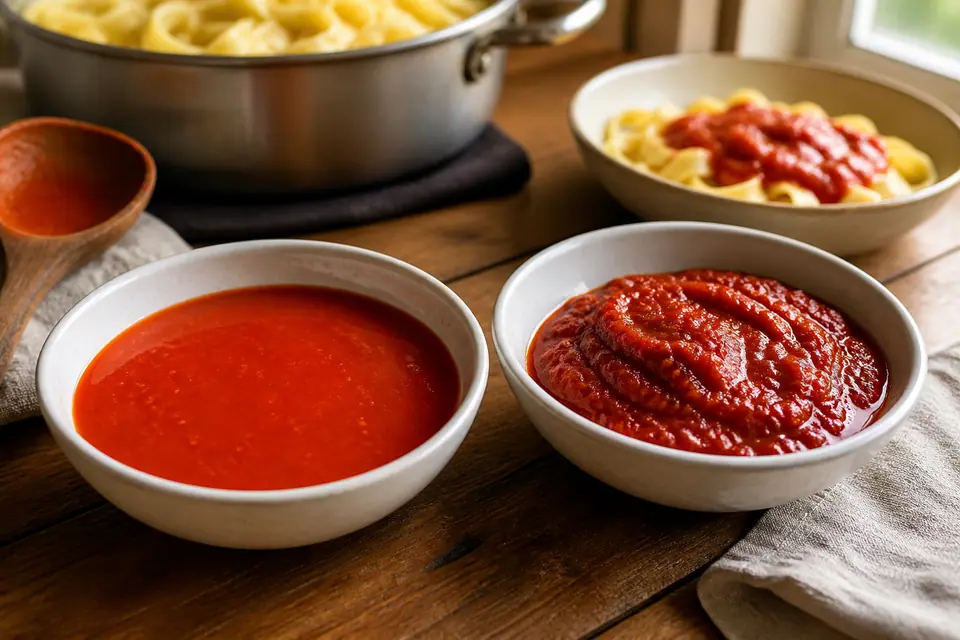
Why passata can taste flat straight from the carton
Flat passata usually needs concentration rather than more herbs. Reduce it in a wide pan, season in stages and finish with fat after the water has gone.
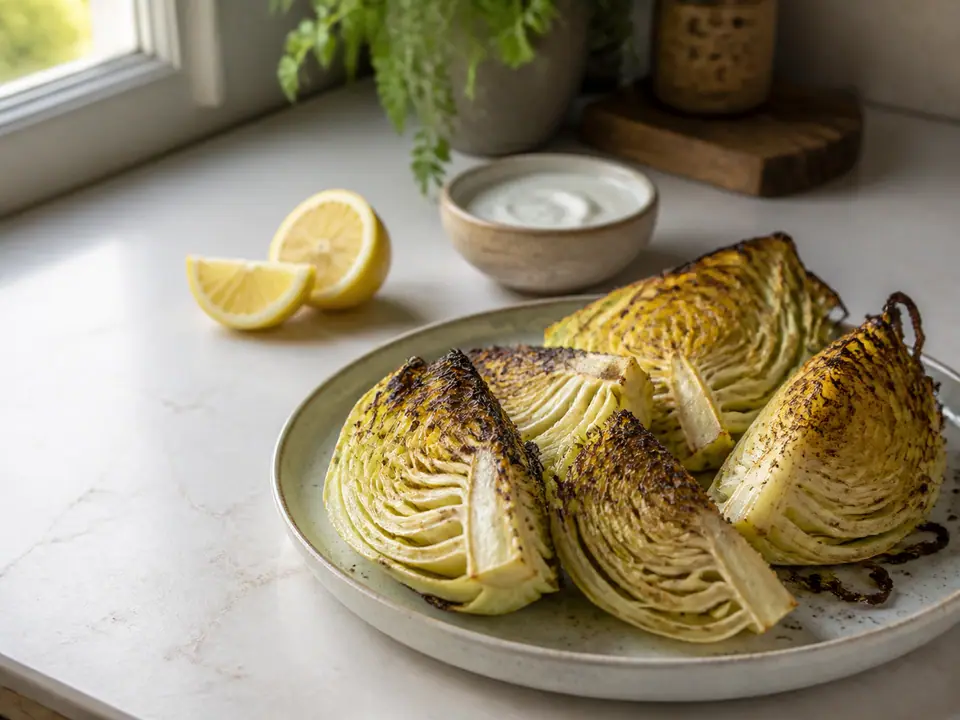
Why cabbage gets sweeter when its edges char
Charred cabbage is not burnt cabbage. A dry cut face and enough heat turn the edges savoury and sweet while the thick rib stays juicy.
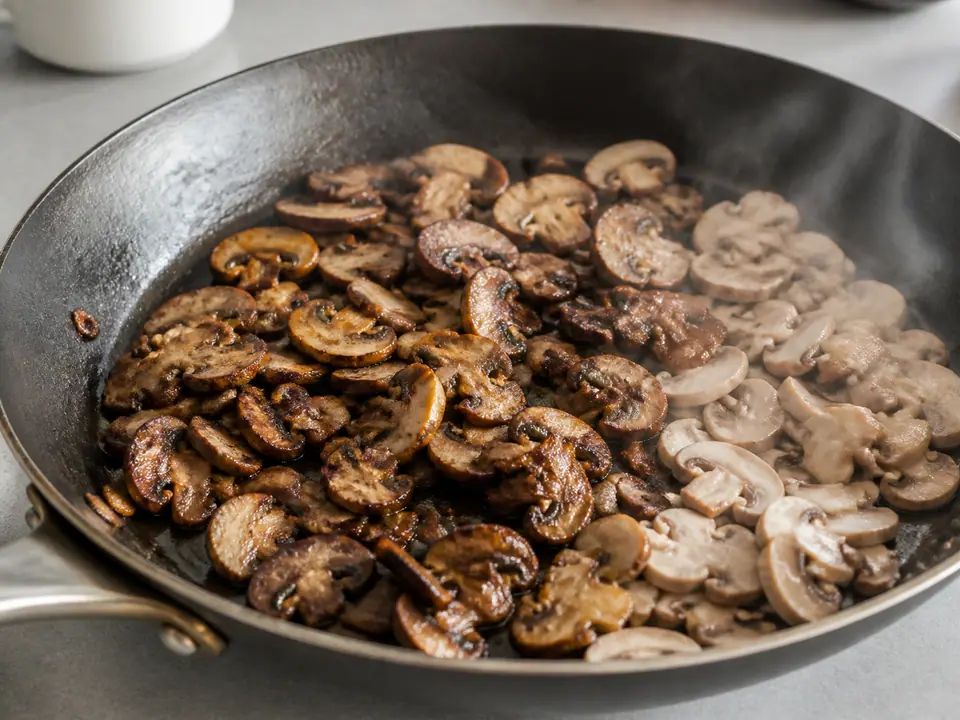
Why mushrooms steam instead of brown
Mushrooms release a surprising amount of water. Give them a dry surface, a wide pan and time before seasoning if you want colour instead of a grey simmer.