The brown edge is the part worth waiting for
Charred cabbage is not burnt cabbage. A dry cut face and enough heat turn the edges savoury and sweet while the thick rib stays juicy.

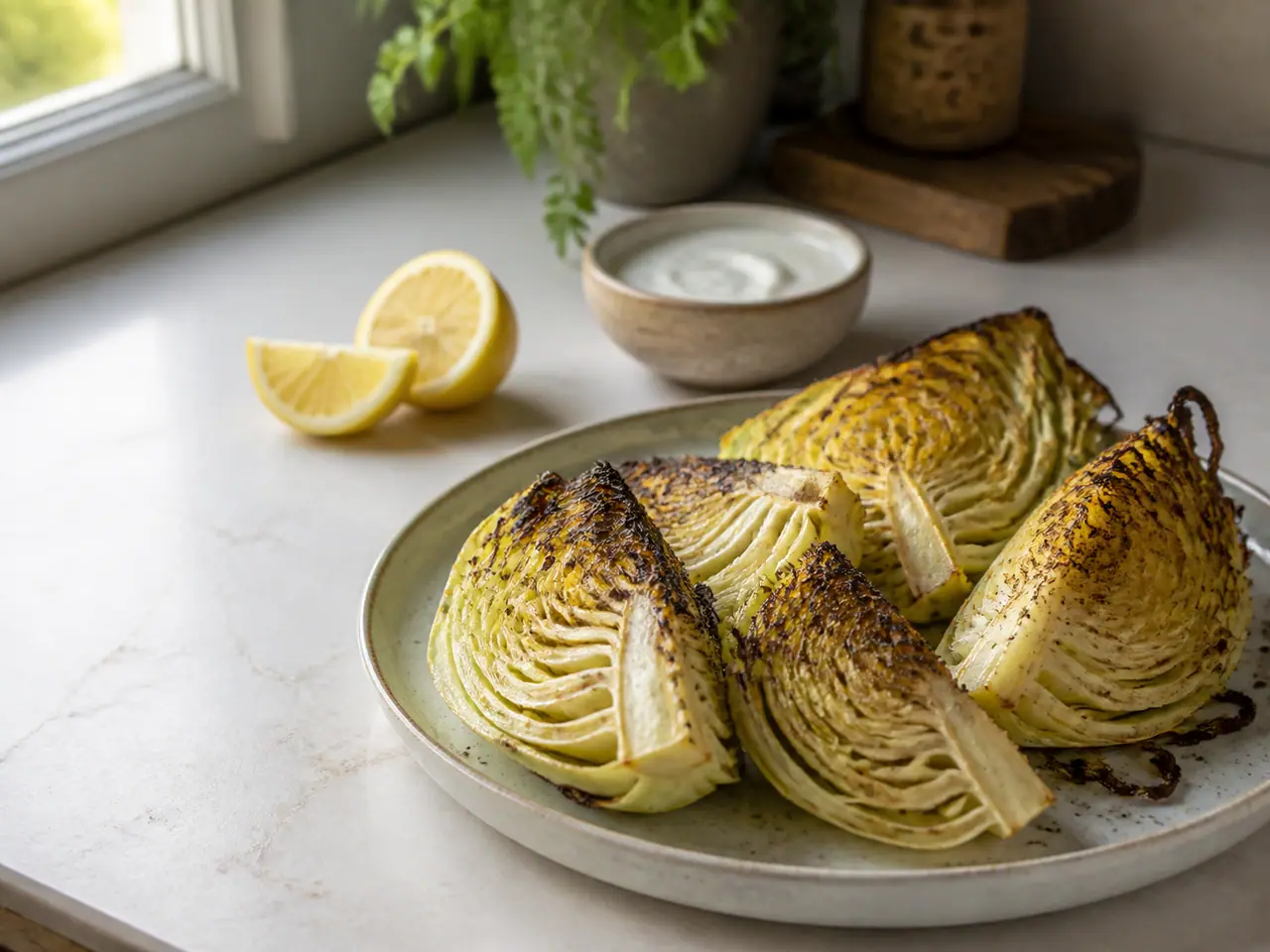
Boiled cabbage gives you a soft vegetable and a pot of water that smells more strongly than the plate. A cabbage wedge roasted until its edges turn dark is a different thing: the leaves are sweet at the tips, savoury in the middle and still juicy beside the core. I first noticed the change when two trays came out of the oven together. The pale tray tasted watery. The darker one needed less salt and disappeared before the chicken did.
The useful answer is heat plus dryness. Cabbage contains a lot of water, so the first part of cooking is spent steaming it away. Once the cut face is dry enough, the surface can brown. I do not chase black edges all over. I want a few dark folds, a tender rib and enough space around each wedge for the oven to work.
The first tray that changed my mind was almost too dark. I had planned to pull the cabbage when the leaves turned gold, then left it alone while I mixed a dressing. A few folds went brown at the edge and the whole wedge tasted fuller. The centre was still juicy. Since then I have treated colour as information rather than a warning. Pale cabbage tells me that water is still leaving; a toasted edge tells me the surface has finally started doing something more interesting.
What the oven is doing first
A cabbage wedge enters the oven cold and wet. Its cut surface has broken cells, and those cells release water as they warm. That water turns to steam. While steam is escaping, the surface temperature stays close to the boiling point of water, so browning is slow. The leaves can soften without tasting roasted.
The turning point comes when the outside has lost enough moisture to heat beyond steaming. The cut folds dry, oil carries heat across them and the colour moves from pale green to gold, then brown. I watch the edges rather than the clock. A recipe can say twenty-five minutes, but a crowded tray may still be at the steaming stage at minute twenty-five.
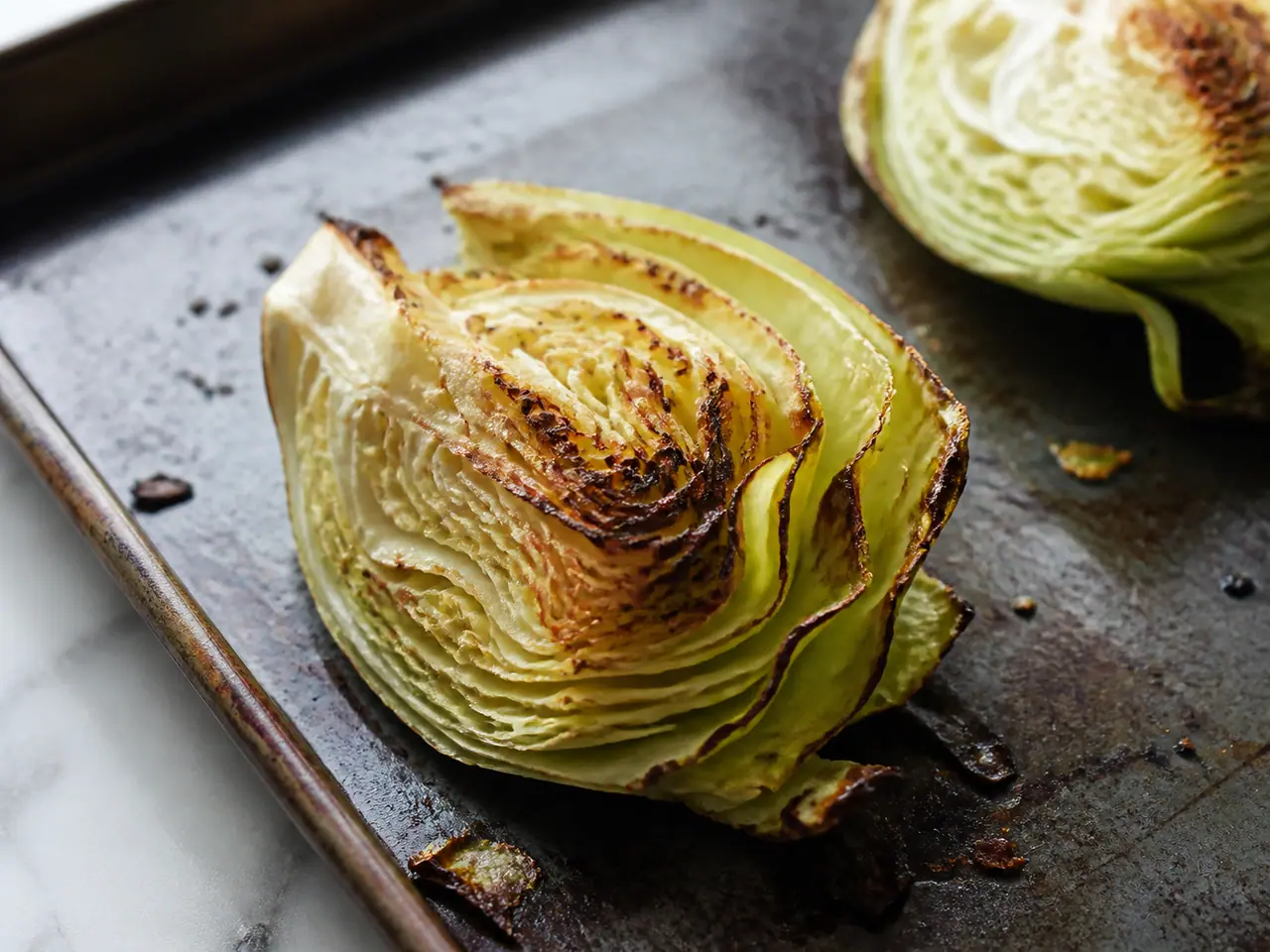
The tray is ready for tasting when the colour has moved past pale green but before every outer leaf has dried into a crisp shard. I break off one edge and try it with the still-soft middle. That contrast is the point: a roasted cabbage wedge should have a little resistance beside the core and a toasted fold at the edge. If both parts feel the same, the cut or the heat needs changing. I take the photograph as a reminder of the texture I am after, not as a decoration. The surface should show what the written method asks for: a dry cut, a browned fold, a firm curd or a leaf that has kept its shape. If the frame looks wet and crowded, I know the pan would have the same problem. If it looks pale but compact, I know the food may be ready for a different job. That is why I keep the vegetable visible while I cook. The cabbage should make sense before any garnish arrives.
My wet tray versus dry tray test
Same cabbage, different surface
Two 400 g cabbage wedges roasted at 220°C fan for 28 minutes, one dried well and one placed wet on the tray.
Wet surface
2
dark folds
Dried surface
7
dark folds
✓ More browned edge
Drying the cut face gave the tray a head start. The cabbage still released water, but the oil and hot metal reached the leaves sooner, so the roasted flavour was stronger.
Source: Maren Ashby kitchen test, 2026-08-28
The test was deliberately small. I did not weigh sweetness with a laboratory instrument; I counted the browned folds and tasted both pieces with no dressing. The dry wedge had a toasted smell and a fuller finish. The wet wedge was tender but needed lemon and salt to wake it up. That is the difference people describe as sweetness, even when no sugar has been added.
Oil is not a magic shortcut. Too much oil makes the leaves slick and can slow evaporation where the oil pools. I brush the cut faces with about two teaspoons for a 400 g wedge, then season after it has browned enough to keep the salt from drawing a wet puddle on the tray.
I have learned to leave one wedge untouched while the others brown. That control piece shows whether the difference comes from the cabbage or from the heat. The pale piece is often tender, but its flavour stops at cooked vegetable. The darker piece has a second register: toast at the edge, sweetness in the middle and enough bitterness to make the lemon feel necessary. Small comparisons like this keep my advice tied to the pan.
Why the edges taste sweeter
The word sweeter can mean two things in a roasted vegetable. Heat changes the way we perceive existing sugars, and browning creates new aromatic compounds that read as toasted, nutty and savoury. Cabbage also loses water as it cooks, so the remaining flavour is more concentrated. The darker fold is not necessarily high in sugar; it is more intense because the surface has dried and reacted.
The core does a different job. It holds the wedge together and stays juicy while the outside takes colour. I leave some of the stem attached rather than separating every leaf. A wedge with no core cooks fast but gives me a pile of loose leaves, and those leaves burn before the centre has a chance to soften.
The cut matters more than the oven setting
I cut cabbage through the core into wedges about 4 cm thick at the widest point. If the wedge is thin, the outer leaves finish before the middle. If it is very thick, the core stays firm while the edges go too dark. A narrow pointed cabbage can take larger wedges because its leaves are thinner; a round green cabbage needs a little more care around the lower rib.
I also leave the outside leaves on when they are crisp. They act like a shield and become the darkest part. If one leaf is already bruised or wet, I remove it before roasting. The oven cannot turn a slimy fold into a good char; it only makes the smell more obvious.
Three ways to keep the char clean
- Preheat the tray. A metal tray that is already hot starts the cut face against firm heat instead of a cold surface.
- Dry the cabbage. Pat the wedges after washing and let the cut face sit for a few minutes while the oven heats.
- Give the wedges room. Leave a finger of space between them so steam can move away rather than settle on the next piece.
I turn the wedges once, usually after twenty minutes, when the underside has picked up colour. If the top is dark but the rib is still firm, I lower the oven to 190°C and give it another ten minutes. That is better than covering the whole tray at the start. A cover protects the surface but traps the moisture that I need to lose.
Finish with an acid that suits the cabbage. Lemon cuts through the roasted richness, cider vinegar makes the edges taste sharper, and yogurt gives the soft centre somewhere cool to go. Add it after the browning, not before. A wet dressing on the tray blunts the very surface you waited for.
Where the science has limits
Cabbage belongs to the brassica family, so it contains sulfur-containing compounds that can become more noticeable when cells are cut and heated. That does not mean every strong smell is a sign of bad cabbage. The intensity changes with variety, freshness, cut size and cooking time. I use the smell as a cue to check the pan, not as a reason to add sugar.
If the cabbage tastes bitter, I first look for a blackened leaf or a pan that was too hot for the thickness of the wedge. A few dark edges are useful. A completely black underside is not the same thing as roasted sweetness. Transfer any good pieces to a clean plate and scrape away the burnt bits before dressing.
My reliable charred cabbage method
Heat the oven to 220°C fan with a metal tray inside. Cut half a green cabbage through the core into four wedges. Pat the cut faces dry, brush them with two teaspoons of olive oil and season lightly. Put the wedges on the hot tray with space between them. Roast for twenty minutes, turn, then roast for another eight to twelve minutes until the rib gives when pressed and the edges have several dark folds.
Rest the cabbage for five minutes. That pause lets the core finish softening without pushing the edges further. I serve it with lemon, yogurt or beans, and I keep the darkest outer leaves because they carry the most concentrated flavour. If your wedges are still pale, wait before reaching for more seasoning. More time and more room are usually the missing ingredients.
Questions
Does charred cabbage contain added sugar?
Why is my roasted cabbage watery?
Is black cabbage safe to eat?
Should I boil cabbage before roasting?
More guides
All guides →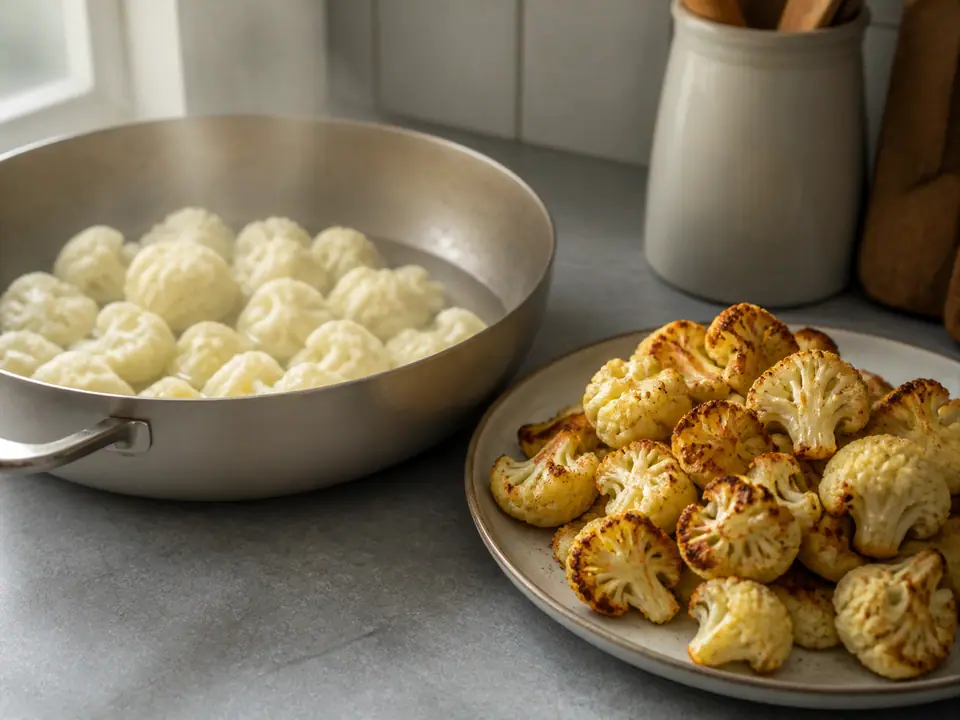
Why cauliflower can smell strong when it is overcooked
Cauliflower contains sulfur compounds that become more noticeable with prolonged wet cooking. Shorter, hotter cooking keeps the smell quieter and the texture firmer.
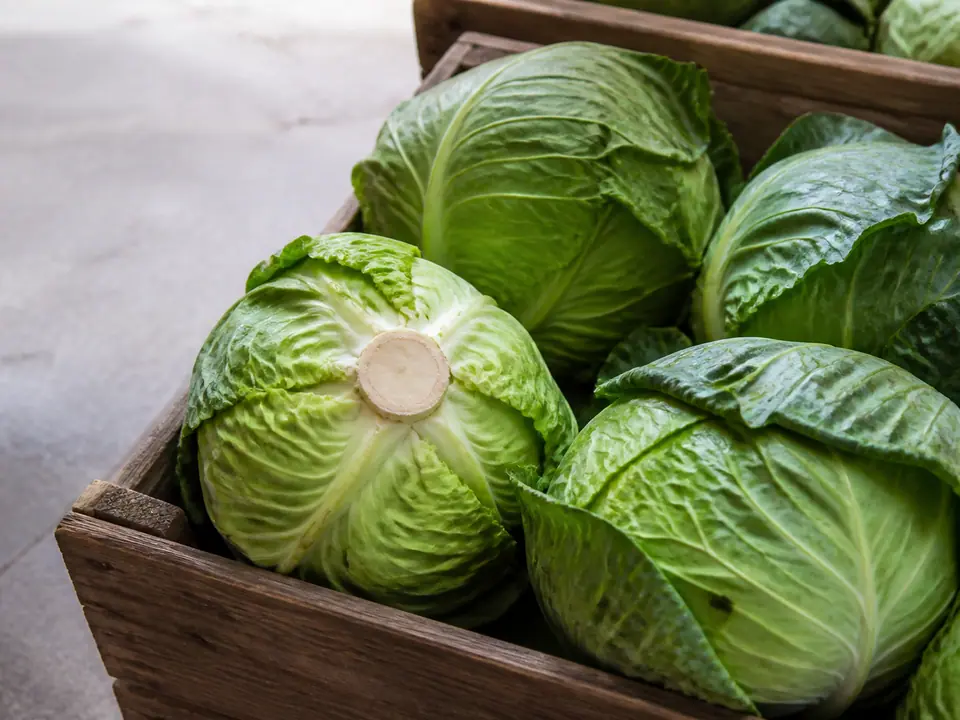
How to choose a cabbage that will stay crisp
A crisp cabbage feels dense, has tightly packed leaves and a dry cut base. The shop test takes less time than rescuing a wilted half later.
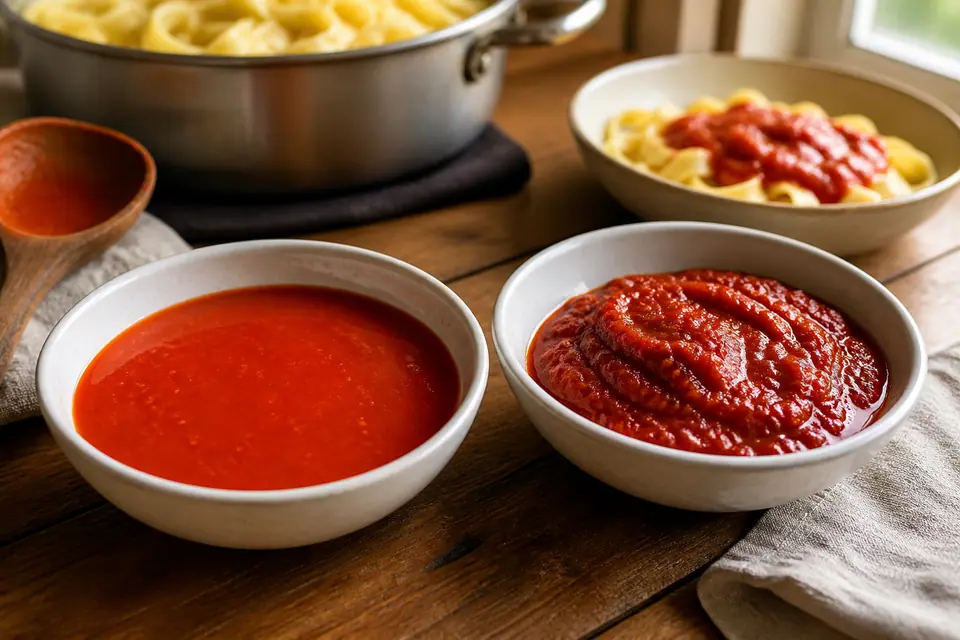
Why passata can taste flat straight from the carton
Flat passata usually needs concentration rather than more herbs. Reduce it in a wide pan, season in stages and finish with fat after the water has gone.