English cucumber usually keeps the cleaner crunch, but a fresh short one can win
English cucumbers tend to have smaller seeds and a steadier crunch, while salad cucumbers vary more by age. Freshness and firmness still matter most.

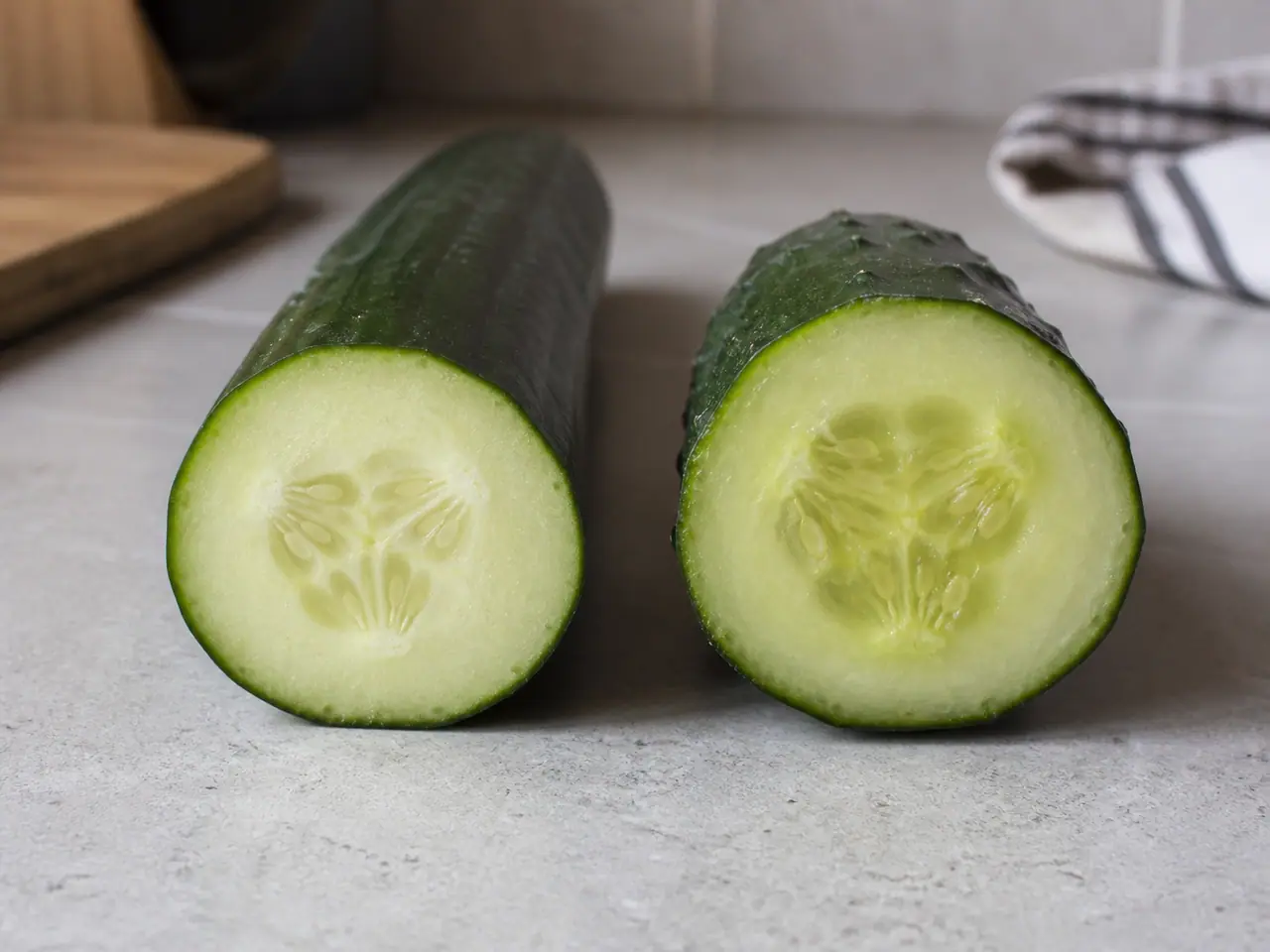
English cucumber is long, smooth and often wrapped in plastic. Salad cucumber is shorter, more familiar and sometimes rougher-skinned. The long one usually gives me a cleaner crunch because its seeds are smaller and its flesh is more uniform, but a fresh salad cucumber can be just as good.
I choose by firmness and the job in front of me. For a sandwich or a bowl that will sit for a while, English cucumber is the safer choice. For a quick chopped salad, I buy the crispest one in the shop and remove the watery centre if it needs help.
Which cucumber keeps the better crunch?
Same length pieces, chilled, salted lightly and tasted after ten minutes.
English cucumber
Small seeds, steady crunch
✓ Crisp texture
Salad cucumber
Fresh but more variable
English cucumber is my small winner for this question. The other choice still works when the dish asks for its particular texture.
Source: Maren Ashby's kitchen test, 2026-02-24
The seed cavity changes the bite
English cucumbers are often bred and harvested for a relatively small seed cavity. Salad cucumbers can have larger seeds as they mature, which makes the centre softer and wetter.
The UC Davis cucumber guide uses firmness, uniform shape, dark green colour and absence of yellowing as quality clues. Those are more reliable than the label alone.
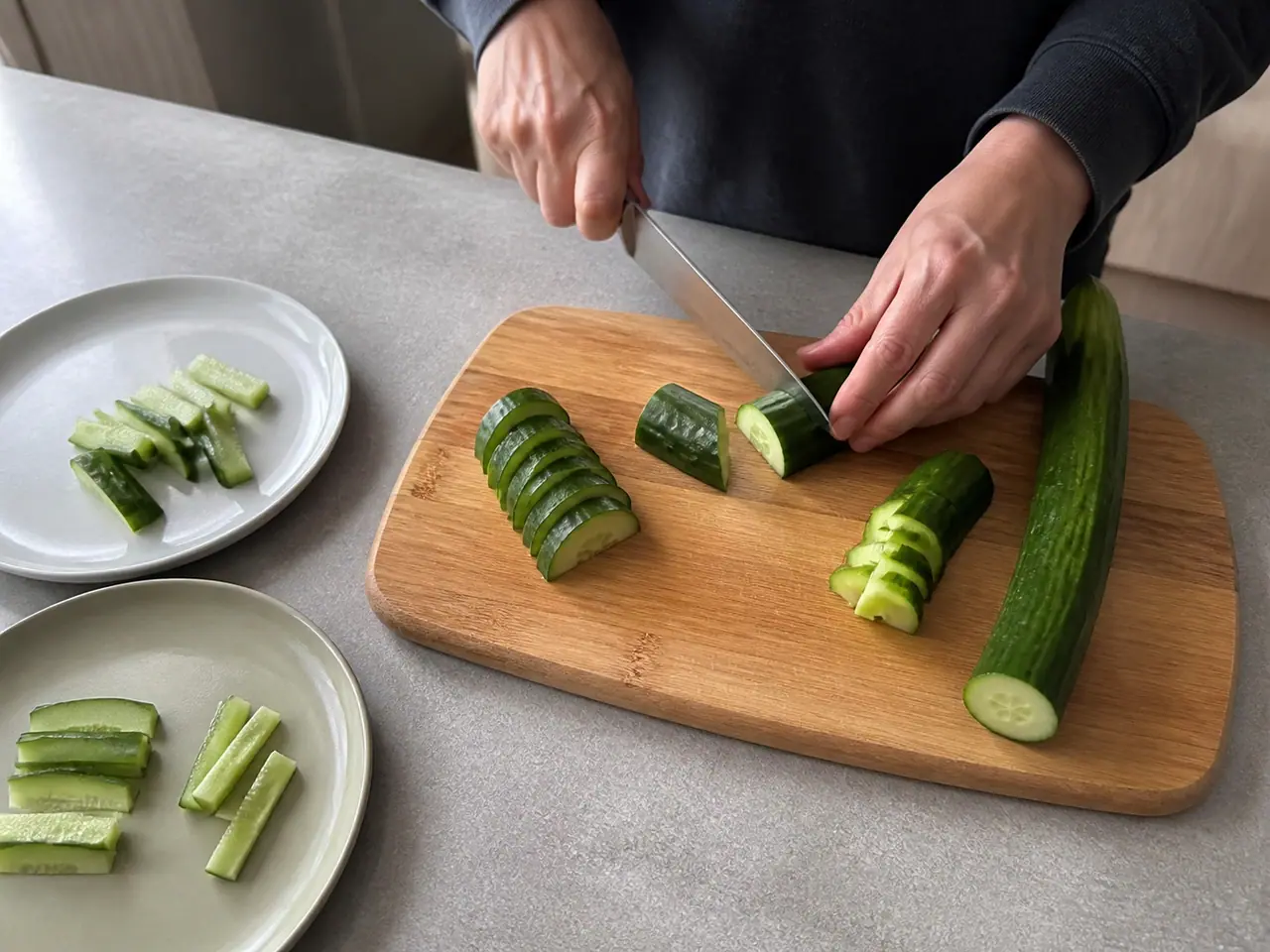
Skin is a practical difference
The thin skin of an English cucumber is easy to eat and keeps the slices together. Salad cucumber skin can be thicker or more bitter, so I taste a small end before deciding whether to peel.
Peeling removes some crunch and colour. I usually keep the skin when it is tender and clean, then strip only a few bands if the surface feels tough.
I keep one piece aside so I can compare it with the next batch.
Freshness is the real winner
A cucumber should feel firm along its length, not soft at the tip or flexible in the middle. A long English cucumber that has chilled badly can be less crisp than a short salad cucumber picked recently.
Look for dark green skin, no yellowing and no sunken wet spots. A waxy shine can be normal; a soft end is not.
The clock helps, but the surface gives the better signal.
Salt reveals the difference
I cut matching pieces, salt them lightly and taste after ten minutes. The English cucumber usually keeps a more even crunch, while a seedy salad cucumber can release more water around the centre.
For a salad that will wait, remove the seeds from the softer cucumber and salt just before serving. That is often enough to close the gap.
That small pause saves more food than a rescue at the end.
Choose by the dish
English cucumber suits sandwiches, yogurt bowls and packed lunches because the slices stay neat. Salad cucumber is good for quick salads, pickles and chopped dishes where a little variation is welcome.
For smashing, I choose a cucumber with a firm skin and enough flesh to break into rough pieces. The name matters less than the resistance under the knife.
The next step works better when the excess moisture has somewhere to go.
Keep the test fair
Use pieces from the middle, not the end. Chill both the same way, cut them to the same thickness and taste before adding dressing. Otherwise temperature or sauce hides the texture.
The result in my kitchen is a small win for English cucumber, not a rule for every shop. Freshness can reverse the ranking in one visit.
I keep one piece aside so I can compare it with the next batch.
One useful substitution is to change the cut before changing the produce. If the cucumber you bought is smaller, slice it thicker and give it a little more quiet contact with the pan. If it is older or wetter, use it in a sauce where the released liquid has somewhere to go. I get a more reliable dinner by adapting the method to the ingredient in front of me than by chasing the variety named in a recipe.
The comparison also changes with the serving temperature. A texture that feels generous straight from the skillet may soften under a cold dressing, while a tender piece can feel better once it sits beside toast or grains. I taste one plain, one seasoned and one after five minutes of waiting. Those three bites tell me which version belongs on the plate and which one needs a different job.
When I repeat the test, I keep the variables boring: same weight, same pan, same oil and the same time between cooking and tasting. I write down the cut because a thin slice can make two varieties look identical. The useful result is not a universal winner. It is a short decision I can make at the shop and repeat on a busy evening.
For the quality and storage details that sit behind my kitchen observations, I use the UC Davis cucumber produce fact sheet alongside the timed test described above.
The practical verdict
English cucumber usually stays crisper because the flesh and seeds are more uniform. A fresh salad cucumber can beat an old wrapped one.
Feel the whole fruit, inspect the ends and decide how long the slices will wait before they meet salt.
Questions
Which cucumber is the crunchiest?
Should I peel English cucumber?
Why is my cucumber watery?
Which cucumber is best for sandwiches?
More guides
All guides →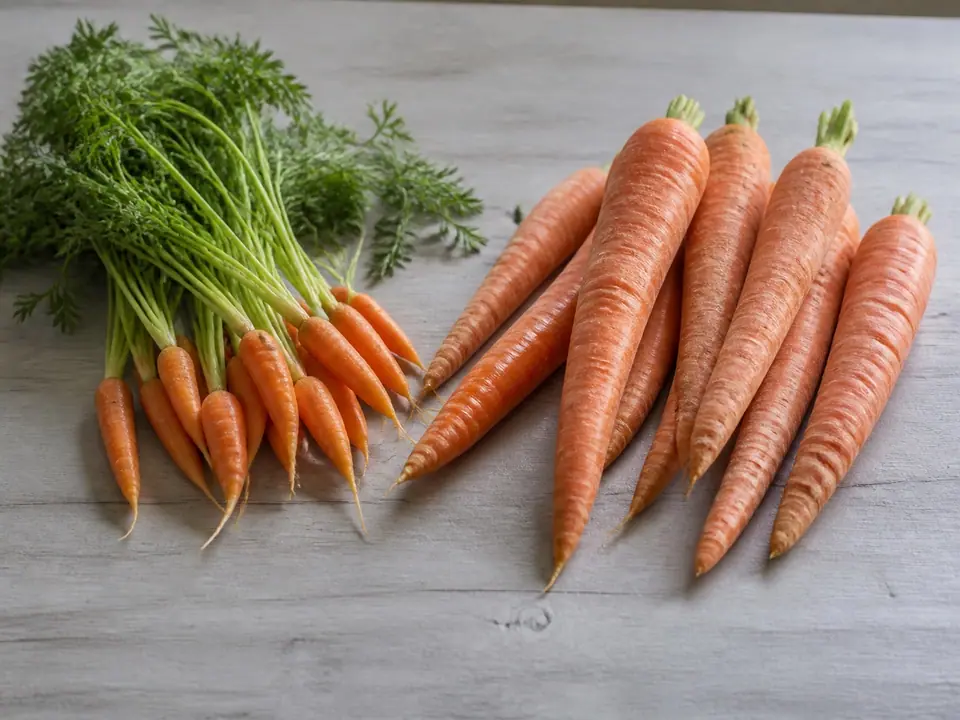
Baby carrots vs full-size carrots: which actually tastes better?
True young carrots are tender and sweet, while supermarket baby carrots are often shaped pieces from larger roots. Full-size carrots give you more control over the cut.
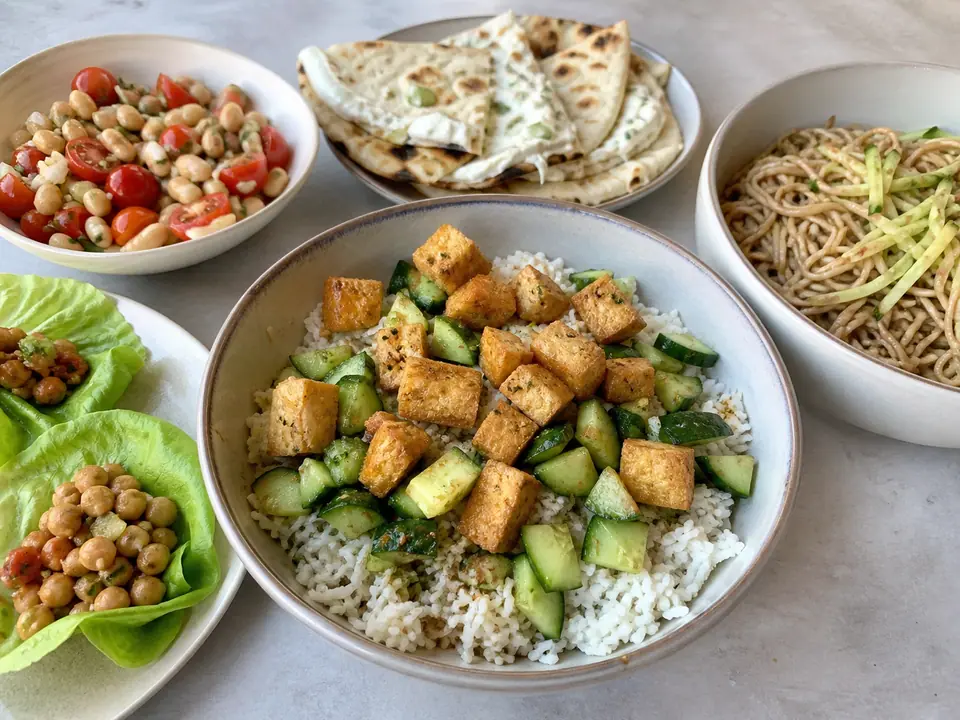
5 fresh dinners for a hot day
Five dinners that need little or no oven heat: crisp cucumber bowls, tomato beans, yogurt flatbread, cold noodles and chickpea lettuce cups.
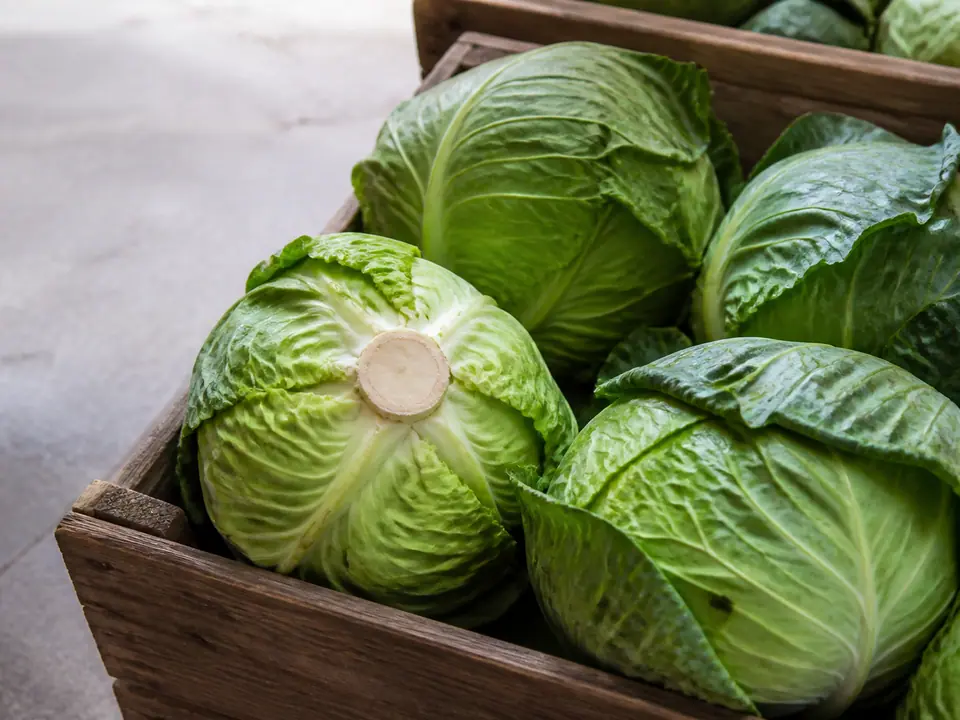
How to choose a cabbage that will stay crisp
A crisp cabbage feels dense, has tightly packed leaves and a dry cut base. The shop test takes less time than rescuing a wilted half later.