The small ones are convenient; the full-size ones give you more control
True young carrots are tender and sweet, while supermarket baby carrots are often shaped pieces from larger roots. Full-size carrots give you more control over the cut.

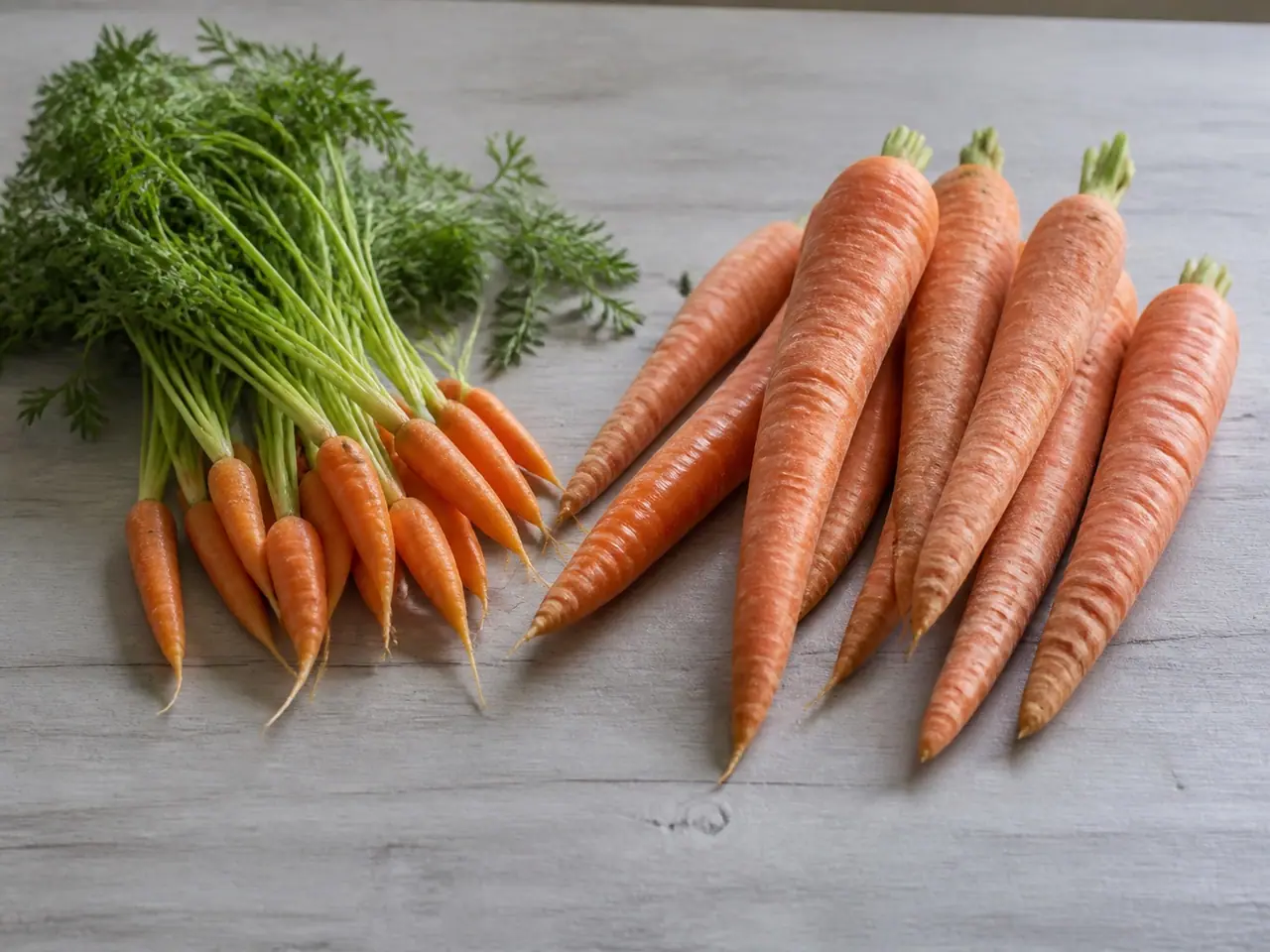
Full-size carrots are my better buy for cooking because I can choose the thickness, keep the peel when it is clean and cut every piece for the same pan. Baby carrots are useful when speed matters, but the label can hide two products: genuinely young carrots or larger carrots peeled and shaped into small cylinders.
Taste is close when both are fresh. Texture is where the difference shows. Small true carrots can be tender and fragrant, while processed baby carrots may be uniformly mild. Full-size roots give you options for roasting, ribbons, rough dice or braising.
I check that detail before adding more heat, oil or seasoning.
The name does not tell the whole story
A bunch of young carrots is a root harvested small, often with a leafy top. A bag of baby-cut carrots is usually made by peeling and shaping larger carrots. Both can be convenient, but they do not carry the same skin or taper.
Look at the root. True young carrots vary in size and keep a tapered shape. Baby-cut pieces are short, rounded and identical. Uniformity is not bad; it tells you the product has been trimmed.
I check that detail before adding more heat, oil or seasoning.
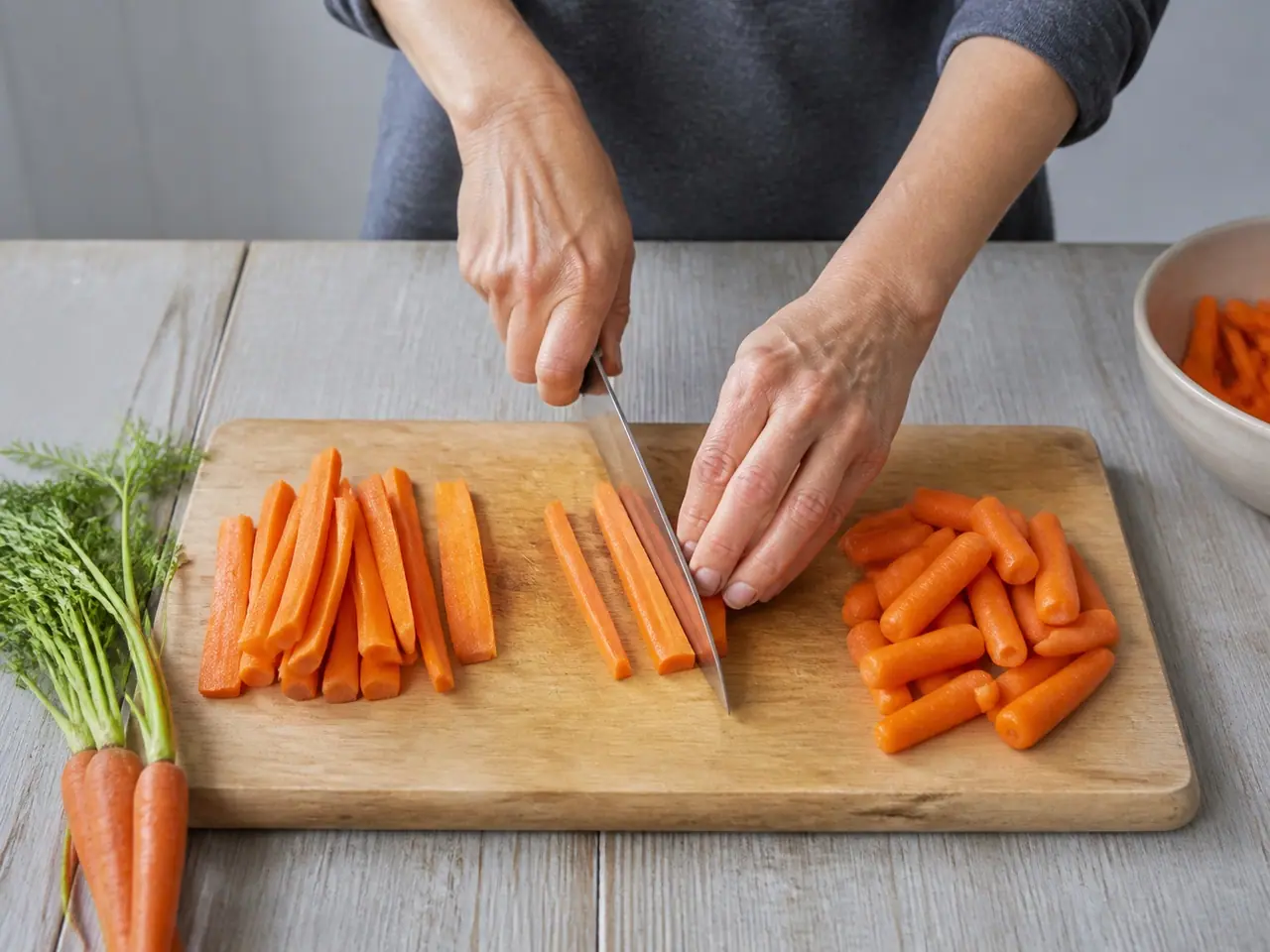
The fair taste test
Eat one of each raw after rinsing. Freshness matters more than the label. A crisp full-size carrot can taste sweeter than a tired baby carrot, while a young carrot with a fresh top can have more perfume.
Roast equal-weight pieces with the same oil and salt. Baby-cut pieces cook quickly because they are small and even. A full-size carrot can become a thicker baton with a juicy centre and deeper edge.
The clock helps, but the surface gives the better signal.
Where baby carrots win
Baby carrots are excellent for packed lunches, quick steaming and a tray where everything else is small. There is no peeling pile and little waste. Dry them before roasting because their smooth surface can steam.
They suit a short glaze. Butter, lemon or honey can cling to the rounded surface in minutes. Keep the heat moderate if the coating contains sugar; small carrots reach the dark stage fast.
I keep one piece aside so I can compare it with the next batch.
Where full-size carrots win
Full-size carrots win when the cut is part of the recipe. Thick batons roast without disappearing, ribbons stay visible in a salad and rough dice build a soup base. Leave the skin on or peel only what needs it.
The core of a large carrot may be woody, but that is easy to spot after cutting. Split it lengthwise and trim the fibrous centre if needed. A large root still gives you more usable food.
That small pause saves more food than a rescue at the end.
The value decision
Baby-cut carrots charge you for washing and shaping, which can be worth it on a busy day. Full-size carrots usually cost less per usable gram and give you trimmings for stock or soup.
I buy baby carrots when prep is the obstacle, not because they taste automatically better. True young carrots are a seasonal treat; roast them whole and keep their shape.
The next step works better when the excess moisture has somewhere to go.
Choose by the meal
For raw sticks, buy small to medium carrots that feel hard and fresh. For roasting, a larger root is fine if the core is not woody. For soup, bendy carrots can be rescued because the blender does not need a crisp centre.
A mixed bag is good when the plan is flexible. If dinner depends on matching pieces, choose roots with similar thickness.
The result should look ordinary and feel deliberate, not overworked.
There is one more useful distinction: a true young carrot is worth cooking with its top and skin intact, while a shaped baby carrot is mainly a time-saving ingredient. I do not peel a delicate young root into a smooth cylinder. I wash it, trim the top and let its natural shape be the reason it is on the plate.
Root vegetables reward a small check before the main work. I look at one piece, one cut face or one stored end and let that evidence choose the next step. A firm centre deserves a hot tray; a soft one belongs in soup or mash. A dry cupboard suits a whole root; a covered container suits a cut one. That habit keeps the method honest and saves me from adding more heat, water or seasoning to a problem that started with the ingredient itself.
The short answer
Baby carrots are convenient, not automatically sweeter. Full-size carrots give you more choices and often more value. When both are fresh, let the cooking method decide.
For a tray, I choose full-size carrots and cut thick batons. For lunchboxes, I choose small clean roots or baby-cut pieces.
Questions
Do baby carrots taste better?
Are baby carrots just small carrots?
Which carrots are best for roasting?
Are baby carrots worth the cost?
More guides
All guides →
How to choose carrots that are crisp, not rubbery
Firm carrots with a fresh stem end and smooth, unbroken skin are more likely to stay crisp. Rubberiness means water has already left the root.
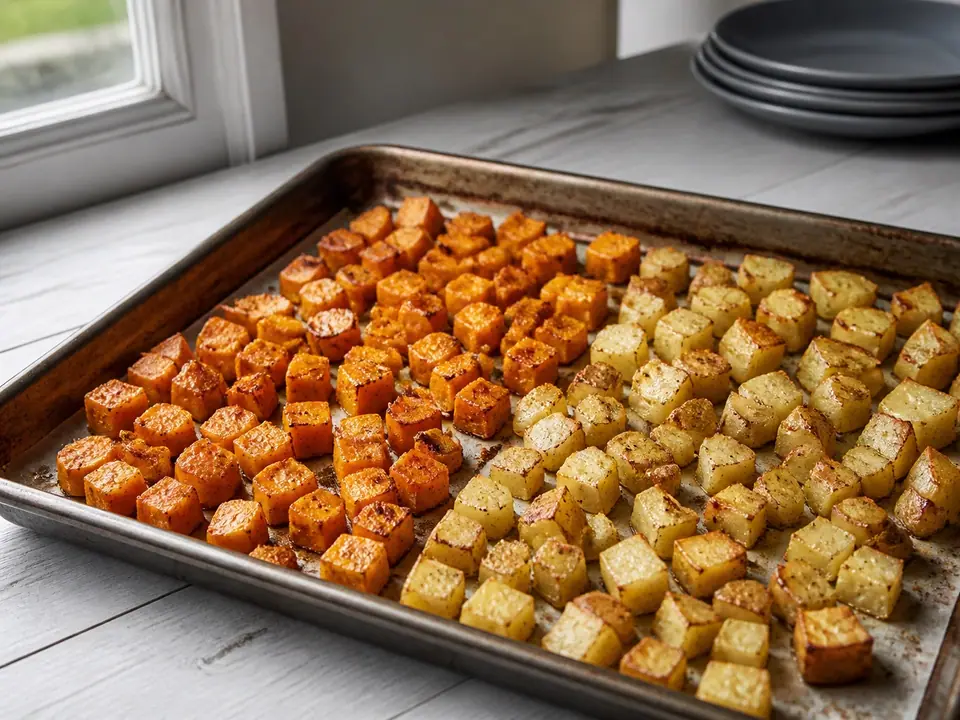
Sweet potatoes vs white potatoes: which is better for roasting?
Sweet potatoes give you a soft, sweet centre and dark edges. White potatoes give you a drier middle and a firmer crust when the tray has room.
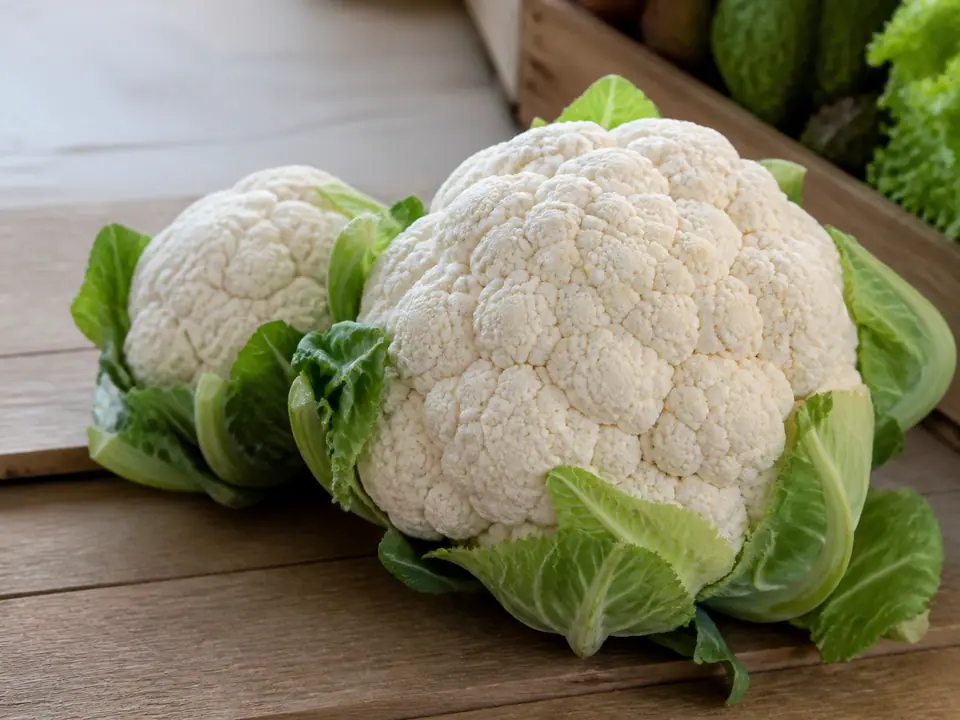
How to choose a dense cauliflower with fresh leaves
A good cauliflower feels heavy for its size, has a tight white curd and fresh leaves around a dry base. The leaves are the quickest freshness clue.