A long dense neck gives you more usable flesh for the tray
Look for a heavy, well-formed butternut with a long solid neck, firm skin and an intact stem. Avoid soft spots, wet cracks and a hollow light feel.

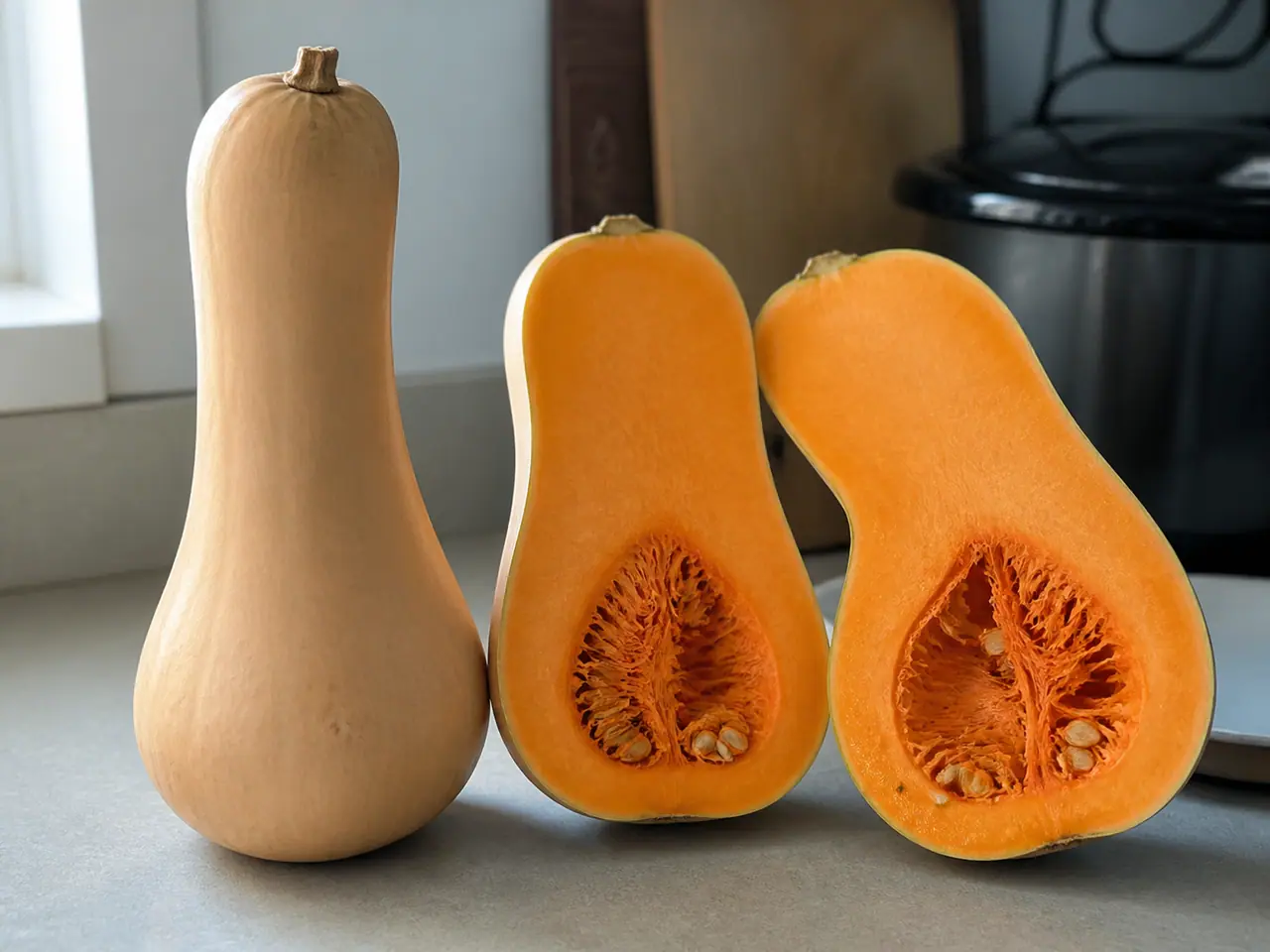
A butternut squash is mostly useful flesh, but not every shape gives the same amount. I look for a long solid neck and a modest bulb because that means more of the squash will become even cubes or wedges instead of seeds and stringy centre.
Weight matters too. A good root feels heavy for its size, with hard skin and no soft shoulder. I do not need a beautiful beige surface. Small scuffs are fine; a wet crack or hollow light feel is not.
Choose the shape before the colour
The long neck is the part I want for regular roasting pieces. A very round bulb can still be good, but it gives more cavity and more variation in thickness.
Hold two roots side by side and compare usable length rather than total size. A slightly smaller squash with a long neck can feed more people than a huge round one.
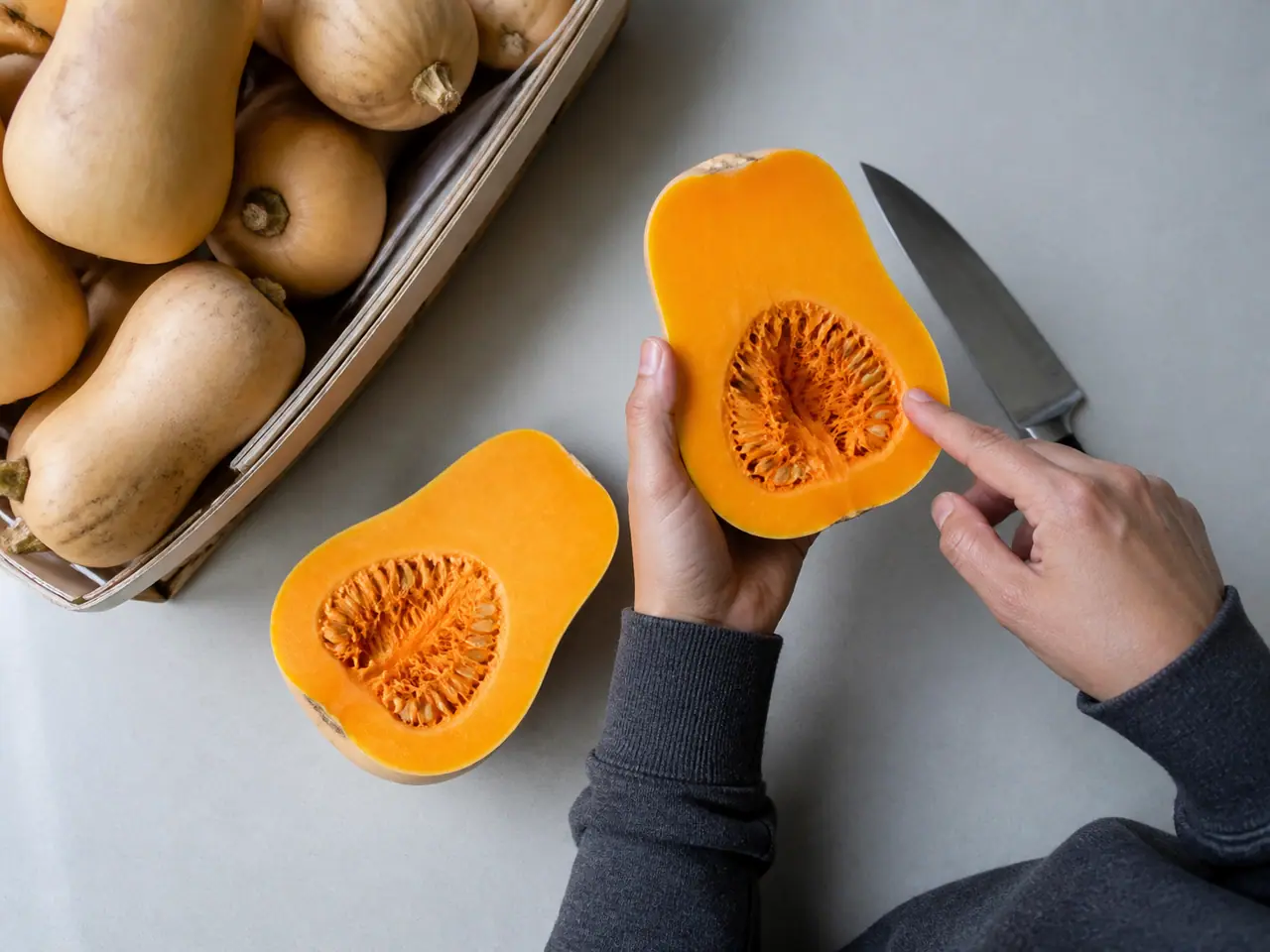
Use weight as evidence
A dense squash feels heavy when lifted. A light root may have lost water, though weight alone cannot reveal a hidden bruise.
I compare similar shapes. The heavier one usually has a better chance of a moist centre, especially when the skin is still firm and the stem has not collapsed.
I keep one piece aside so I can compare it with the next batch.
Check the stem
A dry corky stem suggests the squash reached maturity, while a green fleshy stem can suggest it was harvested earlier. The stem should be intact and firmly attached.
Do not pull at the stem in the shop. Look for damage around it and reject any squash with a wet soft ring or a sour smell.
The clock helps, but the surface gives the better signal.
Read the skin
The rind should be hard enough that a fingernail does not sink easily. Scratches and dull patches are normal. Wet cracks, mould and soft dark areas are the clues I avoid.
A matte tan skin is more useful than a shiny one. Shine can come from handling or wax and tells me less than firmness.
That small pause saves more food than a rescue at the end.
Match size to dinner
For cubes and wedges, choose a medium squash that you can cut safely. For soup or mash, a large root is fine because the shape does not need to be uniform.
If the neck is very narrow, it may roast quickly. If the bulb is wide, cut it separately and give the thick pieces a head start.
The next step works better when the excess moisture has somewhere to go.
Cut it once at home
The centre should be dense, evenly coloured and free from a large watery gap. A modest cavity is easy to scoop; a huge stringy cavity changes the value of the root.
I save the seeds from a good squash for roasting. If the flesh is fibrous or smells wrong, I do not let seasoning hide that evidence.
I keep one piece aside so I can compare it with the next batch.
I take the shopping clue home and check it against the cut surface. The knife should confirm the hand test: firm flesh, a clean smell and no wet pocket hiding inside. If the first piece is sound but not as crisp or sweet as I wanted, I change the recipe to suit it. A raw salad can become a cooked side; a neat slice can become soup, sauce or a tray.
The best value is not always the lowest price per kilo. I divide the price by the part I will actually use and by the number of meals the ingredient can carry. A smaller sound squash that gets cooked in time beats a large discounted one that loses half its weight to trimming or decay. That calculation matters when a display makes abundance look like a bargain.
At the counter I avoid judging quality from one dramatic specimen. I compare two or three pieces in the same display and look for the shared pattern: even colour, firm structure, clean ends and no trapped liquid. Once home, I keep the strongest pieces for the dish where texture matters and send the less handsome but sound pieces to a longer cook.
A good purchase is one that fits the meal you can actually cook. Before paying, imagine the first use, the storage space and the day when the ingredient will be at its best. Choose the soundest piece rather than the most dramatic one, and do not let a low price persuade you to buy more than your week can use. At home, make the first inspection part of unpacking. Separate the pieces by firmness, keep the fragile ones visible and change the recipe when the cut surface tells you to. That is how shopping becomes less wasteful and more precise.
For the quality and storage details behind my kitchen observations, I use the UC Davis pumpkin and winter squash fact sheet alongside the timed test described above.
The practical verdict
Choose a butternut squash that is heavy, firm and long through the neck, with an intact stem and no wet damage. The seed cavity should be modest, not the whole bulb.
Let the root’s shape decide the cut and timing once you bring it home.
Questions
How do I choose a good butternut squash?
What shape gives the most squash flesh?
Should butternut squash feel hard?
Does the stem matter?
More guides
All guides →
How to choose carrots that are crisp, not rubbery
Firm carrots with a fresh stem end and smooth, unbroken skin are more likely to stay crisp. Rubberiness means water has already left the root.
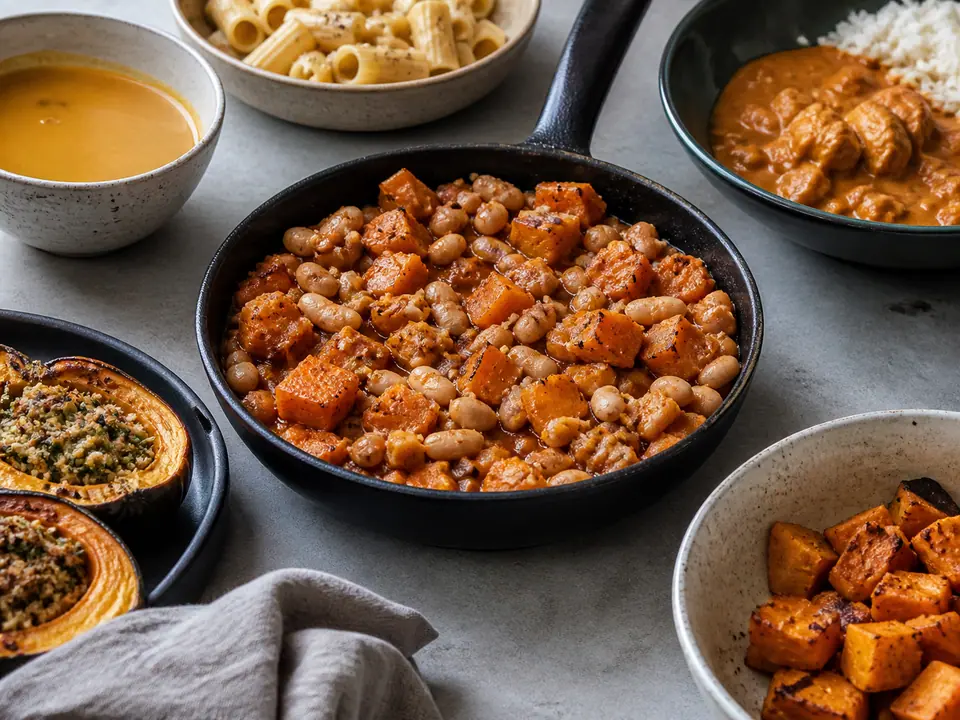
5 squash dinners for cold evenings
Squash makes cold-weather dinner feel generous in roasted trays, lentil soup, pasta, curry or stuffed halves. Add beans, grains or lentils so the soft centre carries a meal.

Cauliflower vs broccoli: which roasts better?
Cauliflower gives a more even roast and creamy centre. Broccoli browns faster and has better crisp tips, so the winner depends on the texture you want.