Firmness, weight and a clean dark skin give away the better cucumber
A crisp cucumber feels firm from end to end, has even dark green skin and feels heavy for its size. Reject soft tips, yellowing and sunken wet patches.

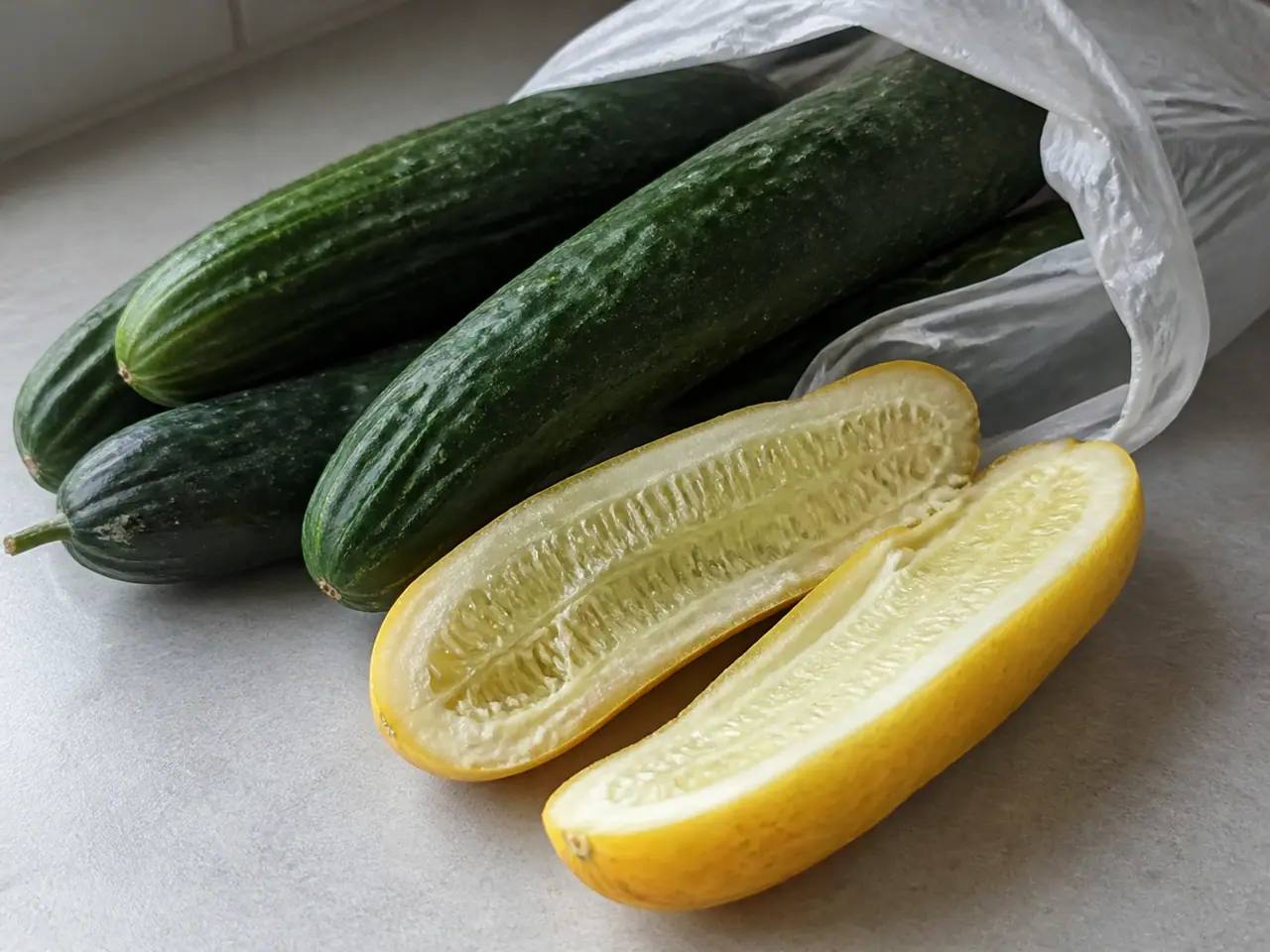
The crisp cucumber is the one that resists your fingers before you cut it. I check the middle, both ends and the skin colour, then compare weight with another fruit of the same size. A polished appearance cannot hide a soft tip for long.
UC Davis lists firmness, uniform shape, dark green skin and freedom from decay as quality indicators. I use those clues with one practical question: will this cucumber still crunch after it is cut and salted?
Press the middle gently
The middle should feel solid, not flexible or hollow. Press lightly rather than squeezing the fruit, because a bruise can become tomorrow’s soft spot.
A little give near the blossom end can happen, but a long soft section means the fruit has lost structure. Put it back if the softness runs through the centre.
Check both ends
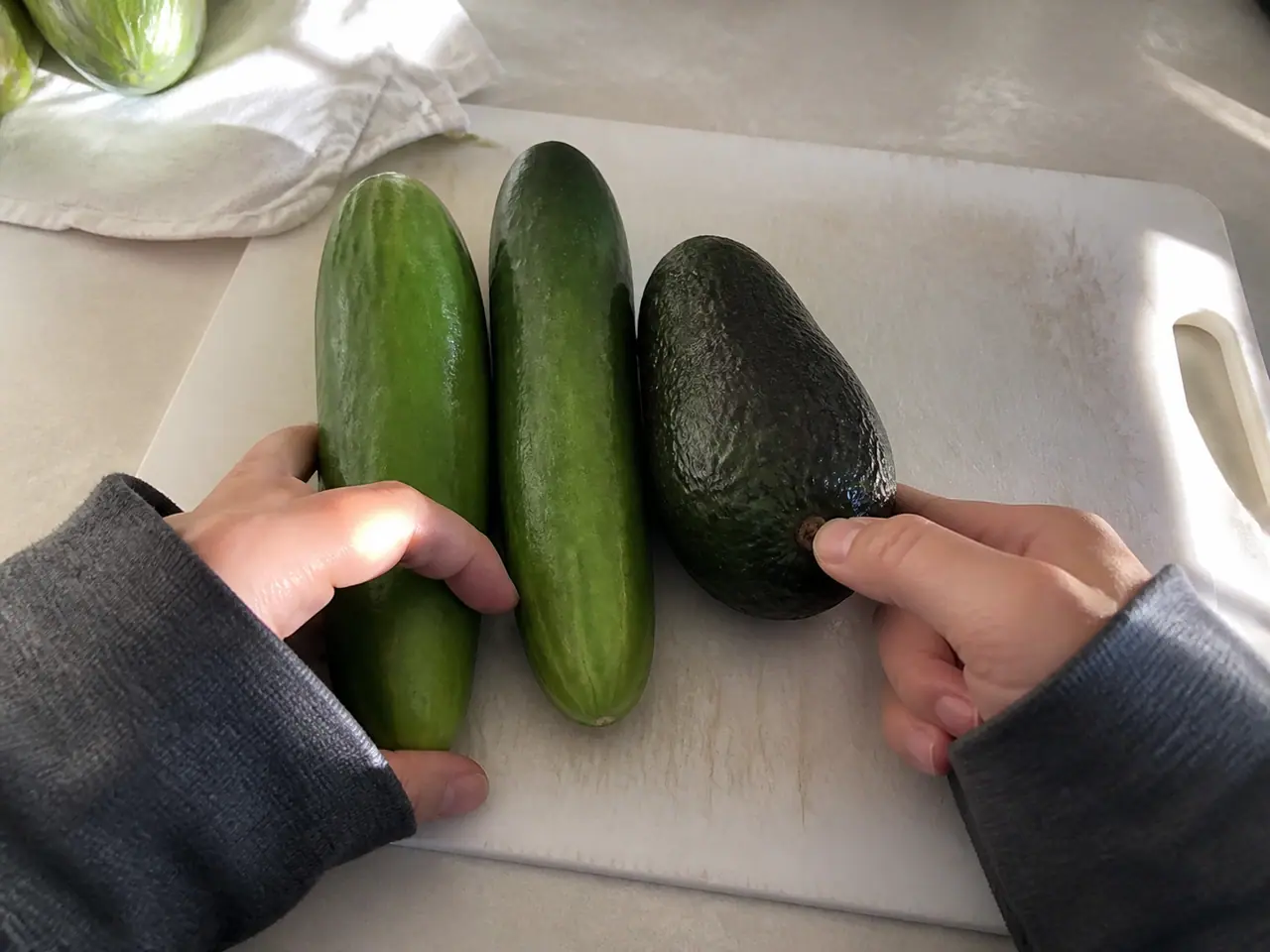
Look at the stem end and the opposite tip. Dryness is less serious than a wet, sunken or collapsing end. A firm fruit should not feel like it has a weak hinge.
If the tip is slightly dry but the cucumber is otherwise firm and clean, I trim it. If the tip is slimy or sour-smelling, I choose another.
I keep one piece aside so I can compare it with the next batch.
Read the skin colour
Deep green, even skin is a useful sign for slicing cucumbers. Yellow patches can mean advanced maturity or poor storage, and they often arrive with softer flesh.
Small scars or ridges are not a problem. I prefer an imperfect firm cucumber to a smooth one with a flexible middle.
The clock helps, but the surface gives the better signal.
Use weight as a clue
Pick up two fruits of similar length. The heavier one often holds more water and gives a better crunch. A very light cucumber may be dry inside even if the skin is intact.
Weight is not proof of quality, so pair it with firmness. A heavy fruit with a soft end still goes back.
That small pause saves more food than a rescue at the end.
Choose size for the job
Small and medium cucumbers usually have a more manageable seed cavity. Large fruits can be good for salads, but scrape the centre if the seeds have enlarged.
For sandwiches I want a straight firm fruit. For smashing or chopping, shape matters less than skin and resistance.
The next step works better when the excess moisture has somewhere to go.
Cut one when you get home
The knife gives the final evidence. A crisp cucumber cuts cleanly, smells fresh and has firm flesh around the seed cavity. A soft one bends before the knife reaches the centre.
Use the firm fruit raw and cook or pickle a softer sound fruit. Do not keep a disappointing cucumber hidden in the drawer until the condition worsens.
I keep one piece aside so I can compare it with the next batch.
I take the shopping clue home and check it against the cut surface. The knife should confirm the hand test: firm flesh, a clean smell and no wet pocket hiding inside. If the first piece is sound but not as crisp as I wanted, I change the recipe to suit it. A chopped salad can become a cooked side; a neat sandwich filling can become soup or a pan sauce.
The best value is not always the lowest price per bag. I divide the price by the part I will actually use and by the number of meals the ingredient can carry. A smaller dry pack that gets cooked in time beats a large discounted pack that loses half its weight to slime or trimming. That calculation is especially useful for delicate cucumber.
At the counter I avoid making a quality judgement from one dramatic specimen. I compare two or three pieces in the same display and look for the shared pattern: even colour, firm structure, clean ends and no trapped liquid. Once home, I keep the strongest pieces for the dish where texture matters and send the less handsome but sound pieces to a longer cook.
I also avoid buying a cucumber that has been pressed under a heavy pile. Even a firm fruit can bruise at the middle during transport, and the damage only becomes obvious after a day in the drawer. Lift it from the display, turn it once and choose the one that feels sound all the way along. A firm outside is useful evidence, but it is not a promise that every seed is small. The cut face still gets the final vote.
For the quality and storage details that sit behind my kitchen observations, I use the UC Davis cucumber produce fact sheet alongside the timed test described above.
The practical verdict
Choose a cucumber that is firm end to end, dark green and heavy for its size, with no wet soft spots or yellowing.
The cut face matters most. If it is soft or watery, change the meal while the fruit is still safe and sound.
Questions
How do I pick a crisp cucumber?
Why is my cucumber soft inside?
Should cucumbers be hard?
Are small cucumbers crisper?
More guides
All guides →
How to choose carrots that are crisp, not rubbery
Firm carrots with a fresh stem end and smooth, unbroken skin are more likely to stay crisp. Rubberiness means water has already left the root.
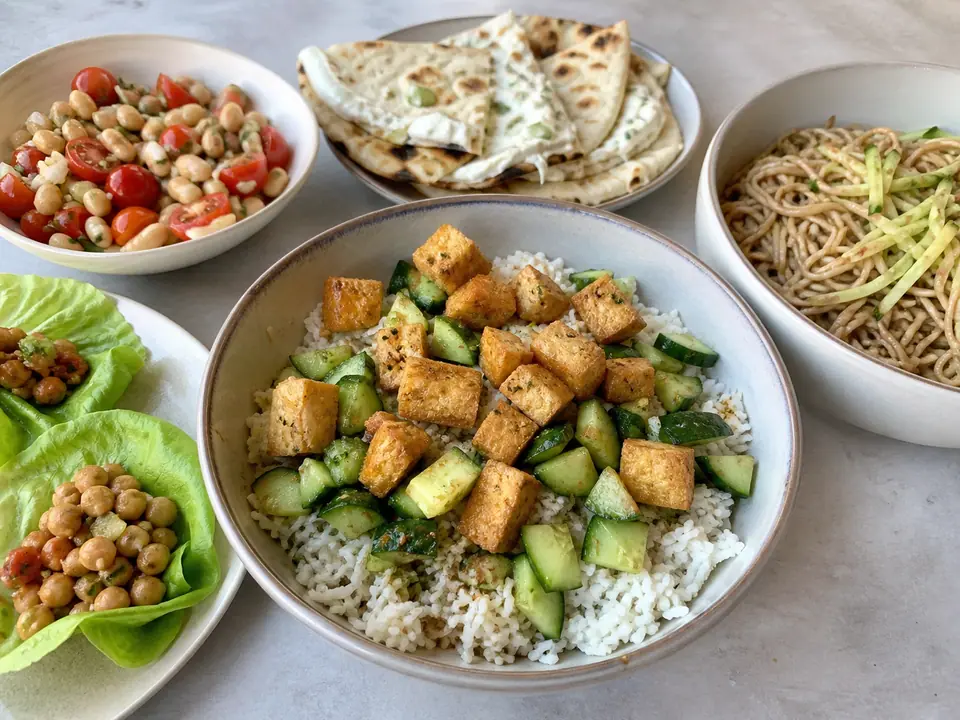
5 fresh dinners for a hot day
Five dinners that need little or no oven heat: crisp cucumber bowls, tomato beans, yogurt flatbread, cold noodles and chickpea lettuce cups.

Cauliflower vs broccoli: which roasts better?
Cauliflower gives a more even roast and creamy centre. Broccoli browns faster and has better crisp tips, so the winner depends on the texture you want.