Buy fragrance and firmness together, then protect the fruit on the journey home
Choose a peach with a fruity stem aroma, firm unbroken skin and a little room to ripen. Avoid bruises and fruit that is either rock-hard and scentless or already leaking.

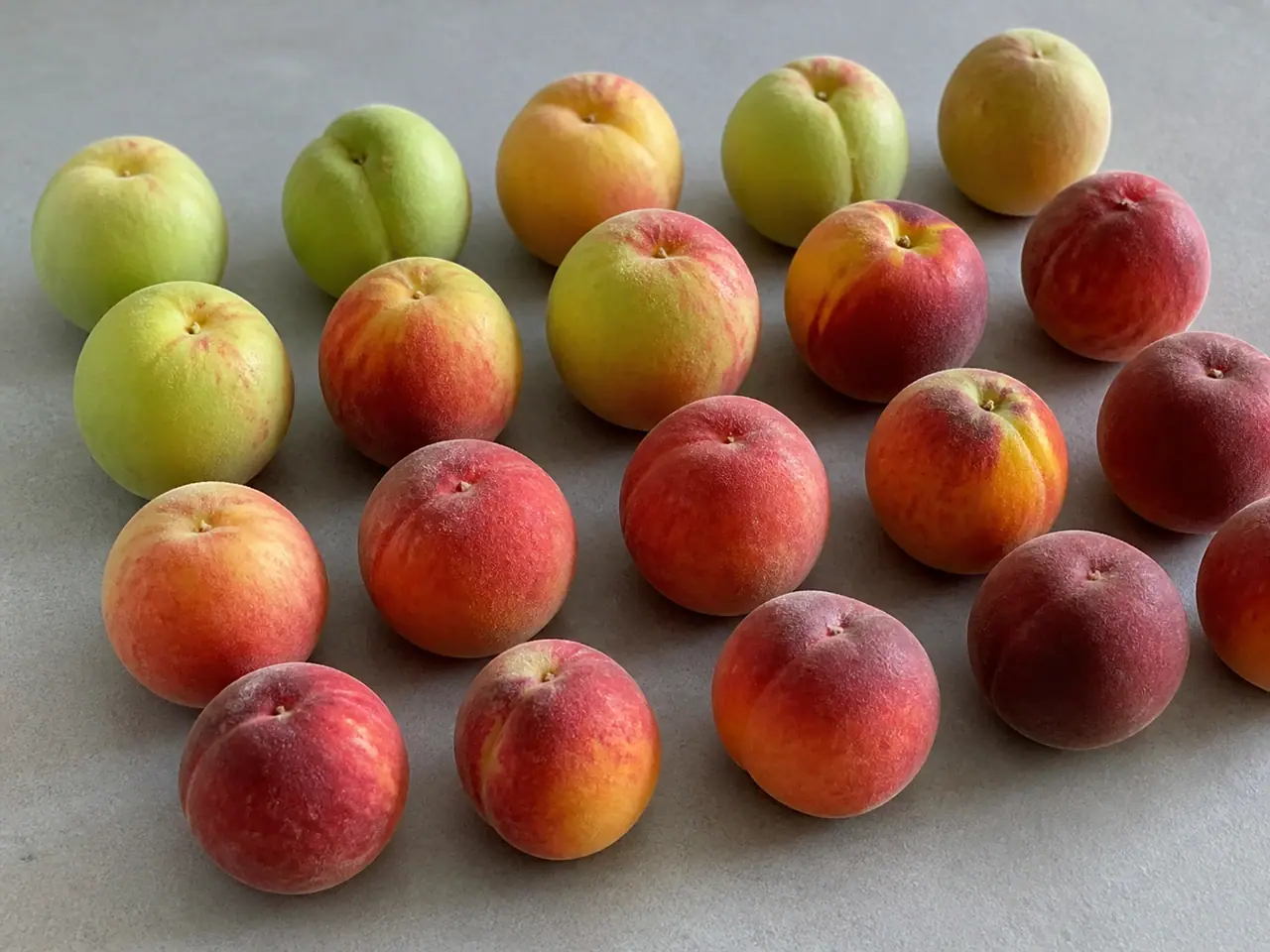
A peach chosen for tomorrow should not feel ready for tonight. I look for a fruity smell near the stem, firm skin and no bruised hollow. That combination gives the fruit a chance to soften at home without collapsing in the shopping bag.
The best peach is not the softest one in the display. A very soft fruit may already be bruised or leaking. A hard scentless fruit may need a long wait. I choose according to the meal clock and carry the fruit as gently as I would carry eggs.
Smell near the stem
The stem end holds the clearest aroma. A fruity smell means the peach has started developing its character, even when the flesh is still firm.
No smell does not prove the fruit is bad, but it means I plan for more ripening time. A fermented smell is a reason to leave it behind.
Press once, lightly
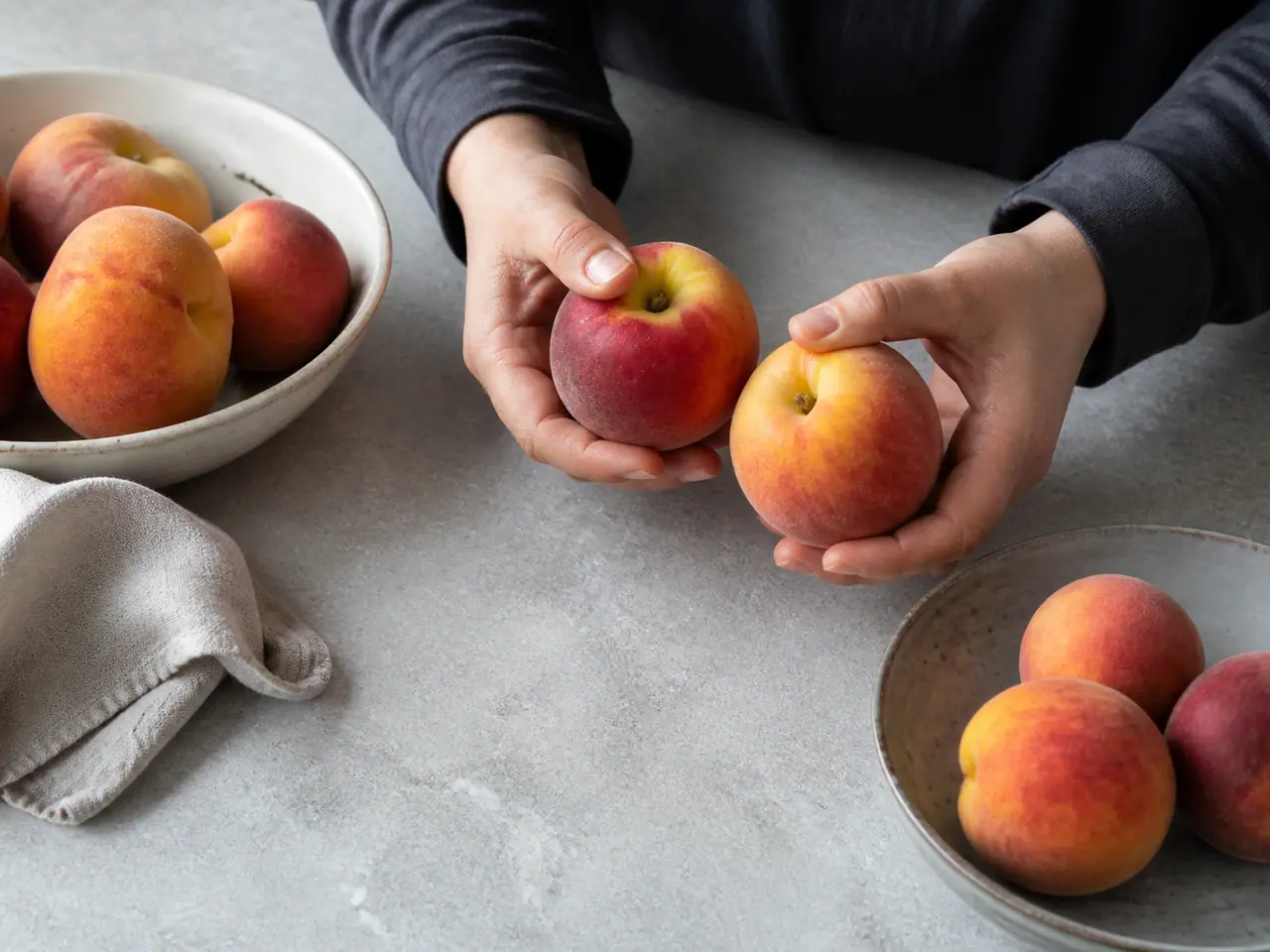
A peach for home ripening should resist gentle pressure and have no soft hollow. It can give slightly at the shoulder without being ready to eat.
Do not squeeze the centre repeatedly. Finger pressure bruises peach flesh under the skin and creates the soft patch you were trying to avoid.
I keep one piece aside so I can compare it with the next batch.
Look for unbroken skin
Small marks can be cosmetic. Wet cracks, leaking juice and dark spreading bruises are different. The skin should be dry and intact enough to protect the fruit on the way home.
Turn the peach rather than judging the display-facing side. Damage often sits underneath where the fruit has rested against another piece.
The clock helps, but the surface gives the better signal.
Use colour carefully
Peach colour varies by variety and growing conditions. A red blush is not a complete ripeness test, and a pale area near the stem can be normal.
I use colour to spot green hard fruit or dull decay, then rely on smell and firmness for the decision.
That small pause saves more food than a rescue at the end.
Choose by the dinner clock
Buy firmer peaches when they need to wait two or three days. Choose a peach with more give when the meal is tonight, but protect it from pressure on the journey.
If the batch is mixed, keep the softest fruit for the first meal and let the firm ones ripen in a single layer.
The next step works better when the excess moisture has somewhere to go.
Make the home test
Set the peaches stem-side down on a plate and check one daily. The ready fruit gives near the shoulder, smells full and feels juicy when cut.
Use a firm peach in a salad or cook it if the texture is slow to change. A shopping choice is a forecast, not a guarantee, so keep a second route for dinner.
I keep one piece aside so I can compare it with the next batch.
I take the shopping clue home and check it against the cut surface. The knife should confirm the hand test: firm flesh, a clean smell and no wet pocket hiding inside. If the first piece is sound but not as crisp or sweet as I wanted, I change the recipe to suit it. A raw salad can become a cooked side; a neat slice can become soup, sauce or a tray.
The best value is not always the lowest price per kilo. I divide the price by the part I will actually use and by the number of meals the ingredient can carry. A smaller sound peaches that gets cooked in time beats a large discounted one that loses half its weight to trimming or decay. That calculation matters when a display makes abundance look like a bargain.
At the counter I avoid judging quality from one dramatic specimen. I compare two or three pieces in the same display and look for the shared pattern: even colour, firm structure, clean ends and no trapped liquid. Once home, I keep the strongest pieces for the dish where texture matters and send the less handsome but sound pieces to a longer cook.
A good purchase is one that fits the meal you can actually cook. Before paying, imagine the first use, the storage space and the day when the ingredient will be at its best. Choose the soundest piece rather than the most dramatic one, and do not let a low price persuade you to buy more than your week can use. At home, make the first inspection part of unpacking. Separate the pieces by firmness, keep the fragile ones visible and change the recipe when the cut surface tells you to. That is how shopping becomes less wasteful and more precise.
For the quality and storage details behind my kitchen observations, I use the UC Davis nectarine and peach fact sheet alongside the timed test described above.
The practical verdict
A peach that will ripen at home has aroma, firm skin and enough structure to travel. Avoid damage first, then choose the softness that matches your meal clock.
Let it ripen in one layer on the counter and protect it from the weight of other fruit.
Questions
How do I choose peaches to ripen at home?
Should peaches be hard when bought?
How can I tell if a peach is bruised?
Where should peaches ripen?
More guides
All guides →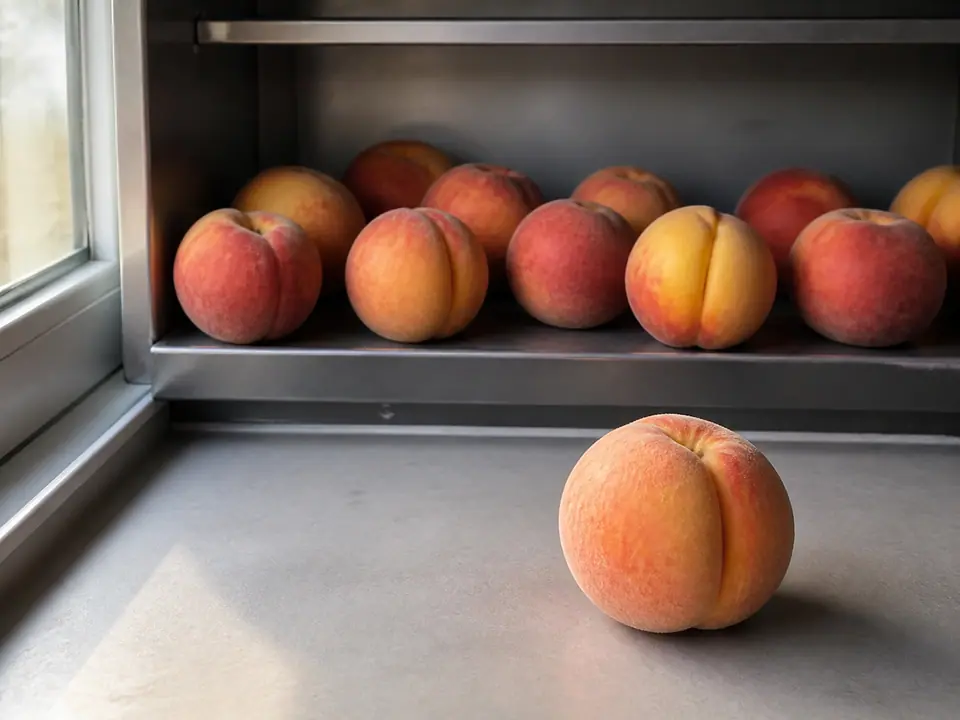
How to keep ripe peaches from bruising
Ripe peaches bruise under pressure. Store them in one layer, keep the stem area protected and refrigerate fruit once it is ready to slow further softening.

Cauliflower vs broccoli: which roasts better?
Cauliflower gives a more even roast and creamy centre. Broccoli browns faster and has better crisp tips, so the winner depends on the texture you want.

How to choose carrots that are crisp, not rubbery
Firm carrots with a fresh stem end and smooth, unbroken skin are more likely to stay crisp. Rubberiness means water has already left the root.