Small springy leaves and thin stems cook with less waiting
Tender kale has fresh colour, springy leaves and stems that are not thick and woody. Choose smaller leaves for quick cooking and larger ones for soup or roasting.

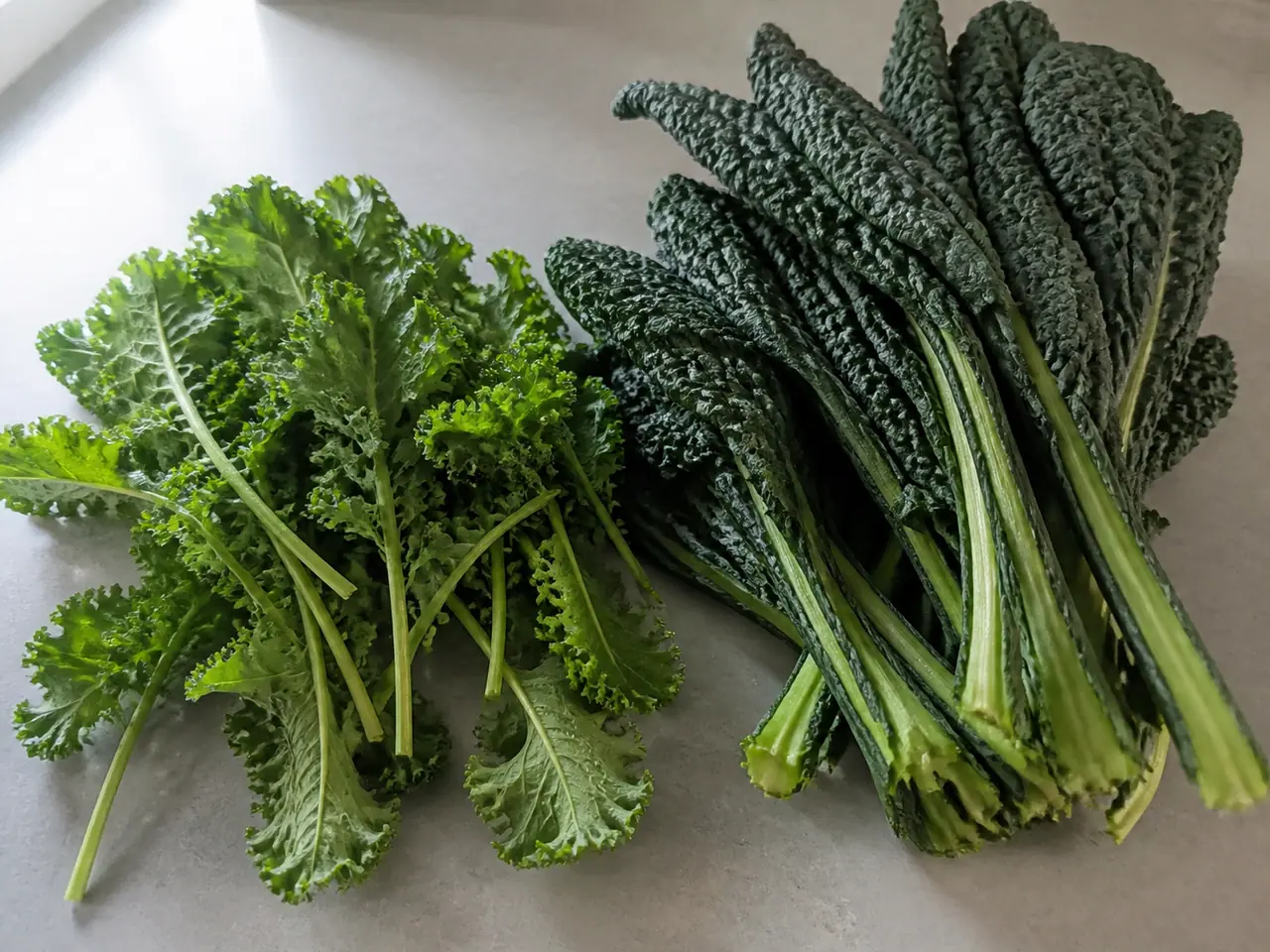
Kale does not need to be soft in the shop, but it should not feel leathery either. I look for springy leaves, fresh green colour and stems that are thin enough to slice. A large coarse bunch may be good for soup; it is not the fastest route to a tender side.
The leaf tells me the cooking time. Small cavolo nero leaves and young curly kale can wilt into a pan with little fuss. Large, thick leaves need stripping, chopping and a covered stage. Choose the bunch that fits the dinner clock.
Look for spring, not polish
Fresh kale leaves stand away from the bunch and return when touched. They should not be limp, wet or yellow at the edges. A few small marks are less worrying than a whole bunch that has lost its lift.
The colour can be dark or medium green depending on variety. I care more about even colour and clean leaves than a particular shade.
Read the stems
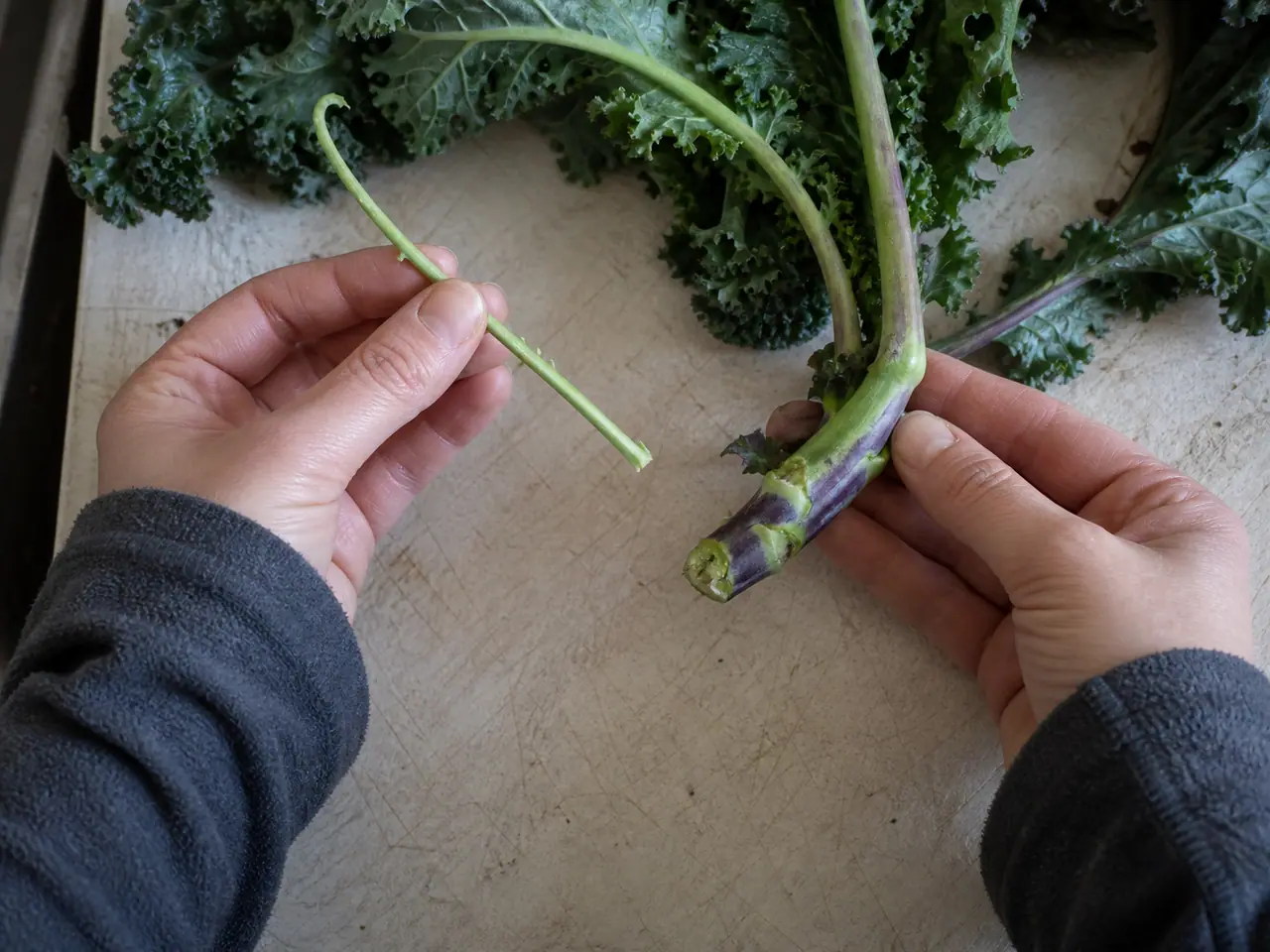
Hold a stem and bend it gently. A young stem has some flexibility; a thick woody stem resists and feels fibrous. Thin stems are easier to slice and cook with the leaf.
Cavolo nero usually gives a clear central rib. Curly kale can hide its stem among the folds, so turn the leaf over before choosing.
I keep one piece aside so I can compare it with the next batch.
Choose size by method
Small leaves suit quick sautés, pasta and eggs. Large leaves are useful for roasting, wrapping or a long soup, where their extra structure has time to soften.
I do not buy giant leaves for a ten-minute dinner unless I am happy to remove the stems and chop them finely. Shape is a cooking forecast.
The clock helps, but the surface gives the better signal.
Check the bunch centre
Lift the bunch and look at the tied or packed middle. Wet dark leaves can hide there, especially when the outer leaves look fresh. Avoid slime or a sour smell.
A little soil can be washed away. A crushed wet leaf should be removed at home immediately and the rest used soon.
That small pause saves more food than a rescue at the end.
Kale should smell green
Fresh kale has a clean brassica smell. A strong sour, fermented or rotten smell means it has been stored too long or damaged.
I do not rely on a rinse to fix an unpleasant smell. It is better to leave the bunch at the shop than to build a meal around a questionable centre.
The next step works better when the excess moisture has somewhere to go.
Buy enough for the pan
Kale loses volume but not as dramatically as spinach. One bunch can still be bulky after stripping, so check the usable leaf rather than the full tied weight.
If the bunch has thick stems, allow for trimming. The usable leaves are what pay for dinner, not the parts that go into the compost.
I keep one piece aside so I can compare it with the next batch.
I take the shopping clue home and check it against the cut surface. The knife should confirm the hand test: firm flesh, a clean smell and no wet pocket hiding inside. If the first piece is sound but not as crisp as I wanted, I change the recipe to suit it. A chopped salad can become a cooked side; a neat sandwich filling can become soup or a pan sauce.
The best value is not always the lowest price per bag. I divide the price by the part I will actually use and by the number of meals the ingredient can carry. A smaller dry pack that gets cooked in time beats a large discounted pack that loses half its weight to slime or trimming. That calculation is especially useful for delicate kale.
At the counter I avoid making a quality judgement from one dramatic specimen. I compare two or three pieces in the same display and look for the shared pattern: even colour, firm structure, clean ends and no trapped liquid. Once home, I keep the strongest pieces for the dish where texture matters and send the less handsome but sound pieces to a longer cook.
For the quality and storage details that sit behind my kitchen observations, I use the Colorado State Extension kale guide alongside the timed test described above.
The practical verdict
Tender kale is a combination of freshness, leaf age and a stem you can actually cook. Small leaves buy speed; large leaves buy structure.
Strip the bunch at home, wash it well and let the ribs tell you how much time the pan needs.
Questions
How do I choose tender kale?
Is smaller kale more tender?
Can thick kale stems be eaten?
How much does kale shrink when cooked?
More guides
All guides →
How to choose carrots that are crisp, not rubbery
Firm carrots with a fresh stem end and smooth, unbroken skin are more likely to stay crisp. Rubberiness means water has already left the root.
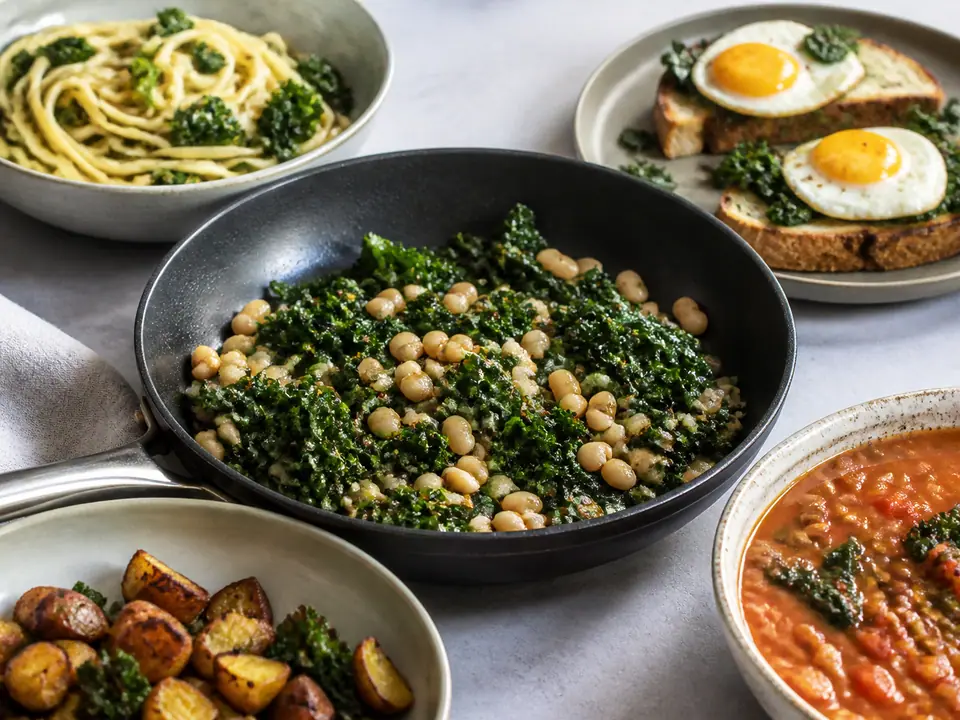
5 dinners that make kale taste good
Kale tastes better when the pan gives it enough time and a clear partner. Try creamy beans, lemon pasta, eggs, potatoes or a tomato lentil soup.

Cauliflower vs broccoli: which roasts better?
Cauliflower gives a more even roast and creamy centre. Broccoli browns faster and has better crisp tips, so the winner depends on the texture you want.