A cool, dry cap and a springy stem are the shop clues I trust
Good mushrooms feel firm, look dry and smell clean. Check the cap, stem and underside, then choose the pack with the least trapped moisture.

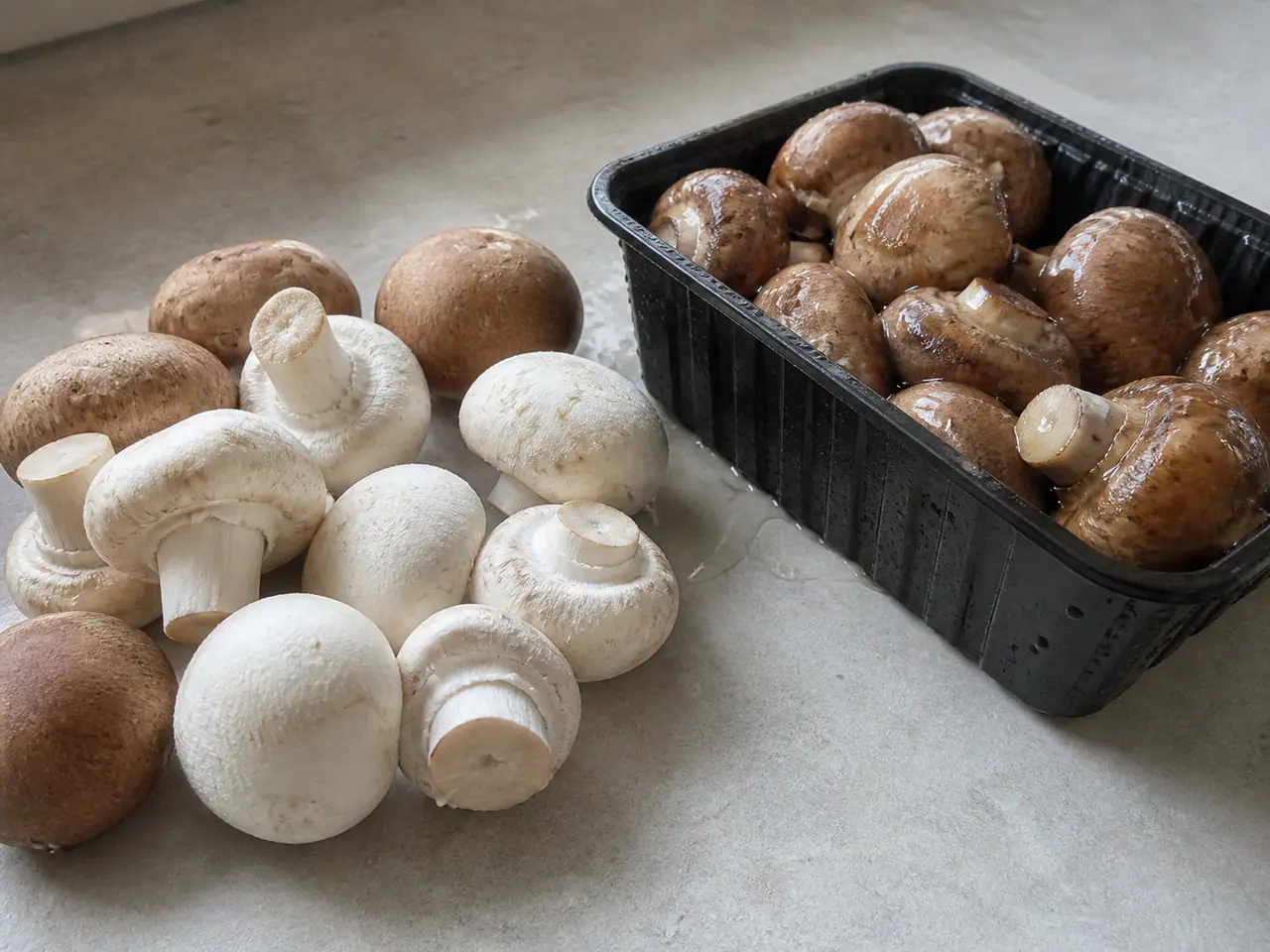
Mushrooms do not announce freshness with a glossy label. I look for a cap that feels dry, a stem that still has spring and a pack without a wet film at the bottom. Those clues tell me more than whether the mushrooms are white, chestnut or oversized.
A little soil is harmless and an open veil is not automatically a problem. What I avoid is bruising, sliminess, sour smell or a soft cap that has collapsed against its neighbours. Buy the pack that looks ready for the pan, not the one that needs a rescue first.
Feel the cap gently
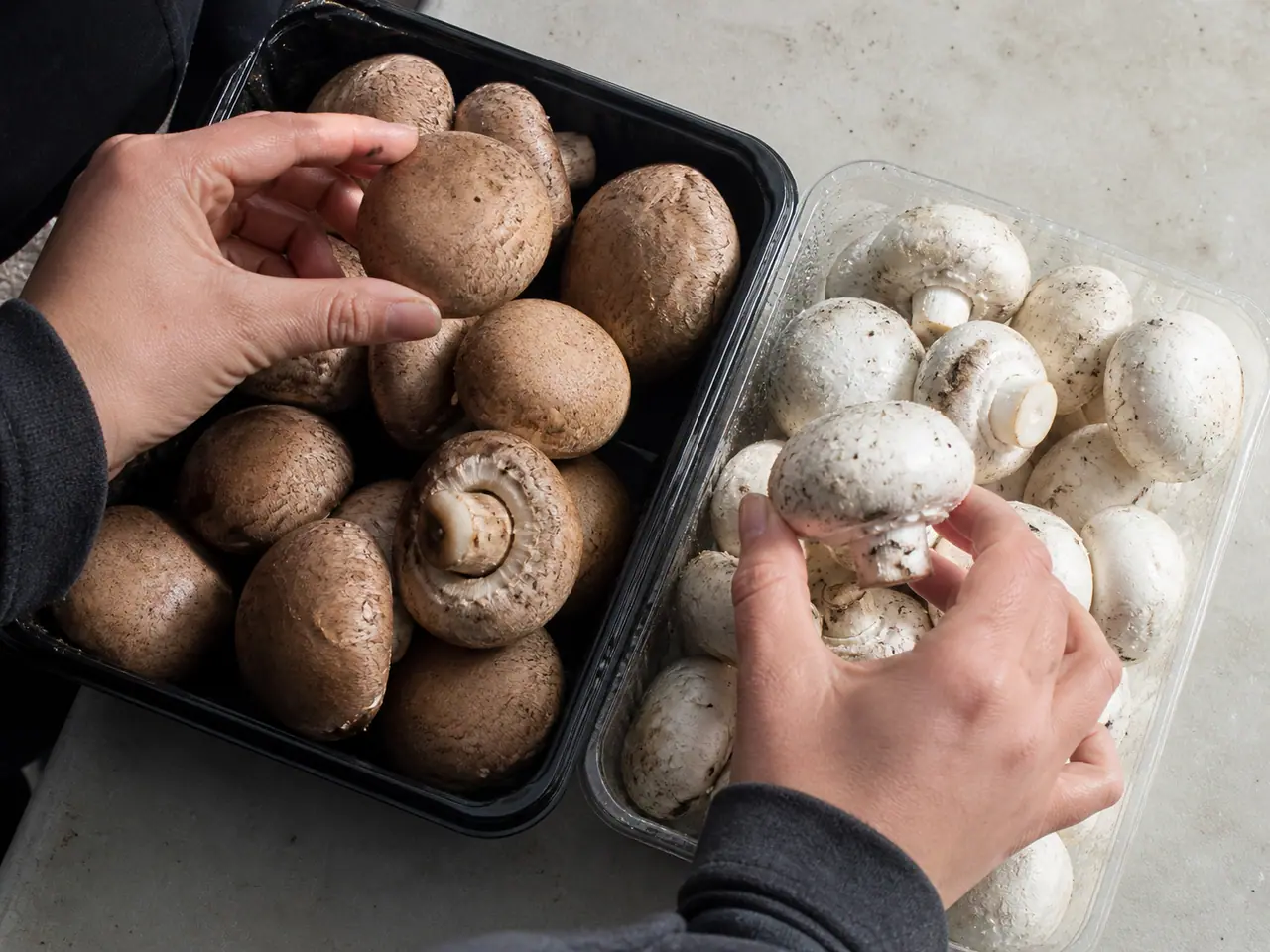
A fresh cap should be firm and slightly cool, not slippery. Press the top with one finger through the pack if you can. It should resist and return rather than leave a soft dent.
Gloss is not the same as wetness. Healthy mushrooms can have a natural sheen, but a liquid film that moves when the pack tilts means the mushrooms have been sitting in condensation.
Inspect the stem end
The cut stem should look clean and hold its shape. Darkening at the end can happen with age, but a collapsed or wet stem means the mushroom has lost useful firmness.
A little trimming is normal. I do not reject a good cap because the stem is long. I reject a pack where several stems are black, soft or surrounded by liquid.
I keep one piece aside so I can compare it with the next batch.
Look at the underside
Closed caps give a tighter texture; open gills are still edible when the mushroom is sound, but they cook faster and can feel more delicate. Choose the maturity that suits the meal.
For a quick fry, I like medium mushrooms with intact caps. For stock or a long sauce, open caps can be useful because the extra surface picks up flavour.
The clock helps, but the surface gives the better signal.
Read the pack, not just one mushroom
Lift the tray or bag and check the bottom. Condensation trapped underneath often reaches the lower mushrooms first. If one piece is soft, separate it at home before it touches the rest.
A sealed plastic film can hide the important evidence. When possible, buy a pack where the mushrooms are visible from several angles and not crushed into a tight stack.
That small pause saves more food than a rescue at the end.
Smell for clean earth
Fresh mushrooms smell mild and earthy. A sour, fermented or ammonia-like note tells me the pack has moved beyond the freshness I want, even if the caps still look acceptable.
Do not use perfume or a strong sauce to cover a questionable smell. Mushrooms are inexpensive enough to leave behind when the evidence is poor.
The next step works better when the excess moisture has somewhere to go.
Match size to the recipe
Small mushrooms cook quickly and evenly. Large mushrooms can be quartered or filled, but the thick stem may need extra time. Similar sizes make a mixed skillet easier to judge.
I buy the least processed shape I need. Whole mushrooms stay drier in the pack than sliced ones, and I can decide the cut after seeing their condition.
I keep one piece aside so I can compare it with the next batch.
I take the shopping clue home and check it against the cut surface. The knife should confirm the hand test: firm flesh, a clean smell and no wet pocket hiding inside. If the first piece is sound but not as crisp as I wanted, I change the recipe to suit it. A chopped salad can become a cooked side; a neat sandwich filling can become soup or a pan sauce.
The best value is not always the lowest price per bag. I divide the price by the part I will actually use and by the number of meals the ingredient can carry. A smaller dry pack that gets cooked in time beats a large discounted pack that loses half its weight to slime or trimming. That calculation is especially useful for delicate mushrooms.
At the counter I avoid making a quality judgement from one dramatic specimen. I compare two or three pieces in the same display and look for the shared pattern: even colour, firm structure, clean ends and no trapped liquid. Once home, I keep the strongest pieces for the dish where texture matters and send the less handsome but sound pieces to a longer cook.
For the quality and storage details that sit behind my kitchen observations, I use the UC Davis mushroom produce fact sheet alongside the timed test described above.
The practical verdict
Choose mushrooms that are firm, dry and clean-smelling, with intact caps and stems that have not collapsed. A little soil or uneven shape is less serious than trapped moisture.
Once they come home, cook the softest pieces first and keep the rest cold and dry.
Questions
How can I tell if mushrooms are fresh?
Are open mushroom caps bad?
Should mushroom stems be firm?
Are wet mushrooms spoiled?
More guides
All guides →
How to choose carrots that are crisp, not rubbery
Firm carrots with a fresh stem end and smooth, unbroken skin are more likely to stay crisp. Rubberiness means water has already left the root.
5 dinners for a box of mushrooms
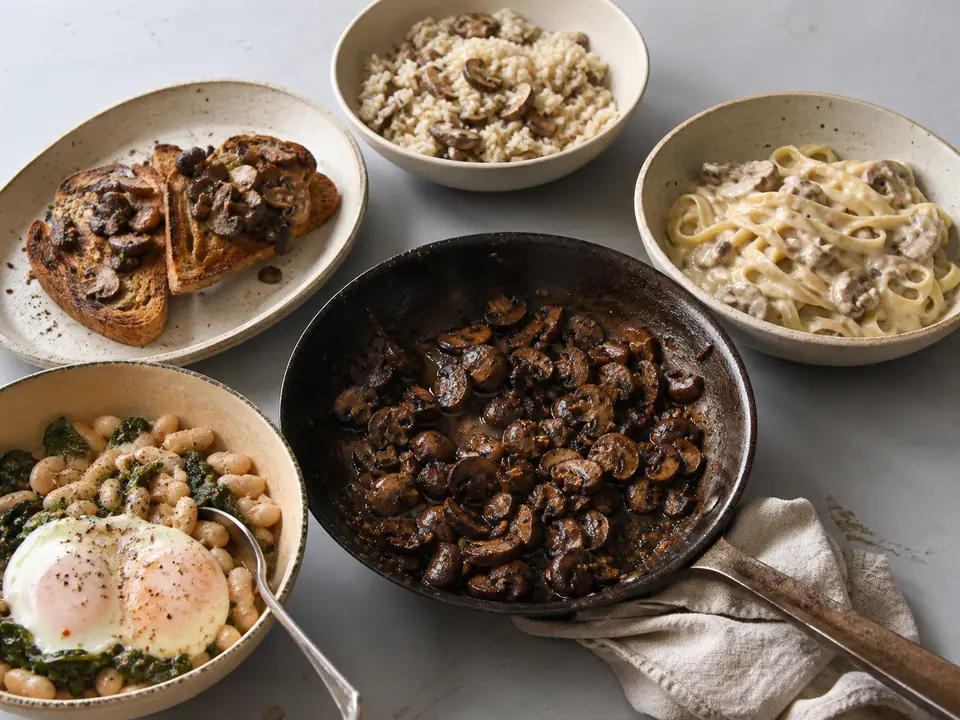
A box of mushrooms can become a fast toast topping, a rice skillet, a pasta sauce, a bean dinner or a pan of eggs when the cut matches the clock.

Cauliflower vs broccoli: which roasts better?
Cauliflower gives a more even roast and creamy centre. Broccoli browns faster and has better crisp tips, so the winner depends on the texture you want.