Choose the pea for the finish, not the green label
Frozen garden peas are my everyday choice for pasta, petits pois suit a smooth soup and fresh peas earn their place in a raw or barely cooked salad.

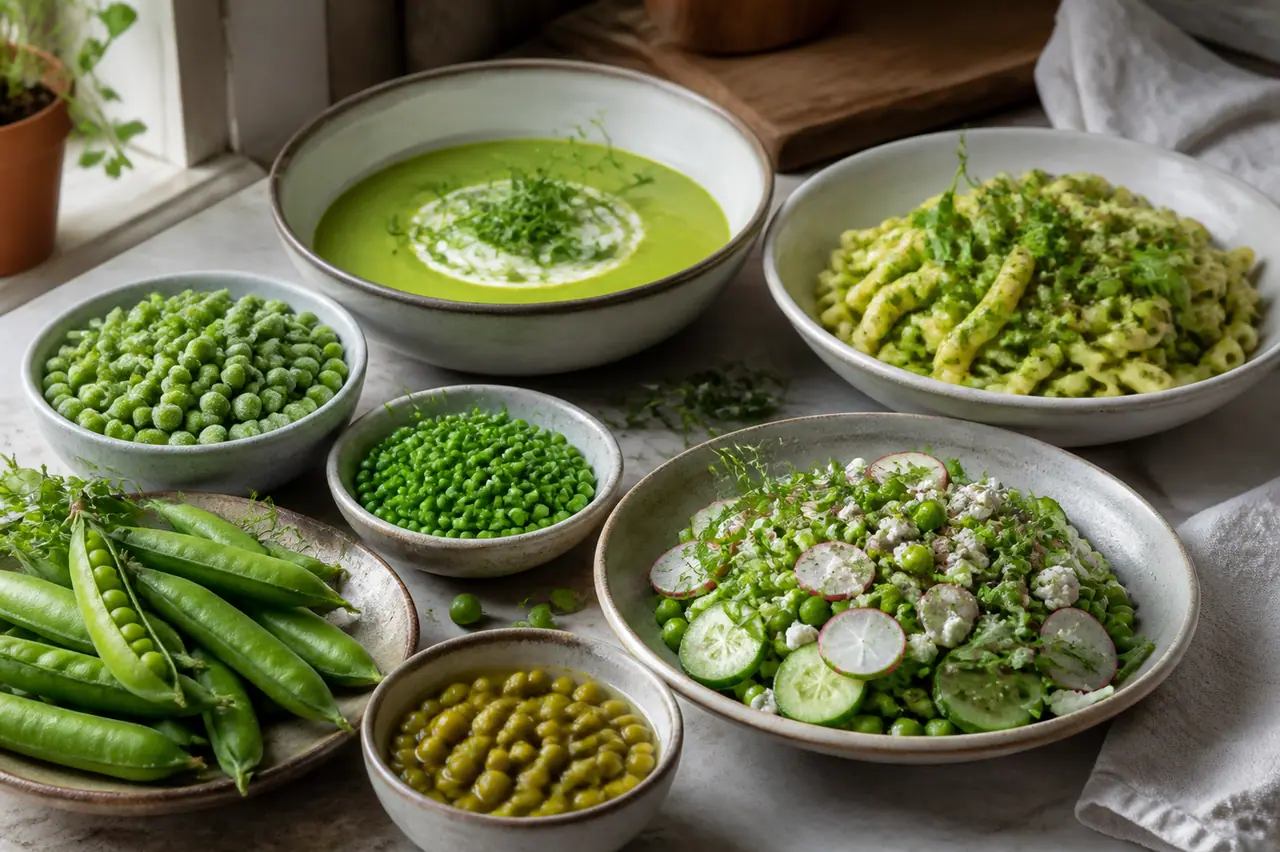
The pea aisle makes a small ingredient look more complicated than it is. Fresh pods, frozen garden peas, petits pois and tins all have a place, but they do not give the same result. Buy the wrong one and you spend the meal trying to repair texture with extra cooking.
My short version is easy: use frozen garden peas for pasta, petits pois for a smooth soup, fresh peas for a salad when the pods are young, and canned peas only when softness is the point. The choice is about the finish in the bowl, not a moral ranking of formats.
The dish decides the format before the recipe decides the seasoning.
| If you are making | Buy first | Why |
|---|---|---|
| Smooth soup | Frozen petits pois | Small, tender peas blend evenly |
| Chunky soup | Frozen garden peas | Hold their shape and stay visible |
| Cold salad | Fresh peas or thawed frozen peas | Fresh gives a pop; frozen gives reliability |
| Pasta | Frozen garden peas | Easy to add at the end |
| Soft stew | Canned peas | Already tender and ready to warm |
Source: Maren Ashby's pea shopping guide, 2026-08-28
For soup, decide whether you want silk or pieces
Pea soup usually needs either a smooth green puree or a broth with peas you can find on the spoon. Frozen petits pois are useful for the first job. They soften quickly and blend without leaving a thick skin in every mouthful. Add them after the onion and stock are ready, cook until hot, then blend. The colour stays brighter when the cooking is short.
For a chunky soup, choose regular frozen garden peas. Their larger size gives the spoon something to catch. Add half early for body and half near the end for a fresh note. A small squeeze of lemon keeps the soup from tasting sweet and heavy.
For salad, freshness matters more than size
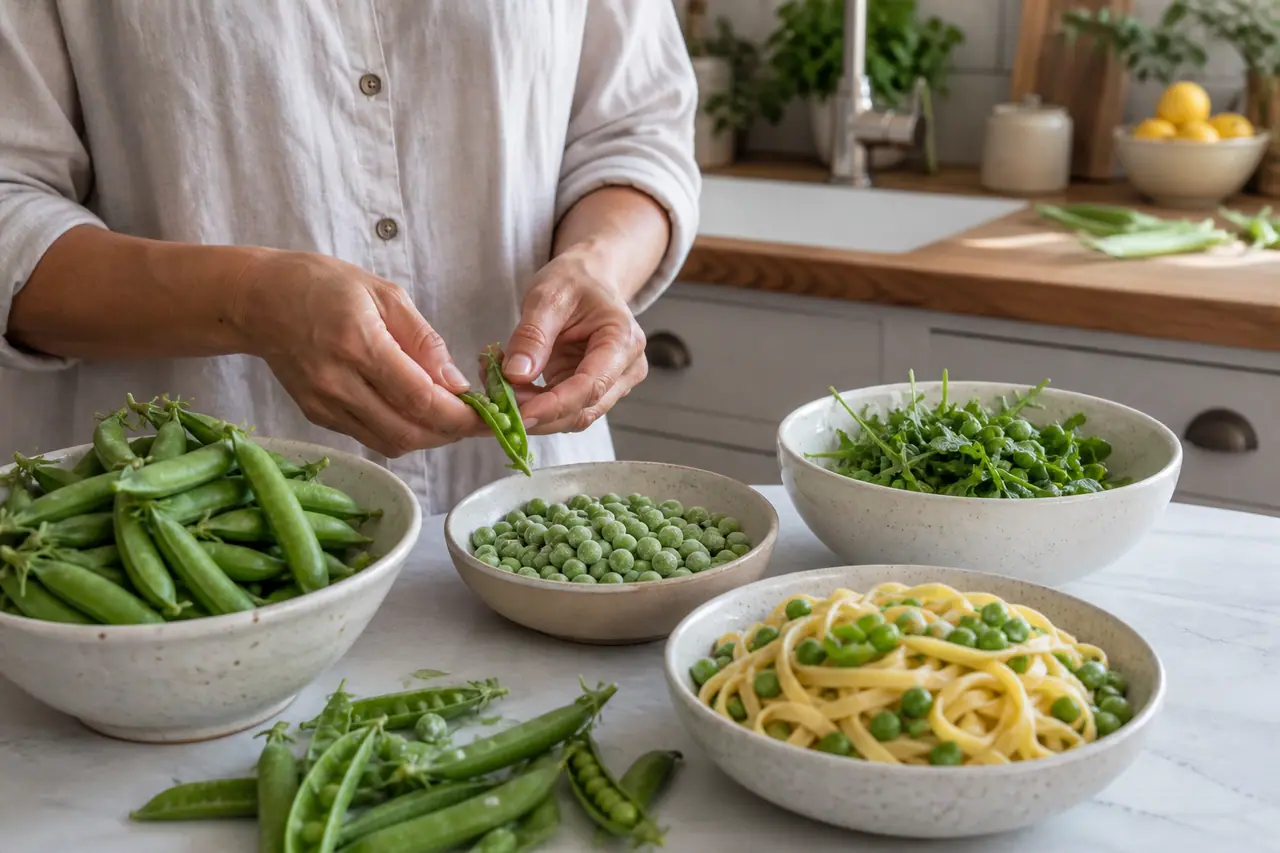
A salad shows a pea without much seasoning to hide behind. Fresh peas are lovely when the pods are firm and bright, and when you can cook them the same day. Shell them, blanch them for a minute or two and cool them quickly. The centre should stay sweet and slightly firm.
Frozen peas work well in salads too. Rinse or blanch them just long enough to remove the frozen centre, then drain them on a plate. Do not dress them while they are wet. A pea salad needs a sharp dressing, herbs and something with crunch, such as cucumber or toasted seeds, so the sweetness has a counterpoint.
Canned peas are the least useful here. They are soft and often carry a little brine. Keep them for a salad where the whole point is tender, or rinse them and use them in a mashed filling.
For pasta, frozen is the calm choice
Pasta rewards a pea that can enter the pan late and still taste bright. Frozen garden peas do that without shelling, weighing or a second trip to the shop. Add them to cream sauce, tomato sauce or a little pasta water with butter during the last few minutes. They warm through while the pasta finishes.
Fresh peas also work, but shelling takes longer than the recipe often admits. I use them when I want the peas to be part of the occasion, not when I am trying to get dinner on the table before the water evaporates from the pan. Canned peas can work with a soft sauce, although they need less cooking and more care around salt.
I taste the peas before I commit them to a cold dressing.
Read the bag with your hand as well as your eyes
Frozen peas should be loose in the bag, not one solid block. A little frost is normal, but a heavy icy mass suggests thawing and refreezing somewhere in the journey. Choose a bag you can store flat and use without leaving a large open pocket of air.
For fresh peas, look for firm green pods with no wet brown marks. Avoid pods that feel light, limp or swollen. The University of Maine Extension also warns against overlarge pods because the peas inside can taste starchy. For tins, check the label for added salt if the dish already contains stock, cheese or cured meat.
Choose by texture and dinner gets easier
There is no single best pea. A small tender pea disappears into soup; a larger garden pea gives pasta and rice a visible, sweet bite. Fresh peas are a seasonal pleasure when they have turned up recently. Frozen peas are the dependable cupboard-adjacent ingredient I reach for most often.
Keep a bag beside the ingredients for coconut chickpea curry with greens and yogurt. A handful added at the end changes the colour and gives the sauce a little sweetness without needing another side dish.
Questions
Which peas are best for pea soup?
Can I use frozen peas in a cold salad?
Do I need to shell fresh peas for pasta?
Are canned peas worth buying?
More guides
All guides →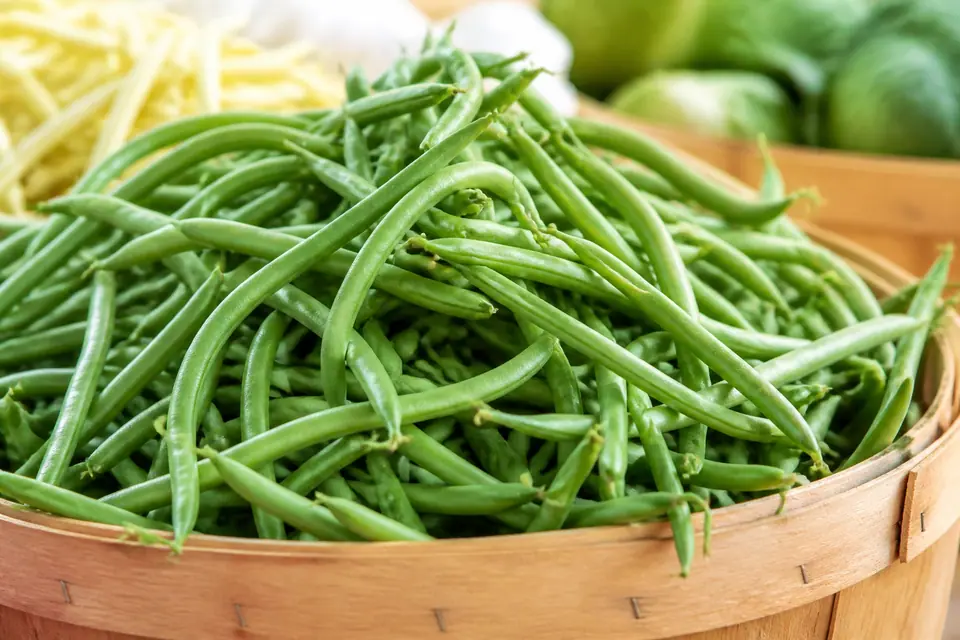
How to choose green beans that still snap
Fresh green beans are smooth, bright and firm, with a clean snap and no swollen seed bumps. A flexible limp pod is usually a thirsty older pod, not a tender one.
5 dinners that make frozen peas useful
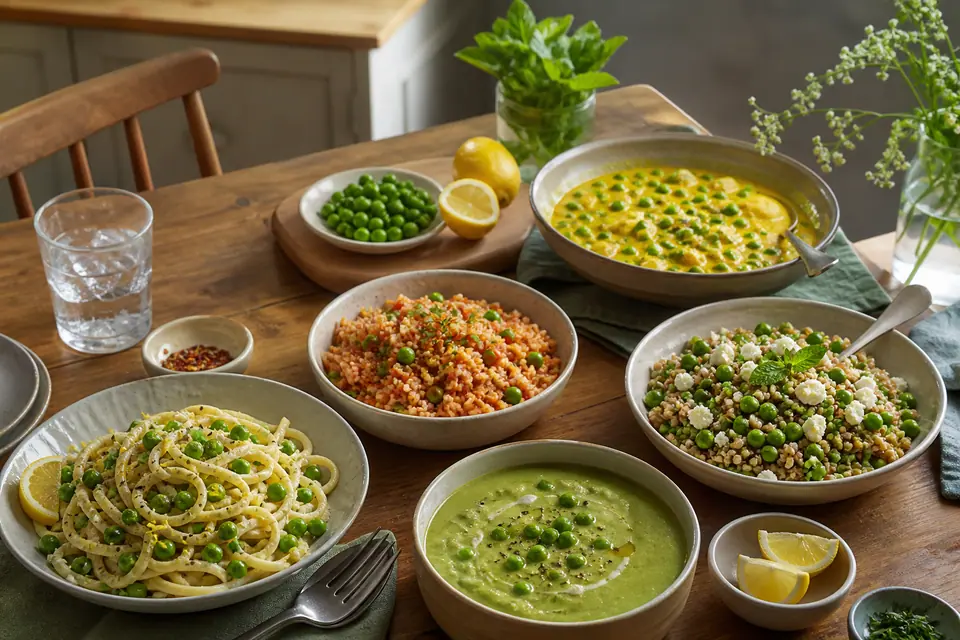
Frozen peas are a small freezer ingredient with five strong jobs: brighten pasta, thicken soup, finish curry, lift rice and fill a warm grain bowl.

Cauliflower vs broccoli: which roasts better?
Cauliflower gives a more even roast and creamy centre. Broccoli browns faster and has better crisp tips, so the winner depends on the texture you want.