Feel the ear, check the silk and do not buy the driest husk
Good sweetcorn feels full, has a green husk and fresh silk, and shows no dry stem or empty tip. Buy the ear that feels juicy, not the one with the loudest colour.

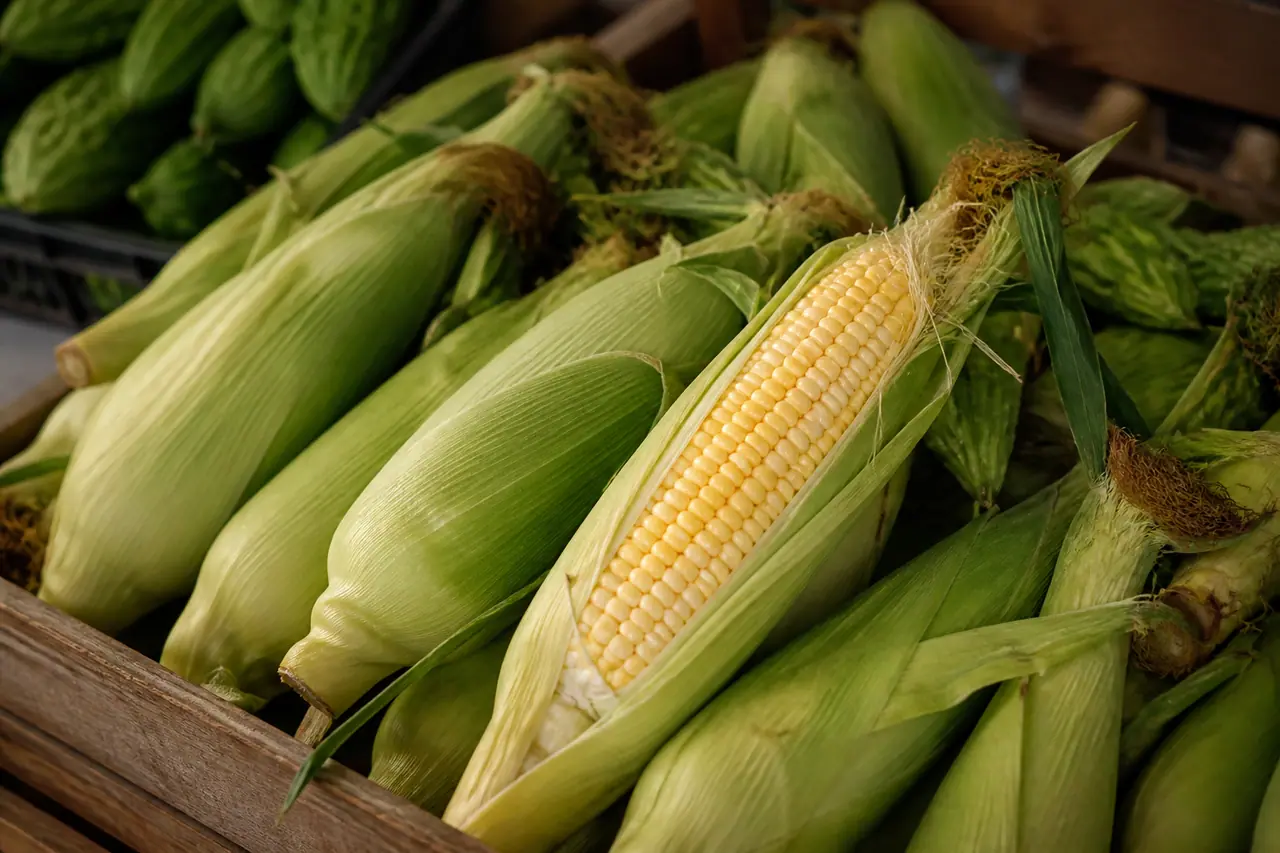
The best ear of sweetcorn is not necessarily the biggest one or the one with the brightest yellow kernels. It is the ear that feels full, heavy and recently picked. The husk should still have some life in it, the silk should be dry rather than slimy, and the stem should not look like it has been sitting in a box for a week.
Choose with your hands. Feel the kernels through the husk, compare the weight of two similar ears and check the tip for gaps. A good ear goes straight into a hot pot or a cold fridge. It does not improve while you wait.
The fullest ear is not always the freshest ear in the display.
| Look at | Good clue | False bargain |
|---|---|---|
| Husk | Green and wrapped tightly | Dry, yellowing or loose |
| Silk | Brown, dry and slightly sticky | Wet, black or collapsing |
| Stem | Fresh-looking and not shrivelled | Dark, dry or deeply cracked |
| Tip | Kernels fill close to the end | Long empty section |
| Weight | Heavy for its size | Light and papery |
Source: Maren Ashby's sweetcorn shopping check, 2026-08-28
Start with the husk, but do not stop there
A green husk protects the ear and usually means it has not dried out badly. It should be wrapped closely around the cob rather than loose and papery. The outer leaves may have a few marks; that is less important than whether the ear feels firm underneath.
Husk colour alone can fool you. A bright green ear can still be old if it was kept warm, and a slightly marked ear can be excellent if it was picked recently. Treat the husk as the first check, not the verdict.
I compare two ears by weight before I look for the prettiest husk.

Silk tells you about age
Sweetcorn silk starts pale and becomes brown and dry as the ear matures. Fresh-looking brown silk is a good sign. Silk that is wet, black or slimy suggests damage or decay. Silk that has turned into a dry tangle may mean the ear has been waiting too long.
You do not need to strip the whole husk in the shop. Look at the exposed silk and stem, then use your fingers to feel the shape. If the shop has already trimmed the ears, rely more on weight, firmness and kernel fill.
Feel for a filled tip
Run your fingers from the base to the tip. A good ear feels evenly packed, without a long soft section near the end. The tip often reveals poor pollination or an immature ear before the rest of the cob does. Choose the ear with kernels packed close to the top if two otherwise look alike.
A few missing kernels are not a disaster. I would rather buy a sweet, juicy ear with a small bare patch than a dry, overlarge ear that is filled perfectly. Taste depends on age as much as appearance.
Do not peel back every ear
Peeling back the husk lets moisture escape and leaves the ear more exposed. If the shop offers a sample ear, check a kernel by pressing it with a fingernail. Milky juice suggests the eating stage; clear juice suggests immaturity; no juice and a tough kernel suggest the ear is late.
The University of Arkansas Extension gives the same practical signs: green husks, fresh silk and plump kernels, with quick refrigeration if the corn cannot be eaten straight away. You can make a good choice without turning the display into a pile of opened wrappers.
Choose by what you will cook
For corn on the cob, freshness and juice matter most because the ear is the whole dish. For a chowder, salsa or rice, a slightly older ear can still work once the kernels are cut and mixed with other ingredients. Frozen sweetcorn is often the better buy for those dishes because the quality is more consistent and there is no cob to waste.
If the season is ending, buy fewer fresh ears and use them tonight rather than filling the fridge for a week. The sweetest corn is a timing problem. The solution is not a bigger bag.
A good ear should need very little
When the kernels are juicy and sweet, boiling water, butter and salt are enough. When the ear is older, cut the kernels into a sauce, soup or salad rather than expecting a plain cob to hide its age. The shopping decision sets the ceiling for dinner.
For a late-summer plate, use the best ear in charred corn, tomato and peach salad with lemon and herbs. Keep the corn lightly charred so it tastes like corn before the herbs and fruit join in.
Questions
How do I know if sweetcorn is juicy?
Should sweetcorn silk be brown?
Should I peel corn in the shop?
Is frozen sweetcorn easier to choose?
More guides
All guides →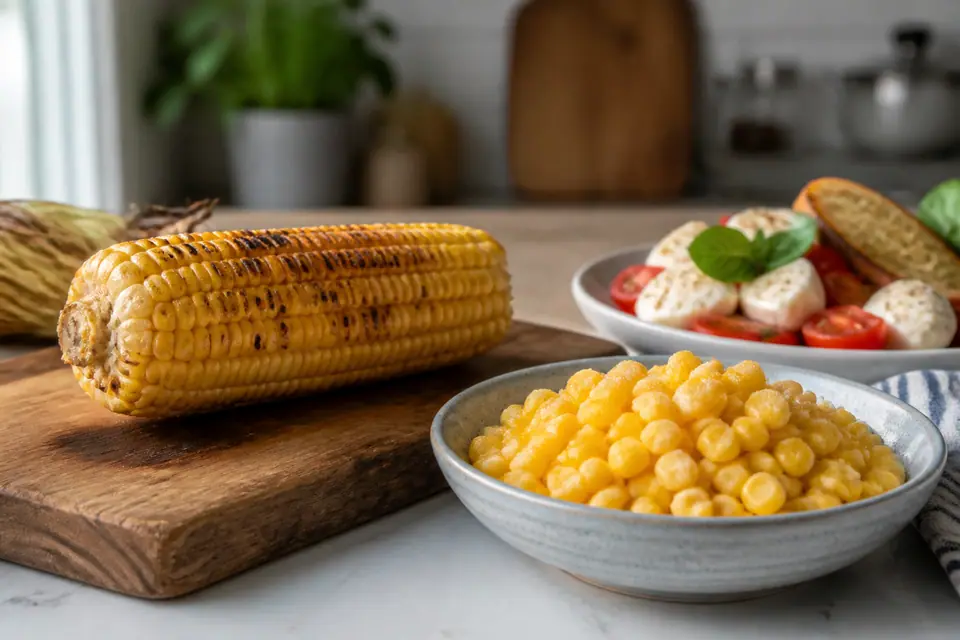
Corn on the cob vs frozen sweetcorn: which tastes better?
A freshly picked ear is hard to beat. For supermarket corn that has travelled or waited, frozen sweetcorn often has more sweetness and a cleaner bite.
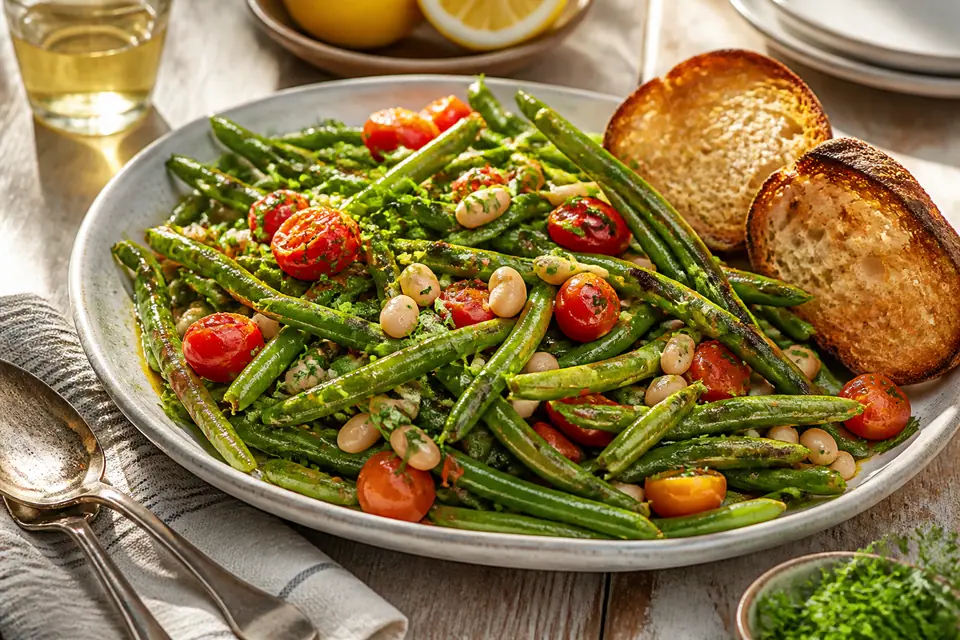
5 summer dinners for green beans
Use green beans as the vegetable that carries dinner: blister them with tomatoes, fold them through noodles, pair them with eggs or build a warm white-bean skillet.
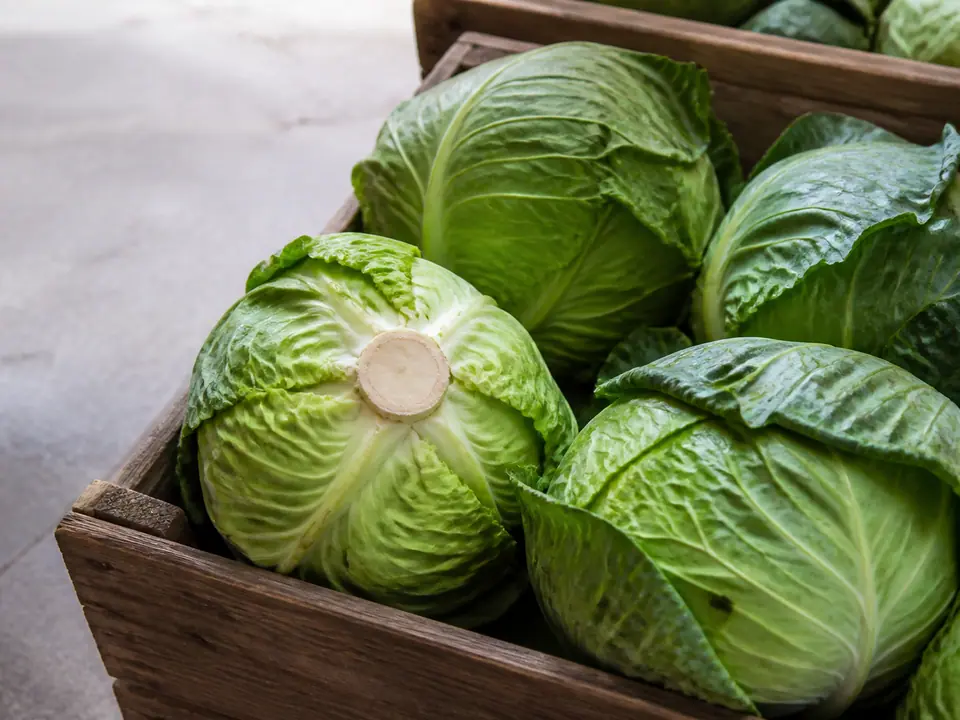
How to choose a cabbage that will stay crisp
A crisp cabbage feels dense, has tightly packed leaves and a dry cut base. The shop test takes less time than rescuing a wilted half later.