The darkest-looking tube is not always the strongest one
Look for dense paste, a short ingredient list and a package you can finish. The biggest flavour gain still comes from frying it properly.

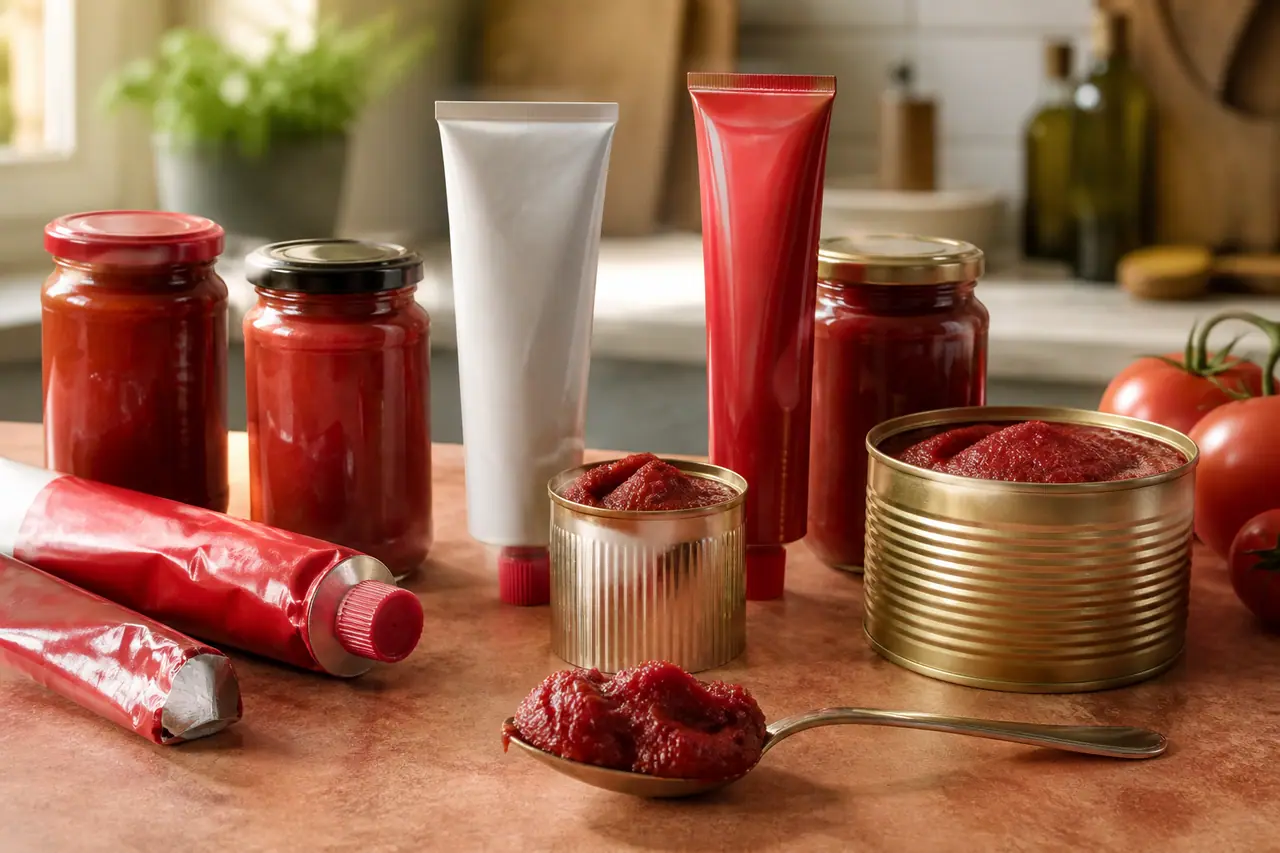
Tomato paste is one of the easiest pantry ingredients to overthink. The shelf may offer tubes, tins, jars, double-concentrated versions and products with a long list of claims. For a small spoonful that will be fried with onions, most of those claims matter less than three quiet details: how dense the paste is, what else is in the package and whether you will use it before it gets forgotten. The package is promising a shortcut, but the useful question is more ordinary: will this paste behave well in the pan you use every week?
I have brought home impressive-looking paste that tasted sweet and thin, then kept a plain tube that made better sauces because it behaved predictably. The shopping decision is not about finding a magic tomato. It is about buying a concentrated ingredient with enough flavour to survive a pan, and a format that fits your cooking habits.
Start with the ingredient list
Plain tomato paste should not need a paragraph to explain itself. Tomatoes and salt can be enough, although some products contain acidity regulators or a small amount of oil. I do not reject an added ingredient automatically, but I want to know whether the paste is seasoned before I put it into a recipe. Sugar can make a sauce taste rounded on the first bite and strangely flat after reduction. Herbs can be useful in one dish and distracting in another.
Check the salt as well as the ingredient list. Tomato paste is often used in a small quantity, but it is concentrated, and the rest of the pan may already contain stock, cheese, olives or tinned beans. A salty paste is not unusable; it means I delay seasoning until the sauce has simmered and I can taste the whole dish. This is also why I prefer a plain paste for recipes that already have a strong personality. The pantry ingredient should support the dish, not quietly rewrite it.
Dense is useful, but dark is not the whole story
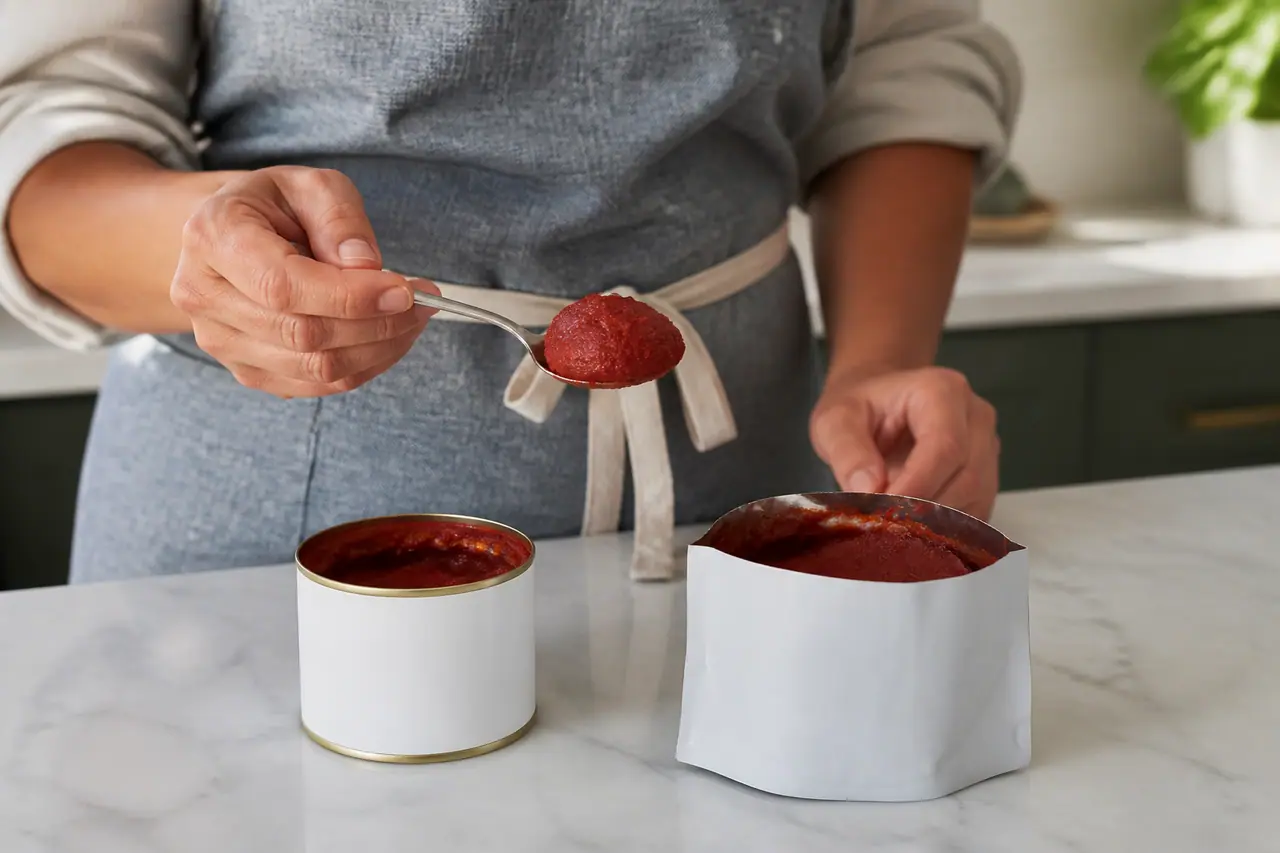
When the package is open, good paste should look compact and glossy rather than watery around the edges. It should stay on the spoon for a moment instead of sliding away like a thin puree. A deep red colour is encouraging, but colour alone can mislead. A paste can be dark because it has been heavily cooked, sweetened or exposed to air, and that does not guarantee a clean tomato flavour.
The best test is how it changes in the pan. Spread it into warm oil and watch whether it loosens into the fat while becoming more fragrant. If it smells sweet before it is heated and stays sweet after a short fry, it may overpower a savoury dish. If it smells dusty or metallic, no amount of label confidence will fix it. Buy the smallest package of an unfamiliar brand until you know how it behaves. A paste that tastes balanced with onion should also sit comfortably beside beans, lentils and stock, which is where most of the useful kitchen tests happen.
| Look for | Why it helps | Question to ask |
|---|---|---|
| Dense texture | It carries flavour in a small spoonful | Does it hold a ridge? |
| Short ingredient list | The tomato stays in control | Is it already sweet or seasoned? |
| Clean package edge | Less dried paste is likely to be wasted | Can I close it properly? |
| A size you finish | Freshness matters more than a bargain | What will use the rest? |
Source: Maren Ashby's grocery and pan test, 2026-01-08
Double concentrate is a cooking clue, not a guarantee
Labels that mention concentration can tell you that the paste has been cooked down further, but they do not tell you everything about flavour. A dense product is handy because you can use less, yet a very concentrated paste can also be more acidic or intense. Start with a smaller spoonful, fry it, and add another only after you taste the finished liquid. Recipes are guides here, not proof that every brand needs the same amount.
This is why I prefer to compare packages by behaviour rather than by the bold words on the front. The paste should make onions taste more complete, not cover them with a sugary red blanket. It should support beans, lentils or meat without becoming the only flavour in the bowl.
The verdict
Choose tomato paste with a dense texture, a readable ingredient list and a package you can finish. Treat colour and concentration as clues, not promises. Once the paste is home, the deepest flavour will come from frying it in oil until the raw edge disappears. A simple product used well beats a dramatic label left open at the back of the fridge.
Questions
What should tomato paste look like?
Is double-concentrated tomato paste better?
Does tomato paste need sugar?
Should I buy tomato paste in a tube or a tin?
More guides
All guides →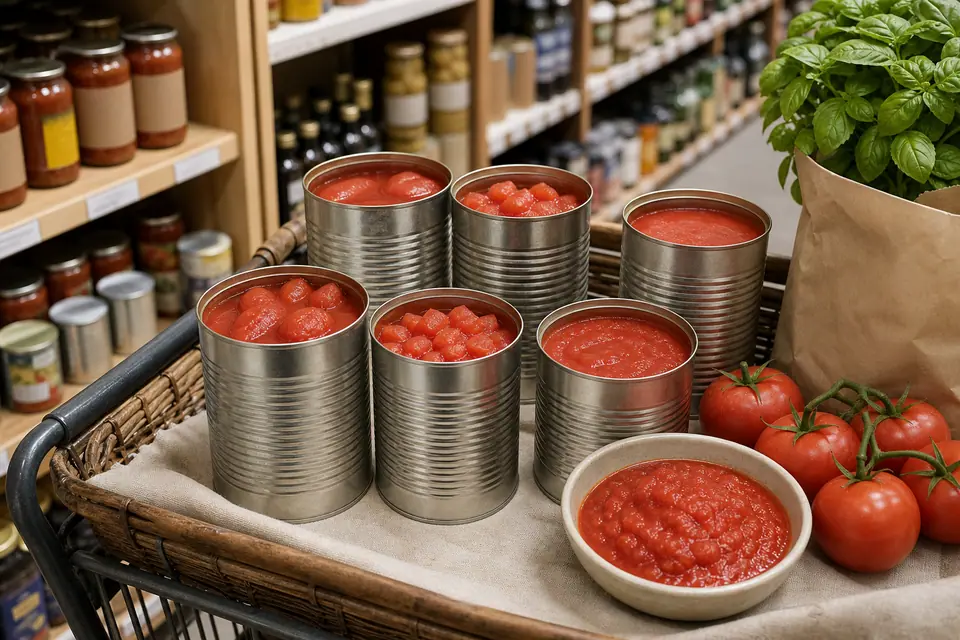
How to choose tinned tomatoes without wasting money
Choose the form for the dish first, then read the ingredient list and salt. The label story matters less than the tomato, the liquid and the price per usable tin.

5 dinners for a bag of carrots
Roast carrots with beans, blend them into lentil soup, fry them with rice, fold them through pasta or build a spiced traybake around them.

Cauliflower vs broccoli: which roasts better?
Cauliflower gives a more even roast and creamy centre. Broccoli browns faster and has better crisp tips, so the winner depends on the texture you want.