The expensive tin is not automatically the useful one
Choose the form for the dish first, then read the ingredient list and salt. The label story matters less than the tomato, the liquid and the price per usable tin.

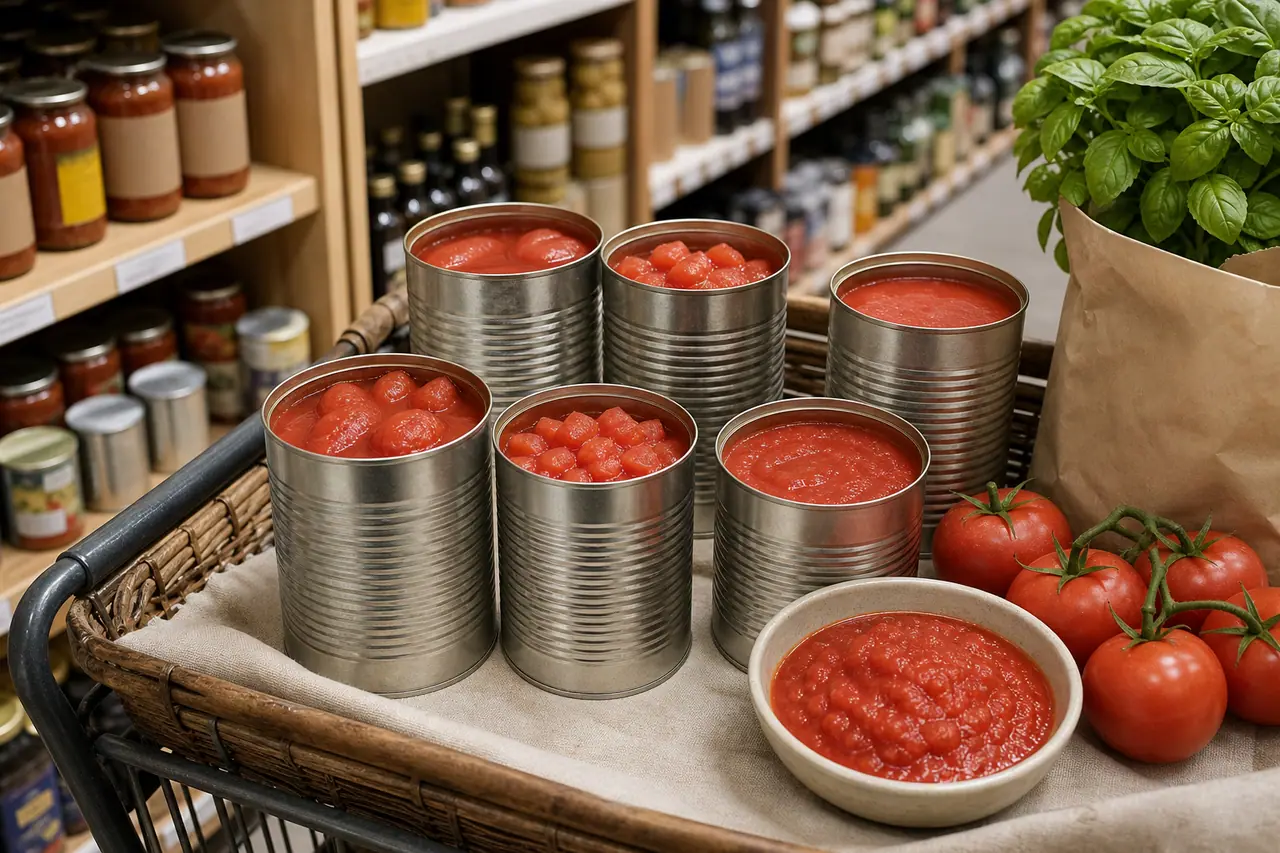
The false bargain is a cheap tin bought for the wrong job. Whole tomatoes for a ten-minute pasta sauce leave you crushing them while dinner waits. A premium chopped tin in a slow stew may taste no different from the supermarket own brand after an hour. The shop decision is easier when you picture the finished food. Do you need pieces that will survive a long simmer, pulp that will coat noodles, or liquid that can become soup? A label cannot answer that for you, but the shape of the tomato can. I used to choose by the picture on the front and then blame the recipe when the sauce took too long. The better habit is to treat the tin as equipment. Whole fruit gives you a tool for texture; crushed fruit gives you speed; diced fruit gives you pieces that may resist breaking down. Once that is clear, the premium claims become much less persuasive.
At the shelf, decide the texture first. Then check the ingredient list, the salt and the net weight. The country on the front can be interesting, but it is not a cooking instruction.
| Form | Use it for | Watch for |
|---|---|---|
| Whole peeled | Slow sauces and braises | Large pieces take time to break down |
| Chopped | Everyday stews and pasta | Some brands are watery |
| Crushed | Fast sauces and pizza | Texture varies between brands |
| Diced | Chunky dishes | Firm pieces may stay separate |
Source: Maren Ashby's shop and pan comparison, 2026-08-27
Start with the back, not the front
Turn the tin around and read the ingredients. For plain tinned tomatoes, the list is usually tomatoes, tomato juice and perhaps salt or acidity regulator. A long list is not proof of a bad product, but it tells you the tin is doing more than holding tomatoes. I also look at the pack size against the recipe. If I need 300 g and the shop only offers 400 g, the remaining 100 g needs a plan before it enters the basket. That is how small amounts become freezer portions instead of forgotten fridge scraps. The cheapest product is valuable when its texture fits the job and its amount fits the way you cook.
Check the net weight and the drained weight only when the recipe cares about pieces. For a sauce, the liquid is part of the starting ingredient. For a salad or roast, a watery tin creates more drying work. The cheapest tin can cost more in oil, time and attention if the texture is far from the one you need.
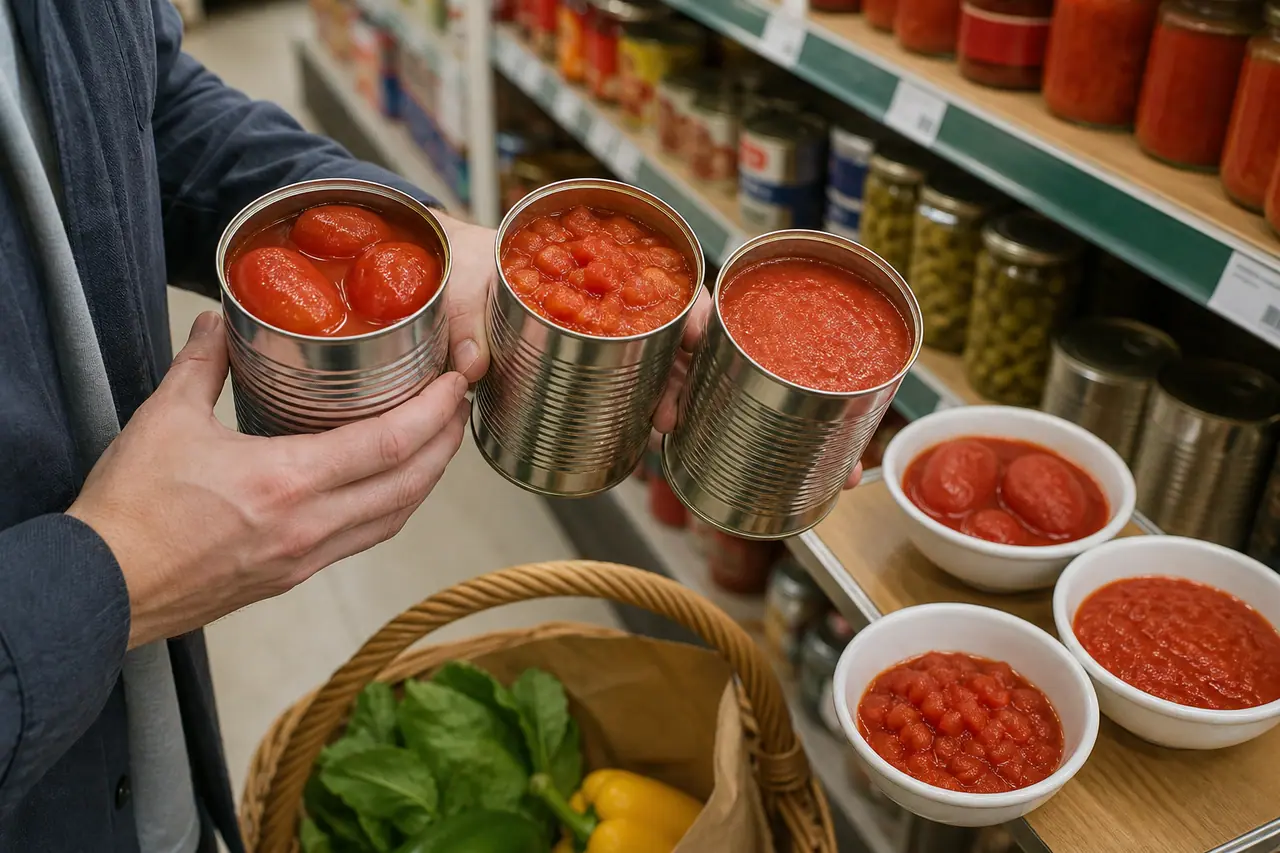
Whole, chopped or crushed?
Whole peeled tomatoes give you the most control. Crush them lightly for a rustic sauce, leave some pieces large for a braise, or blend them after cooking. They are my default when the recipe will simmer for more than half an hour.
Chopped tomatoes are the sensible everyday choice. They save a minute and usually disappear into a stew without fuss. Crushed tomatoes are convenient for a smooth-ish sauce, though the word does not mean the same texture in every brand. One can pour like soup; another lands in the pan as a thick pulp.
Diced tomatoes are useful when the pieces must remain visible, but they often contain calcium salts to help the cubes keep their shape. That can be helpful in a chunky dish and unhelpful in a sauce where you want them to collapse.
What the label can and cannot tell you
- Italian variety names: a useful clue, not a guarantee. Growing region, harvest and processing still affect the tin.
- Organic: tells you about production rules, not whether the sauce will be thick or sweet.
- No added salt: helpful if you want full seasoning control. It may taste sharper until the sauce has reduced.
- Reduced juice: useful for a quick sauce, but compare the price per 100 g because the tin may contain less total food.
- Best before: a quality date, not a promise that every older tin behaves the same. Store undamaged tins cool, dry and away from heat.
My five-second shop test
I pick the format, then find the plainest ingredient list in the price range I am comfortable with. If two tins look similar, I choose the one with less added salt and the one whose weight matches the recipe. A 400 g tin that leaves half a cup of extra water is not a better deal than a 400 g tin that reduces quickly.
For a recipe such as red pepper chickpea stew, chopped or whole tomatoes both work because the casserole has time to cook. For a quick sauce, I choose crushed tomatoes or passata. For a traybake, I would rather buy a tin that makes a thick base than pay for a story printed on the front. I also keep the recipe amount in mind. A tin that is technically cheaper per gram may leave a small remainder that never earns a second use. A tin that costs a little more but matches the recipe can be the better household purchase. The calculation is not glamorous, yet it quietly decides whether a pantry stays useful or fills with half-used ingredients.
Taste one spoon before you build dinner
If you have bought a new brand, taste a spoonful before adding it to the pan. You are looking for three things: a clean tomato flavour, no stale tin taste, and an acidity you can balance with the rest of dinner. This takes less time than trying to correct a whole pot.
A good tin does not need to be sweet. It needs to taste like tomato after cooking. Salt, olive oil, onion and reduction will do the rest. If a tin tastes bland from the start, more herbs may make it busier without making it better.
Storage starts at the shop
Skip tins that are bulging, leaking, badly rusted or deeply dented at the seam. Once home, keep sound tins in a cool dry cupboard. After opening, move leftovers to a covered glass or plastic container instead of leaving them in the can. For the food-safety timing, follow Food Standards Agency guidance for your location and the label instructions on the product.
That is the whole buying guide: choose texture, read the back, taste a new tin and buy the size you will use. The shelf is full of clues, but the pan gets the final vote.
Questions
Are whole tinned tomatoes better than chopped?
What are San Marzano tomatoes?
Should I buy tinned tomatoes with salt?
Can I use diced tomatoes in a smooth sauce?
More guides
All guides →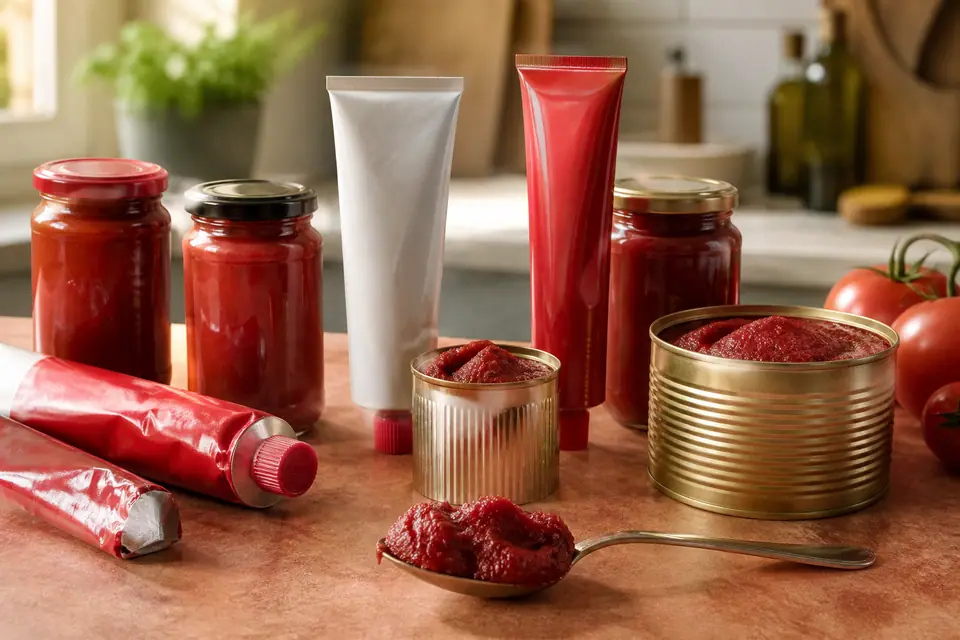
How to choose tomato paste with the deepest flavour
Look for dense paste, a short ingredient list and a package you can finish. The biggest flavour gain still comes from frying it properly.

5 dinners for a bag of carrots
Roast carrots with beans, blend them into lentil soup, fry them with rice, fold them through pasta or build a spiced traybake around them.

Cauliflower vs broccoli: which roasts better?
Cauliflower gives a more even roast and creamy centre. Broccoli browns faster and has better crisp tips, so the winner depends on the texture you want.