Remove the leafy water thief and keep the roots cold
Cut off carrot tops, keep the roots cold in a breathable container and control moisture. A dry towel inside the drawer helps, but a wet one needs changing.

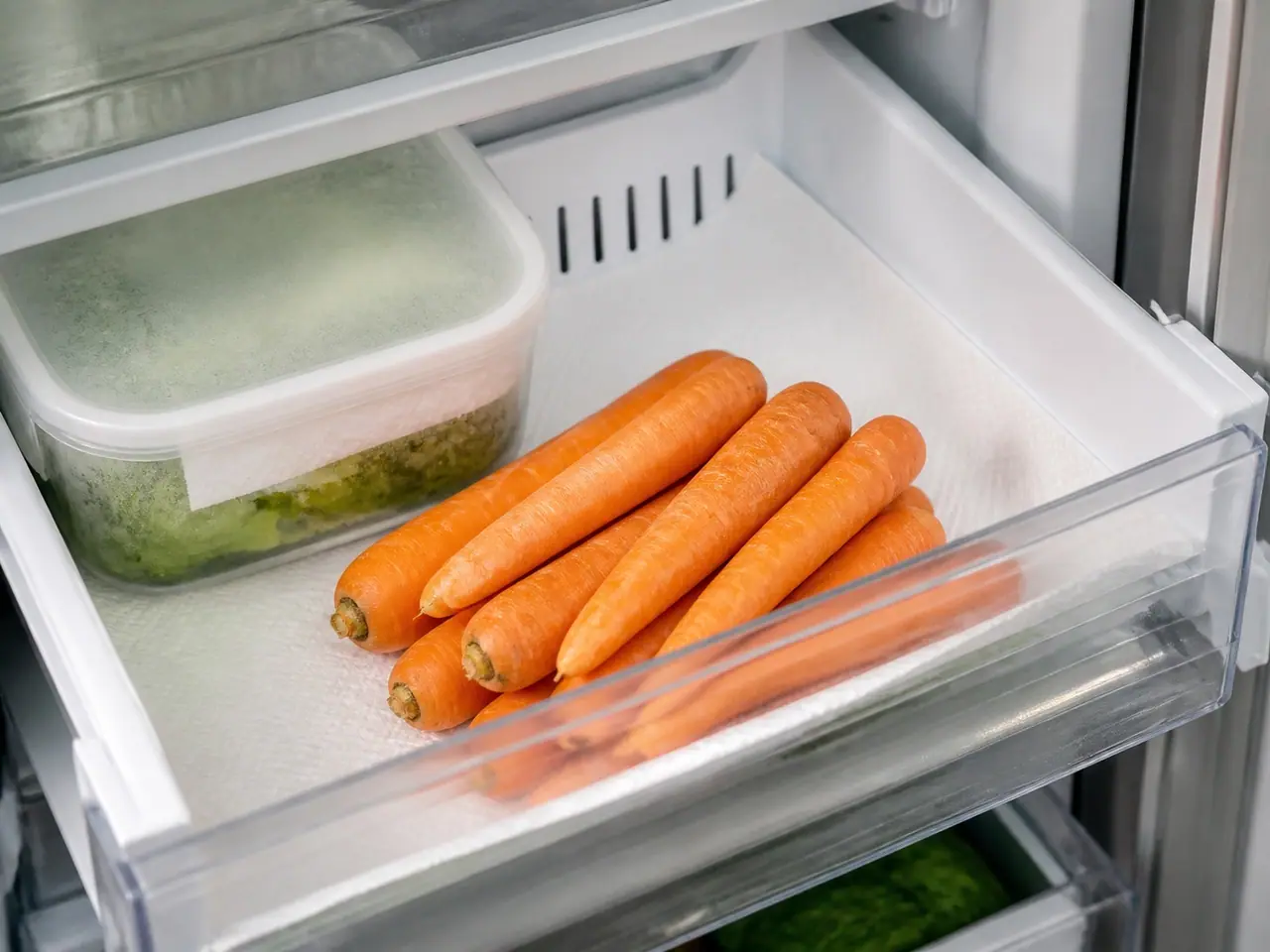
Carrot tops keep drinking after the roots are harvested. Leave the leaves attached and the carrots lose firmness faster. Cut the tops off, keep the roots cold and protect them from both dry air and standing water. That balance keeps a bag useful for weeks.
I store carrots in the crisper drawer in a loose bag or lidded container lined with a dry towel. The towel catches condensation; it is not meant to become a wet blanket. Check it after a few days and replace it when damp.
I check that detail before adding more heat, oil or seasoning.
Cut the tops first
Twist or cut the green tops away from the root, leaving a small clean shoulder. Use the greens soon in pesto, soup or a herb sauce, or compost them. Storing them attached lets the leaves pull water from the carrot.
Do not peel the roots before storage. Peeling exposes more surface and gives moisture a new route out. Wash off soil, dry the carrots and save the knife work for cooking day.
I check that detail before adding more heat, oil or seasoning.
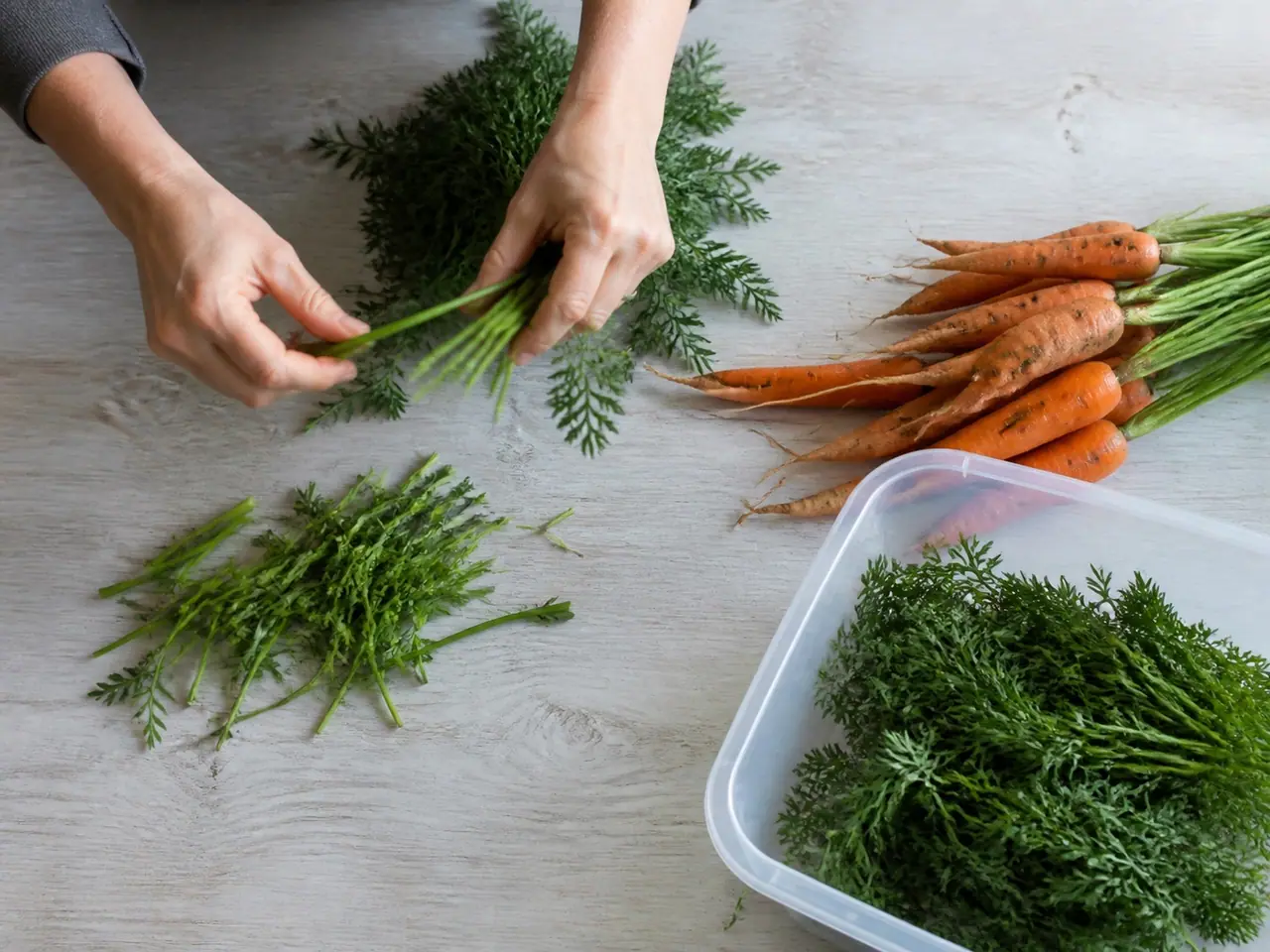
Choose the right container
A loose reusable bag, perforated produce bag or container with a lid that is not sealed tight all work. The roots need protection from cold dry air, but also a way for condensation to leave.
Avoid a deep pile when possible. A shallow container makes it easier to spot a soft carrot before it shares moisture with the rest.
The clock helps, but the surface gives the better signal.
Use a dry lining
A clean paper towel or tea towel under the carrots catches droplets from the cold surface. Check it every few days. If the lining is damp, replace it; leaving it turns a buffer into a wet storage bed.
Do not wrap every carrot tightly. The aim is a little humidity, not a sealed individual parcel. Space around the roots helps you notice the one to use first.
I keep one piece aside so I can compare it with the next batch.
Keep fruit at a distance
Store carrots away from fruit that gives off strong ripening gases, especially if the drawer is small and closed. Keep the carrots in their container and avoid packing fruit directly on top.
Odour matters too. A covered carrot container stops the roots from picking up every smell in the fridge. Clean the drawer before a new batch arrives.
That small pause saves more food than a rescue at the end.
Refresh and triage
A bendy carrot that is still sound can sit in cold water for a few hours, then be dried and cooked. A firm carrot with a dry end can be trimmed. A slimy or sour carrot should leave the container immediately.
Use the softest roots in soup, stew or a roast tray first. Keep the crispest for raw sticks and ribbons.
The next step works better when the excess moisture has somewhere to go.
Cut only when needed
Whole carrots keep longer than peeled or chopped ones. If you are preparing dinner tomorrow, cut the roots and cover them in the fridge. If the meal is next week, leave the carrots whole.
The less surface you expose early, the more water the carrot keeps. Storage and prep are linked; the best container cannot rescue a root cut too soon.
The result should look ordinary and feel deliberate, not overworked.
Do not wash the whole batch every time you take one carrot out. Clean the root you need, dry it and return the rest to their dry container. Repeated wetting is a small habit that shortens storage. The roots last longer when the drawer stays boring: cold, covered, dry and easy to inspect.
Root vegetables reward a small check before the main work. I look at one piece, one cut face or one stored end and let that evidence choose the next step. A firm centre deserves a hot tray; a soft one belongs in soup or mash. A dry cupboard suits a whole root; a covered container suits a cut one. That habit keeps the method honest and saves me from adding more heat, water or seasoning to a problem that started with the ingredient itself.
The short answer
Keep carrots fresh by removing the tops, storing the roots cold and controlling moisture. A loose container and a dry lining protect the bite.
The drawer is not a pause button. Inspect the batch, use the softest first and cook anything that has started to bend.
Questions
How do I keep carrots fresh for weeks?
Should carrot tops be removed?
Can carrots be stored in water?
Why are stored carrots slimy?
More guides
All guides →
5 dinners for a bag of carrots
Roast carrots with beans, blend them into lentil soup, fry them with rice, fold them through pasta or build a spiced traybake around them.
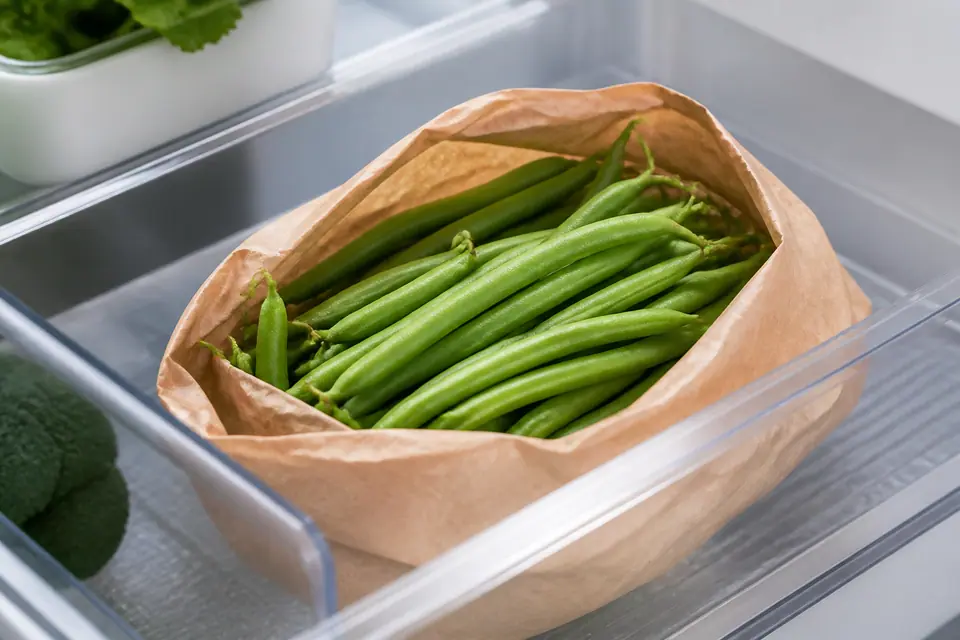
How to keep green beans crisp in the fridge
Green beans lose crispness through water loss but decay quickly when stored wet. Keep them unwashed, cool and loosely contained, then rinse just before cooking.
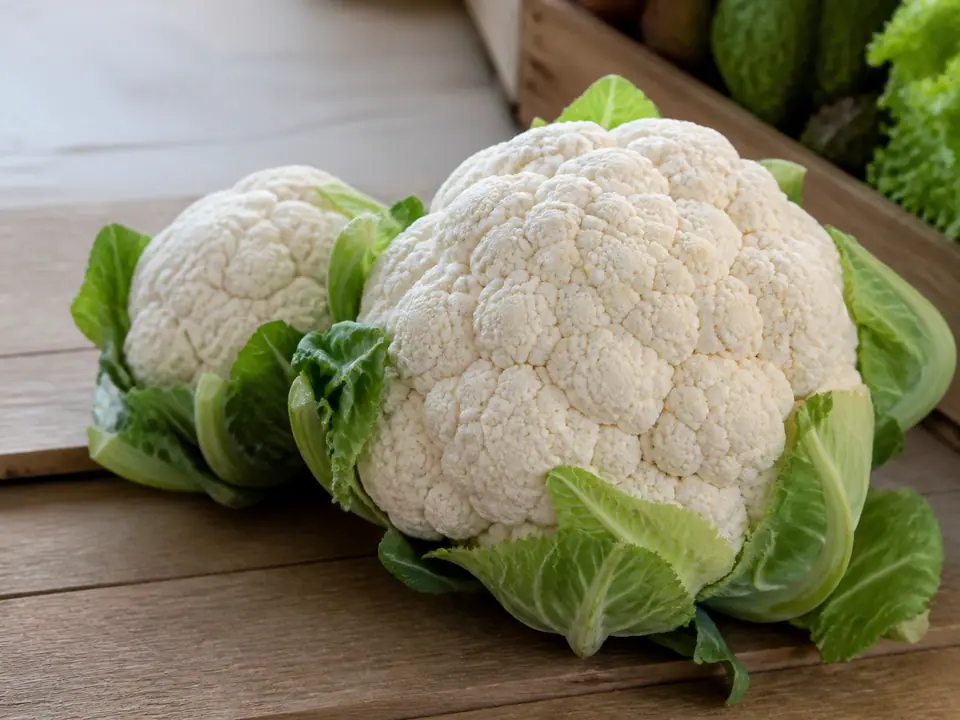
How to choose a dense cauliflower with fresh leaves
A good cauliflower feels heavy for its size, has a tight white curd and fresh leaves around a dry base. The leaves are the quickest freshness clue.