Cool is useful, but too cold for too long can damage the crunch
Cucumbers need protection from water loss but can suffer chilling injury in very cold storage. Keep them dry, wrapped loosely and away from the coldest air.

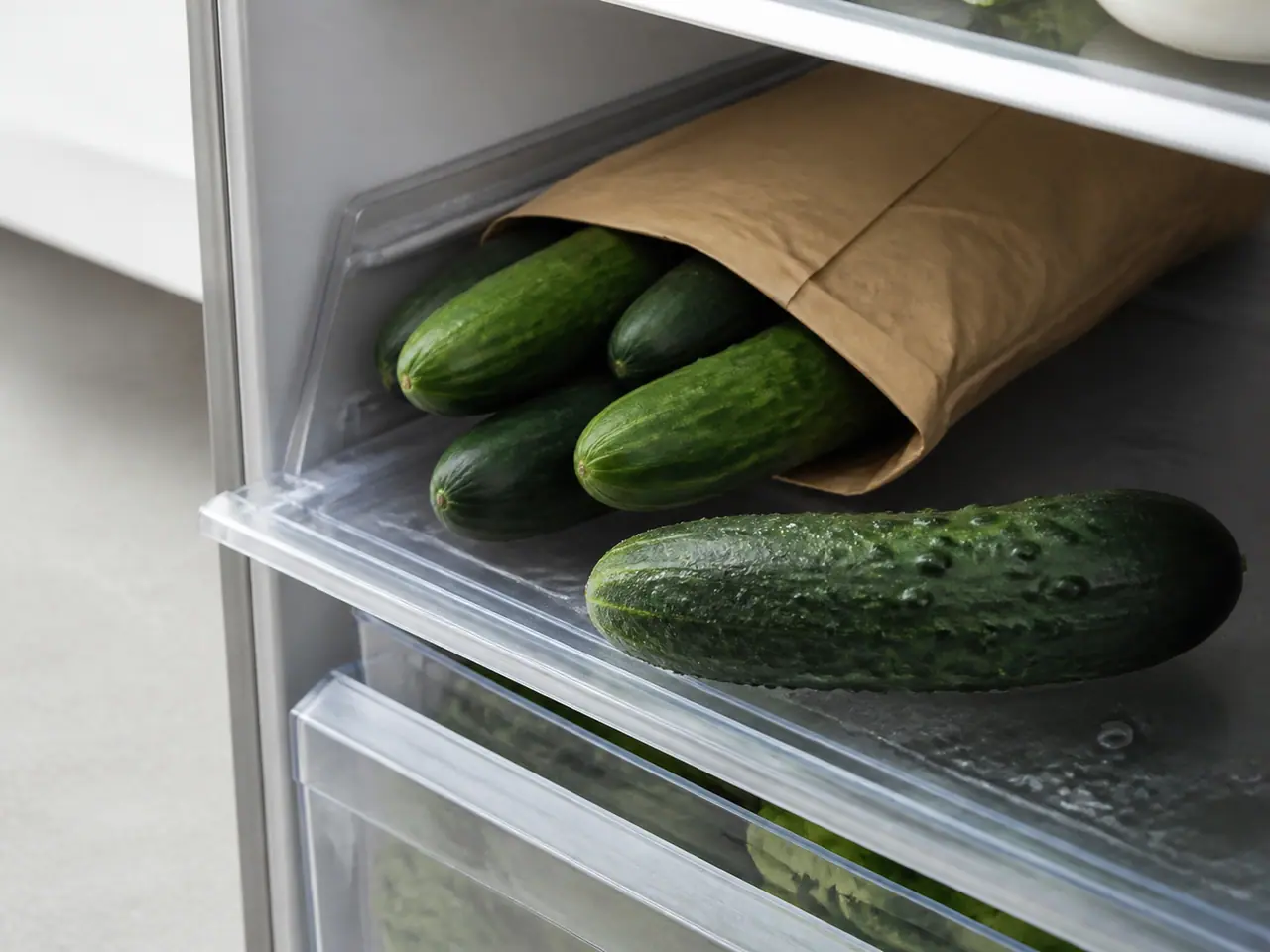
I used to put cucumbers in the coldest part of the fridge and wonder why the skin developed wet pits. Cucumbers like cool storage, but they are sensitive to temperatures below their comfort range. The result is a soft, waterlogged texture that does not recover.
UC Davis gives cucumbers an optimum storage range around 10 to 12.5°C and warns that colder conditions can cause chilling injury. At home I use a protected shelf, a loose wrap and a short storage plan rather than the back wall of the fridge.
Keep them cool, not icy
The coldest fridge zone is often too harsh for a cucumber, especially when the fruit sits there for several days. Chilling injury can show as water-soaked areas, pitting and faster decay.
If your fridge is very cold, use the warmer crisper or a door shelf that does not freeze. The exact spot depends on the appliance, so inspect the skin rather than trusting the drawer name.
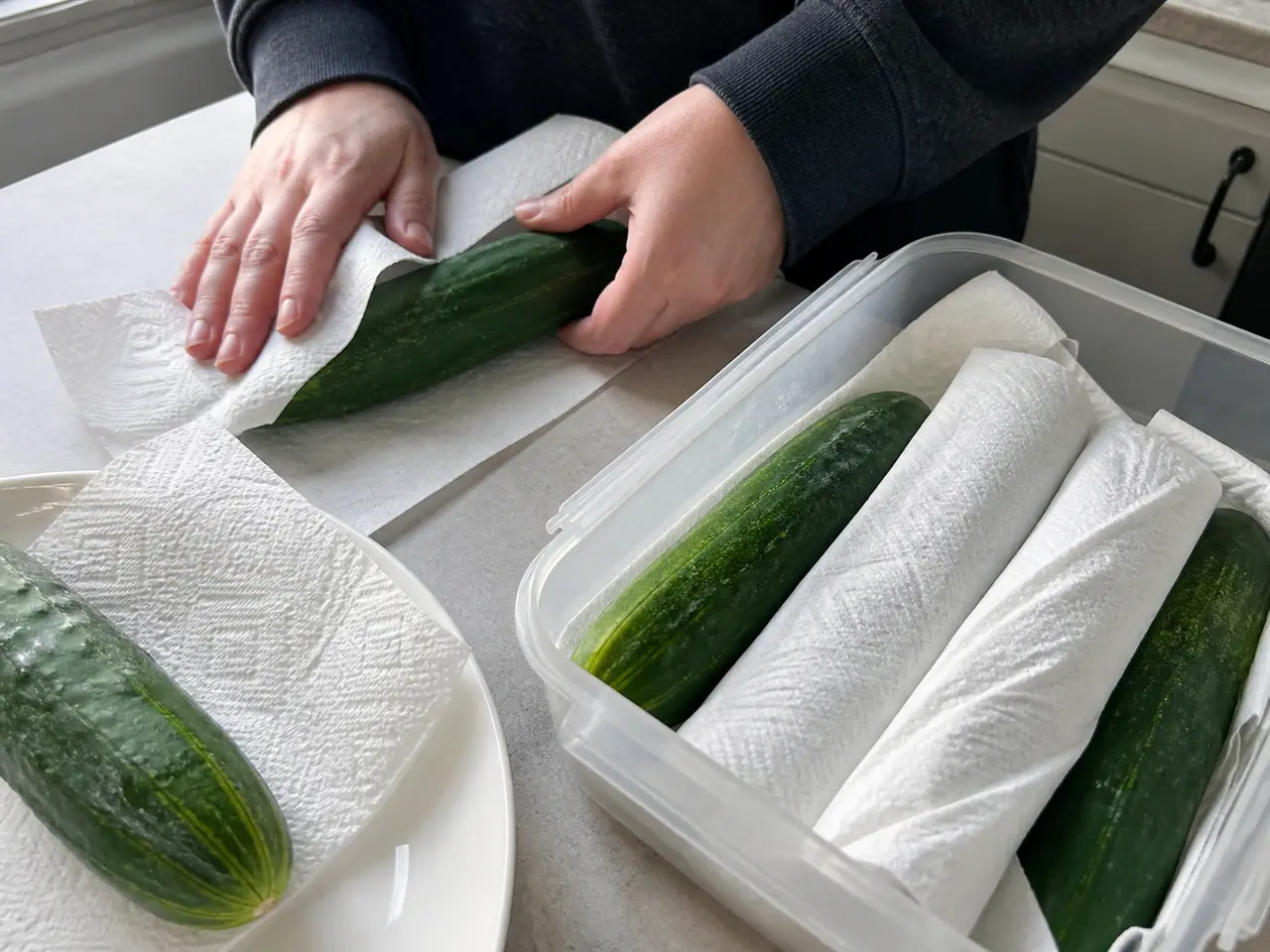
Protect the skin from dry air
A loose bag or reusable produce wrap slows water loss without sealing in a wet film. Keep the cucumber whole until you know the meal.
Do not wrap a wet cucumber tightly. Dry the surface first and leave a little room around the fruit so condensation can escape.
I keep one piece aside so I can compare it with the next batch.
Keep fruit away when possible
Cucumbers are sensitive to ethylene from fruits such as bananas, melons and tomatoes, which can accelerate yellowing and decay. I give them a separate corner when the fridge is crowded.
This does not require a complicated storage system. A small container or loose bag is enough to reduce contact and make the cucumber easier to inspect.
The clock helps, but the surface gives the better signal.
Do not cut early
A whole cucumber keeps its structure longer than slices. Once cut, the exposed flesh loses water and the seed cavity begins to pool juice.
If you must prep ahead, dry the cut surface, store the pieces in a sealed container with a paper towel and use them soon. Remove the towel if it becomes wet.
That small pause saves more food than a rescue at the end.
Use the soft end first
A cucumber with one soft tip can sometimes be trimmed and used in a dressed salad or blended sauce if the rest is firm and smells fresh.
Do not serve a waterlogged, slimy or sour cucumber. The storage fix is for sound food that has lost some crunch, not for decay.
The next step works better when the excess moisture has somewhere to go.
Match storage to the clock
UC Davis notes that cucumber quality declines quickly and storage beyond about two weeks is poor. I buy only enough for the next several meals rather than treating the drawer as a long-term cupboard.
If the fruit is starting to yellow, change the plan: chop it for a quick salad, pickle it or add it to a cool yogurt sauce today. Waiting will not restore the green.
I keep one piece aside so I can compare it with the next batch.
Storage works best when it has an exit plan. I write the meal in my head before I put the cucumber away, then place the most fragile pieces where I will see them first. A container can slow water loss and condensation, but it cannot improve a tired leaf, bruised cap or soft fruit. Visibility is part of freshness because forgotten food gets no useful second chance.
If I need to prepare ahead, I separate the parts that like different conditions. Dry pieces stay apart from dressing, sliced stems stay apart from tender leaves and a wet towel gets replaced rather than left as padding. This takes less room than a complicated storage system and gives me a clear signal when the batch needs cooking.
I use a short inspection before every meal: smell, surface, firmness and any liquid at the bottom. A sound piece that has wilted can often be cooked, drained or trimmed. Slime, mould, sour smell and spreading decay are a different category. No storage trick is worth carrying those signs into a finished dish.
For the quality and storage details that sit behind my kitchen observations, I use the UC Davis cucumber produce fact sheet alongside the timed test described above.
The practical verdict
Cucumbers go soft through water loss, age and chilling injury. Store them dry and protected in a moderate-cool spot, then use them before the skin yellows or pits.
Storage should preserve a good cucumber, not postpone a bad meal.
Questions
Should cucumbers be refrigerated?
How do I keep cut cucumber crisp?
Why do cucumbers get waterlogged?
Can a soft cucumber be used?
More guides
All guides →
How to keep apples crisp for longer
Apples keep their crunch best when cold, protected from bruises and checked for soft fruit. Store them loose or in a breathable bag and remove damaged pieces early.

5 fresh dinners for a hot day
Five dinners that need little or no oven heat: crisp cucumber bowls, tomato beans, yogurt flatbread, cold noodles and chickpea lettuce cups.
How to keep cauliflower from going grey
Cauliflower turns grey when exposed tissue dries or oxidises. Keep the head cold and dry, cover cut surfaces and cook before the spots spread.