Get peas cold, then cook them before the sweetness turns starchy
Fresh peas are at their best soon after buying. Keep the pods cold and dry, do not wash them early, and cook them before they lose their sweetness.

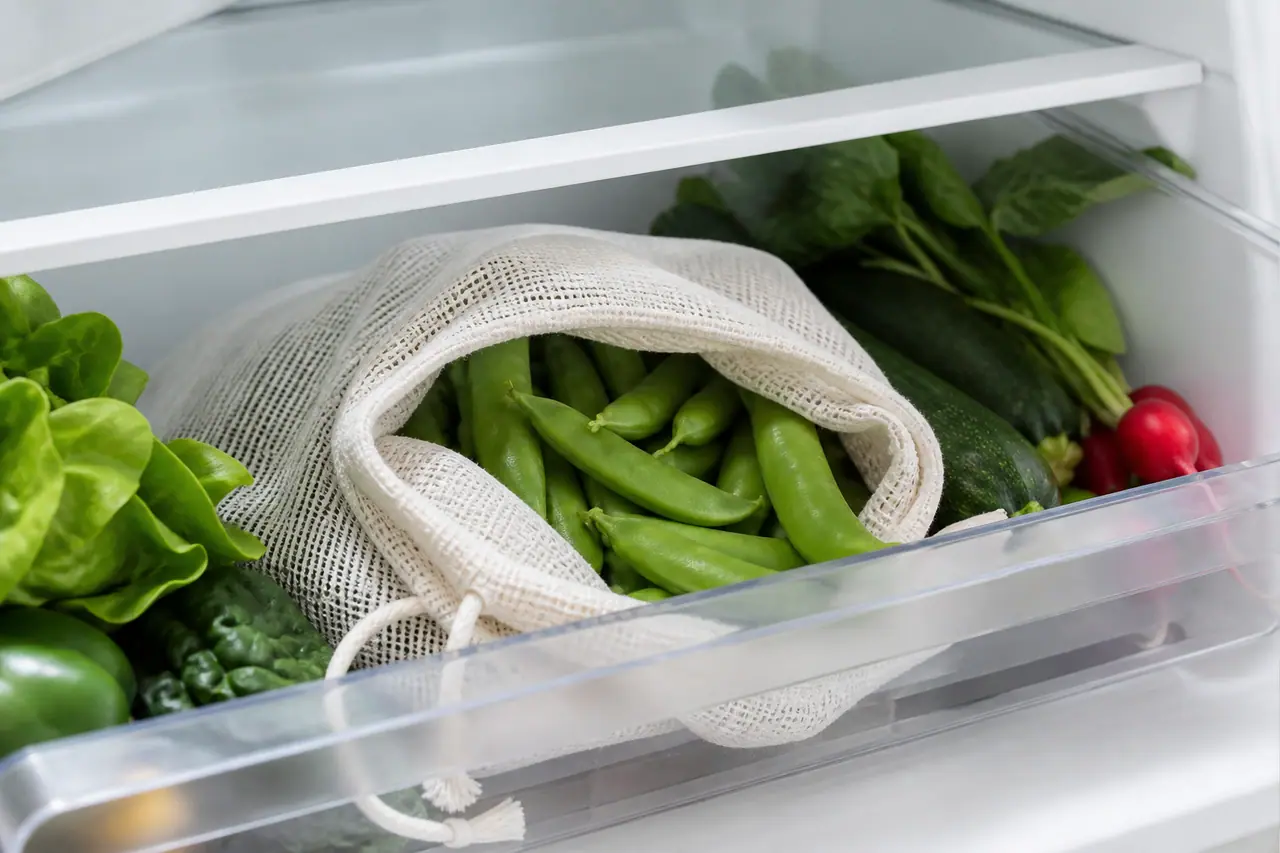
Fresh peas do not need a complicated storage system. They need the shortest route from the shopping bag to a cold fridge and then to a hot pan. The pod protects them for a while, but it cannot stop the sugars inside from changing as the peas age.
Store the pods unwashed in a breathable bag in the crisper drawer. Use them within two or three days for the best sweetness. If dinner is further away, frozen peas are a better rescue than pretending a tired punnet is still at its peak.
The fridge buys time, though it cannot stop the clock.
The first hour matters
Do not leave fresh peas in the car or on the counter while you finish errands. Put them in the fridge when you get home, still in their pods and still dry. Warmth speeds the change from sugar to starch. Cold slows it, which is why the crisper drawer earns its space here.
The University of Maine Extension recommends storing peas in the shell in the crisper section of the refrigerator in a perforated plastic bag. The holes matter. A sealed wet bag traps condensation, and condensation gives soft spots a chance to spread.
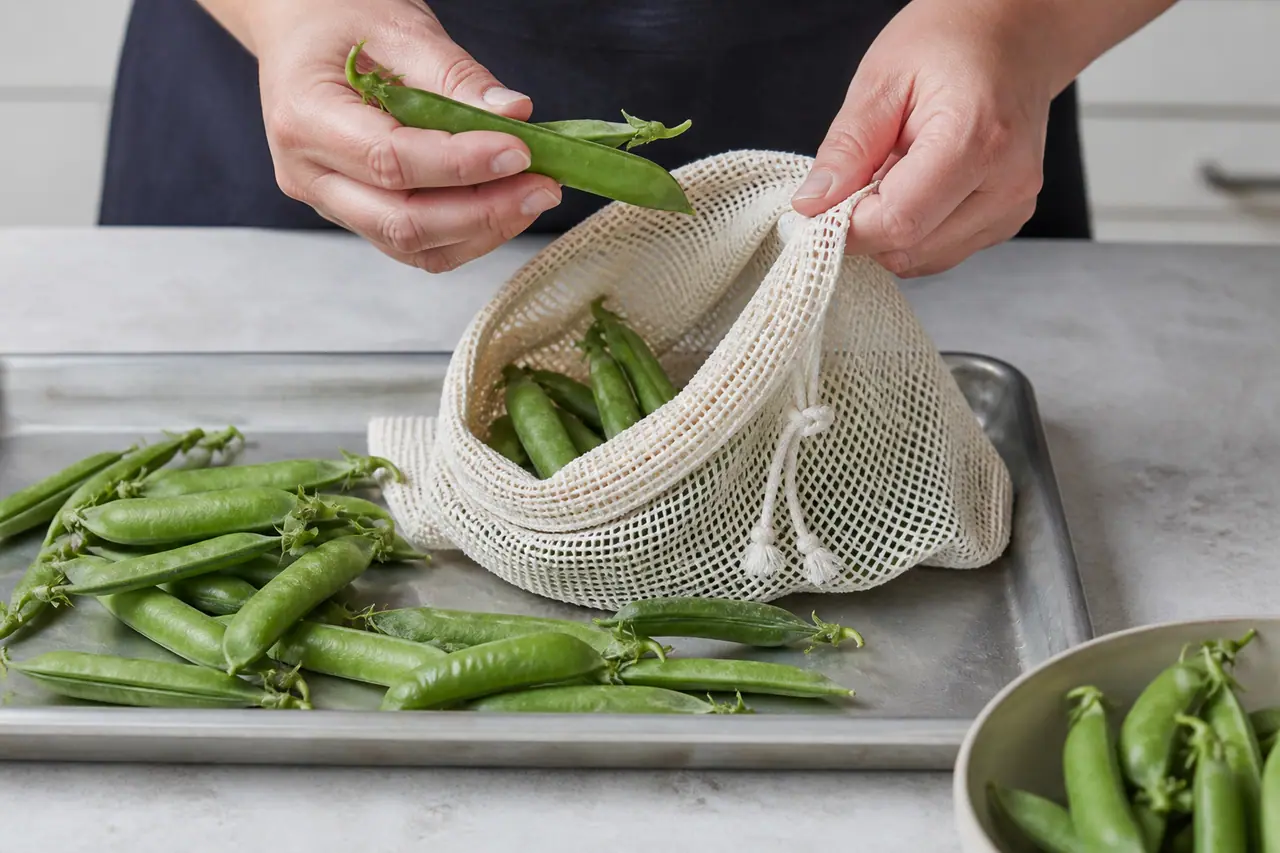
Leave the pods intact
Shelling exposes the peas to air and gives them a larger surface to dry. If you have bought more than you need for one meal, keep the pods intact until the cooking day. Sort out bruised pods first because one wet, damaged pod can make the bag unpleasant.
Do not rinse the whole batch before storing it. Water left in the folds of the pod is more damaging than a little field dust you can wash away later. If the peas are muddy, wipe the outside gently and let the pods dry before refrigerating. Clean hands, a clean bowl and a last-minute rinse are enough for a normal kitchen.
One dry pod in the bag is easier to save than a wet one.
| When | What to do | Expected result |
|---|---|---|
| On the way home | Keep cool and out of sun | Less warmth-driven quality loss |
| At the fridge | Leave unwashed in a perforated bag | Pods stay firm without trapped moisture |
| Cooking day | Shell, rinse and use soon | Best sweetness and texture |
| Day three or later | Taste one before cooking the batch | Decide between a quick side and soup |
Source: Maren Ashby's storage test, 2026-08-28
Use your nose and your teeth
A fresh pea should smell green and slightly sweet. The pod should feel firm rather than limp. Shell one before you commit the whole bowl to a raw salad. If the pea tastes sweet, keep the cooking short. If it tastes starchy, put it in soup, mash or a sauce where softness is useful.
Do not try to cook old peas back into sweetness. Heat changes the texture but does not reverse the sugar loss. A squeeze of lemon, fresh herbs and butter can make a starchy pea pleasant, but the correct rescue is a different dish, not an extra ten minutes in boiling water.
At that point, the pod has become a signal to change the plan.
When freezing is the better rescue
If you know you will not use the fresh peas soon, blanch and freeze them while they are still good. The National Center for Home Food Preservation recommends blanching shelled green peas for one and a half minutes, cooling them quickly and draining them before packing. Use a flat bag so it freezes quickly and take out only what you need.
Freezing a tired pea will preserve a tired pea. Do it on the first or second day, not after the pods have softened and the centres taste floury. If that moment has passed, cook the peas into a soup instead and buy frozen for the next quick meal.
A second-day check
On the second day, shell one pod before choosing the recipe. If the peas still taste sweet, use them as a side or salad. If they have lost their pop, move them into soup or a sauce and add lemon at the end. The pea is telling you what it can do now, not what it promised at the shop.
I keep a small bowl beside the fridge for pods that need attention first. Sorting takes less than a minute and stops a bruised pod from making the rest of the bag damp. The good pods go back into the crisper; the marked ones become that evening’s side dish. Fresh peas reward this little bit of triage because their best flavour is measured in days, not weeks.
The sweet window is short but manageable
Fresh peas are at their sweetest close to harvest, so the best storage method is a short one. Keep the pods cold, dry and intact, then cook them before the flavour turns starchy. That is all the system needs.
For a quick dinner, fold the peas into a warm grain bowl with lemon and yogurt, or add them to crispy tofu with cucumber and tahini just before serving. A little sweetness is enough when the rest of the bowl has crunch and acid.
Questions
How long do fresh peas last in the fridge?
Should I wash fresh peas before storing them?
Can I freeze fresh peas without blanching?
How can I use peas that have gone starchy?
More guides
All guides →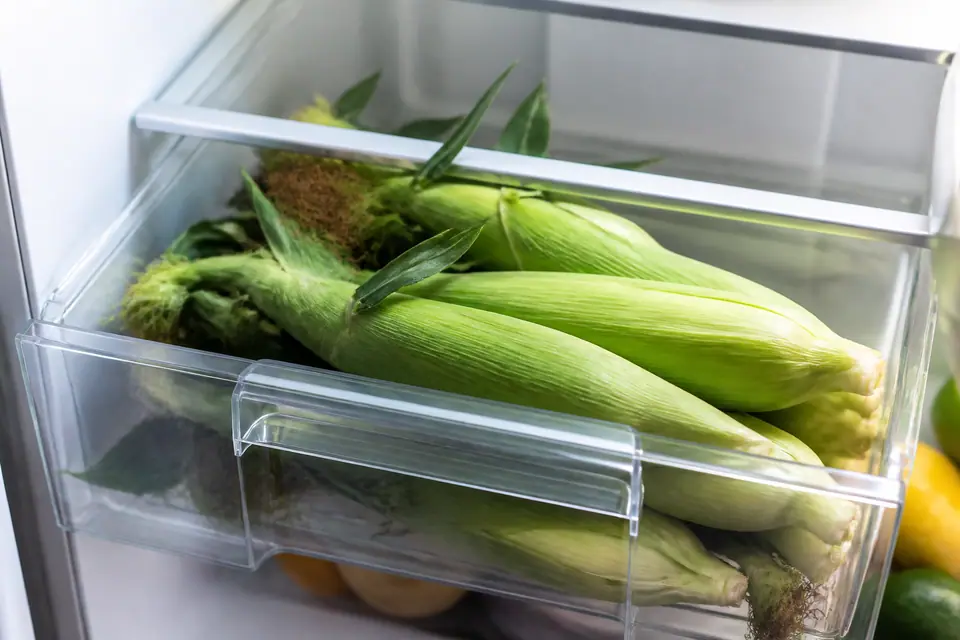
How to keep corn sweet until dinner
Sweetcorn keeps its best flavour when it gets cold quickly. Leave the husk on, refrigerate the ears and cook them within a few days instead of storing them on the counter.
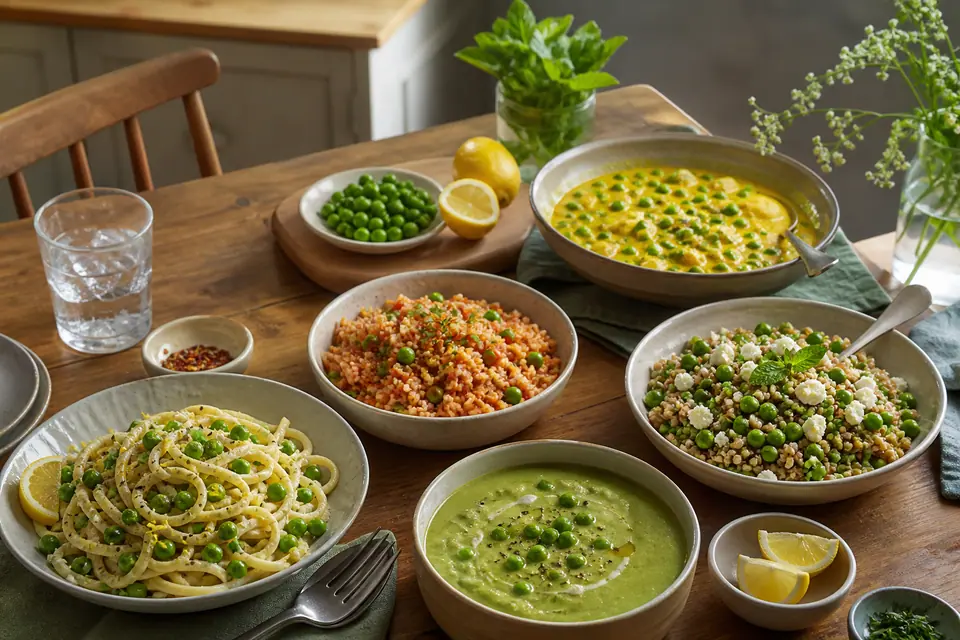
5 dinners that make frozen peas useful
Frozen peas are a small freezer ingredient with five strong jobs: brighten pasta, thicken soup, finish curry, lift rice and fill a warm grain bowl.

Cauliflower vs broccoli: which roasts better?
Cauliflower gives a more even roast and creamy centre. Broccoli browns faster and has better crisp tips, so the winner depends on the texture you want.