Dry leaves, a loose container and one early trim keep kale useful
Kale lasts better when leaves are dry and uncrushed. Trim damaged parts, use a paper towel to catch moisture and keep washed leaves well dried.

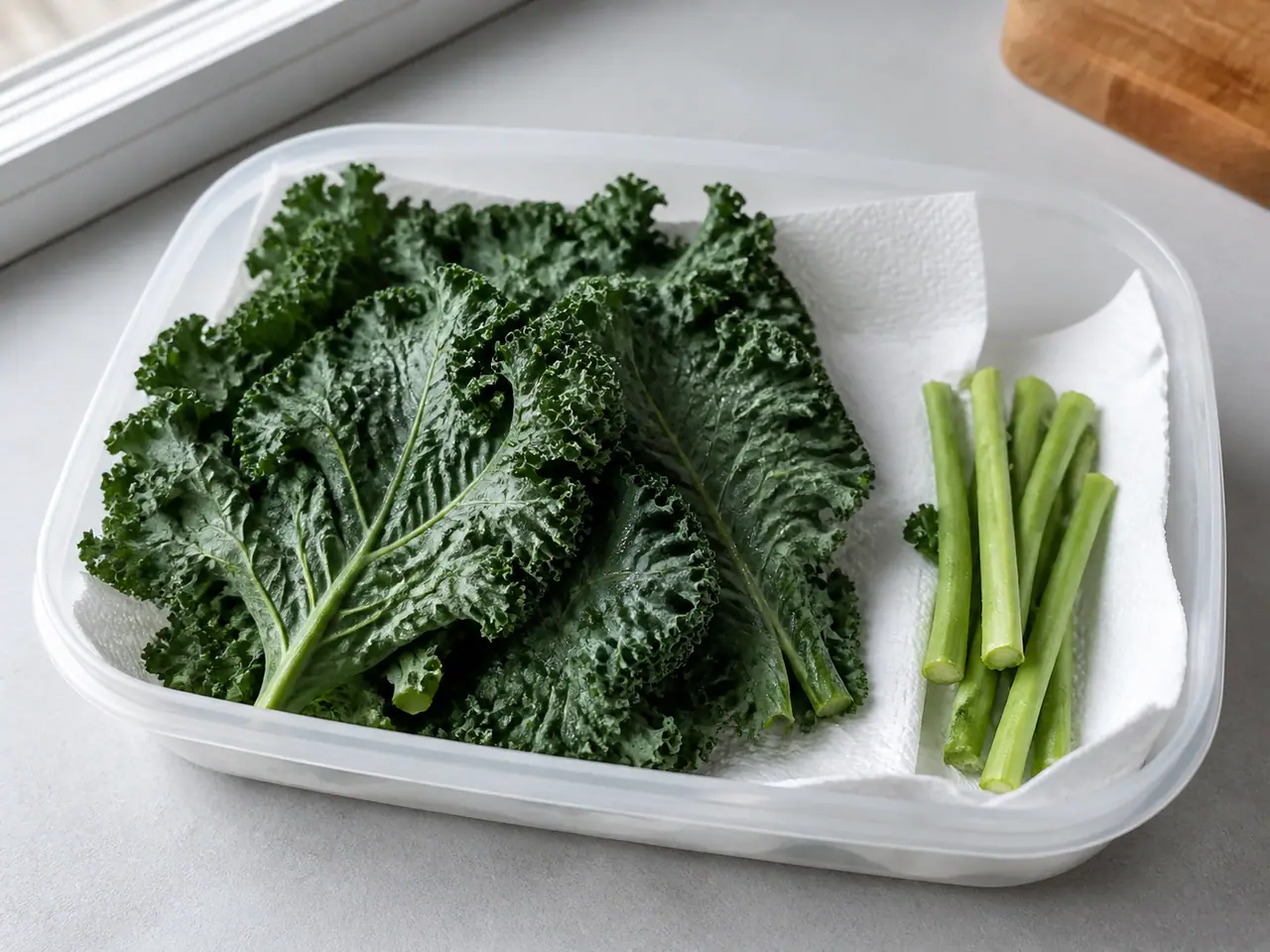
Kale is sturdier than spinach, but a damp, crushed bunch still turns tired in the fridge. I remove the damaged leaves, strip the usable greens and store them loosely with a dry lining. That makes the kale easier to see and ready for the pan.
A container that is too tight bruises the folds; one that is too open lets the leaves dry. The useful middle is a loose bag or shallow box with a little humidity and no standing water.
Trim the bunch early
Remove yellow, slimy or crushed leaves as soon as the kale comes home. They will not improve in storage and can press moisture against good leaves.
Keep the strongest stems until you know the recipe. A small trim at the cooking stage is less wasteful than stripping every leaf before you have a plan.
Store it dry
If the bunch is already dry, put it straight into a loose produce bag or container lined with paper towel. If you wash it, spin or towel-dry it thoroughly before storage.
Dampness is not the same as freshness. Kale likes humidity, but droplets trapped between folded leaves make the outer edges soft.
I keep one piece aside so I can compare it with the next batch.
Keep the leaves uncrushed
A shallow container lets the leaves sit without heavy weight on top. Do not pack a large bunch into a small tub and close it tightly.
For curly kale, leave some room around the folds. For cavolo nero, roll the leaves loosely only if the container is long enough that they are not bent and bruised.
The clock helps, but the surface gives the better signal.
Make a ready-to-cook batch
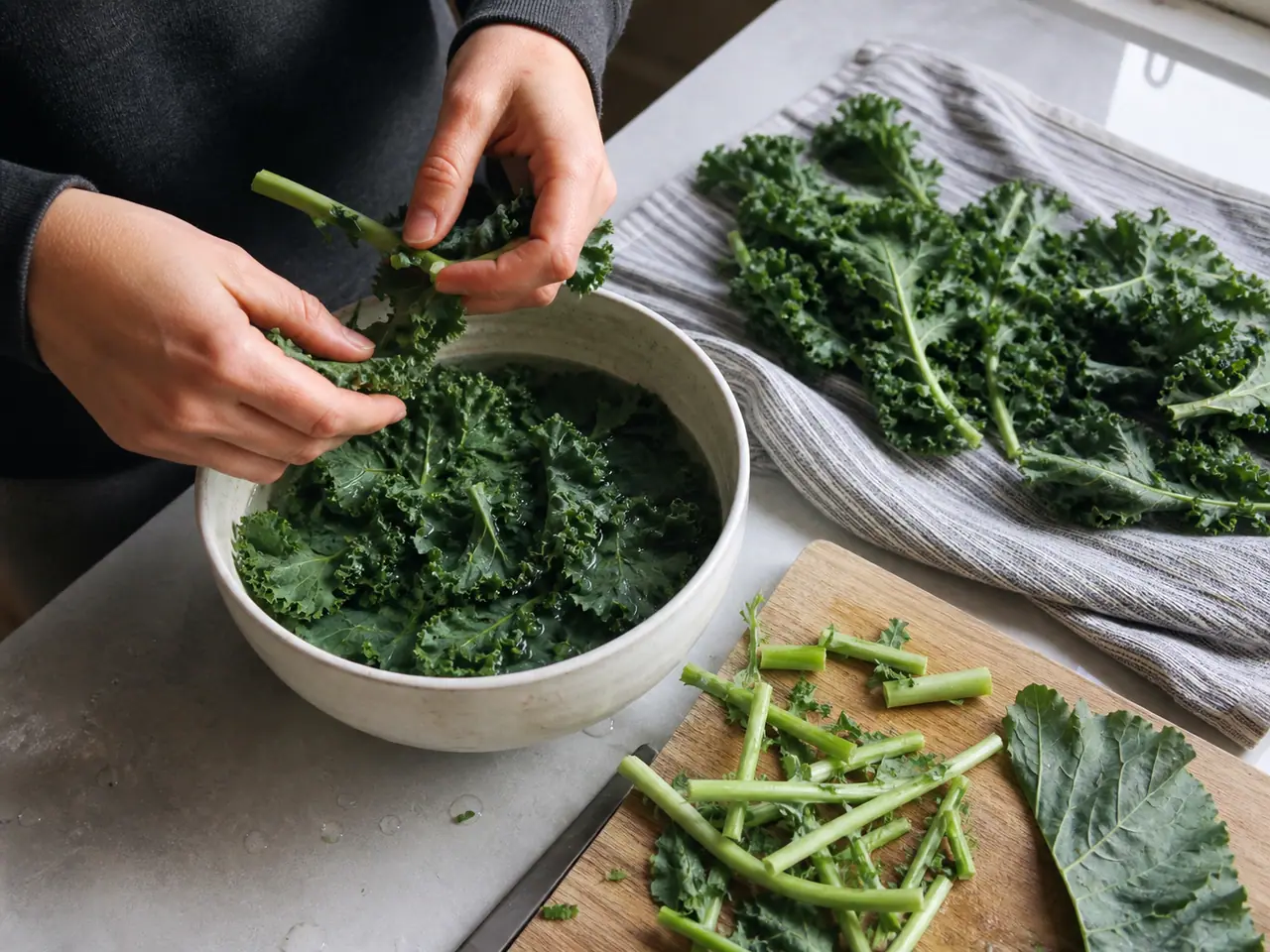
When I know kale is for dinner tomorrow, I strip it, wash it in a large bowl and dry it well. I store the leaves and sliced stems separately so the stems can start the pan first.
Prepared kale needs a clean dry container. The convenience is worth it when it means the bunch gets cooked before it is forgotten.
That small pause saves more food than a rescue at the end.
Use the oldest leaves first
Move softer leaves to the front and keep the strongest ones for salads or roasting. A tired but sound leaf belongs in soup, beans or a covered pan.
Do not mix a new bunch with old wet leaves. Use one batch down before opening another, and clean the container between batches.
The next step works better when the excess moisture has somewhere to go.
Know the discard line
Wilted kale can recover some shape in cold water if it is clean. Slimy leaves, mould and sour smell are different; discard them rather than trying to hide them under sauce.
Storage buys time but does not reverse decay. I would rather change dinner to soup than keep a bad leaf in the fridge for another day.
I keep one piece aside so I can compare it with the next batch.
Storage works best when it has an exit plan. I write the meal in my head before I put the kale away, then place the most fragile pieces where I will see them first. A container can slow water loss and condensation, but it cannot improve a tired leaf, bruised cap or soft fruit. Visibility is part of freshness because forgotten food gets no useful second chance.
If I need to prepare ahead, I separate the parts that like different conditions. Dry pieces stay apart from dressing, sliced stems stay apart from tender leaves and a wet towel gets replaced rather than left as padding. This takes less room than a complicated storage system and gives me a clear signal when the batch needs cooking.
I use a short inspection before every meal: smell, surface, firmness and any liquid at the bottom. A sound piece that has wilted can often be cooked, drained or trimmed. Slime, mould, sour smell and spreading decay are a different category. No storage trick is worth carrying those signs into a finished dish.
When the bunch is unusually large, I split it between two shallow containers rather than forcing it into one deep bag. The lower leaves stay less crushed, condensation is easier to spot and the stems remain available for the first pan. Small storage decisions show up later as shorter prep and fewer leaves thrown away.
For the quality and storage details that sit behind my kitchen observations, I use the Colorado State Extension kale guide alongside the timed test described above.
The practical verdict
Kale stays fresh when it is cold, dry and uncrushed. Remove damaged leaves, line the container and keep the usable greens visible.
A ready-to-cook batch is helpful, but only if the leaves are genuinely dry before storage.
Questions
What is the best way to store kale?
Can kale be washed before storing?
How long does kale last in the fridge?
Can wilted kale be revived?
More guides
All guides →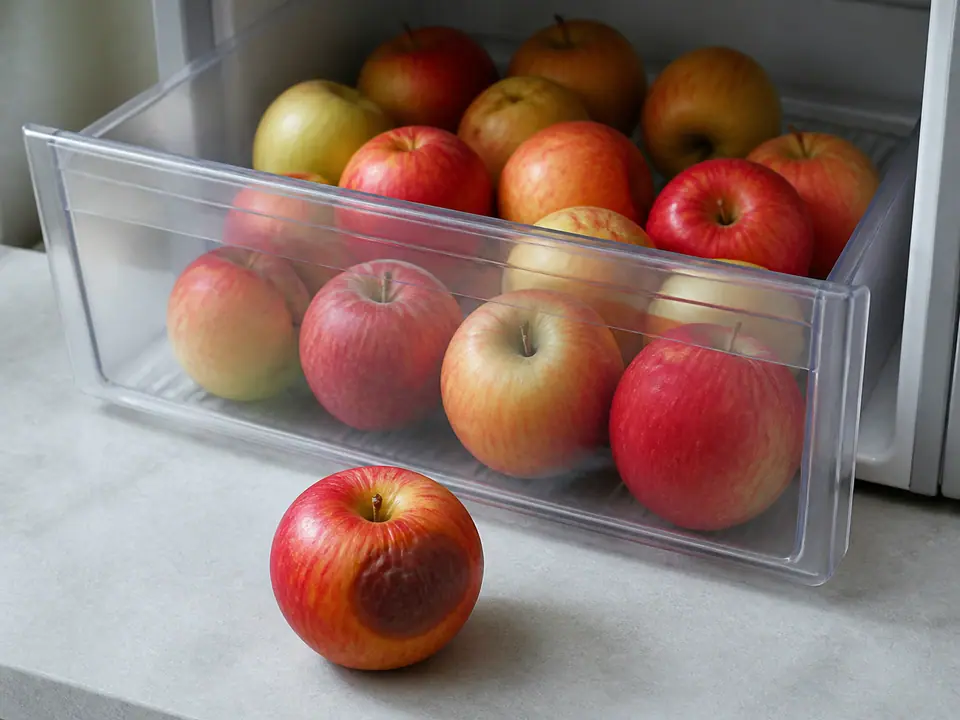
How to keep apples crisp for longer
Apples keep their crunch best when cold, protected from bruises and checked for soft fruit. Store them loose or in a breathable bag and remove damaged pieces early.

5 dinners that make kale taste good
Kale tastes better when the pan gives it enough time and a clear partner. Try creamy beans, lemon pasta, eggs, potatoes or a tomato lentil soup.
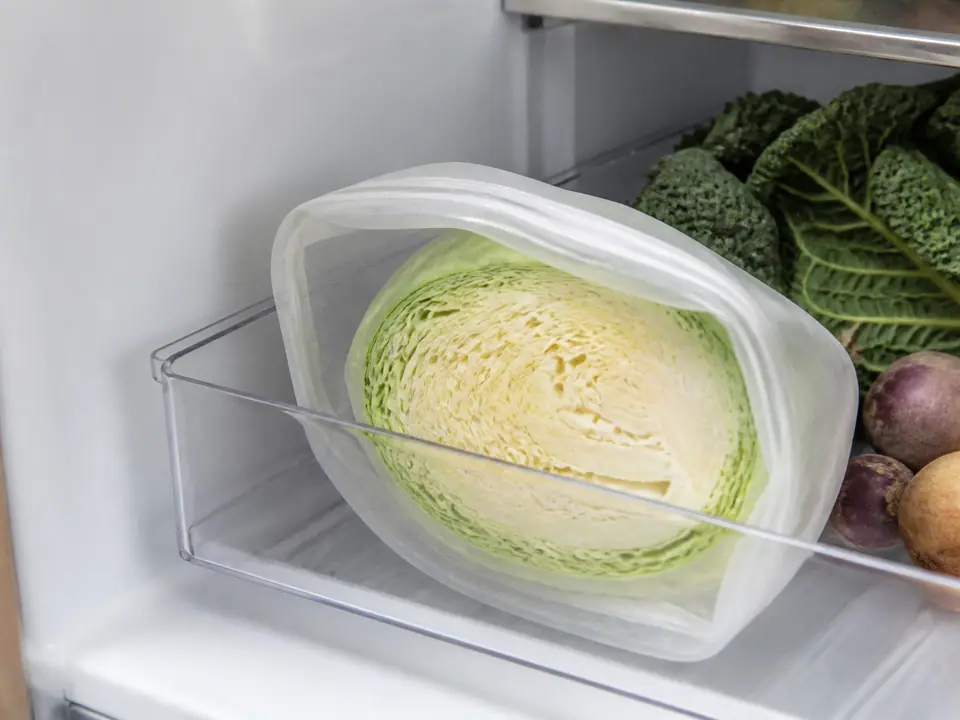
How to keep a cut cabbage fresh for a week
A cut cabbage can stay useful for a week when the exposed face is dry, covered and kept cold. Slice from the outside and leave the core intact.