The half tin in the fridge needs a job, not a vague promise
Move leftover tomatoes out of the tin, chill them promptly and freeze portions you will actually use. The best storage plan is one that has a next meal attached to it.

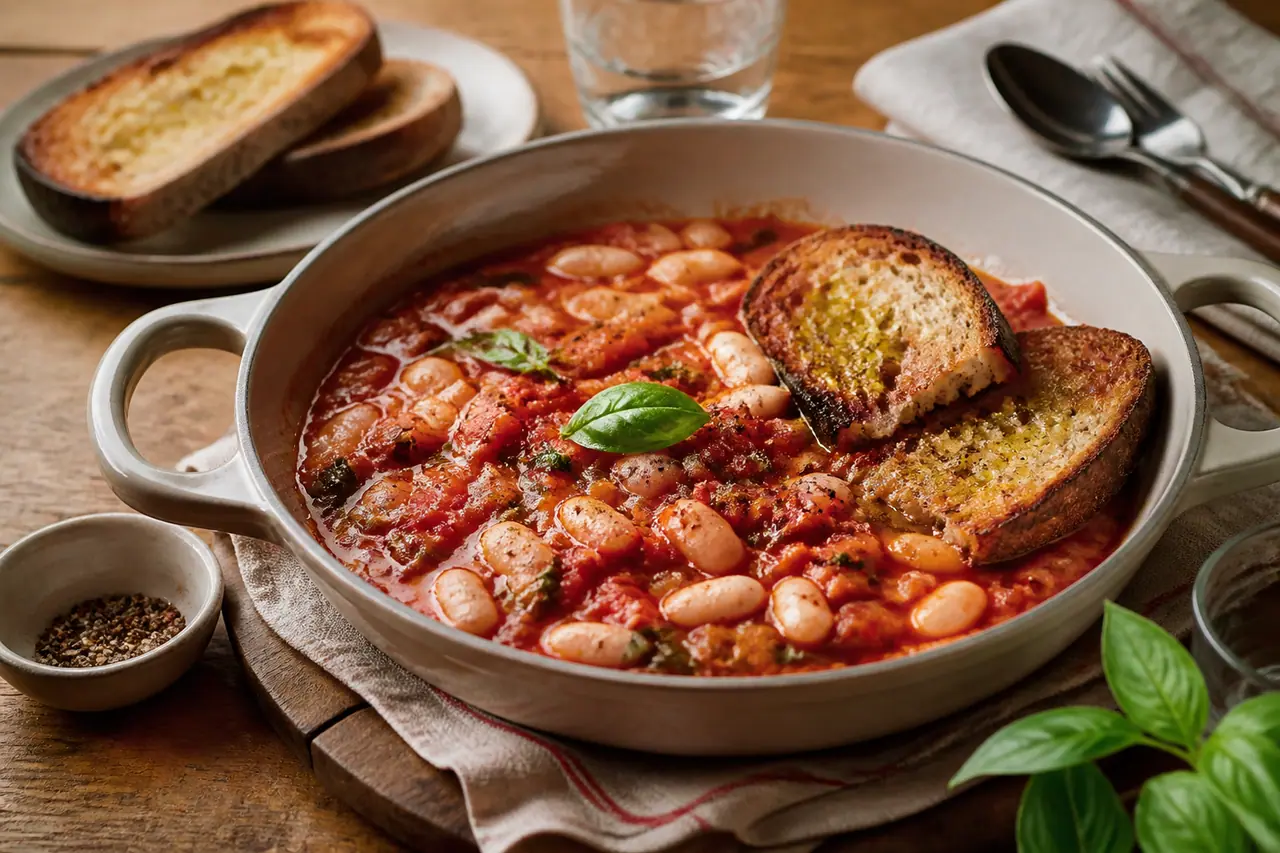
The half tin at the back of the fridge is not a plan. It is a countdown with no dinner attached. I keep leftover tinned tomatoes in a small container for one of two reasons: I will use them within a few days, or I freeze them in a portion that fits a real meal. The portion matters. A full leftover tin feels like another recipe. One hundred and fifty grams feels like a sauce starter, a spoonful for beans or the beginning of soup. Give the ingredient a size and it becomes easier to use. I learned to portion leftovers after throwing away three open tins in one month, each one too small for the dish I had imagined and too large to ignore. A labelled portion removes that small act of planning. It tells me what the food can become before it disappears behind the yoghurt.
Transfer them out of the opened can, cover the container, chill promptly and label it with the date. The USDA guidance for leftovers gives a three-to-four-day fridge window for many cooked leftovers; for an opened tomato product, follow the product label where it is more specific and use your judgement about smell, mould and texture.
| When you need it | Best move | Portion |
|---|---|---|
| Tomorrow or the next day | Covered container in the fridge | Keep as much as needed |
| Later this week | Fridge, dated and sealed | One cooking portion |
| Next month | Freeze in a flat labelled portion | 120 to 200 g |
| No planned use | Freeze or cook it now | Do not leave it open-ended |
Source: USDA FSIS leftovers guidance and Maren Ashby's kitchen practice
Why the can is not the storage container
An opened can is awkward to cover and easy to knock over. The exposed surface dries at the edges, picks up fridge smells and leaves you scraping around a sharp rim. Put the tomatoes into a clean container with a lid as soon as you know the whole tin is not going into the pan. I use a container that is only a little larger than the leftovers, because a huge box makes a small amount hard to see and easy to lose. The change takes seconds. It also gives the food a flat surface, a date and a proper place in the fridge. Those details sound boring until they prevent the third half tin of the week from disappearing.
A shallow container cools faster than a deep jar. Do not leave a hot pot on the counter for hours while deciding what to do. The FDA food safety guidance covers the broader rule: refrigerate perishable food promptly and keep the fridge cold.
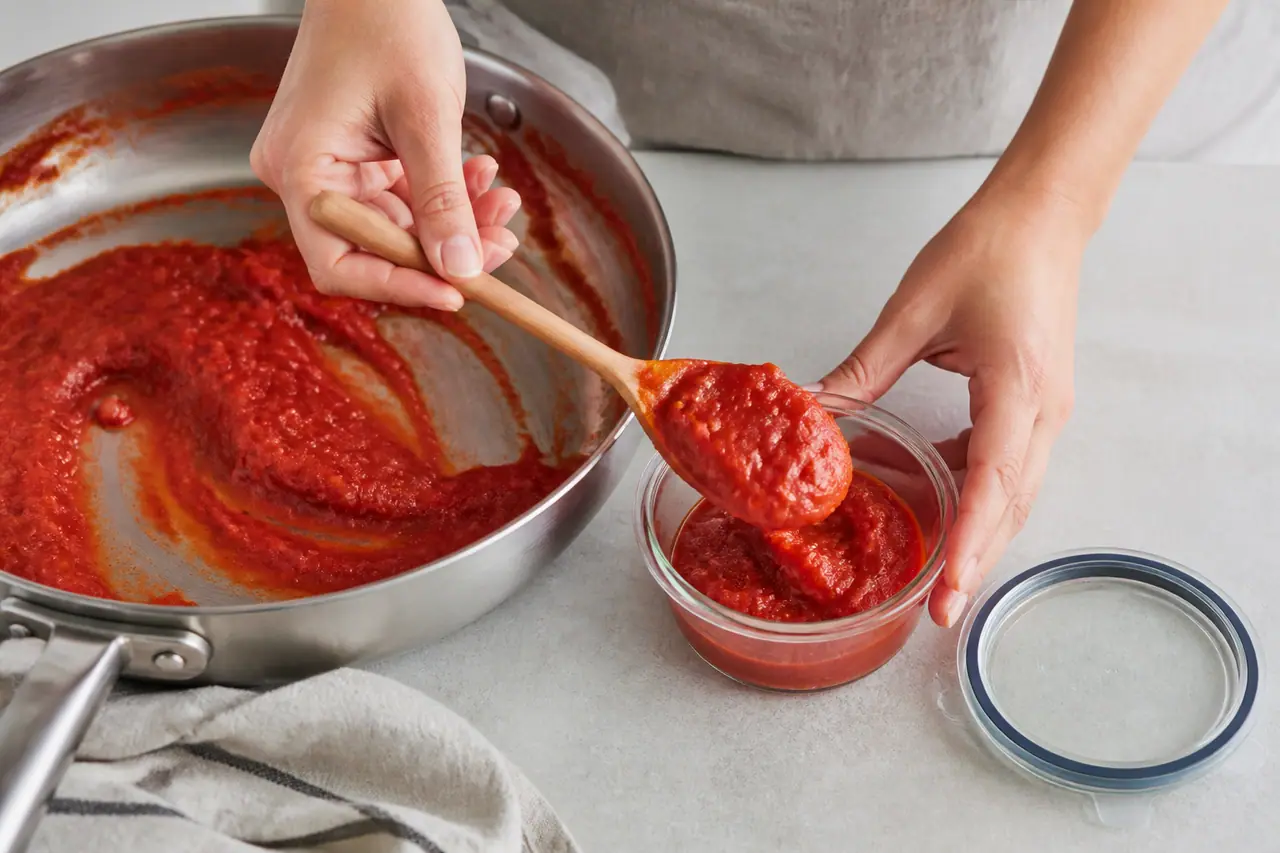
The freezer portions I actually use
Freeze tomatoes in 150 g or 200 g portions, pressed flat in a freezer bag or sealed in small tubs. A flat portion thaws quickly and takes less space. Write the weight and date on it before it goes in, because frozen red bricks are impossible to identify later.
Small portions suit a pan of beans, a quick soup or the sauce for two servings of pasta. Freeze a full 400 g tin only when you know you will use all of it at once. Ice cube trays work for tablespoons of tomato in a braise, but the cubes need a bag after they are solid so they do not taste like last week's curry.
Four ways to use the last few spoonfuls
- Soup base: stir it into stock with chickpeas, cumin and lemon. The spiced chickpea soup is a good route for a larger amount.
- Pan sauce: cook it with garlic and olive oil, then spoon it under eggs or white beans.
- Traybake gloss: mix it with paprika and oil, then brush it over peppers before roasting.
- Freezer starter: combine it with sautéed onion and freeze a flat portion for a later stew.
What changes after freezing
Frozen tomatoes thaw softer. That is a problem only if you wanted fresh pieces. In a sauce, soup or stew, the texture change is hidden by the cooking. Freeze them in the form you plan to use: crushed for sauce, spooned into small cubes for seasoning, or mixed into a cooked base.
Thaw in the fridge when you have time. For a hot pan, you can add a frozen portion directly if the food will cook through and you can break it up safely. Do not refreeze a thawed tomato portion unless you have cooked it first.
When to throw it out
If you see mould, discard the whole portion. Do not scrape the surface and keep the rest. If the tomatoes smell fermented, fizzy or sharply wrong, they are done. A grey dry edge is a quality failure, but it is still a signal to stop playing fridge roulette. When in doubt, the bin is cheaper than a ruined evening.
Use clean utensils each time. A spoon that has touched raw meat, dirty sink water or a used plate can shorten the life of the container. Storage is not a magic pause button; it buys you a controlled window.
The rescue dinner
For 200 g leftover tomatoes, warm olive oil with a sliced garlic clove. Add the tomatoes, a pinch of salt and a handful of cooked chickpeas or white beans. Simmer uncovered until thick, then finish with lemon and herbs. Serve with toast or fold through pasta. It takes ten minutes and uses the amount that usually gets forgotten.
If the tomatoes are already frozen, tip them into the pan with a splash of water and keep the heat moderate until they break apart. The goal is not a new recipe with ten ingredients. It is a landing place for the leftover ingredient.
Questions
How long do opened tinned tomatoes last in the fridge?
Can I freeze leftover tinned tomatoes?
Can I leave tomatoes in the opened tin?
Can I freeze tomato sauce twice?
More guides
All guides →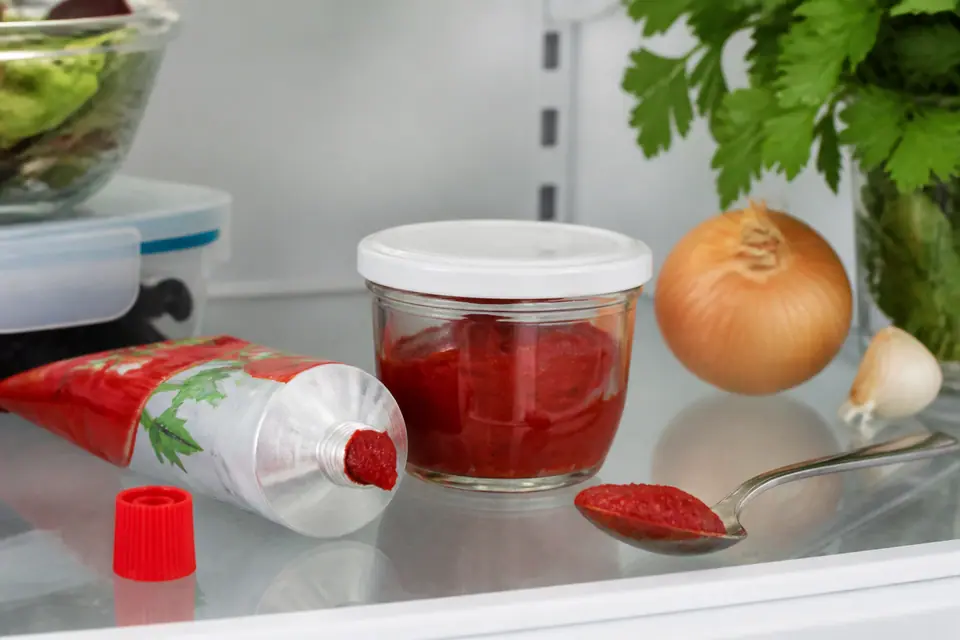
How to store tomato paste after opening
Protect opened tomato paste from air, label it and portion what you will not use soon. A small freezer stash is better than a hopeful fridge corner.

5 dinners for a bag of carrots
Roast carrots with beans, blend them into lentil soup, fry them with rice, fold them through pasta or build a spiced traybake around them.
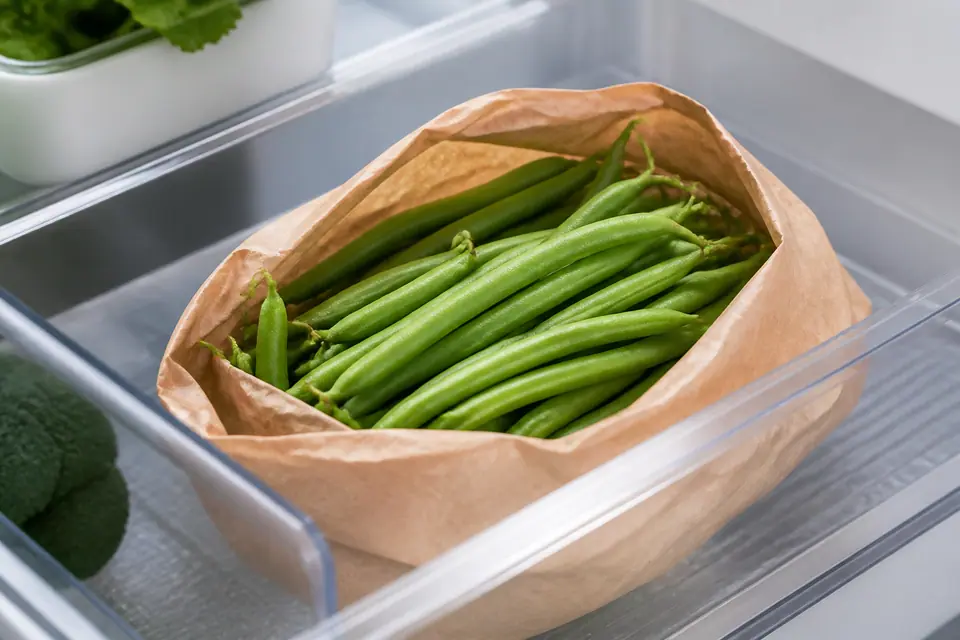
How to keep green beans crisp in the fridge
Green beans lose crispness through water loss but decay quickly when stored wet. Keep them unwashed, cool and loosely contained, then rinse just before cooking.