Cool, dry and ventilated beats the fridge drawer
Sweet potatoes keep best in a cool dry cupboard with air around them. Do not wash them before storing, and inspect the ends before cooking.

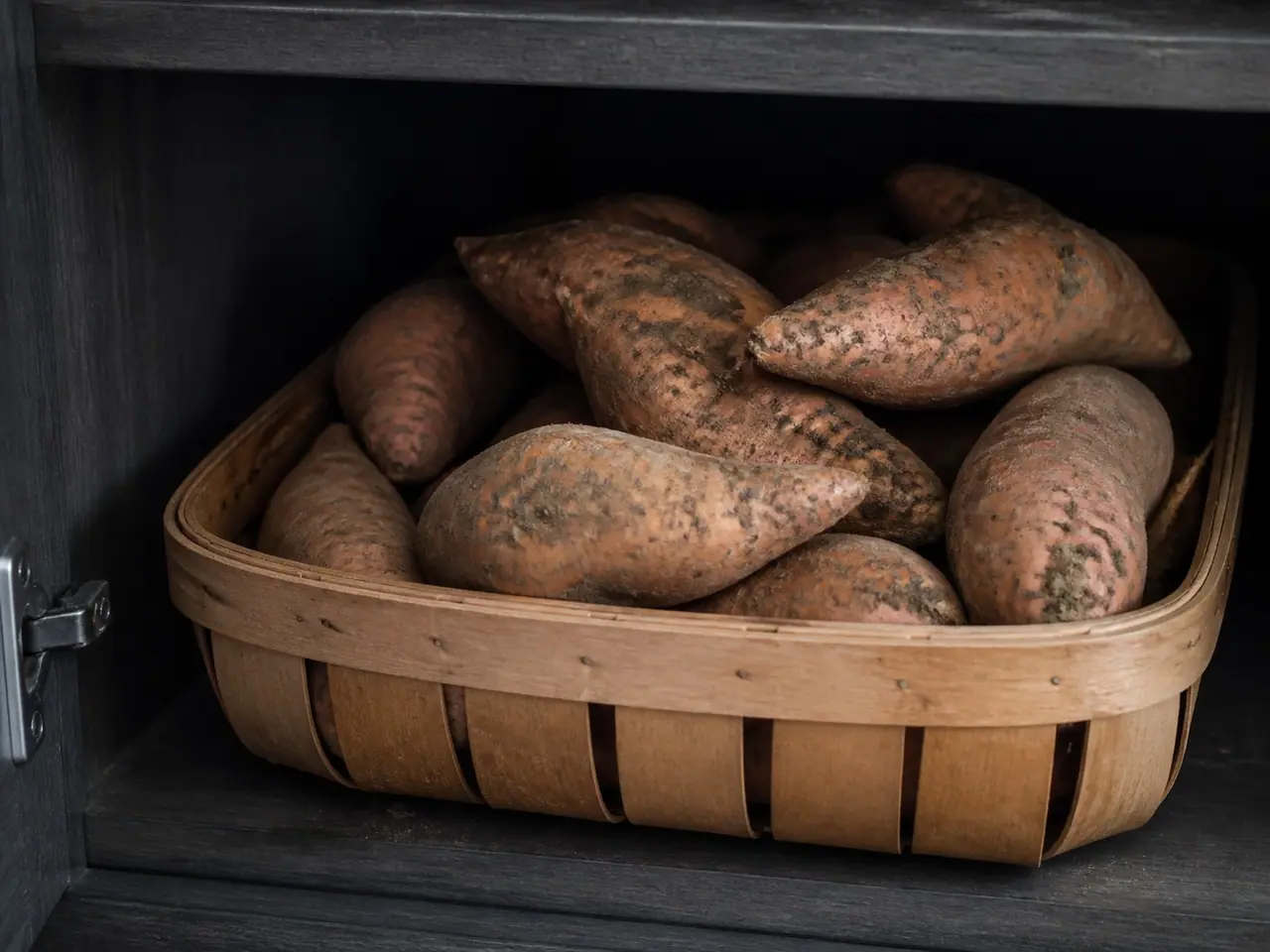
Raw sweet potatoes prefer a cool, dry and dark place with air moving around them. The fridge is convenient but often too cold and damp for the root, while a sealed plastic bag holds moisture against the skin. A basket or open paper bag does a better job.
Store them unwashed and check the ends every few days. Soil can be brushed away when you cook, but water left on the skin gives soft spots a head start. Good storage keeps the roots dry and uncrushed.
I check that detail before adding more heat, oil or seasoning.
Choose the cupboard carefully
Look for the coolest cupboard that stays dry and away from direct sun. Beside an oven or radiator is too warm; under a sink is often too damp. The place that feels comfortable may still trap moisture if there is no air movement.
Leave space between roots. If one sweet potato develops a soft patch, the rest should not be pressed against it. A shallow basket is better than a deep bowl because damage stays visible.
I check that detail before adding more heat, oil or seasoning.
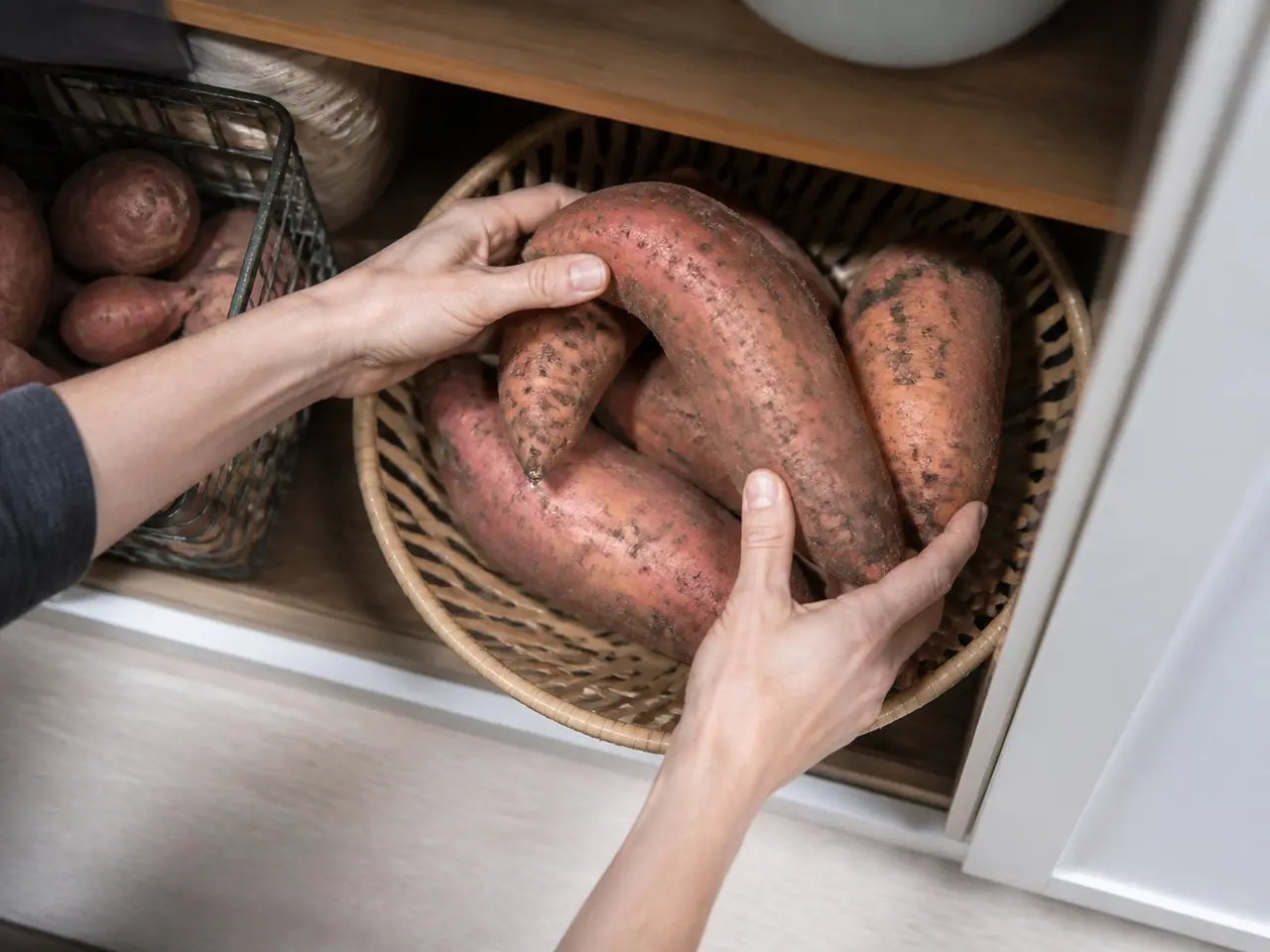
Do not wash before storage
Rinse soil off only when you are ready to cook. If the roots are muddy, brush them gently with a dry cloth and leave them unsealed. Washing can be useful before roasting, but storage starts with a dry skin.
If a root has been rinsed by mistake, dry it thoroughly and use it soon rather than putting it into a closed container for weeks.
The clock helps, but the surface gives the better signal.
Keep plastic loose
A paper bag with its top open can keep dust away without making a humid pocket. A reusable fabric bag works too if the cupboard is dry. Avoid a tightly tied plastic bag, especially when the roots are still warm.
If you have only plastic, leave it open and check the roots more often. The goal is not a particular container. It is a dry surface and enough air for condensation to leave.
I keep one piece aside so I can compare it with the next batch.
Separate the damaged root
Inspect the stem end, tip and any bruised patch. A small dry mark can be trimmed when you cook, but a soft or wet area should not stay against sound roots. Use the damaged one first if the flesh underneath is clean and firm.
Mould or a sour smell is a different problem. Do not wash a spoiled root and return it to the basket. Discard it and wipe the storage surface.
That small pause saves more food than a rescue at the end.
Plan the next use
Whole roots keep better than cut ones, so do not peel a batch in advance unless dinner is close. Once cut, store the pieces in the fridge in a covered container and cook them soon.
Cooked sweet potato belongs in the fridge, not the cupboard. Cool it promptly, cover it and use it in bowls, mash or soup.
The next step works better when the excess moisture has somewhere to go.
Use condition as a clock
A firm root can wait. A root with a dry tip should move to the front of the basket. A root that has started to soften belongs in soup, mash or a tray tonight.
Storage is easier when the basket has a route. I do not ask every root to last equally long; I cook the one that is changing first.
The result should look ordinary and feel deliberate, not overworked.
A cupboard that works in winter may be too warm in summer. Move the basket away from the cooker and buy smaller amounts when the room temperature rises. I would rather make one extra shop visit than lose a whole pile to a warm, sealed corner. Storage is part of the shopping plan, not an instruction that happens after it.
Root vegetables reward a small check before the main work. I look at one piece, one cut face or one stored end and let that evidence choose the next step. A firm centre deserves a hot tray; a soft one belongs in soup or mash. A dry cupboard suits a whole root; a covered container suits a cut one. That habit keeps the method honest and saves me from adding more heat, water or seasoning to a problem that started with the ingredient itself.
The short answer
Keep raw sweet potatoes unwashed in a cool, dark, dry and ventilated place. A shallow basket or open paper bag is better than a damp fridge drawer or sealed plastic.
The moment a root is cut or cooked, move it to the fridge and give it a new plan. Whole roots need air; cooked food needs cold.
Questions
Should sweet potatoes be stored in the fridge?
Can I store sweet potatoes in plastic?
Should I wash sweet potatoes before storage?
How do I know one has gone bad?
More guides
All guides →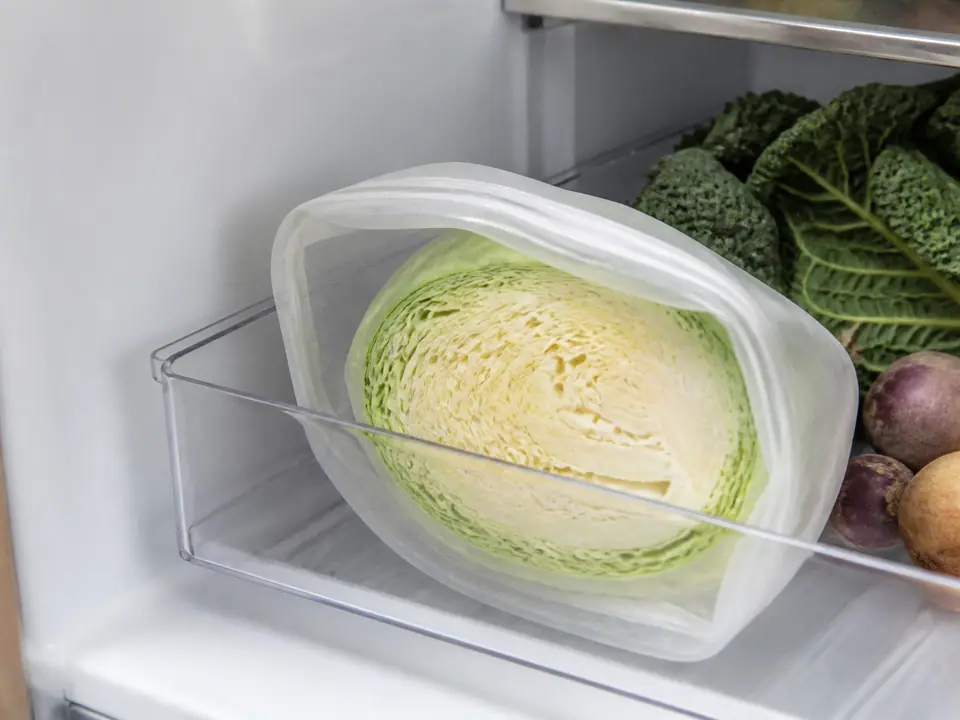
How to keep a cut cabbage fresh for a week
A cut cabbage can stay useful for a week when the exposed face is dry, covered and kept cold. Slice from the outside and leave the core intact.
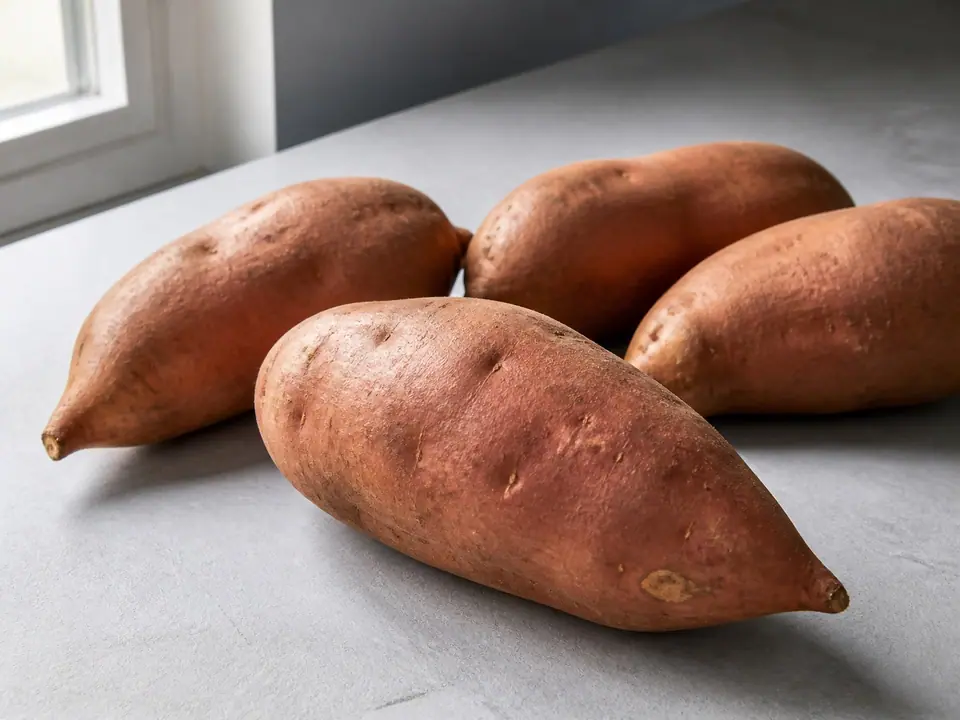
How to choose sweet potatoes with a dry, firm centre
Look for a firm sweet potato with tight skin, a clean stem end and weight that feels substantial for its size. Reject soft patches before they reach the tray.

5 dinners for a bag of carrots
Roast carrots with beans, blend them into lentil soup, fry them with rice, fold them through pasta or build a spiced traybake around them.