The tube saves paste. The tin saves money.
Buy a tube when you use tomato paste a little at a time. Buy a tin when you cook for a crowd or want the lowest cost per spoon.

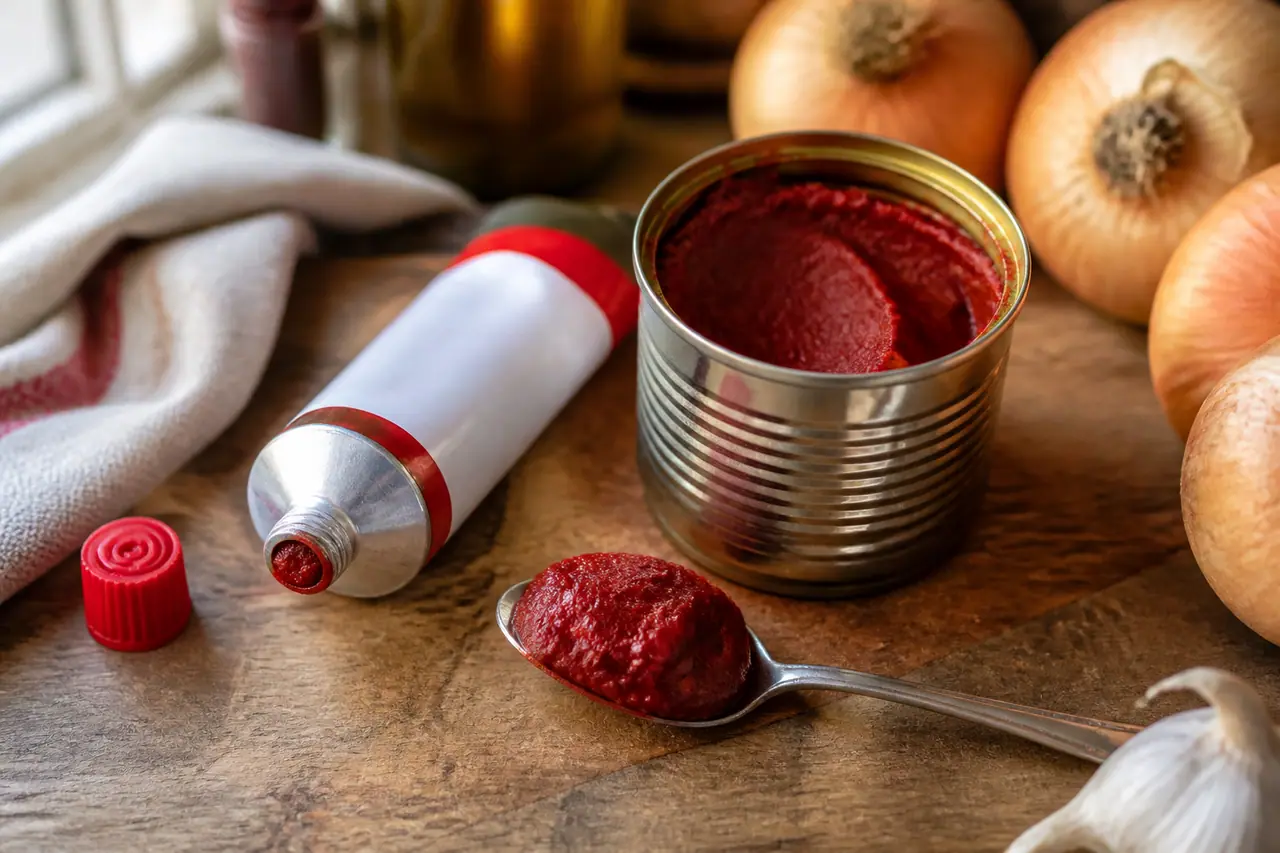
The tube is the better buy for most small households. You can squeeze out one spoonful, put the cap back on and return it to the fridge without leaving half a tin in a bowl. The tin is better value when you use a large amount in one meal, or when you cook for several people and can finish the contents without a storage job. That is the whole decision in one sentence, but the details matter because tomato paste is a small ingredient with a surprisingly high waste rate.
I tested both formats in the same onion base and used the leftovers in later dinners. The paste itself was not the interesting part. The useful difference was how easily I could control the portion, protect the remainder and remember that it was there. A tube encourages small additions. A tin encourages you to find a second use before it dries out. Neither format makes a sauce taste magically better.
The tube earns its space in a small kitchen
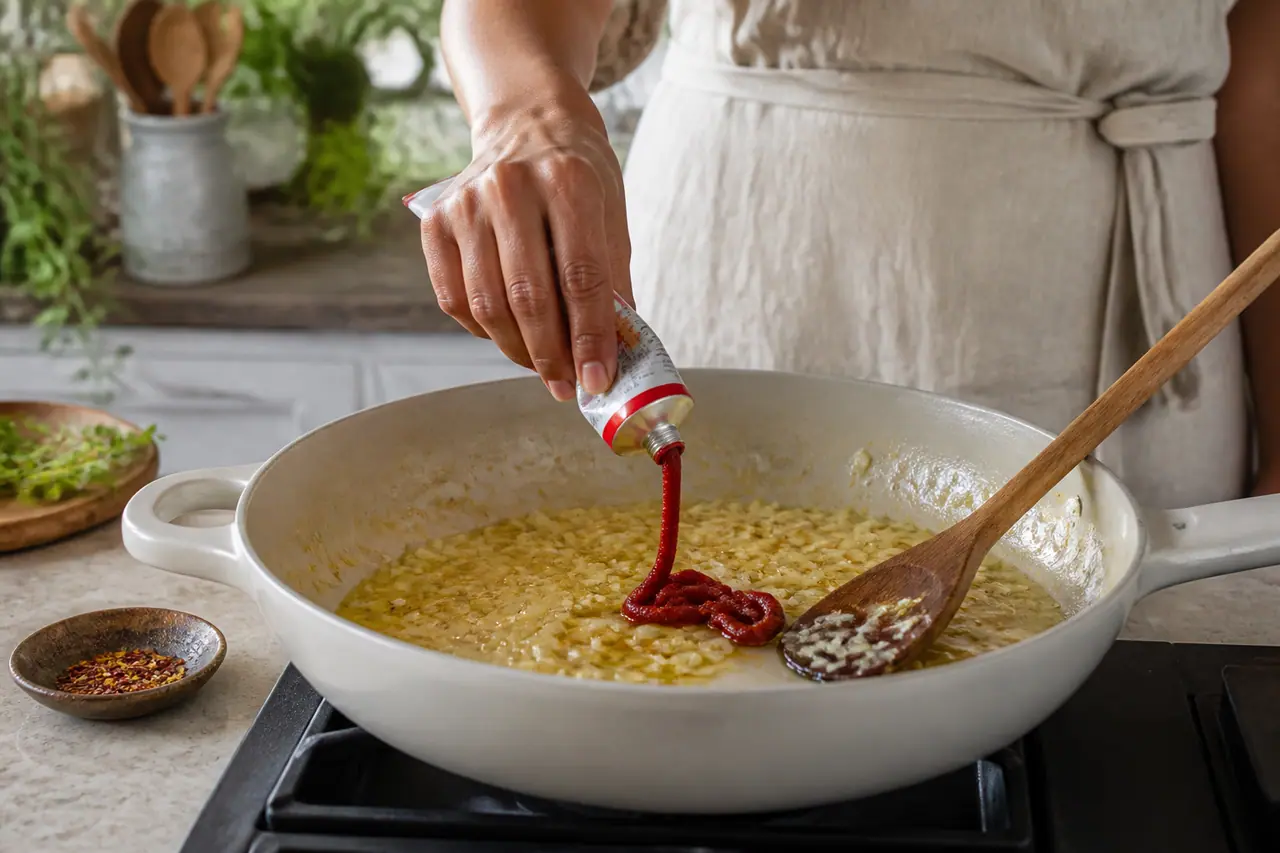
A tube is designed around the way tomato paste is actually used at home: one spoonful in a lentil soup, a little under the onions for a stew, or a stripe stirred into gravy. The opening stays small, so the paste does not sit exposed across a wide surface. That makes the next use feel like part of dinner rather than a rescue mission. I wipe the nozzle, close the cap firmly and keep the tube in the coldest practical part of the fridge, standing in a small jar if it tends to fall over.
The convenience is not just about storage. It changes the amount I use. When the recipe needs only a teaspoon, I do not feel that I have opened an ingredient with a deadline. I can add a little, taste, then add a little more. That is useful in a pan where tomato paste can become bitter if too much lands in one place and catches before the oil coats it.
The tin wins when the dinner is large
For a big pot of chilli, a tray of roasted vegetables or a batch of tomato soup, the tin is often the sensible format. You can scrape every last bit into the pan, and the wide opening makes that simple. Tins also tend to be cheaper per spoonful, especially when the shop sells them in multipacks. If I am cooking for friends, I would rather use a tin than keep squeezing a tube while trying to judge whether the amount is enough for the whole pot.
The tin is less forgiving after opening. I transfer any remainder to a small covered container straight away rather than leave it in the metal. A layer of oil on top helps protect the surface for a short fridge stay, but it does not remove the need to label the container or make a plan. If I cannot see a use for it within the next few days, I portion it onto baking paper, freeze it, then move the firm pieces into a labelled bag. That turns a waste problem into a ready-made flavour booster.
| Question | Tube | Tin |
|---|---|---|
| Best for | Small additions across several meals | One large pot or tray |
| Portion control | Excellent | Less precise |
| Storage after opening | Cap and refrigerate | Transfer and cover |
| Value per spoon | Usually higher | Usually lower |
| Main risk | The tube gets forgotten | The remainder gets wasted |
Source: Maren Ashby's kitchen comparison, 2026-01-06
Read the label, then taste the paste
Format is only half the purchase. I look for tomato paste with a short ingredient list, then check whether salt, sugar or herbs have been added. A seasoned paste can be useful, but it removes control from a recipe that may already contain stock, cheese or salty beans. The colour should be a deep red rather than brown at the first opening, and the texture should be dense enough to hold a ridge from the spoon instead of flowing like passata.
Do not judge a tube by the fact that it feels more expensive at the shelf. Compare the amount you will actually use before it expires. A cheap tin that loses half its contents is not cheap in the kitchen. A tube that costs more but gets used down to the last squeeze can be the lower-waste choice, even before you count the time spent finding a use for leftovers.
The verdict
Choose the tube if you cook for one or two, add tomato paste by the spoonful and hate throwing away half-used ingredients. Choose the tin if you cook big batches, want the lowest cost per spoon and can use the remainder immediately. The paste is the same kind of ingredient in both formats, so the winning package is the one that matches your pattern of use. For most ordinary weeknights, that is the tube.
Whichever one you buy, fry the paste briefly in the oil before adding liquid. That small step gives it a deeper, rounder flavour and makes the format matter much less than the timing.
Questions
Is tomato paste in a tube better than tinned tomato paste?
Can I freeze leftover tomato paste from a tin?
Does tomato paste in a tube need to be refrigerated?
How much tomato paste should I use?
More guides
All guides →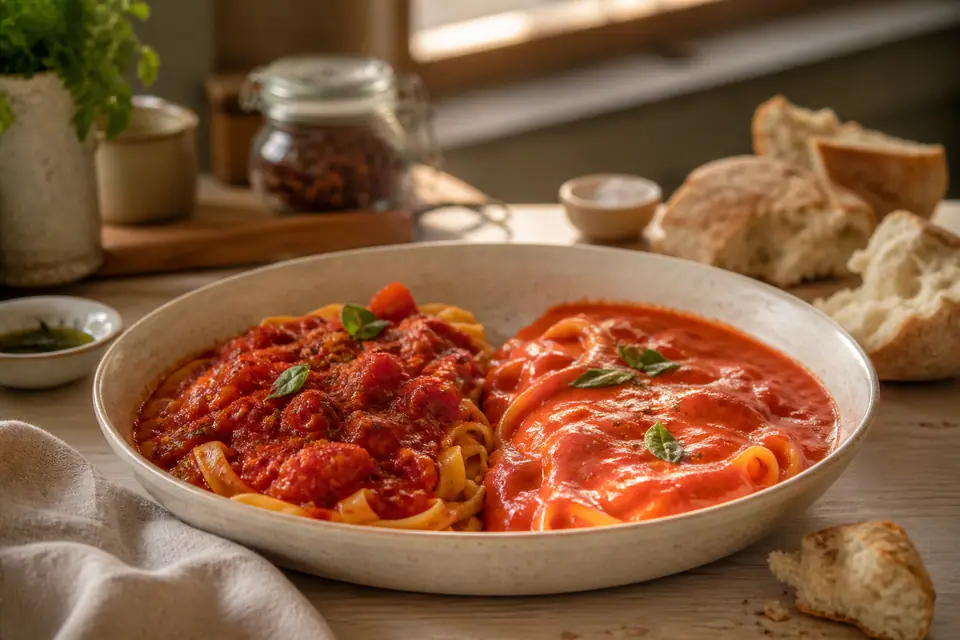
Tinned tomatoes vs passata: which belongs in your sauce?
Use tinned tomatoes when the tomato should stay visible. Use passata when you want a smooth sauce with less work. The middle ground is where most pans go wrong.

5 dinners for a bag of carrots
Roast carrots with beans, blend them into lentil soup, fry them with rice, fold them through pasta or build a spiced traybake around them.
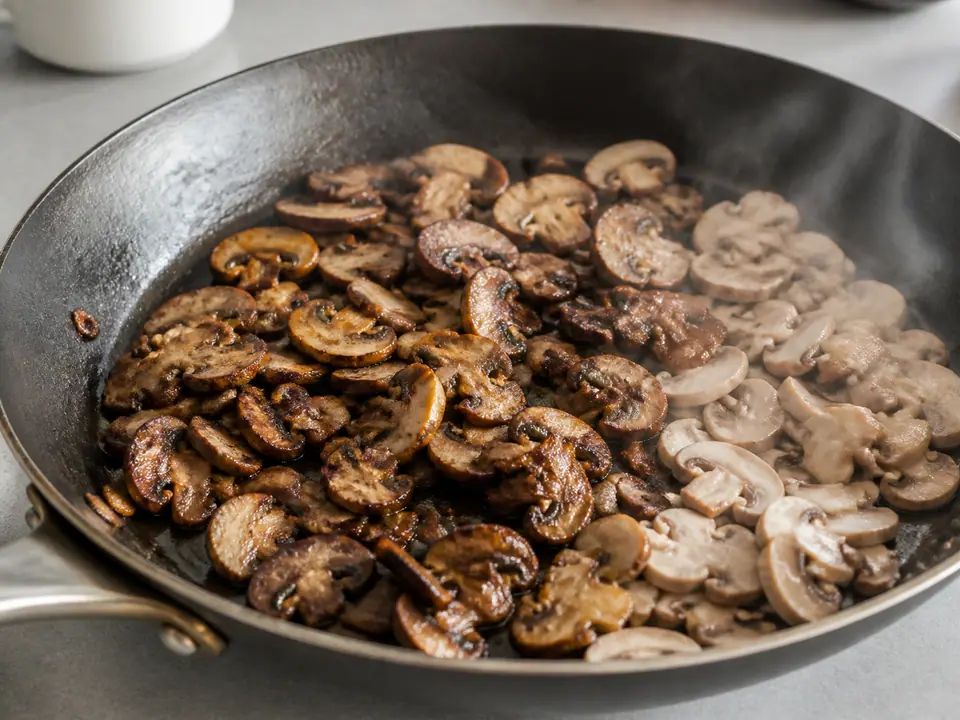
Why mushrooms steam instead of brown
Mushrooms release a surprising amount of water. Give them a dry surface, a wide pan and time before seasoning if you want colour instead of a grey simmer.