Choose by the sauce you want, not the label on the tin
Use tinned tomatoes when the tomato should stay visible. Use passata when you want a smooth sauce with less work. The middle ground is where most pans go wrong.

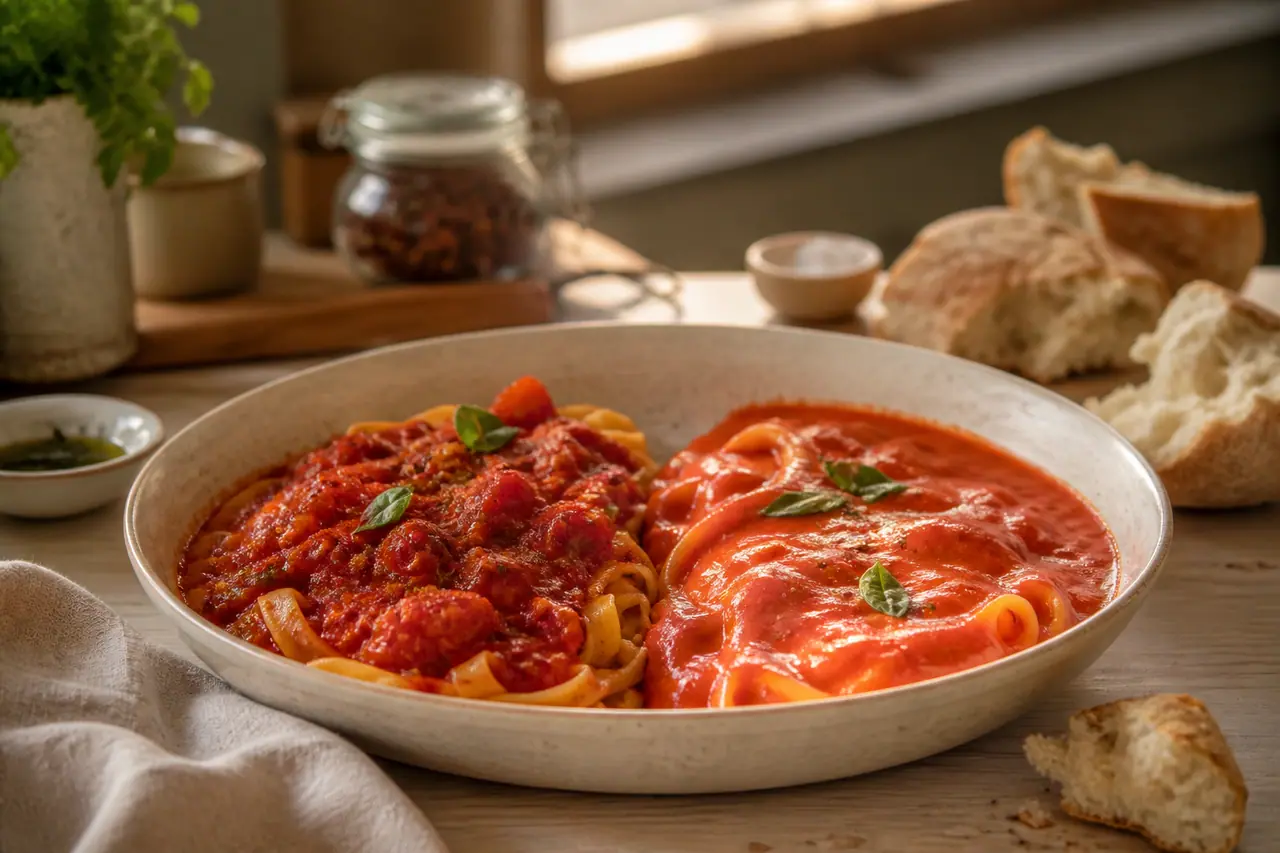
For a sauce with tomato pieces, buy tinned tomatoes. For a sauce that should coat pasta in one smooth red layer, buy passata. That is the useful answer, and it saves more money than hunting for a premium label. The choice also affects how much attention the pan needs. A whole tomato can sit in a braise while you chop the next thing. Passata asks for more stirring because its smooth surface heats and thickens all at once. That is a small difference, but it is the difference I notice on a tired weeknight. It also changes the clean-up. Crushed tomato dries in flecks around a wide pan, while passata leaves a smooth ring that lifts with hot water. Neither issue decides a purchase, but both become obvious after cooking the same dinner several times. The pantry ingredient that behaves calmly is often the one I reach for again.
I cooked both in the same shallow pan, with the same onion, oil and 20-minute simmer. The passata became smooth sooner. The tinned tomatoes tasted fresher when I crushed them by hand and gave them another ten minutes. Neither is the better tomato in every job.
| Question | Tinned tomatoes | Passata |
|---|---|---|
| Texture from the pack | Pieces, juice and seeds | Smooth, strained |
| Best first use | Stews and chunky sauces | Quick pasta sauces |
| Work before the pan | Crush or chop | Pour |
| Texture control | High | Low unless reduced |
| Risk | Watery pieces | Flat or thin sauce |
Source: Maren Ashby's side-by-side kitchen test, 2026-08-27
The texture decision is the real one
Tinned tomatoes arrive as fruit held in juice. Even a tin labelled whole has soft flesh, seeds and a little liquid around it. You can crush the tomatoes with your hands, break them with a wooden spoon, or leave them in large pieces for a slow braise. That range is the reason I keep them in the cupboard. It also means one tin can serve two very different meals. Leave the pieces alone for a casserole, or break them down for pasta after the sauce has reduced. The choice stays open until the pan is already doing its work, which is a useful kind of flexibility when the contents of the fridge keep changing.
Passata has already had that decision made for you. The tomatoes are sieved into a pourable puree. It is useful when you need the sauce to look smooth, or when the cooking time is short. It is less useful when the sauce needs a little chew or when you want to cook the liquid down without losing all the tomato body. I think of it as a prepared texture rather than a superior tomato. If the dish needs a clean red coating, prepared texture is a gift. If the dish needs pieces that can catch spices and hold up beside beans, the same preparation becomes a limitation. The pack has already answered the texture question, so make sure it has answered the right one.
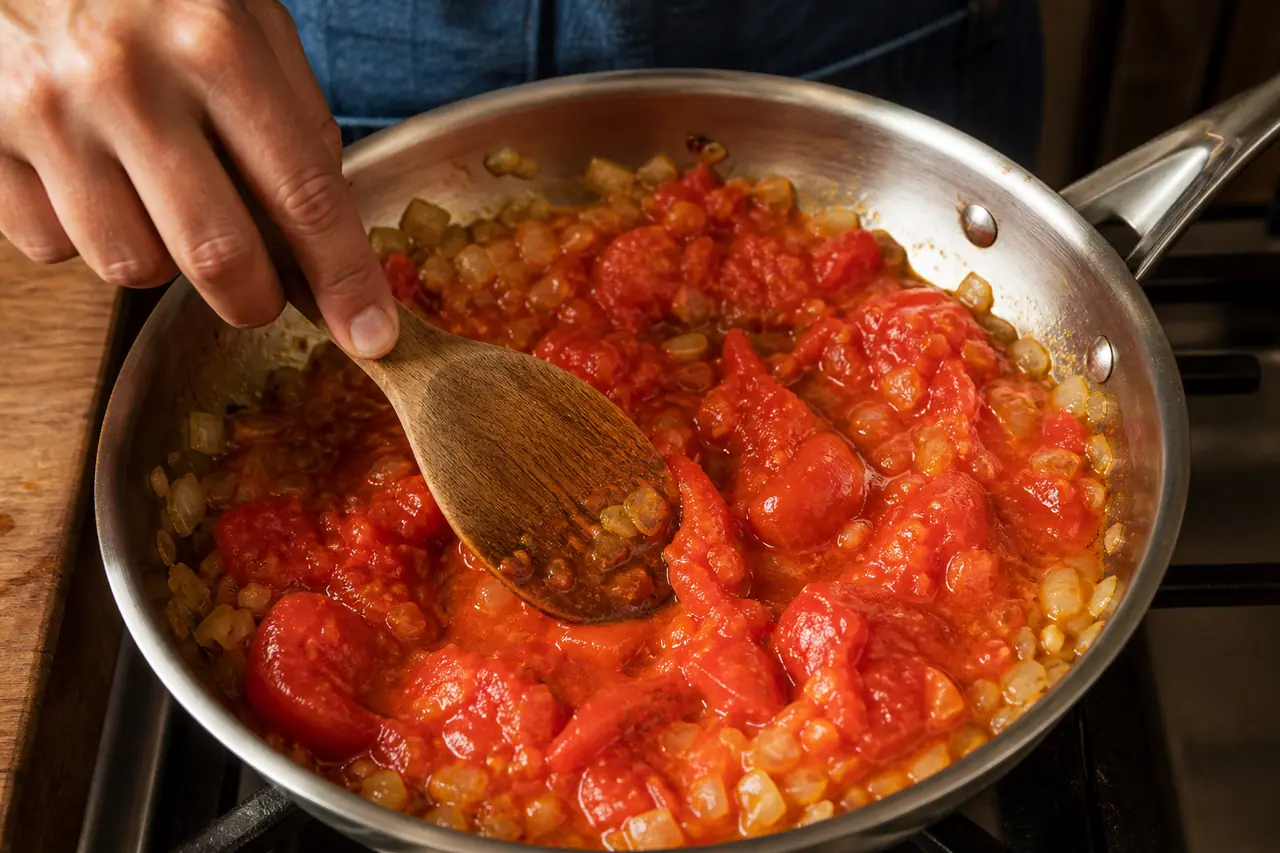
When tinned tomatoes are worth the extra minute
- Stew: whole or chopped tomatoes hold their shape around beans, chicken and vegetables. Try them in the red pepper chickpea stew.
- Arrabbiata: crushed tomatoes give the chilli and garlic something to cling to without turning the pasta into soup.
- Fish or eggs: larger pieces make it possible to judge how much liquid is left around the food.
- Long cooking: the sauce changes as the pieces collapse, so you can stop at the texture you want.
When passata earns its place
Passata is my choice for a fast red sauce under baked eggs, for a smooth base under a meatball dinner, and for any dish where a tomato skin would be annoying. Pour it into a wide pan rather than a small saucepan. More surface area lets water leave quickly, and the sauce thickens without a long simmer.
It also works well in the spiced chickpea soup, where the tomato should disappear into the broth. I would not use it for a rustic stew unless I had no tinned tomatoes. The result is edible, but it loses the small tomato pieces that make a bowl feel cooked rather than assembled.
The test I use before seasoning
Take a spoonful after ten minutes and look at the track it leaves in the pan. If the track closes at once, the sauce still carries too much water for pasta. If it holds for a second and the spoon looks coated, it is ready for oil, cheese or pasta water. Salt does not fix a thin sauce. It only makes the thinness louder.
With tinned tomatoes, crush first and simmer uncovered. With passata, start with a wider pan and stir the bottom more often. Passata can catch before it tastes cooked because its smooth solids sit in one layer. A low flame and a heavy pan help.
The verdict
Buy tinned tomatoes for texture and passata for smoothness. Do not swap them by volume without checking the liquid in the recipe. A sauce written for crushed tomatoes may need a longer reduction when made with passata, while a quick passata sauce can turn watery if you tip in a whole tin and leave the pieces intact.
There is no meaningful nutrition win between the two plain products. Read the ingredient list, check the salt if that matters to you, and choose the texture your dinner needs. The tomato form is a cooking decision, not a quality badge.
For more pantry decisions, see the ingredient pages for red bell pepper and chickpeas.
Questions
Can I use passata instead of tinned tomatoes?
Can I blend tinned tomatoes to make passata?
Which is better for pizza sauce?
Why does my tomato sauce stay watery?
More guides
All guides →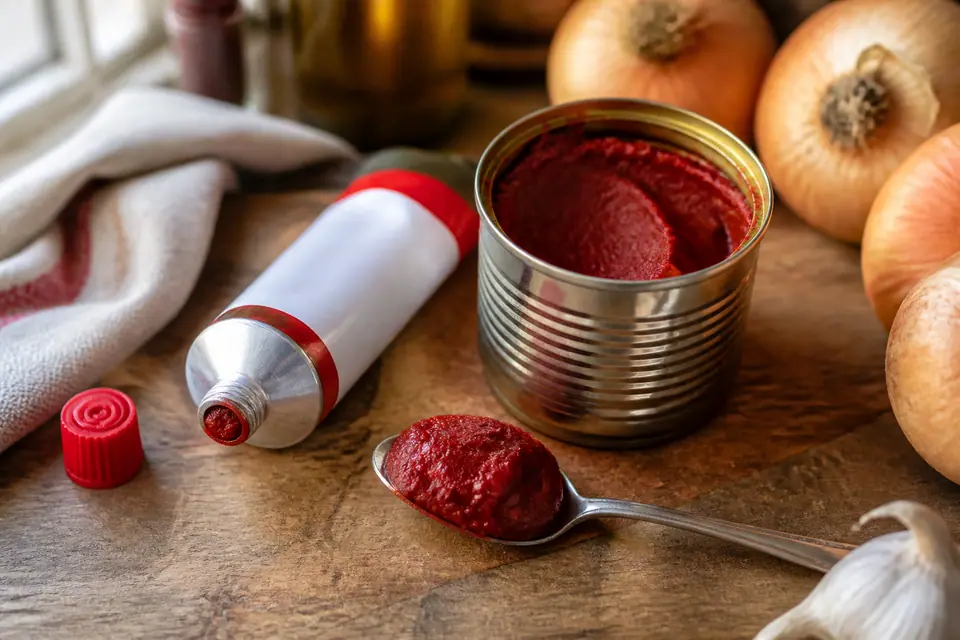
Tomato paste in a tube vs a tin: which is worth buying?
Buy a tube when you use tomato paste a little at a time. Buy a tin when you cook for a crowd or want the lowest cost per spoon.

5 dinners for a bag of carrots
Roast carrots with beans, blend them into lentil soup, fry them with rice, fold them through pasta or build a spiced traybake around them.
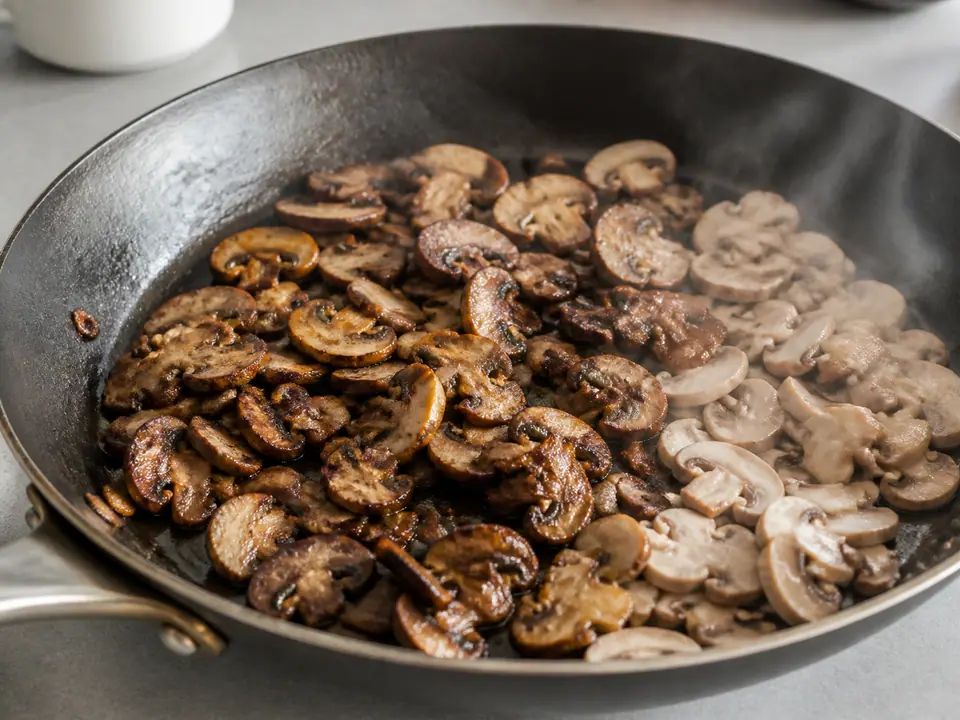
Why mushrooms steam instead of brown
Mushrooms release a surprising amount of water. Give them a dry surface, a wide pan and time before seasoning if you want colour instead of a grey simmer.