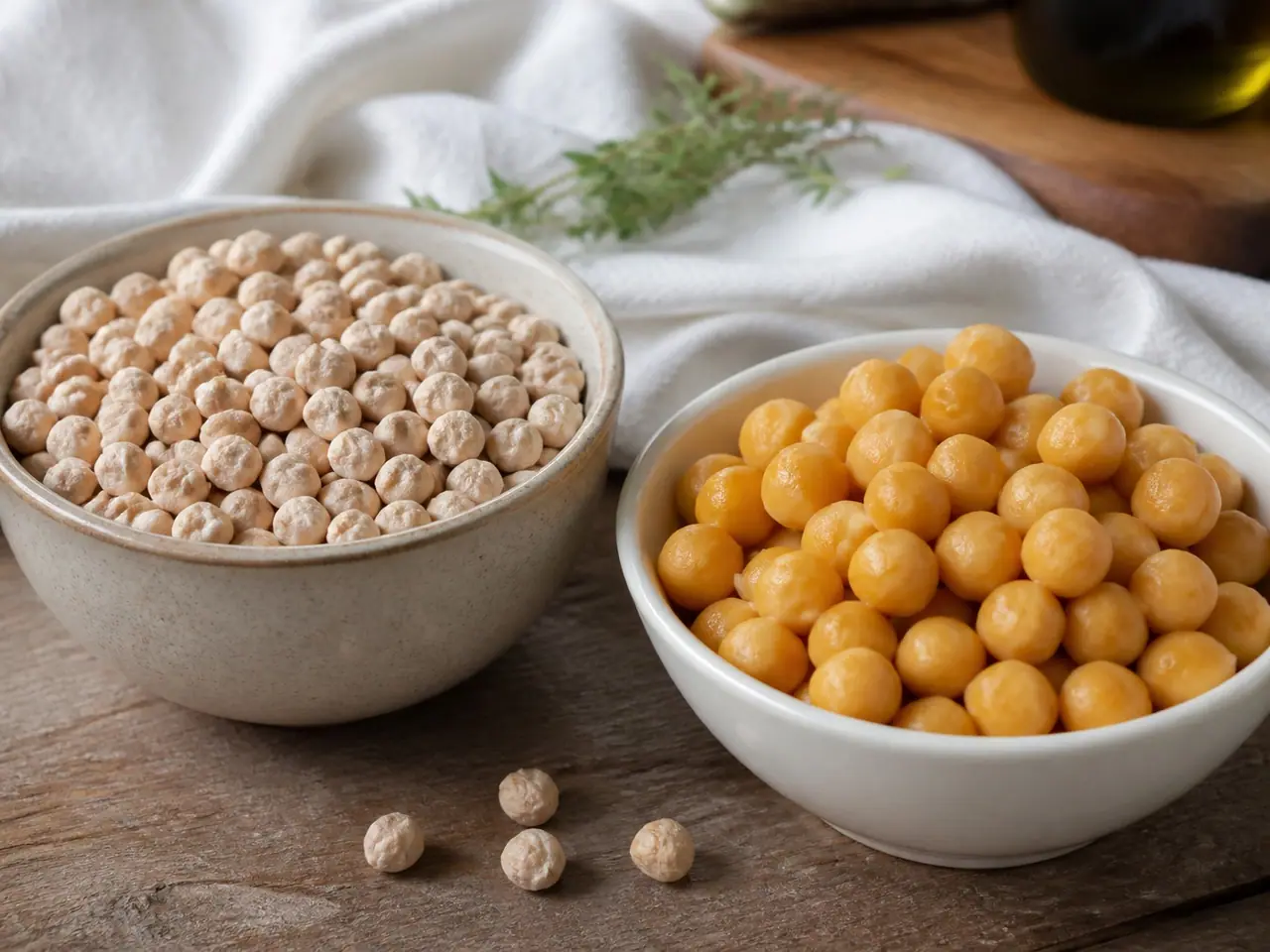
Chickpeas, tinned and dried
Also called garbanzo beans, ceci
The most useful thing in the cupboard: 8.9 g of protein and 7.6 g of fibre per 100 g cooked, and it keeps for years.
The numbers
| Nutrient | Amount | % RI |
|---|---|---|
| Calories | 164 kcal | — |
| Protein | 8.9 g | 18% |
| Carbs | 27.4 g | — |
| Fibre | 7.6 g | 30% |
| Fat | 2.6 g | — |
| Iron | 2.9 mg | 21% |
| Folate | 172 µg | 86% |
Source: USDA FoodData Central, SR Legacy 173757 (chickpeas, mature seeds, cooked, boiled, without salt) · FDC ID 173757 · % RI against EU adult reference intakes.
Buying and keeping
What to look for at the shop, and how to make it last once it is home.
How to pick
- Tinned: the label should read chickpeas, water, salt. Firming agents such as calcium chloride keep them stubbornly firm no matter how long you simmer them.
- Shake the tin. A dull thud means it is packed tight, and you will get more chickpeas and less water for the same money.
- Dried: buy from a shop with turnover. Chickpeas more than about two years old never fully soften, and nothing on the bag will warn you.
- Larger dried chickpeas hold their shape through long cooking. Small ones break down into something closer to a purée, which is what you want for hummus and not for a salad.
- Kabuli chickpeas are the pale ones most recipes assume. Desi, the small dark variety, cook faster and taste nuttier, and are worth seeking out.
How to store
- Dried: airtight, dark, cool. Two years for good texture, edible well beyond that if you accept a longer cook.
- Tinned and unopened: years. Check the seam for rust or bulging and bin anything swollen.
- Opened tin: decant into a container with the liquid, not left in the metal. Three days in the fridge.
- Cooked chickpeas freeze perfectly. Freeze them in their cooking liquid and they will not dry out or wrinkle.
- Never store dried pulses above the oven. Heat cycling is what ages them fastest.
If you have none
Swaps that hold up, with what changes when you use them.
The bicarbonate trick
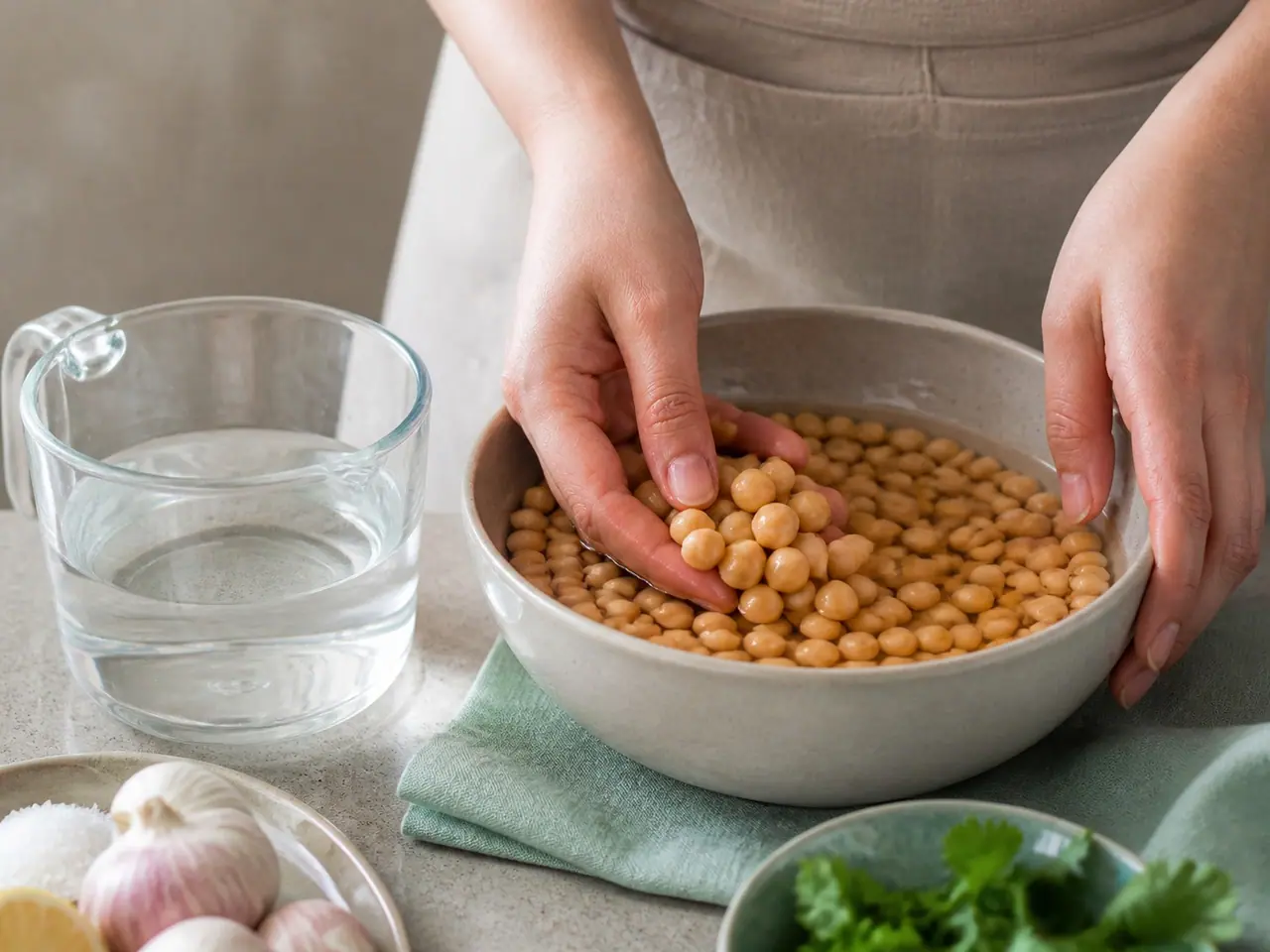
A quarter teaspoon of bicarbonate of soda per litre of soaking water raises the pH, which breaks down pectin in the cell walls and lets water in faster. Chickpeas soaked this way cook in roughly two thirds of the time and end up creamier.
Too much and they go to mush and taste faintly of soap. A quarter teaspoon is the whole trick, and it is worth measuring rather than eyeballing.
Aquafaba is not waste
The liquid in the tin whips like egg white. It is starch and dissolved protein, and it will hold air well enough for a meringue, a mayonnaise or the foam on a cocktail.
Two tablespoons is roughly one egg white.
The liquid from home-cooked chickpeas does the same job and tastes better because you seasoned it. Freeze it in an ice cube tray and you have egg-white substitute on demand, which is more useful than it sounds if anyone in the house does not eat eggs.
Why they sometimes stay hard
Age is the answer nine times out of ten. Very hard water and salting the water early both slow things a little, and neither explains a pot that has simmered for two hours and gone nowhere.
If you suspect old stock, the bicarbonate soak is the only thing that reliably helps. It will not rescue a bag that has been in a warehouse since the last decade.
Questions
Do I need to rinse tinned chickpeas?
Why are my dried chickpeas still hard after two hours?
How much dried equals a 400 g tin?
Can I cook them without soaking?
Are chickpeas and garbanzo beans the same thing?
Recipes using chickpeas
25 on the site so far.
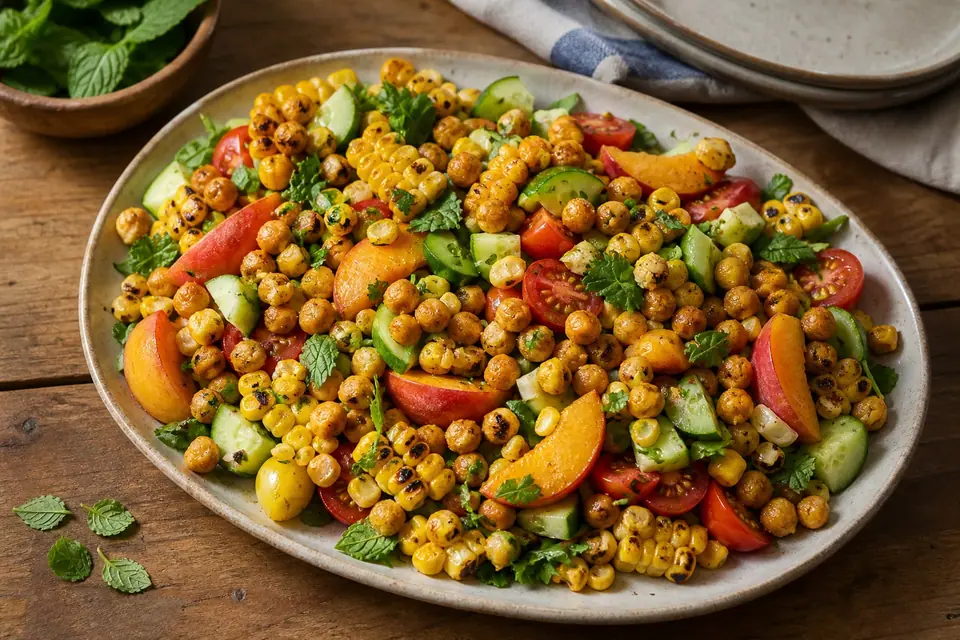
Charred corn, tomato and peach salad with crispy chickpeas
Sweet late-summer produce with chickpeas roasted until their edges crackle. The salad stays fresh while the chickpeas bring the substance.
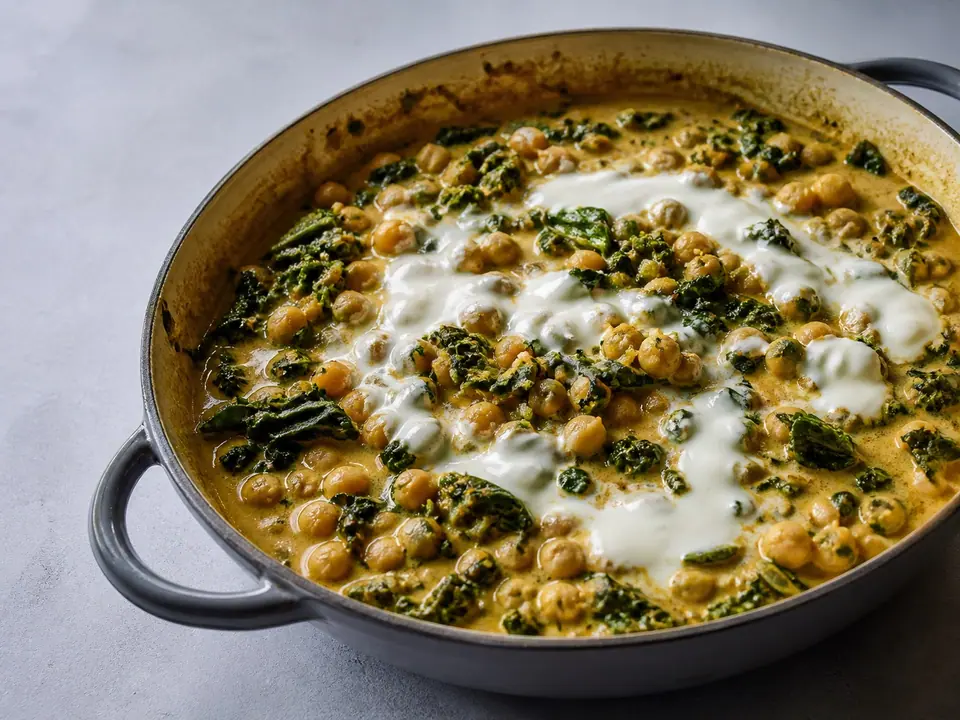
Coconut chickpea curry with greens with yogurt
A creamy chickpea curry is finished with cool lemon yogurt, which gives the coconut sauce contrast without taking over the bowl.
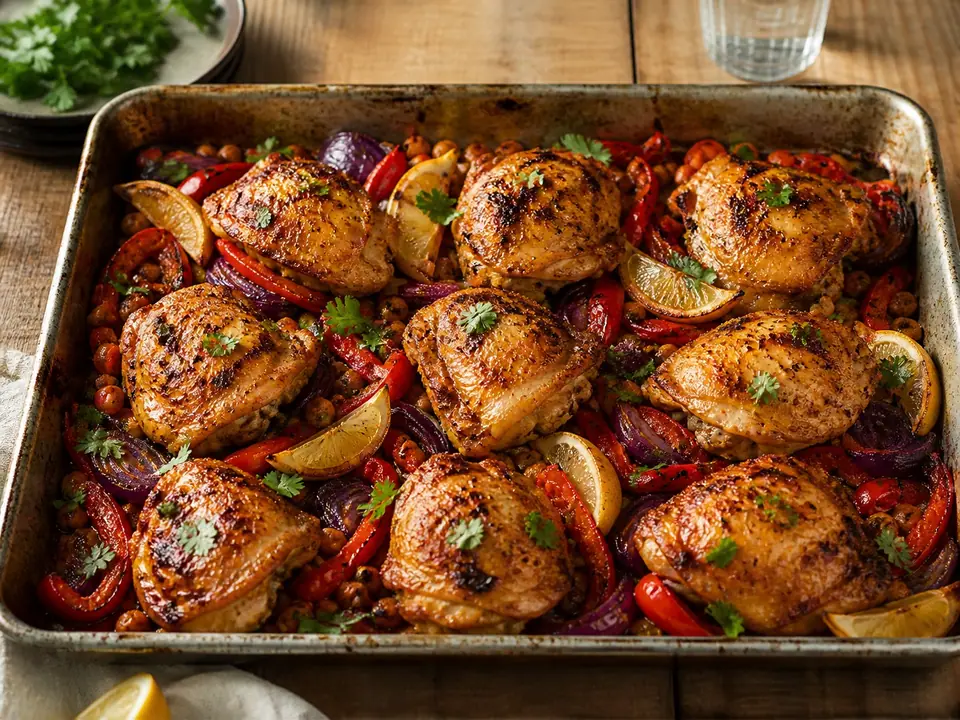
Harissa roast chicken traybake
Chicken thighs roasted on top of chickpeas and red peppers, so the fat renders down into everything underneath. One tray, one wash-up.
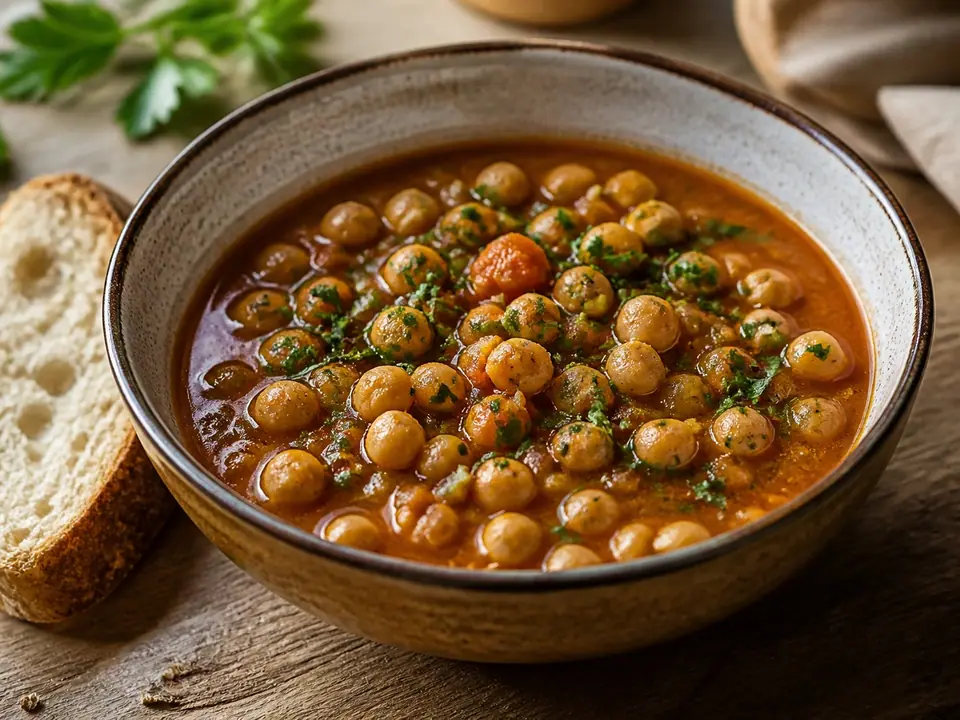
Spiced chickpea soup with lemon
Blending all of it gives you baby food. Blending none of it gives you thin broth with things in it. Half is the answer.
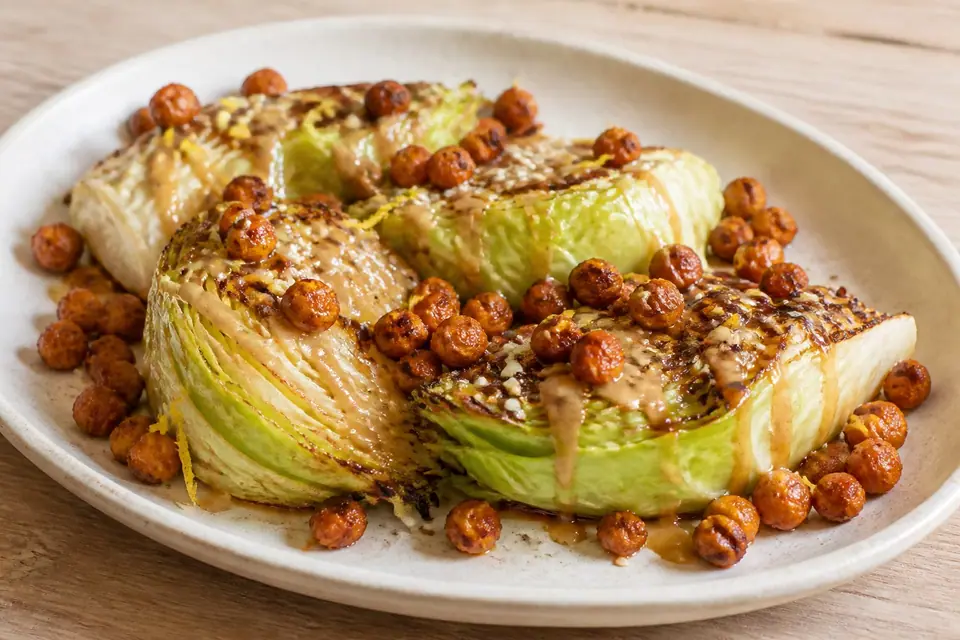
Miso-roasted cabbage with crispy chickpeas
The chickpeas roast beside the cabbage but finish with a separate blast of heat, so they stay crisp while the cabbage turns tender.
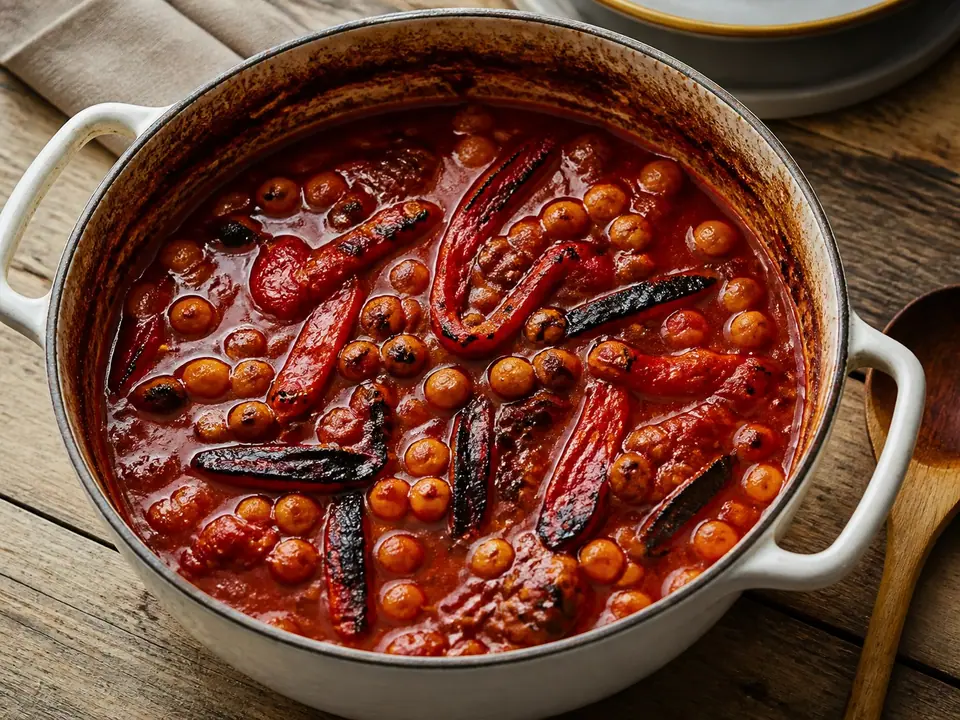
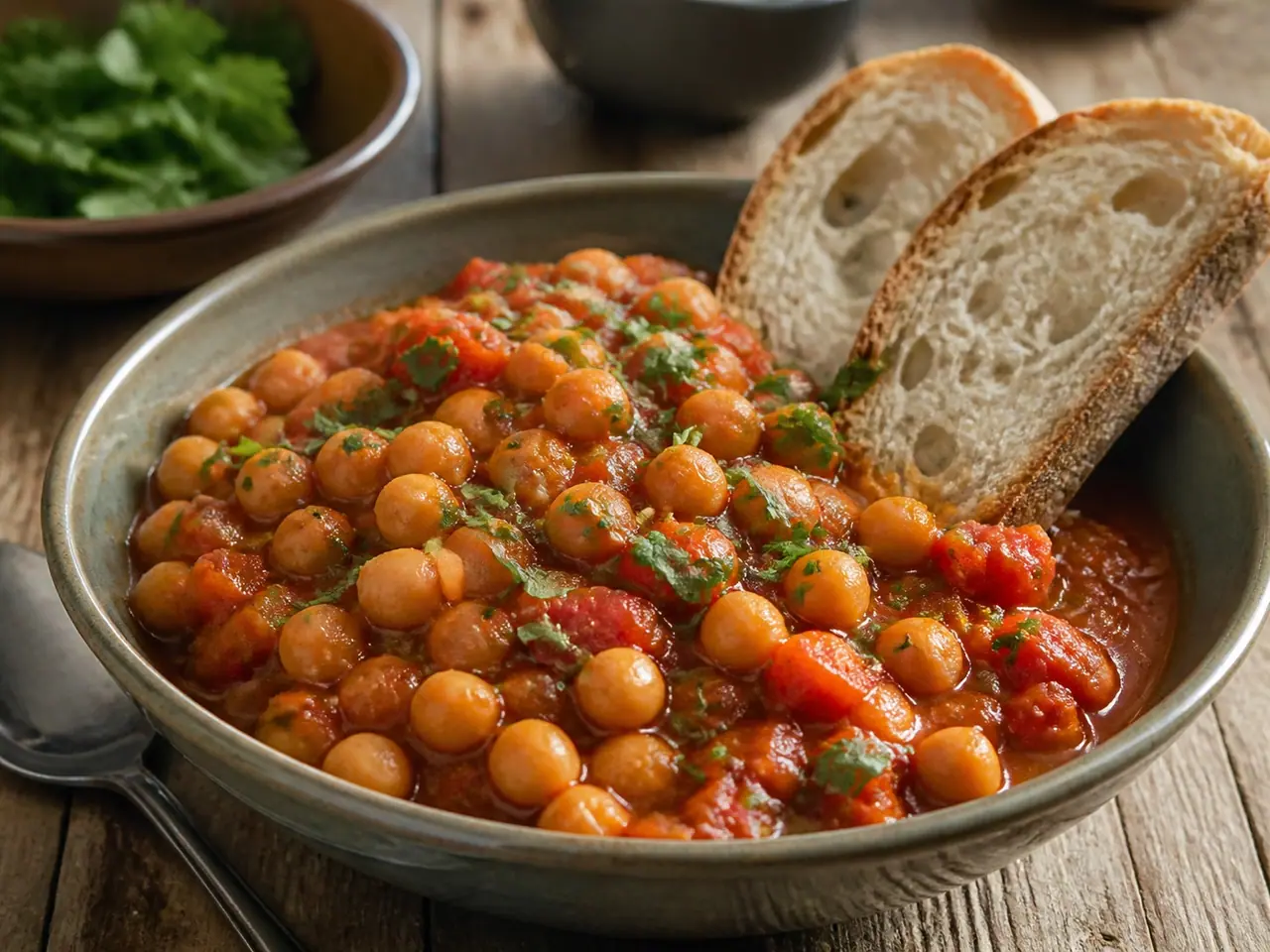
Charred red pepper and chickpea stew
The peppers go under the grill until they are properly black in patches. That ten minutes is the whole flavour of the dish.
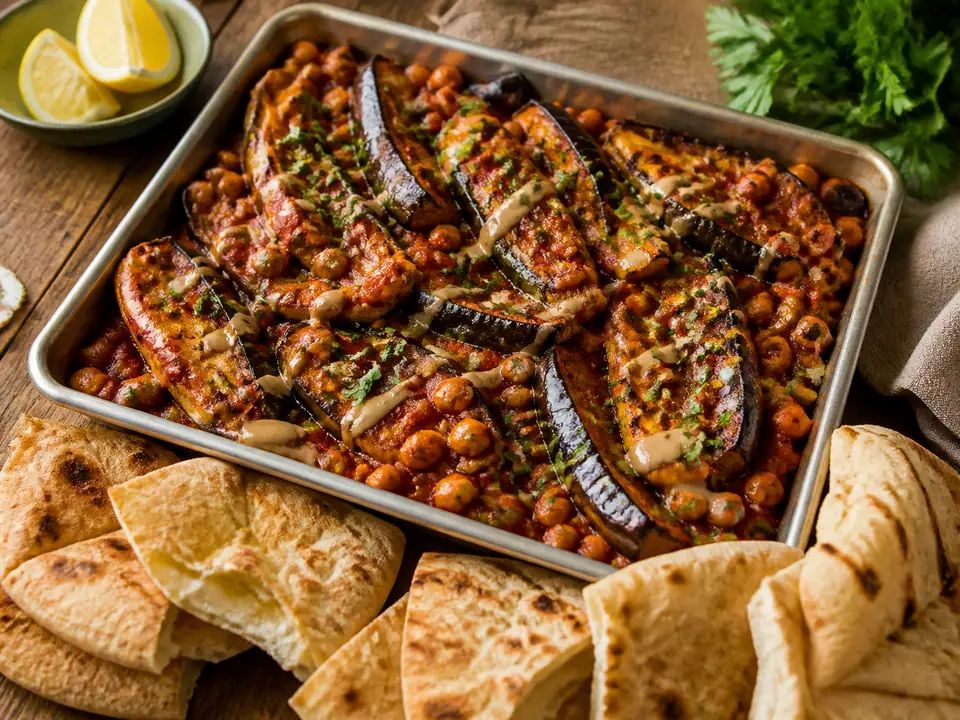
Harissa aubergine with chickpeas with warm flatbread
Make the tray saucy enough for flatbread, then warm the bread directly on the oven rack while the aubergine rests.
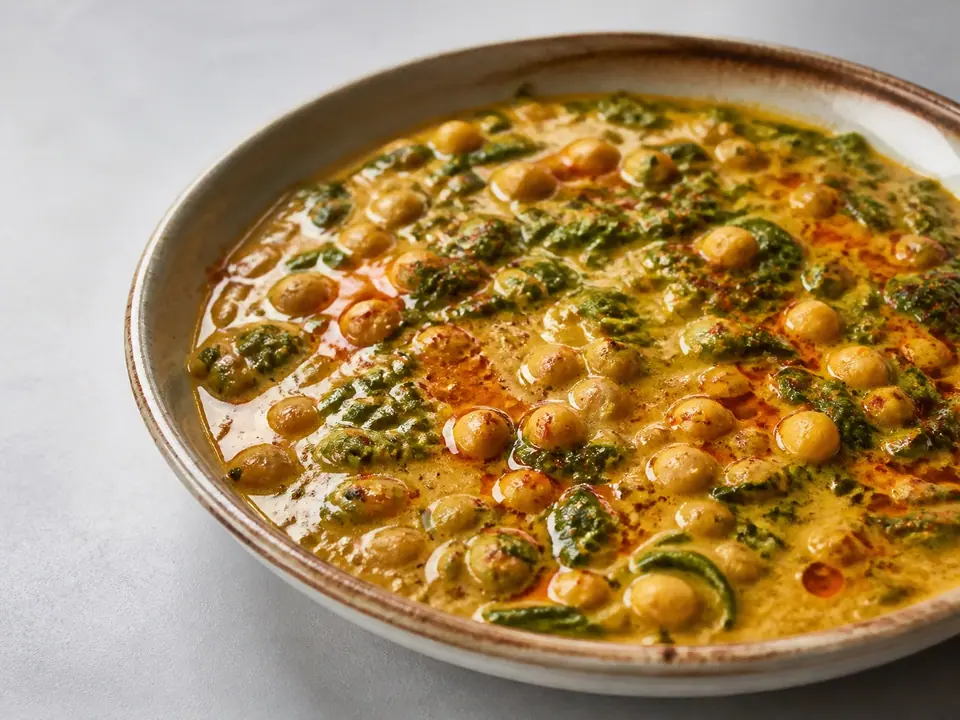
Coconut chickpea curry with greens with chilli oil
The curry is gently spiced and creamy; a cumin chilli oil made in the same pan adds heat without making every mouthful fiery.
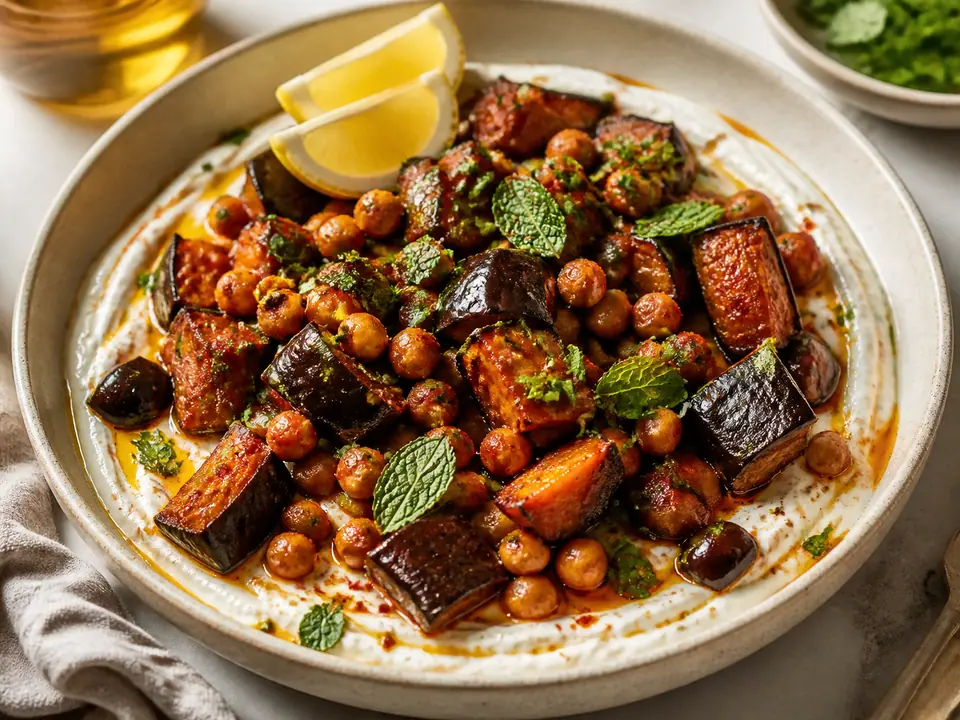
Harissa aubergine with chickpeas with yogurt
Roast the aubergine until deeply browned and put cold yogurt underneath, where it cools each hot, spicy mouthful.
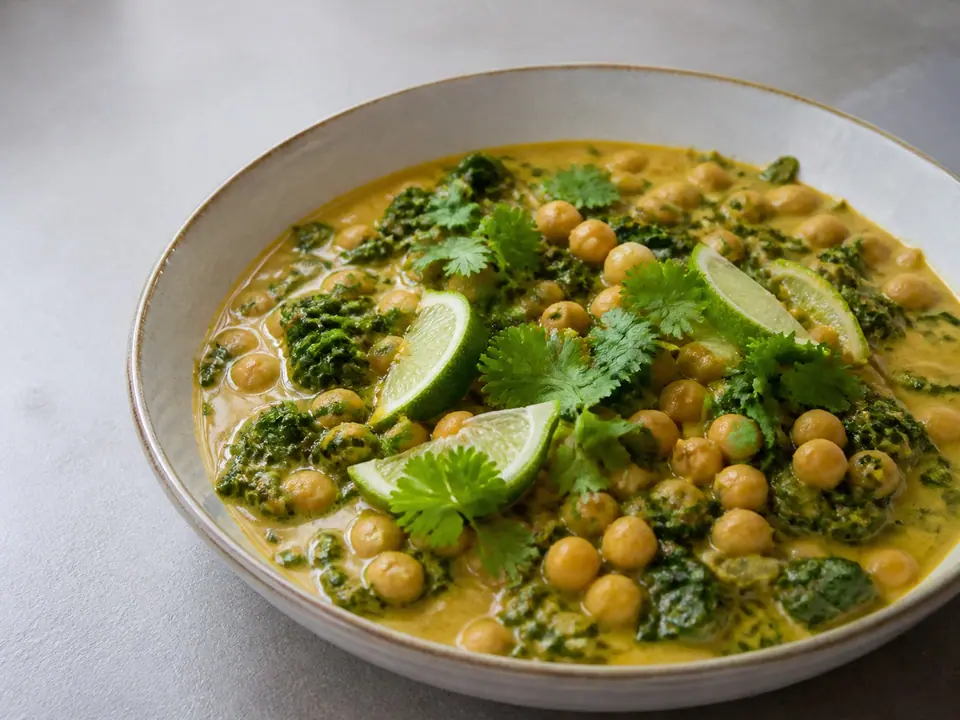
Coconut chickpea curry with greens for the freezer
Cook the coconut chickpea base now, freeze it in portions, and add fresh greens and lime after reheating so the curry still tastes alive.
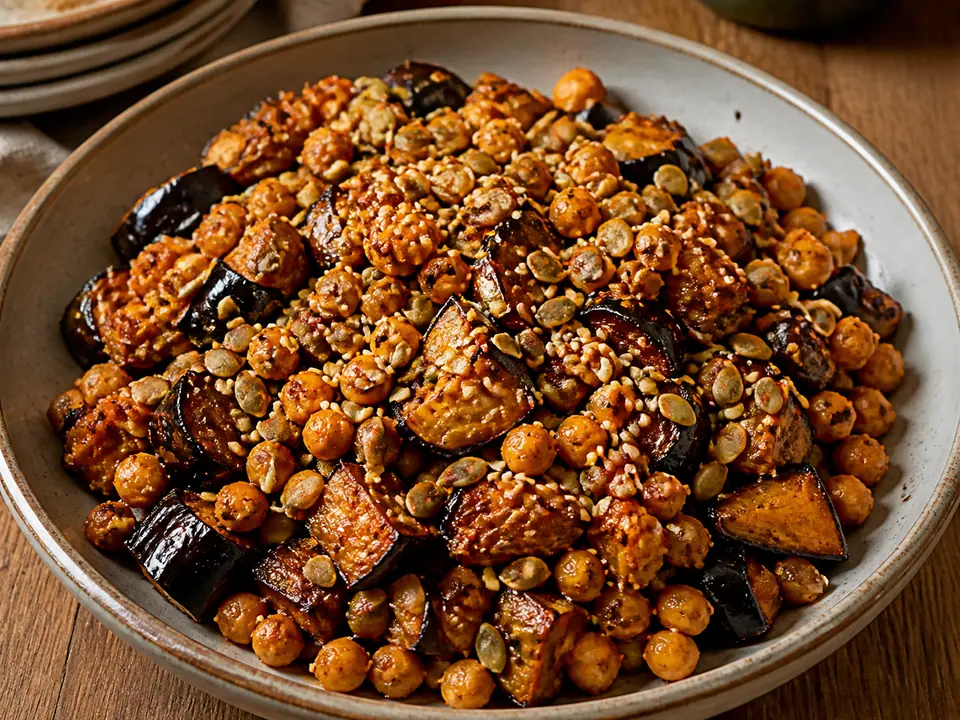
Harissa aubergine with chickpeas with toasted seeds
Toast pumpkin and sesame seeds separately while the tray cooks, then add them at the last second so they stay audible.
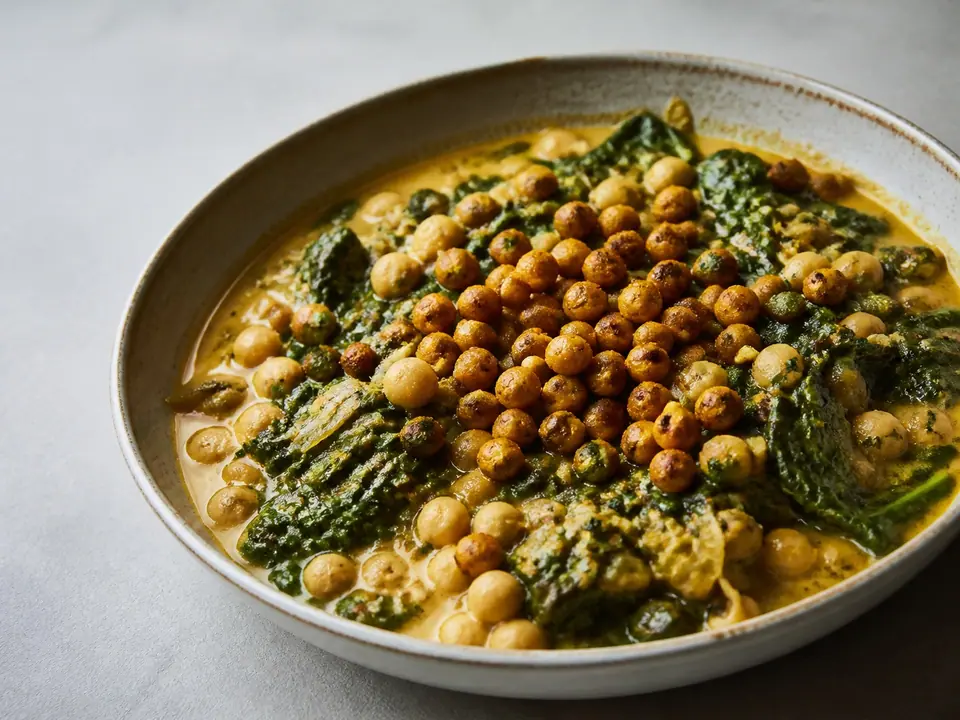
Coconut chickpea curry with greens with crispy beans
The curry stays creamy and the chickpeas on top roast until dry and crisp, giving a one-pot dinner the crunch it usually misses.
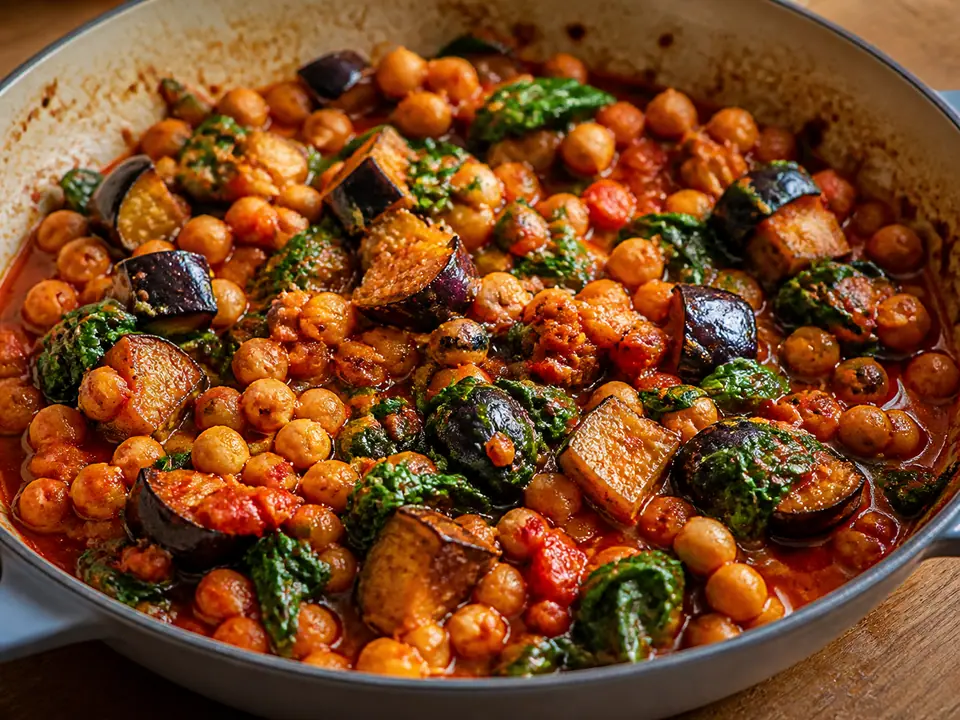
Harissa aubergine with chickpeas for a one-pan dinner
Add tomatoes for moisture, chickpeas for substance and spinach at the end, so the whole dinner still comes from one pan.
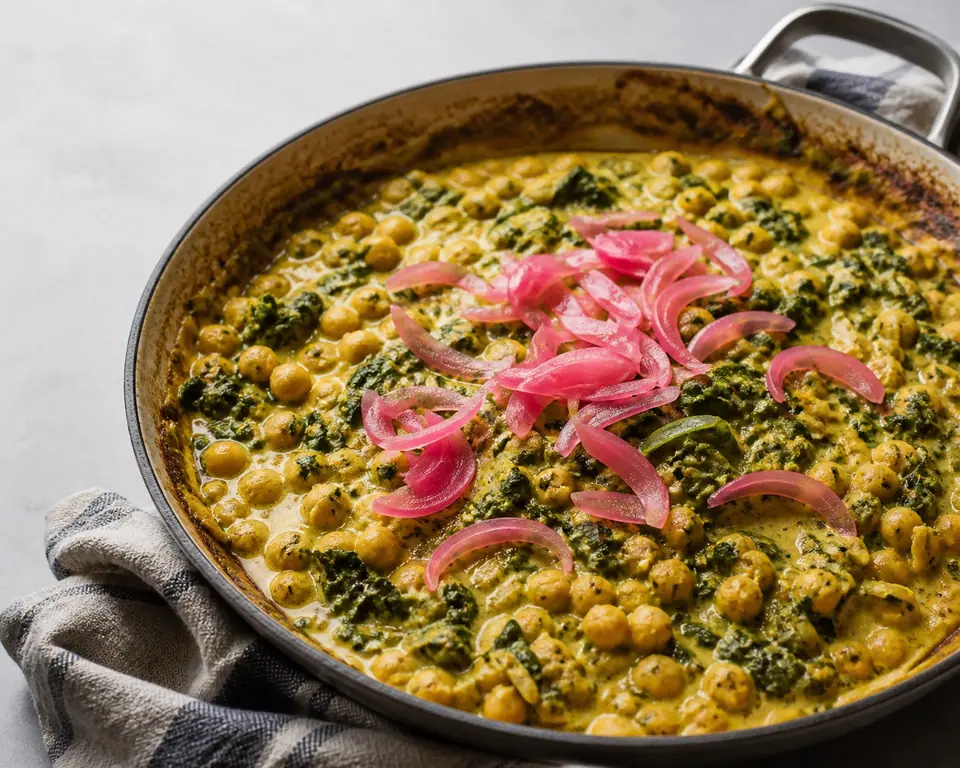
Coconut chickpea curry with greens with pickled onions
Make the onions first so they turn pink and sharp while the coconut chickpea curry simmers underneath them.
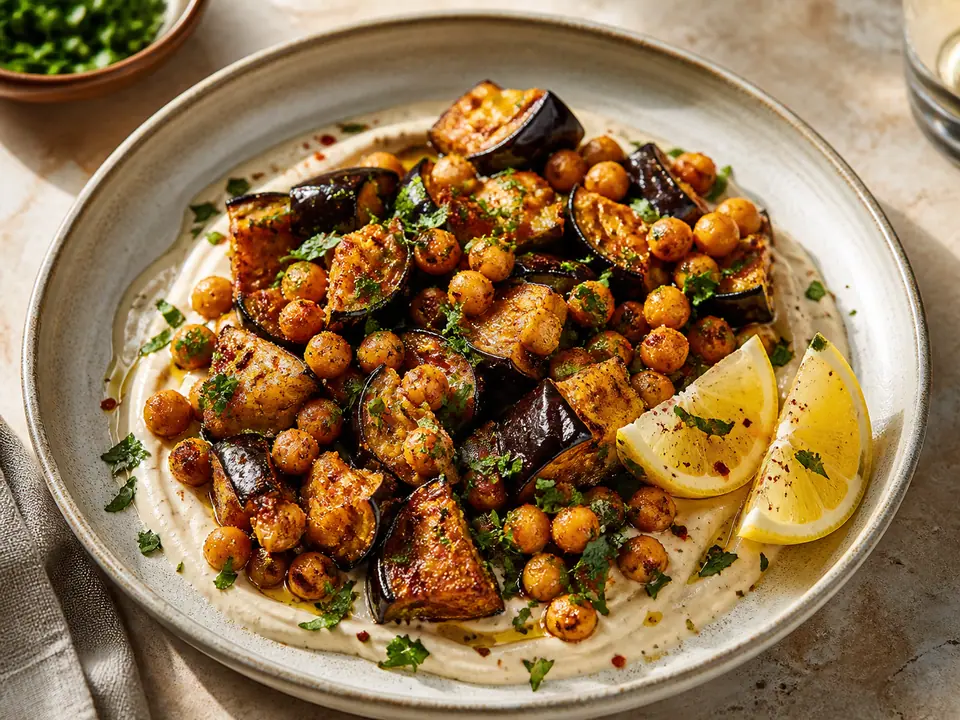
Harissa aubergine with chickpeas with tahini dressing
Roast the aubergine hard, then loosen tahini with lemon and water until it pours instead of clumps.
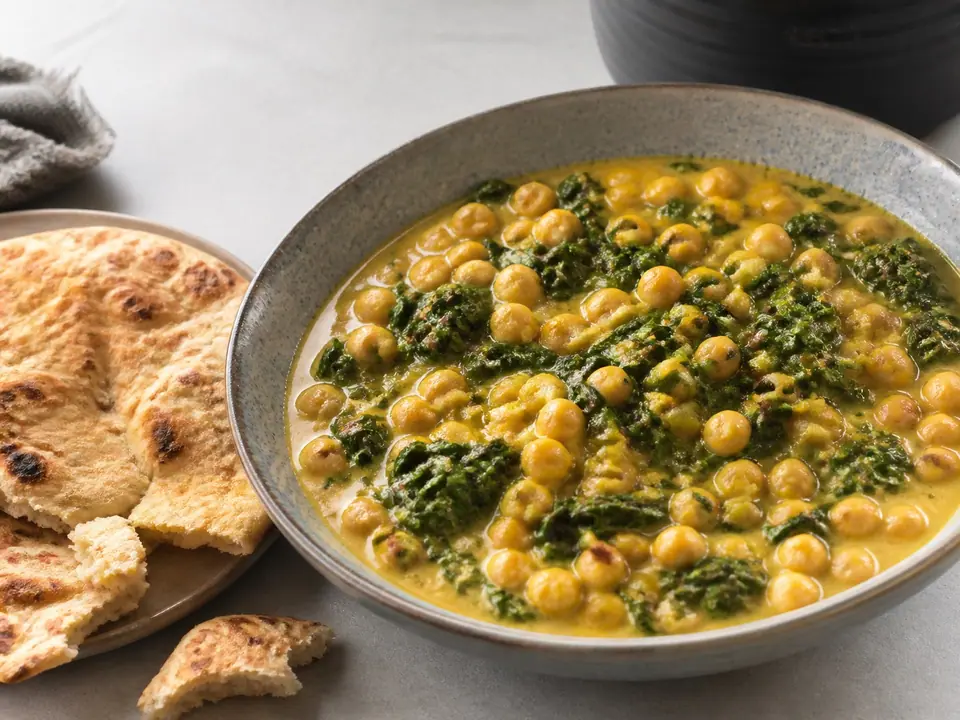
Coconut chickpea curry with greens with warm flatbread
Keep this coconut chickpea curry thick enough for flatbread to scoop, with greens folded through just before the pan leaves the heat.
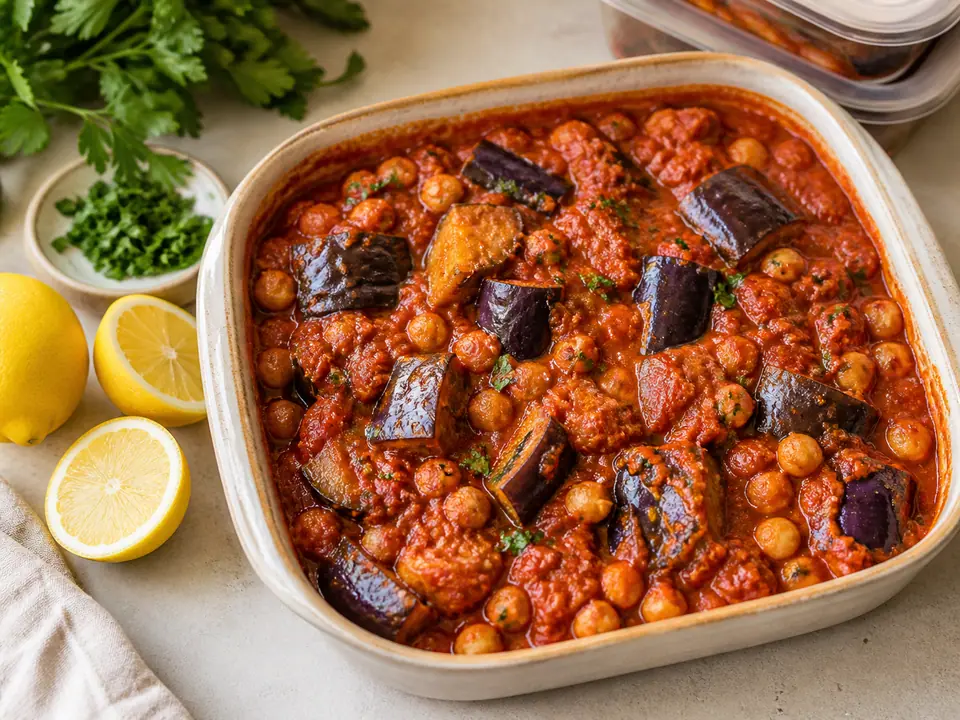
Harissa aubergine with chickpeas for the freezer
Cook the sauce thick and leave the fresh finishes until reheating, so a freezer portion comes back glossy rather than watery.
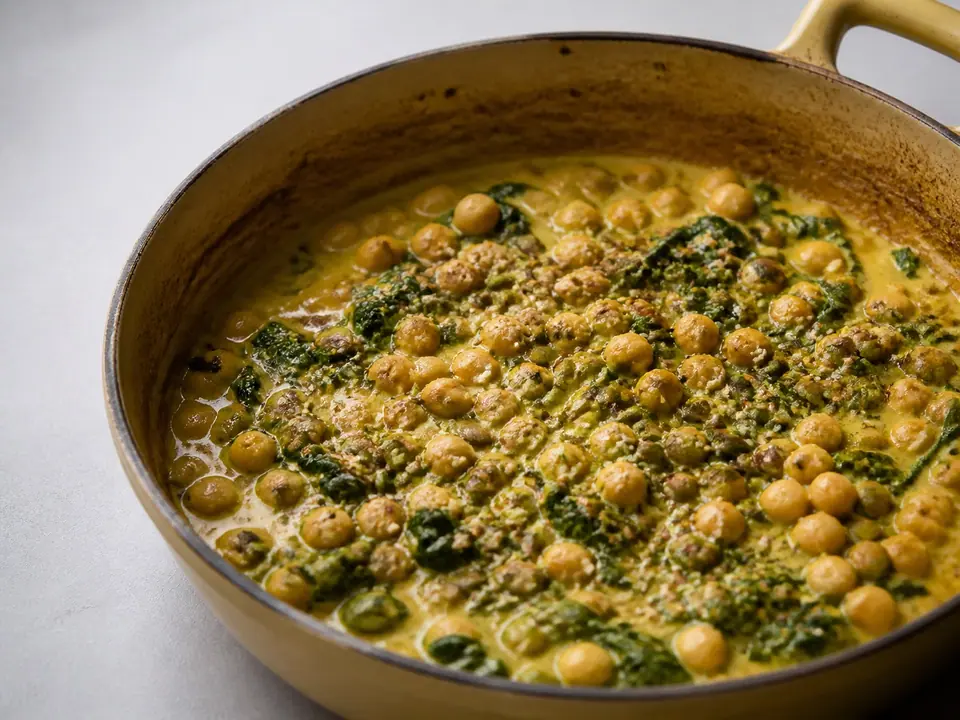
Coconut chickpea curry with greens with toasted seeds
Toasted pumpkin and sesame seeds bring a dry, nutty crunch to a creamy coconut curry without adding another complicated dish.
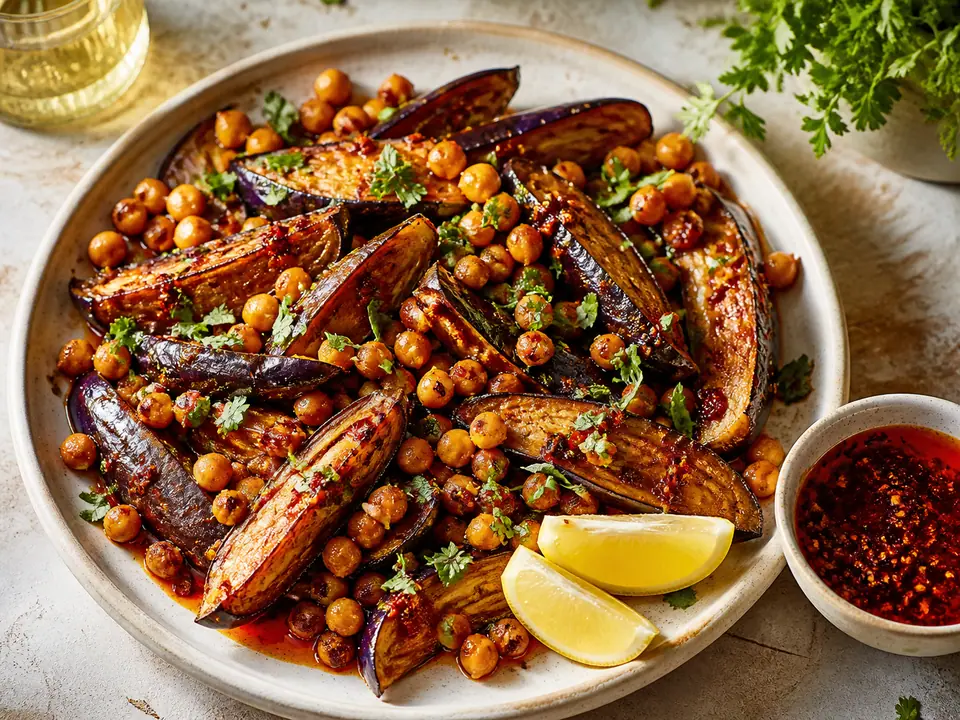
Harissa aubergine with chickpeas with chilli oil
Keep the roasting gentle enough for the aubergine to turn silky, then bring the heat with chilli oil at the table.
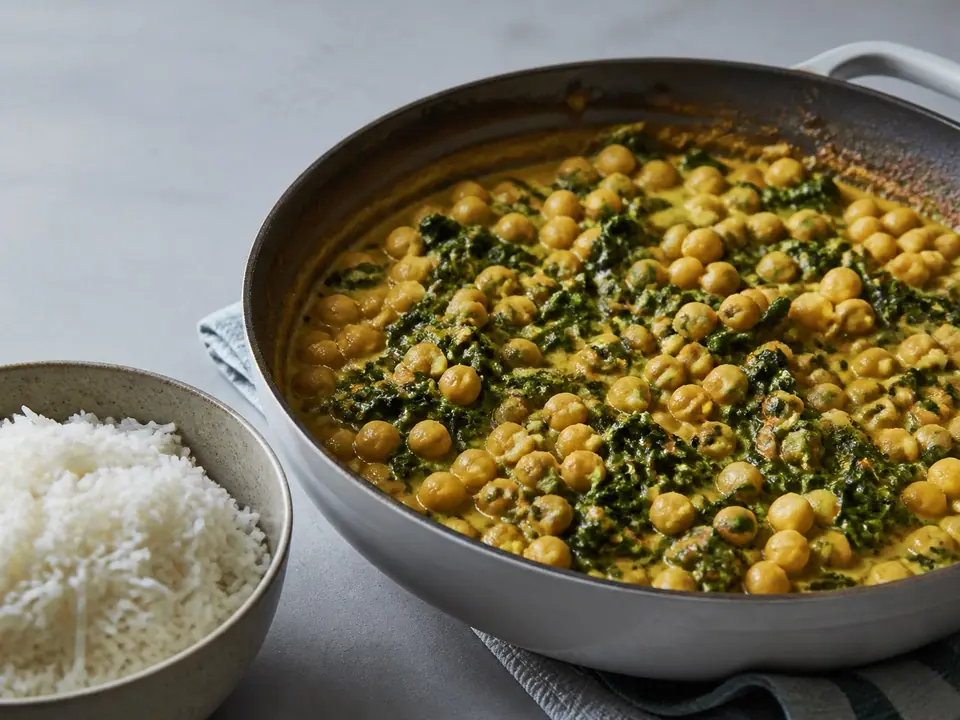
Coconut chickpea curry with greens for a one-pan dinner
Everything for this coconut chickpea curry goes into one wide pan, including the greens, so dinner is on the table with very little washing up.
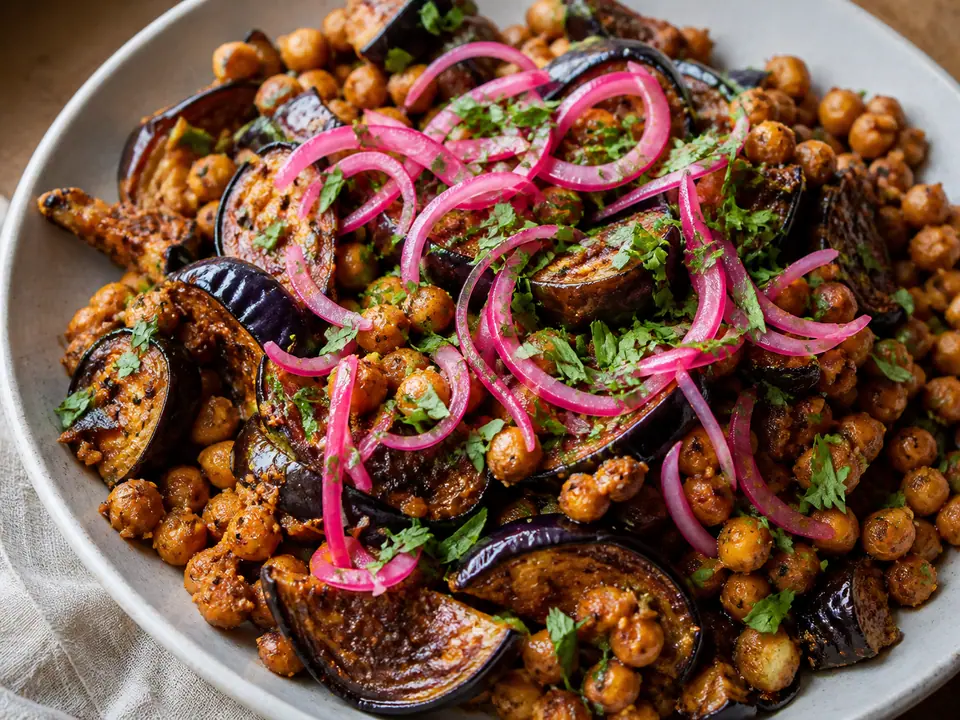
Harissa aubergine with chickpeas with pickled onions
Pickle the onions while the tray roasts; their vinegar and crunch keep the soft aubergine from feeling too rich.
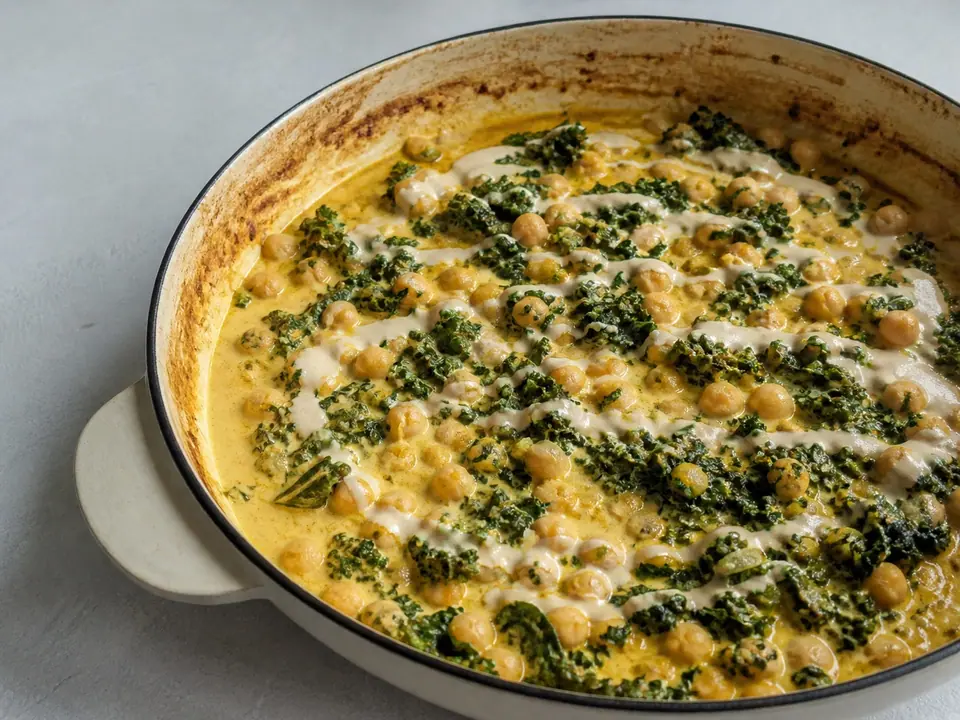
Coconut chickpea curry with greens with tahini dressing
A coconut chickpea curry gets a second kind of creaminess from lemon tahini, which is spooned over the top rather than cooked into the pot.
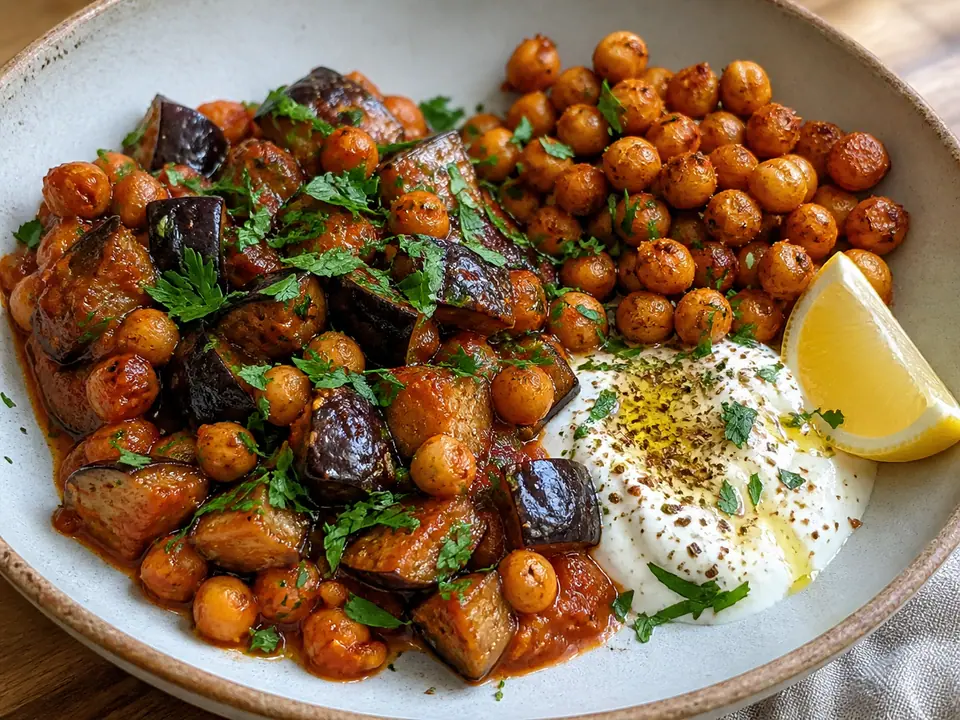
Harissa aubergine with chickpeas with crispy beans
Roast the aubergine low on the tray and give the chickpeas their own hot corner, where they turn crisp and nutty.
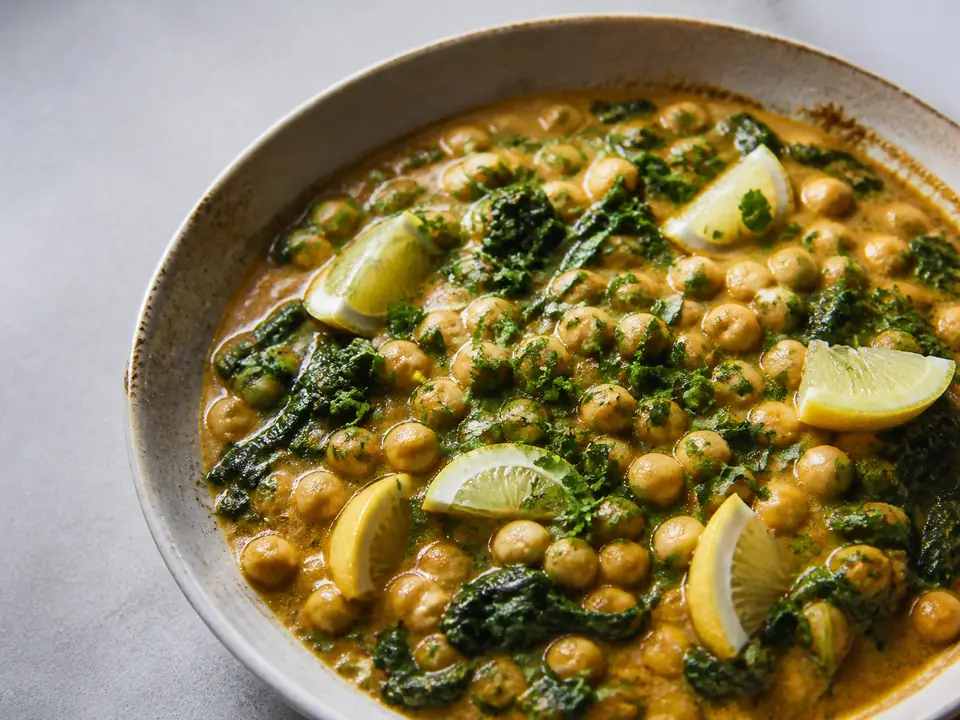
Coconut chickpea curry with greens with lemon and herbs
Chickpeas simmer in coconut milk with ginger, garlic and greens, then lemon and herbs keep the bowl from tasting heavy.
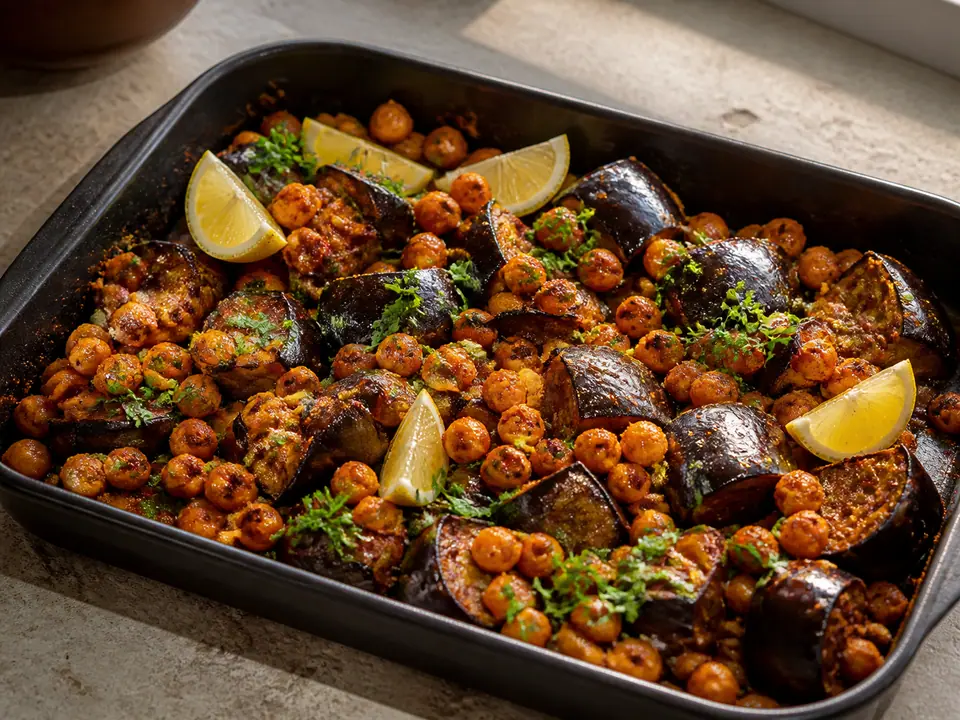
Harissa aubergine with chickpeas with lemon and herbs
Roast the aubergine until collapsed at the edges, then add the chickpeas so they stay crisp rather than turning to pebbles.
Guides about chickpeas
All guides →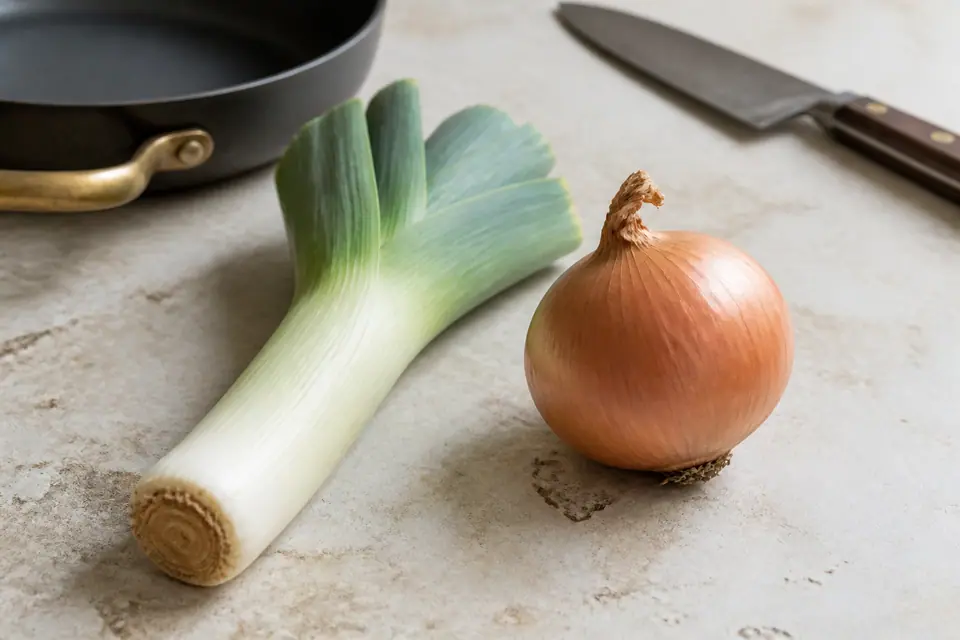
Leeks vs onions: when does the softer flavour matter?
Use onions when you want a strong savoury base; use leeks when you want a tender, sweet allium that can remain visible in the finished dish.
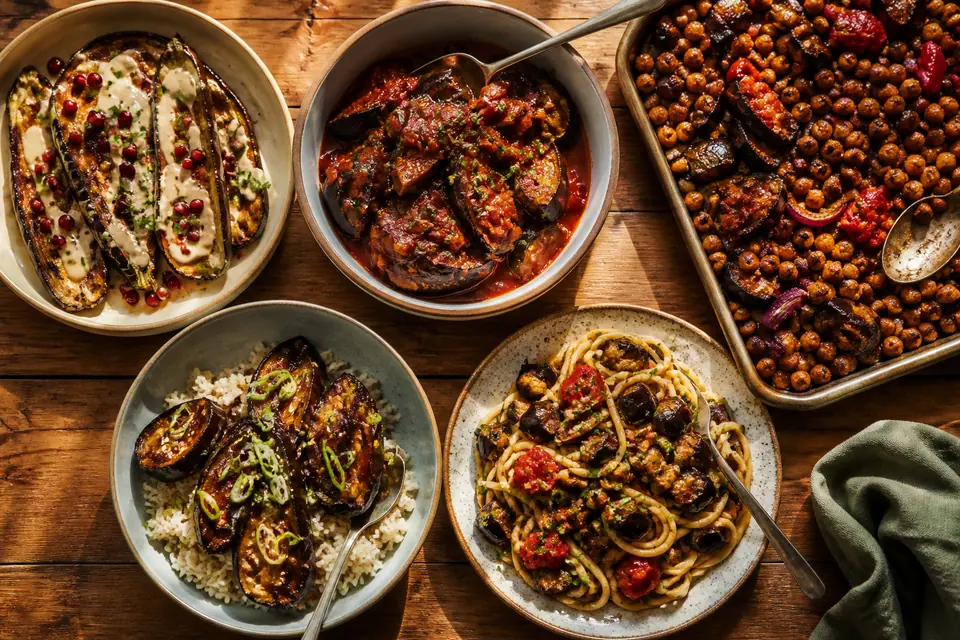
5 dinners that make aubergine the main event
Aubergine can carry dinner when it gets enough heat, a sharp finish and something with substance beside it. These five meals give it the main role.
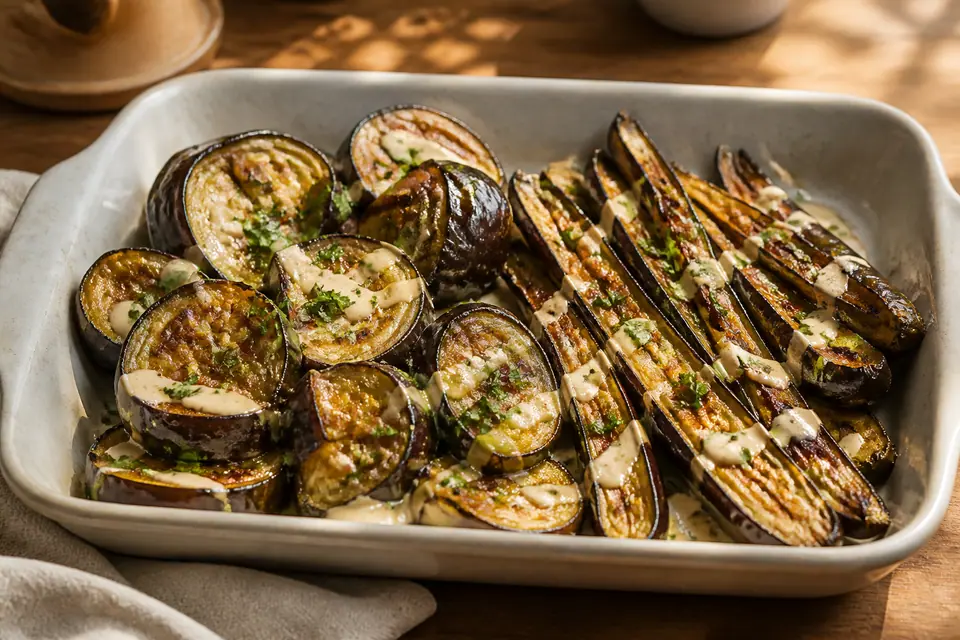
Globe vs long aubergines: which is better for roasting?
Long aubergines roast with more browned surface and fewer large seeds, while globe aubergines give thick soft flesh for halves and stuffing.
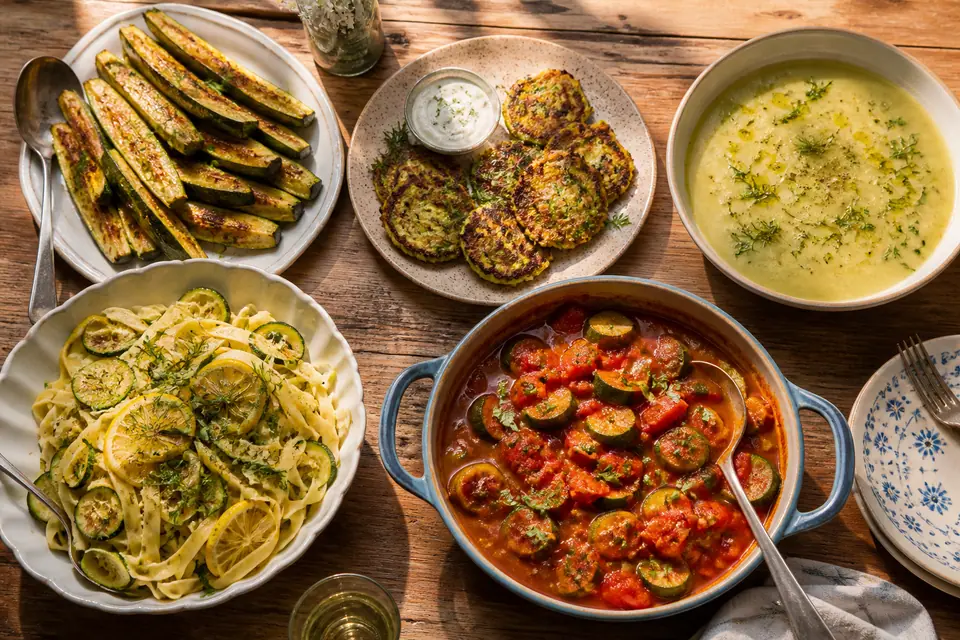
5 dinners for too many courgettes
A pile of courgettes needs different textures, not five versions of the same saute. These dinners use roasting, grating, blending, ribbons and stewing.
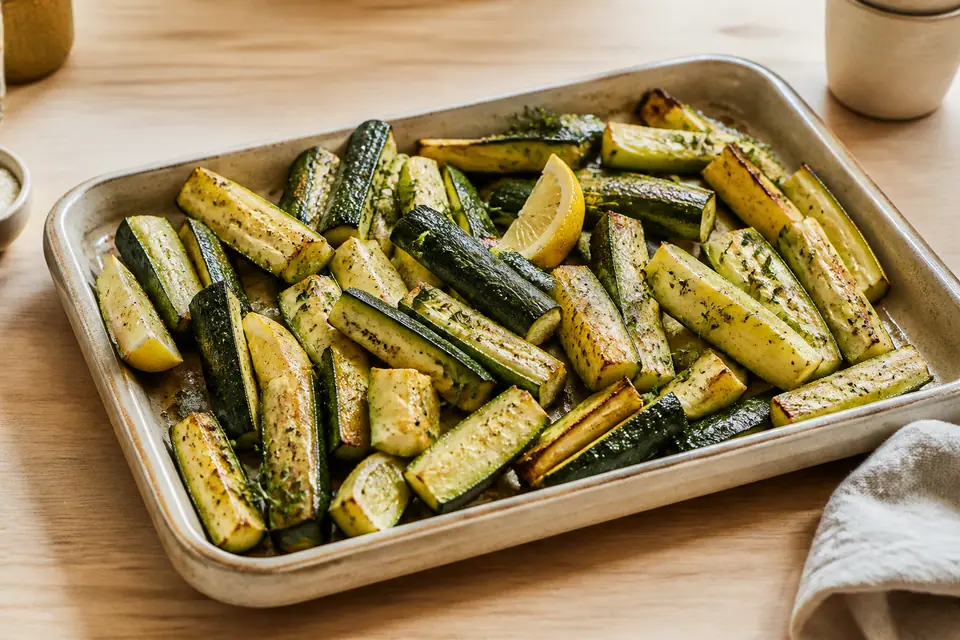
Courgettes vs zucchini: does the variety change how you cook it?
Courgette is the British name for zucchini. The useful difference is not the label but the variety, size and moisture inside the skin.