Long aubergines win the tray test, globe wins for stuffing
Long aubergines roast with more browned surface and fewer large seeds, while globe aubergines give thick soft flesh for halves and stuffing.

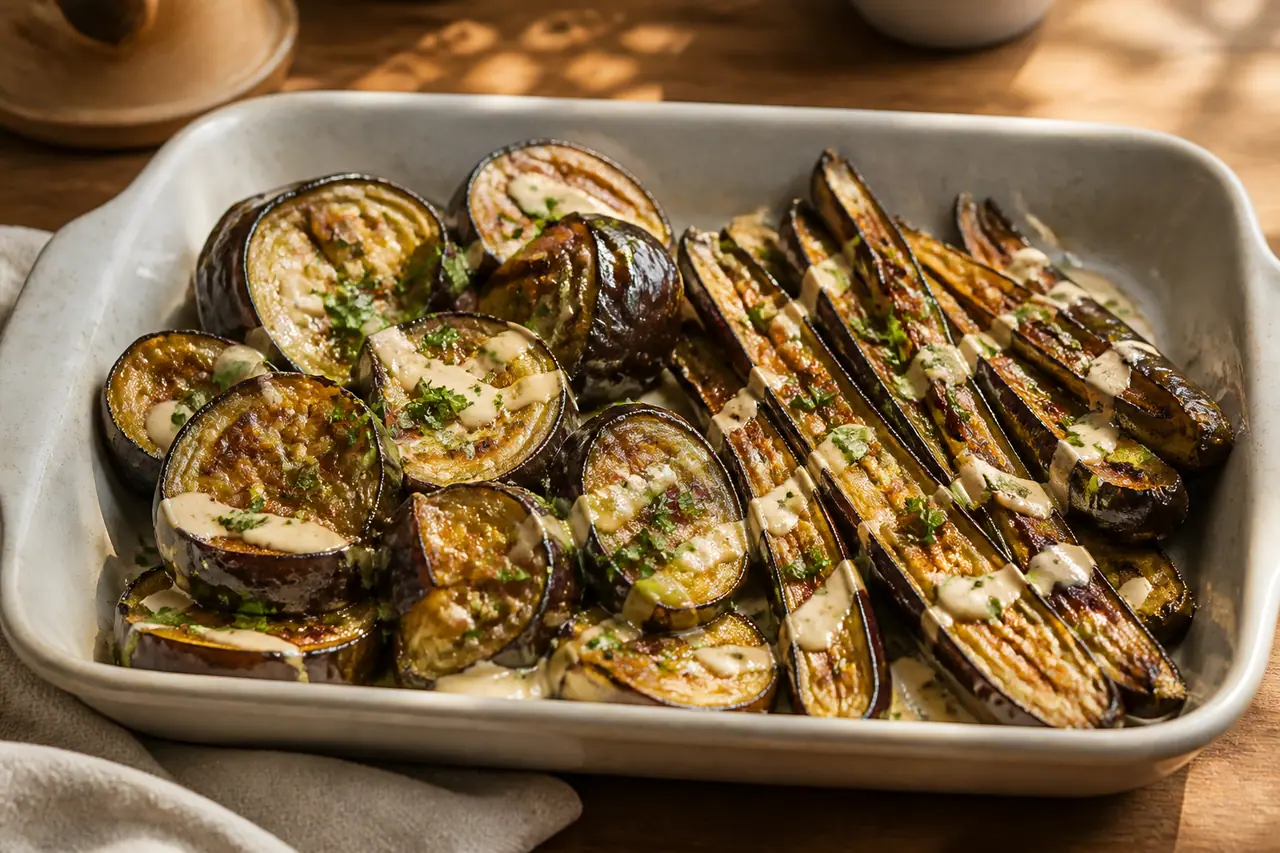
For a tray of roasted pieces, I choose long aubergines. Their narrower shape gives more cut surface, fewer broad seed pockets and pieces that cook at the same pace. Globe aubergines are better when I want two thick halves to hold a filling or a spoonful of sauce. I roasted equal weights of both at 220°C fan, and the long pieces browned in 31 minutes while the globe wedges needed 38.
Neither shape is a quality grade. A young globe aubergine can beat an old long one. The useful choice is about geometry: how much surface you expose, how thick the centre is and whether the finished dish needs slices or a soft bowl-shaped half. Buy the shape that suits the job already in your head.
The shape changes the ratio
Globe aubergines are rounder and wider, with a generous central body.
A wedge from one can be thick at the centre and narrow at the tip, so the tip darkens before the middle softens. Long aubergines are slimmer and often more uniform from end to end. Batons and diagonal slices expose enough flesh to brown without leaving a hard core.
The skin-to-flesh ratio changes too.
Globe slices have a broad interior and a sturdy outer rim. Long aubergine pieces can feel more delicate but cook into a silky texture faster. I leave the skin on both. It keeps wedges together and adds a little bitterness to balance the soft centre.
My roasting comparison
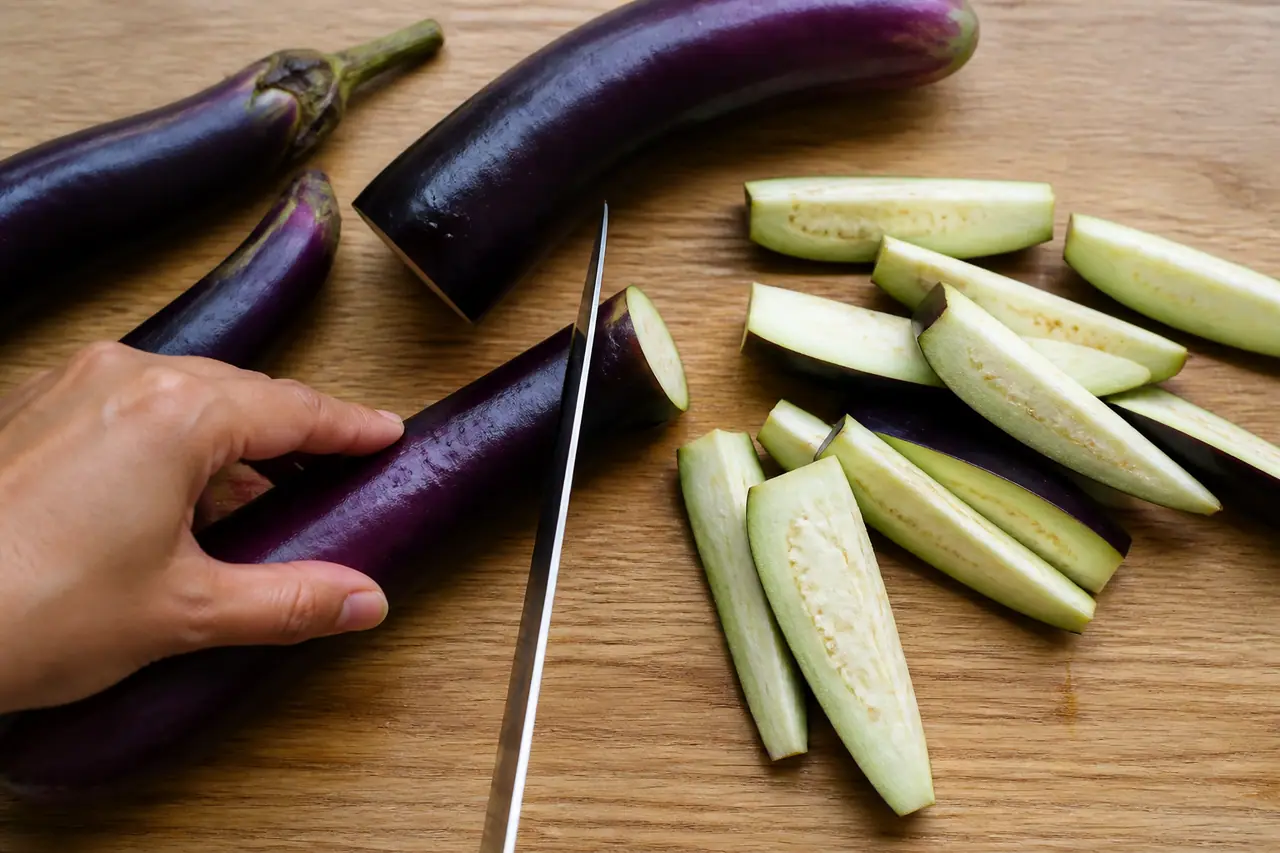
I weighed 400 g of globe aubergine and 400 g of long aubergine, cut both into 3 cm wedges, dried the surfaces and brushed each with the same two teaspoons of oil.
On a preheated metal tray, the long variety gave me more browned edge per bite. The globe pieces had a softer centre but needed several extra minutes at the thickest point.
The difference was not dramatic in a saucy dish.
Once I added tomato and chickpeas, both varieties became tender and useful. It mattered on a dry tray, where the browned surface is the main seasoning. If I am making a dish like [harissa aubergine with chickpeas and tahini](/recipes/harissa-aubergine-with-chickpeas-with-tahini-dressing), I use long pieces when the tray is the focus and globe halves when the aubergine needs to carry a filling.
| Job | Globe aubergine | Long aubergine |
|---|---|---|
| Thin roasted slices | Good, but thick centre needs watching | Best and more even |
| Stuffed halves | Best shape and capacity | Narrower, less filling |
| Tray wedges | Soft centre, broad pieces | More browned edge |
| Skewers | Awkward unless cut small | Easy to portion |
| Blended dip | Good | Good, often cooks faster |
Source: Maren Ashby roasting comparison, 2026
The real issue is age
When I roast both shapes together, I cut the globe aubergine smaller than the long one. That sounds backwards, but the wide fruit has more distance from skin to centre. Equal-sized pieces would leave the globe firm while the long pieces soften. Matching the cooking time means matching the thickest part, not the length printed on a produce label. Once the pieces are on the tray, the right comparison is the pressure of a spoon against the centre.
A perfect shape cannot rescue an old aubergine.
Large dull seeds, a spongy centre and a cap that looks dry will make roasting harder, no matter whether the fruit is globe or long. I press the skin lightly. It should give a little and spring back, not stay dented. The cap should be green and attached, with no wet brown patch.
Young fruit needs less salting than old fruit.
I rarely salt small fresh aubergines before roasting. I cut, oil and cook them. If a large one tastes bitter or carries a visibly loose seed core, I salt the cut pieces for 20 minutes and blot the liquid. It is a rescue, not a ritual that every aubergine requires.
How to cut for a dry tray
For long aubergines, I cut diagonal wedges about 3 cm thick so each piece has a flat face and a skin edge.
For globe aubergines, I cut into half-moons or thick quarters, then trim any very pointed tips that would burn. I preheat the tray and leave gaps. The pieces should hiss when they hit the metal.
Turn once, not repeatedly. Aubergine needs time to build colour and the soft flesh tears when you chase it around the tray.
If the outside darkens while the centre remains firm, reduce the heat slightly and give it more time. A spoon should dent the thickest piece without meeting resistance.
The verdict
Long aubergines are my first choice for a crisp-edged roasting tray because their narrow shape cooks evenly and exposes more surface.
Globe aubergines win for halves, stuffing and thick soft flesh. The label is useful only after freshness and the final cut have been decided.
Aubergine pieces need a rest
Leave roasted aubergine on the tray for five minutes before serving.
The centre settles, the juices stop running and the skin becomes easier to lift with a fork. This is especially useful with globe wedges, whose thick centre can feel loose straight from the oven.
The rest is not a command to serve cold food. It is enough time to whisk the sauce or warm the flatbread. Use it.
Questions
Which aubergine is best for roasting?
Do globe aubergines have more seeds?
Should I salt aubergines before roasting?
Can I use long aubergines in a stew?
Recipes for this guide
All recipes →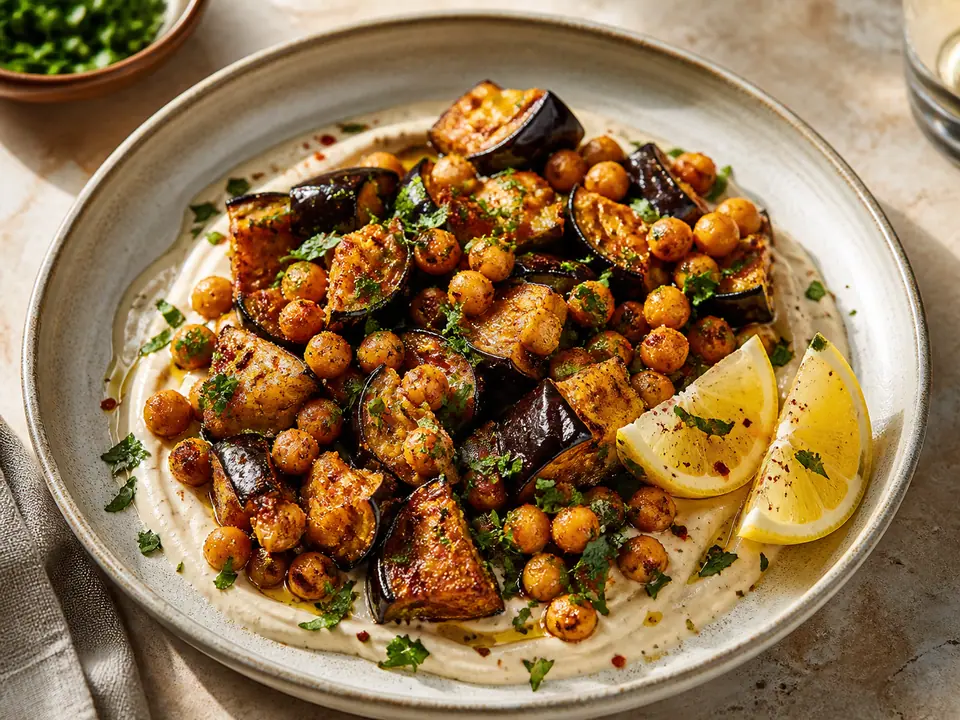
Harissa aubergine with chickpeas with tahini dressing
Roast the aubergine hard, then loosen tahini with lemon and water until it pours instead of clumps.
More guides
All guides →
Cauliflower vs broccoli: which roasts better?
Cauliflower gives a more even roast and creamy centre. Broccoli browns faster and has better crisp tips, so the winner depends on the texture you want.
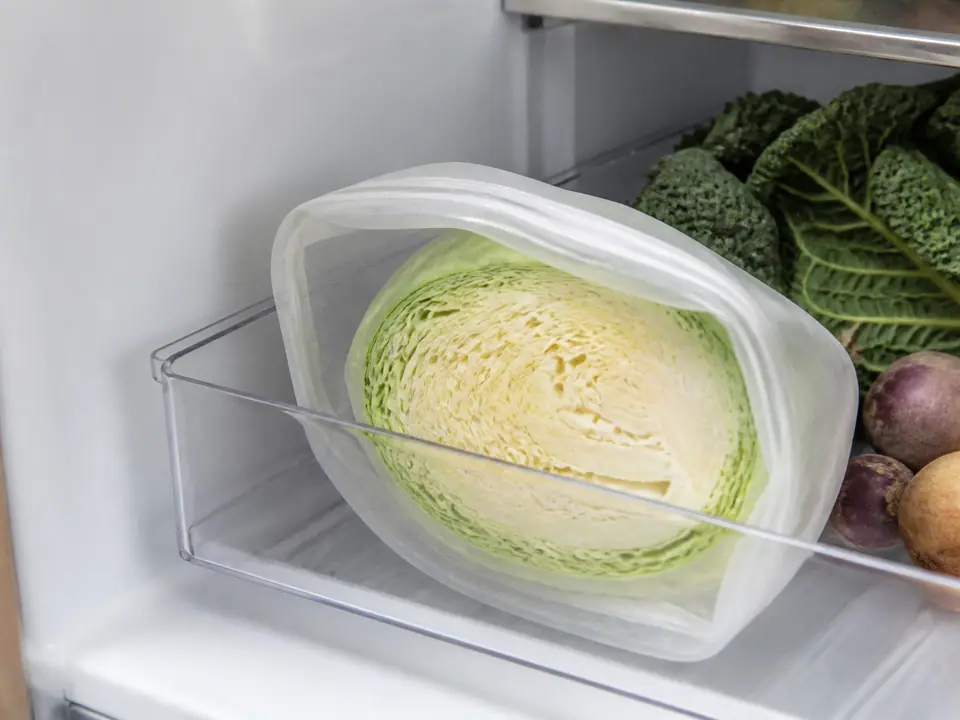
How to keep a cut cabbage fresh for a week
A cut cabbage can stay useful for a week when the exposed face is dry, covered and kept cold. Slice from the outside and leave the core intact.

How to choose carrots that are crisp, not rubbery
Firm carrots with a fresh stem end and smooth, unbroken skin are more likely to stay crisp. Rubberiness means water has already left the root.