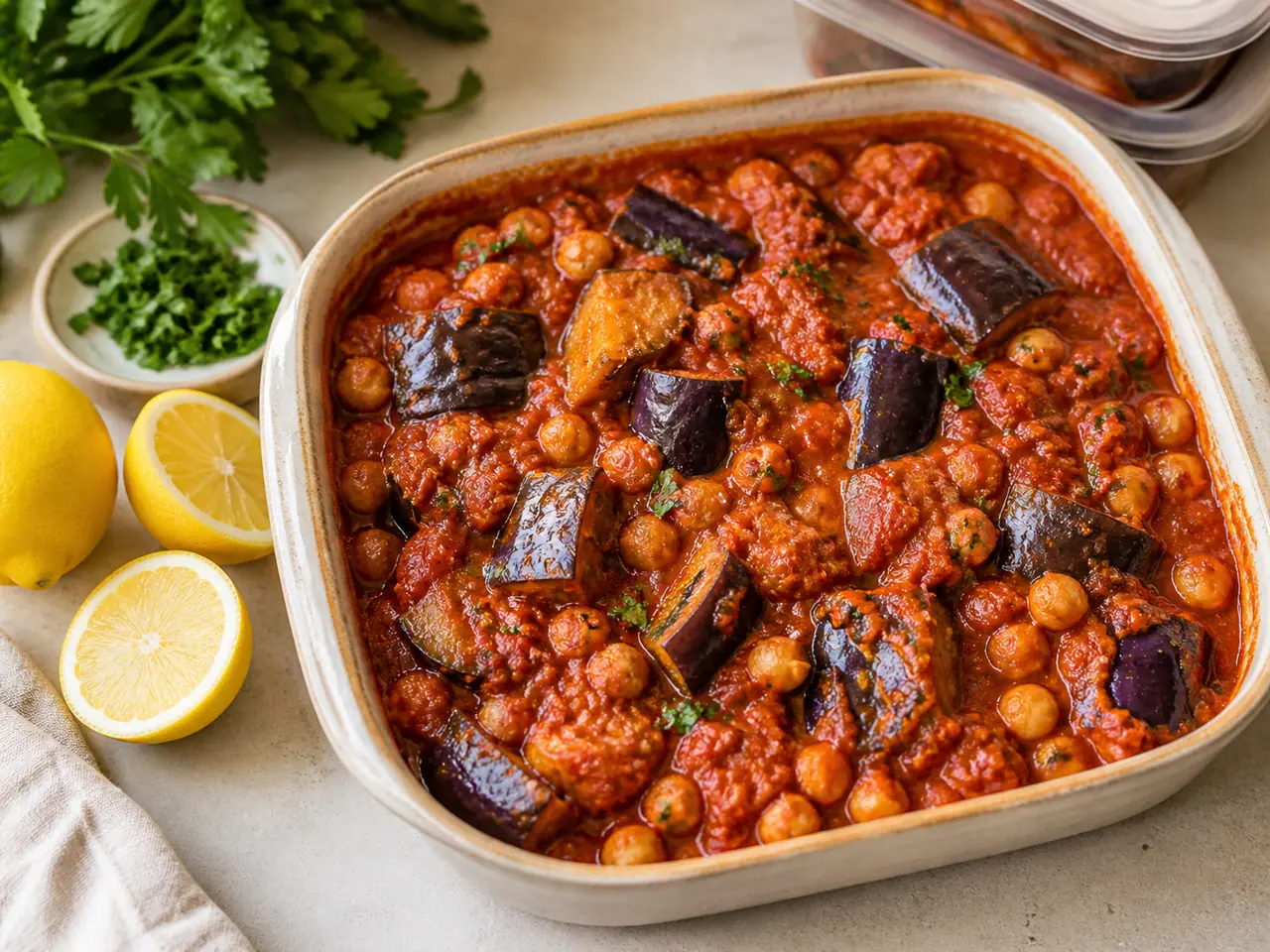
Harissa aubergine with chickpeas for the freezer
youryum.com/recipes/harissa-aubergine-with-chickpeas-for-the-freezer · serves 4
A freezer dinner that reheats without sulking
Cook the sauce thick and leave the fresh finishes until reheating, so a freezer portion comes back glossy rather than watery.
- Vegan
- Vegetarian
- Gluten free
- Dairy free

- Prep
- 15 min
- Cook
- 50 min
- Total
- 1 hr 5 min
- Serves
- 4
- Per serving
- 405kcal
- Effort
- Easy
Freezer food needs a different target from food eaten straight away. Crispness is not going to survive, but a thick sauce, soft aubergine and a fresh finish will. This version is built for that second life.
Cool it completely before freezing, portion it flat, and add lemon and herbs only after reheating. The freezer cannot ruin what it never gets given.
Ingredients
Equipment
- Large roasting tin
- Small bowl
Method
-
Roast the aubergine
Heat the oven to 220°C fan. Toss the aubergine with one tablespoon of oil and salt. Roast for 25 minutes until the edges are browned and the centres are soft.
Use a broad metal tin rather than a deep casserole. The pieces need gaps around them so hot air can reach the cut sides and the released water can evaporate. If everything looks packed before it goes in, remove a handful and save it for another meal. A little space is worth more here than an extra few degrees on the oven.
-
Make the base in the same tin
Push the aubergine to the sides. Add the remaining oil, onion and garlic to the middle and roast for five minutes, then stir in the harissa.
-
Build the freezer sauce
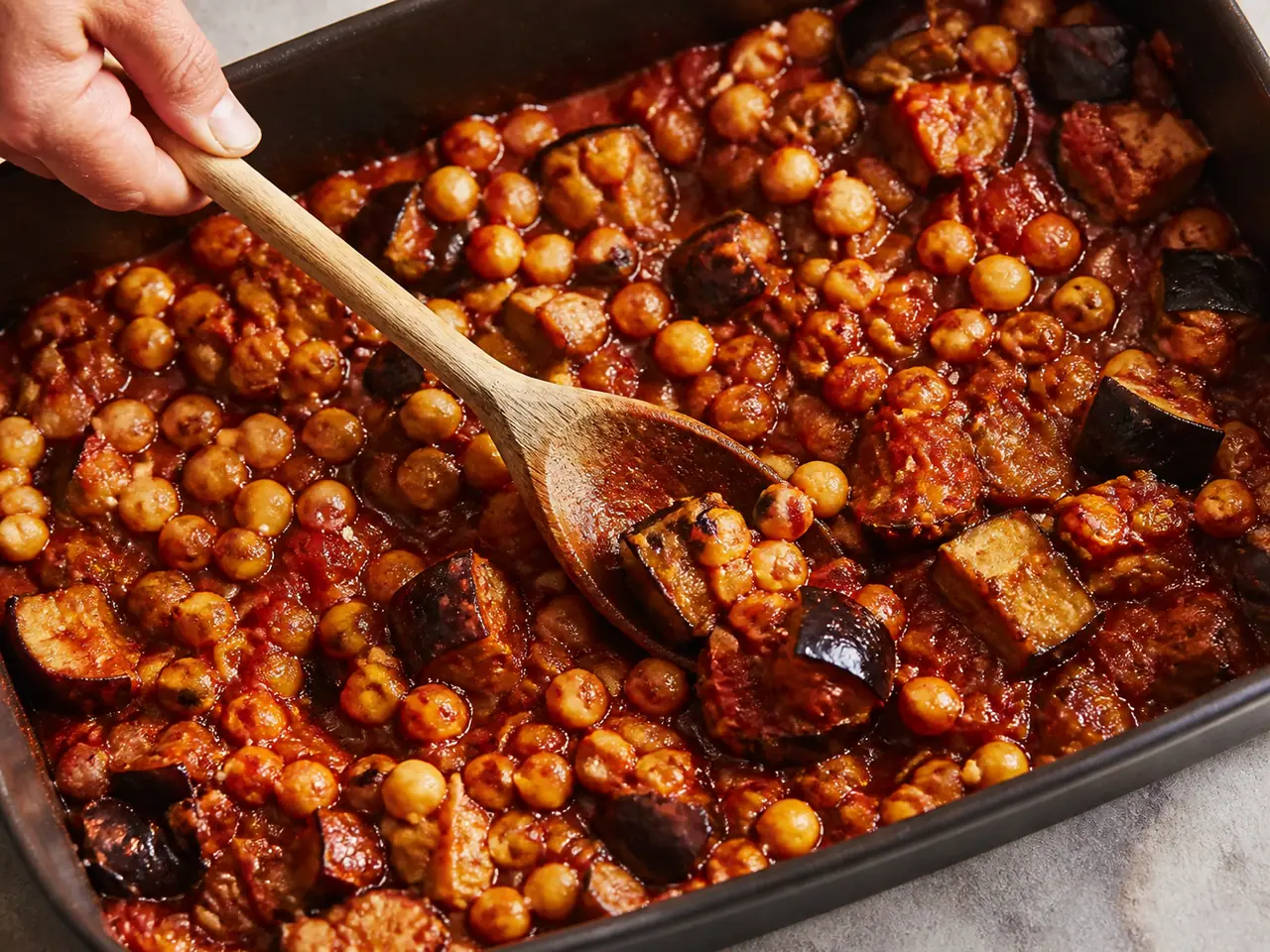
Add tomatoes, chickpeas and stock. Stir well and roast for 20 minutes, until thick enough that a spoon dragged through leaves a line for a second.
-
Cool before portioning
Season, then spread the mixture in a shallow dish to cool quickly. Portion into airtight containers only once it is no longer steaming.
Look at the bottom of the tin before you decide it is ready. A thin sheen of oil and a few dark sticky patches are useful; a pool of clear water means the food needs more time or more space. Stir from underneath with a flat spatula so the browned paste comes up, but do not scrape hard enough to tear the soft aubergine. Those browned bits are seasoning.
-
Reheat and finish
Defrost overnight or microwave gently, then reheat in a covered pan with a splash of water. Finish each portion with lemon juice and herbs if you have them.
What's in it
Nutrition, buying and storage notes for the ingredients this recipe leans on.

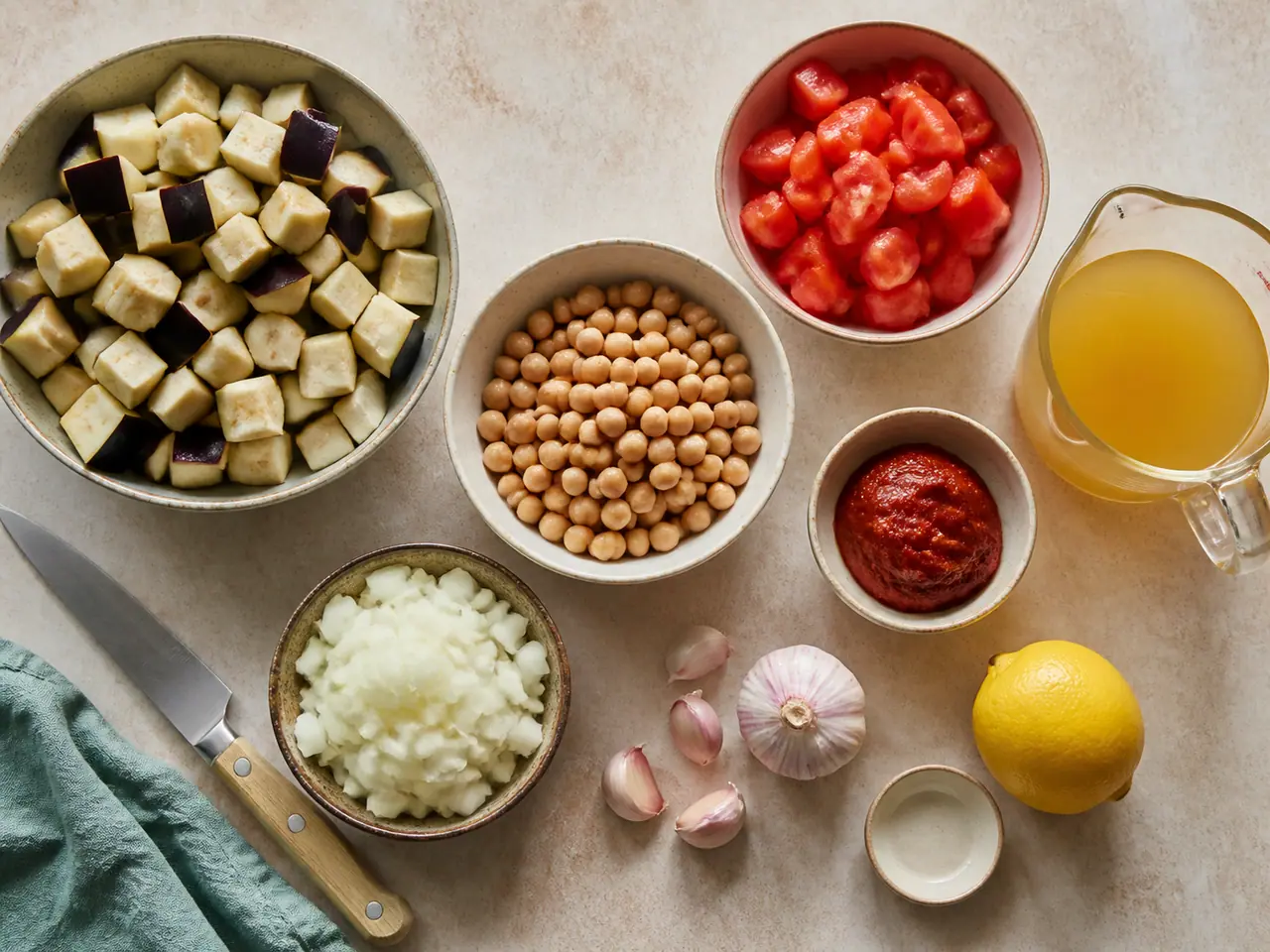
The aubergine test
The freezer rewards sauce. A dry roasted tray loses its best texture after thawing, but a thick tomato base protects the aubergine and gives the chickpeas somewhere to sit. Keep the lemon separate because its bright flavour is the first thing to fade.
Where this tray can go wrong
The first failure is a crowded tin. Aubergine releases water as it cooks, and if the pieces touch, that water has nowhere to evaporate. You get pale, greasy chunks instead of browned corners. Use the biggest tin you own, or split the food between two tins and swap their shelves halfway through. The second failure is adding the chickpeas too early. They dry out before the aubergine is soft, then taste hard rather than creamy. For this for the freezer version, the chickpeas should be exposed to the metal and should have a little oil on their surface, but they do not need a bath of sauce.
Do not judge the tray by its colour alone. Harissa darkens quickly, especially on a thin edge, while the middle can still be firm. Press the thickest aubergine piece with a spoon. It should give without springing back. If it resists, turn the pieces and give them another five minutes. A short rest after the oven matters too: the chickpea skins tighten and the sauce stops sliding around the tin.
Swaps that still work
- Use butter beans for chickpeas when you want a softer, more spoonable tray; dry them well first.
- Replace rose harissa with tomato paste, smoked paprika and a pinch of cayenne if the jar is empty.
- A red onion can replace some aubergine, but cut it into thick wedges so it does not disappear.
- Serve over couscous, rice or toasted bread; choose the starch that can catch the juices.
Nutrition
Per serving, for 4 servings. Estimated from ingredient weights — it moves with the brands and cuts you actually use.
| Nutrient | Per serving |
|---|---|
| Calories | 405 kcal |
| Protein | 14 g |
| Carbohydrate | 54 g |
| Fibre | 17 g |
| Fat | 16 g |
Source: Estimated from ingredient weights, USDA FoodData Central
Questions
Can I use another bean?
Can I use courgettes instead of aubergines?
How should I reheat it?
Is this suitable for meal prep?
Filed under
Cook this next
All recipes →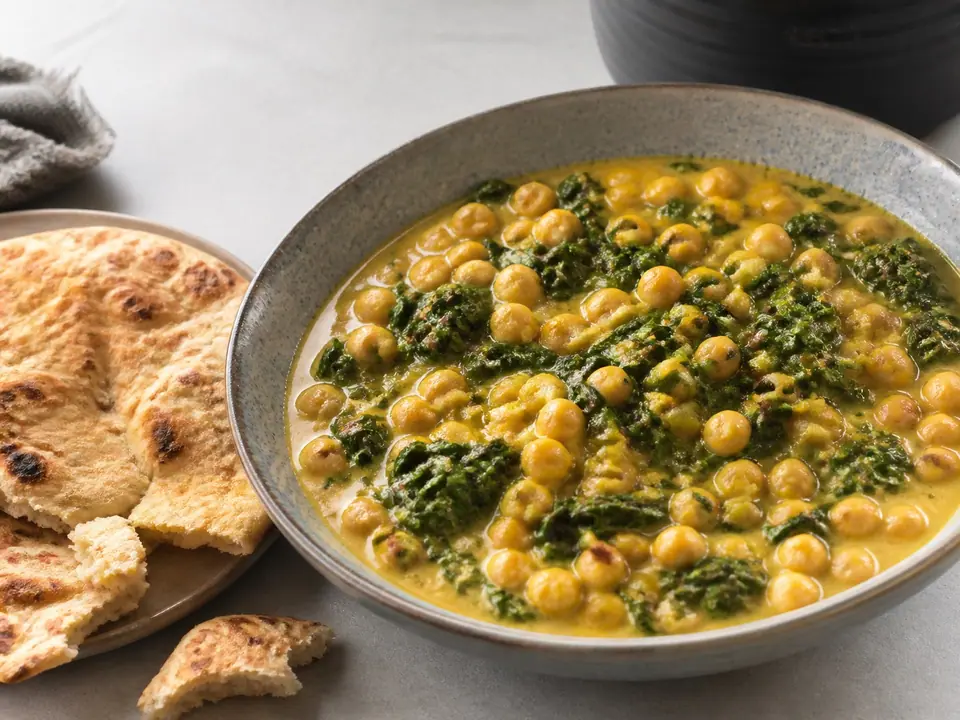
Coconut chickpea curry with greens with warm flatbread
Keep this coconut chickpea curry thick enough for flatbread to scoop, with greens folded through just before the pan leaves the heat.
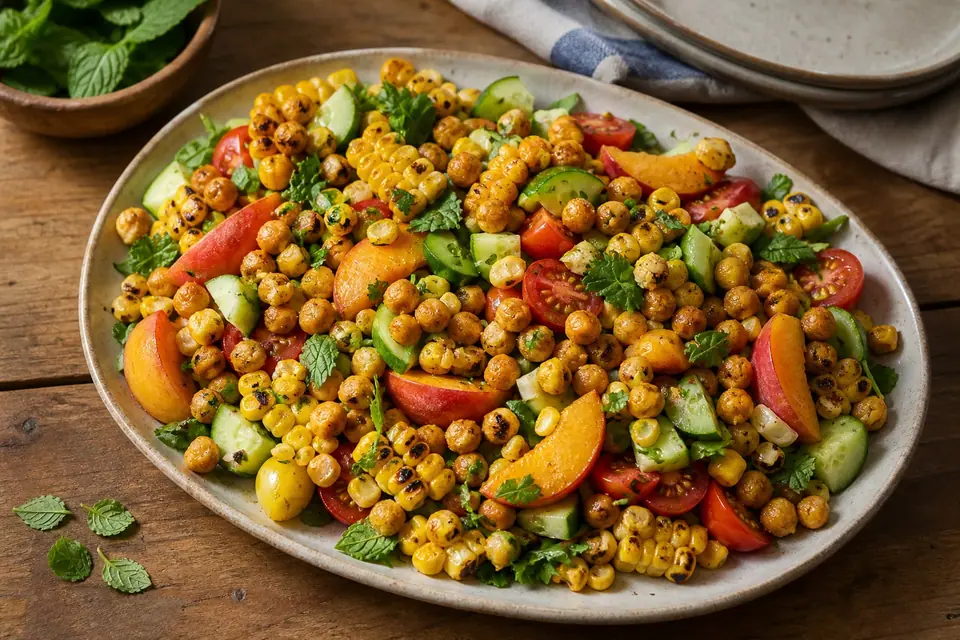
Charred corn, tomato and peach salad with crispy chickpeas
Sweet late-summer produce with chickpeas roasted until their edges crackle. The salad stays fresh while the chickpeas bring the substance.
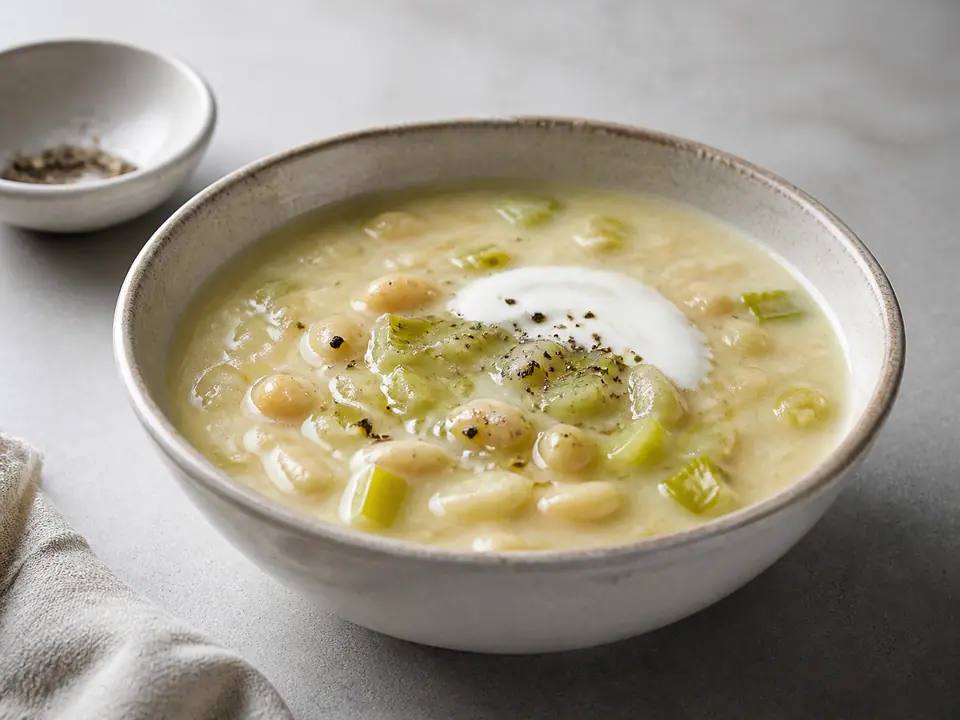
White bean and leek soup with yogurt
Cool lemon yogurt gives the creamy bean soup a fresh contrast and makes the leeks taste sweeter.