White peaches taste softer and floral; yellow peaches bring brighter acidity
White peaches often taste sweeter and more floral, while yellow peaches bring stronger acidity and a firmer, brighter bite. Ripeness matters more than colour alone.

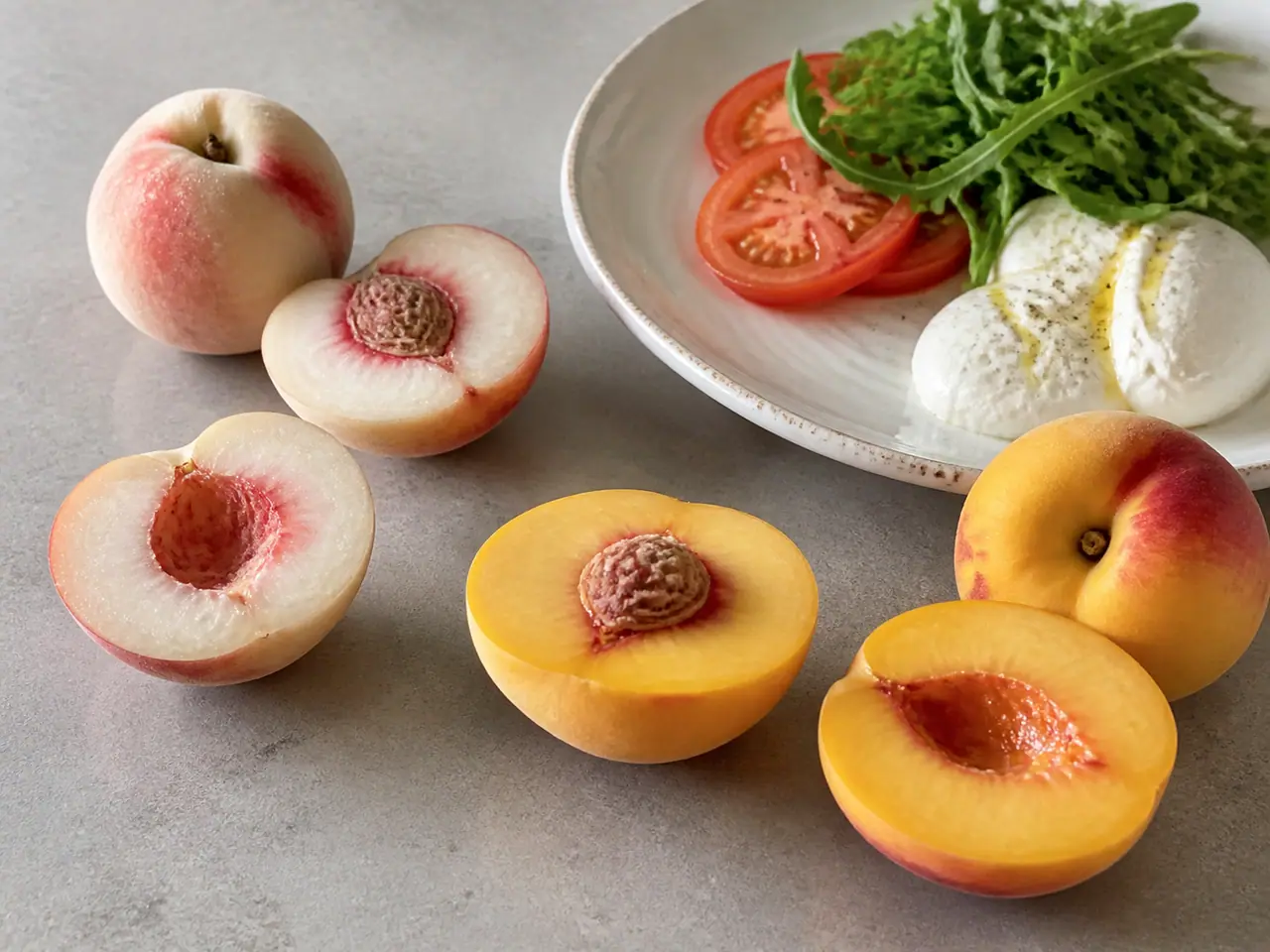
White peaches usually taste softer and more perfumed, with a sweetness that feels round even when the fruit is not fully ripe. Yellow peaches bring a sharper line: more acidity, firmer flesh and a flavour that stands up to grilling or a salty dinner plate.
I compare peaches by ripeness first. A ripe yellow peach beats an underripe white one every time. When both are ready, I choose white for eating over yogurt and yellow for salads, grilling and dishes where acidity keeps the plate awake.
Which peach tastes sweeter?
Same ripeness, tasted plain and then with yogurt, bread and a sharp dressing.
White peach
Soft, floral sweetness
✓ Sweeter impression
Yellow peach
Brighter, more acidic
White peach is my small winner for this question. The other choice still works when the dish asks for its particular texture.
Source: Maren Ashby's kitchen test, 2026-03-06
White peaches bring floral sweetness
White-fleshed peaches can taste honeyed and fragrant, with a soft texture that bruises easily once ripe. They are best when eaten soon after the fruit gives under gentle pressure.
I serve them with plain yogurt, cream or a simple loaf. Strong spices can hide the delicate perfume, so I start with salt and a little lemon.
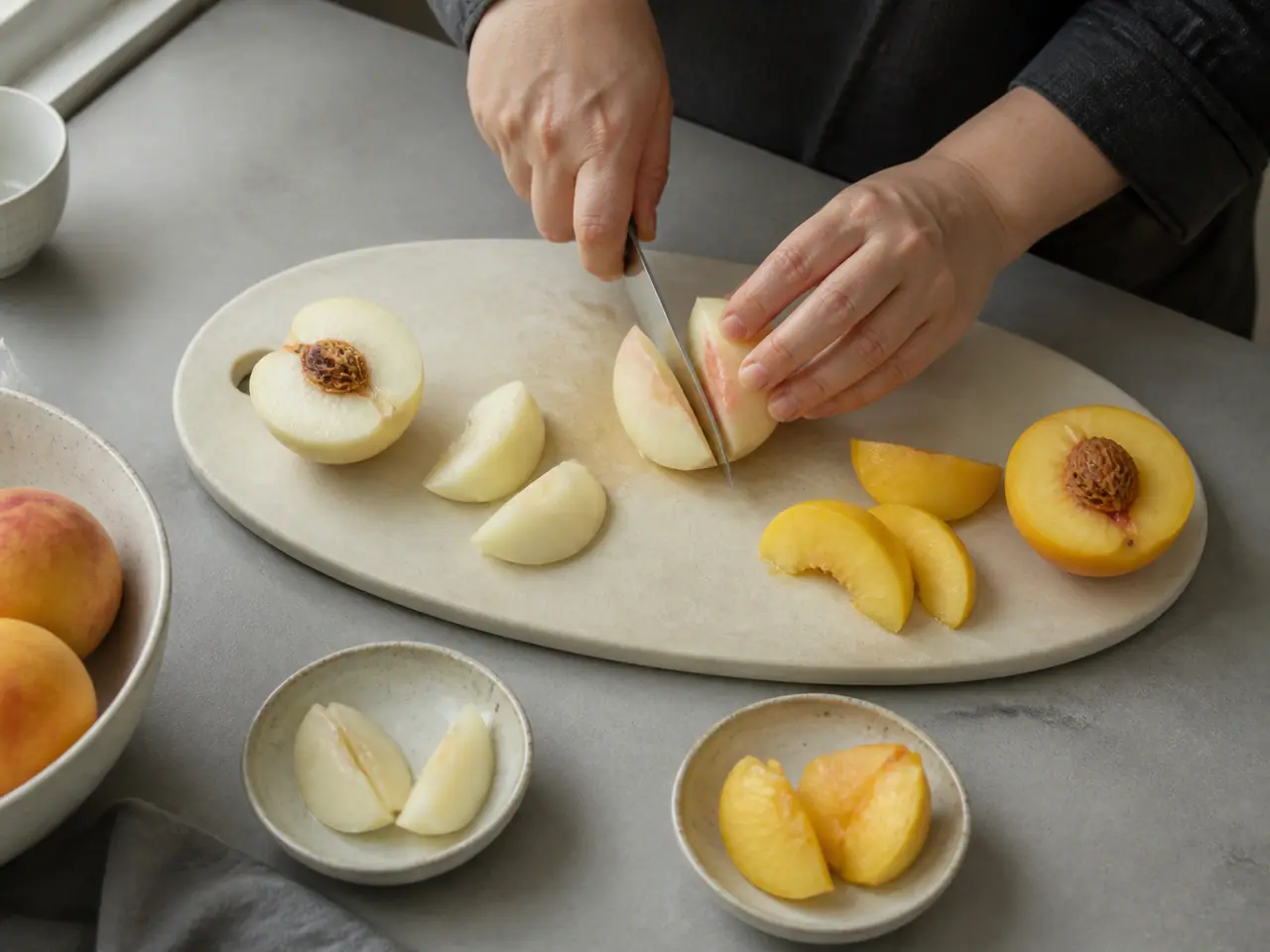
Yellow peaches carry more acidity
Yellow peaches often taste brighter and more structured. That acidity helps them work beside cheese, herbs, tomatoes and grilled food without the plate becoming sugary.
The flesh can stay firmer at the same ripeness, which makes clean slices easier. Use them when a peach needs to travel from board to table.
I keep one piece aside so I can compare it with the next batch.
Ripeness beats colour
A peach should smell fruity near the stem and give slightly under pressure. Colour alone tells me less because varieties blush differently and greenish areas can ripen at home.
Avoid pressing repeatedly in the shop. Turn the fruit in your hand and look for bruises, then let the nose and gentle give decide.
The clock helps, but the surface gives the better signal.
The skin changes the bite
Peach skin adds texture and colour. I keep it on for salads and grilled halves, then peel only when making a smooth puree or a delicate filling.
Rinse close to eating and dry the fruit. Wet peaches bruise more easily when stacked.
That small pause saves more food than a rescue at the end.
Use acid with the sweet fruit
Lemon, lime, yogurt and vinegar make white peaches taste clearer and stop yellow peaches becoming too sharp. Add a little, taste and stop when the fruit still leads.
Salt is useful in tiny amounts. It makes sweetness easier to notice without turning the peach into a savoury ingredient.
The next step works better when the excess moisture has somewhere to go.
My tasting test
I tasted matching slices at room temperature. The white peach read sweeter and more floral. The yellow peach felt firmer and brighter, especially with yogurt and bread.
Cold fruit tastes less aromatic, so I let both warm slightly before deciding. Temperature is part of the comparison, not background noise.
I keep one piece aside so I can compare it with the next batch.
One useful substitution is to change the cut before changing the peaches. If the pieces you bought are smaller, keep them thicker and shorten the cooking time. If they are older or wetter, send them into a sauce, soup or covered dish where the released moisture has somewhere to go. I get a more reliable dinner by adapting the method to the ingredient in front of me than by chasing the variety named in a recipe.
The comparison also changes with serving temperature. A texture that feels generous straight from the oven may soften under dressing, while a tender piece can feel better beside toast or grains. I taste one plain, one seasoned and one after five minutes of waiting. Those three bites tell me which version belongs on the plate and which one needs another job.
When I repeat a test, I keep the variables boring: same weight, same pan, same oil and the same time between cooking and tasting. I write down the cut because a thin slice can make two types look identical. The useful result is not a universal winner. It is a short decision I can make at the shop and repeat on a busy evening.
A fair choice still leaves room for the other ingredient. I use the comparison as a decision tool, not as a reason to ignore what is freshest at the shop. Start with the texture the meal needs, make the cut match that texture and taste the result before adding a heavy sauce. If the first batch behaves differently, record the small change that fixed it: thicker pieces, less liquid, a wider tray or a shorter wait. Those notes are more useful than a grand rule because they travel into the next kitchen, the next season and the next ordinary dinner where the ingredient has to earn its place again.
For the quality and storage details behind my kitchen observations, I use the UC Davis nectarine and peach fact sheet alongside the timed test described above.
The practical verdict
White peaches usually give the sweeter, softer impression. Yellow peaches are brighter and firmer, which makes them more useful beside savoury food.
Ripeness is the final judge. A fragrant peach with gentle give is ready, whatever the flesh colour.
Questions
Are white peaches sweeter than yellow peaches?
Which peaches are best for grilling?
Should peach skin be removed?
How do I tell if a peach is ripe?
More guides
All guides →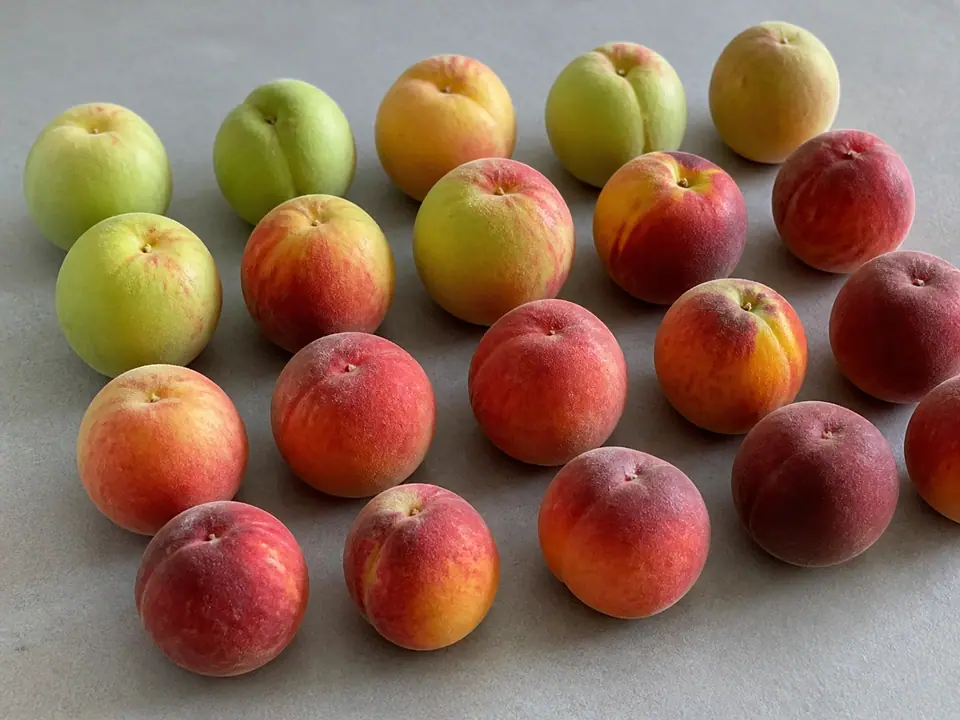
How to choose a peach that will ripen at home
Choose a peach with a fruity stem aroma, firm unbroken skin and a little room to ripen. Avoid bruises and fruit that is either rock-hard and scentless or already leaking.
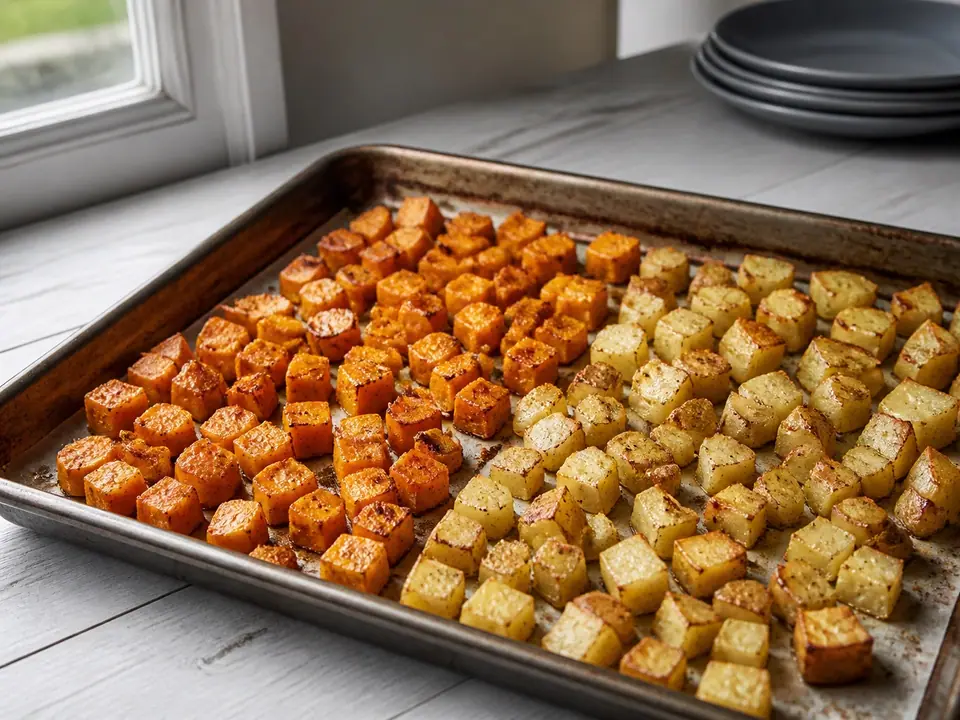
Sweet potatoes vs white potatoes: which is better for roasting?
Sweet potatoes give you a soft, sweet centre and dark edges. White potatoes give you a drier middle and a firmer crust when the tray has room.
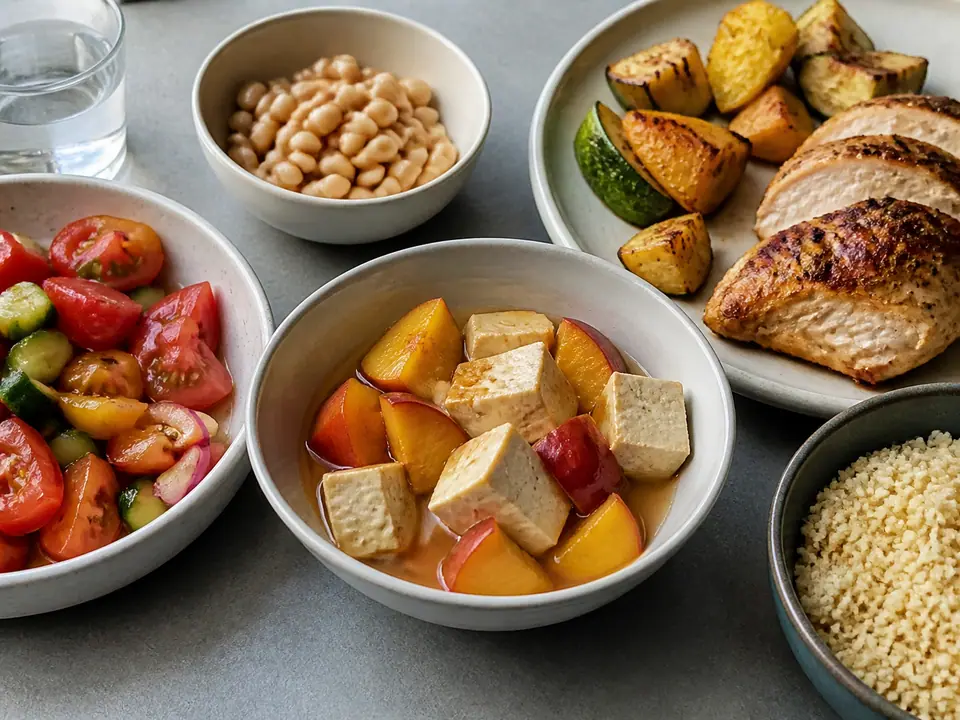
5 summer dinners for ripe peaches
Ripe peaches can carry dinner with tomatoes, tofu, beans, couscous or chicken. Use salt, herbs and acid to keep the sweetness bright rather than dessert-like.