A tin tastes flat when the pan never gets hot enough
Tinned tomatoes are not bland by default. They taste dull when excess water stays in the pan and the tomato never gets the concentrated finish it needs.

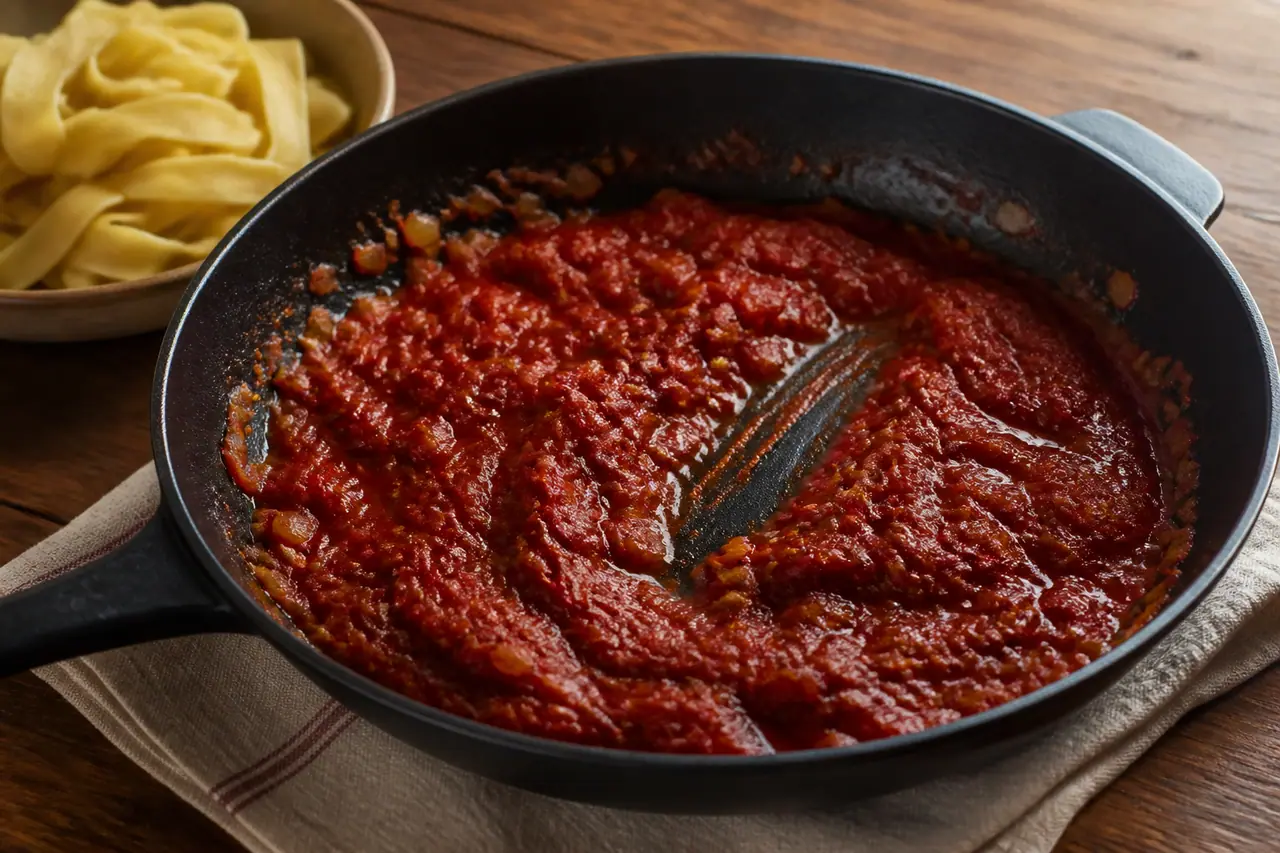
You open a tin, add it to onions, wait twenty minutes and taste a sauce that is red but strangely empty. The usual response is more garlic, more herbs, or a pinch of sugar. My first fix is less exciting: use a wider pan and let the water leave. I learned this after making the same sauce in three pans on one rainy afternoon. The narrow pot stayed loose and tasted sharp. The sauté pan reduced quickly and needed less seasoning. The heavy casserole was slower, but it gave the onion enough time to brown before the tomatoes arrived. The equipment was part of the recipe, not background furniture. I also noticed that a cold pan made the first five minutes disappear into steaming. The oil needs to shimmer, the onion needs contact with the metal, and the tomatoes should enter only after the onion has lost its raw crunch. A sauce has a sequence, and skipping one stage leaves a flavour gap that seasoning cannot fill.
Tinned tomatoes taste concentrated because they were picked ripe and packed quickly, but the tin still contains a lot of juice. A sauce can spend its whole cooking time steaming that water without ever reaching the point where the tomato tastes rounded. The tomato is not broken. The heat and the pan are.
The same tin in two pans
A small saucepan and a wide frying pan, uncovered, cooked for 20 minutes with the same onion and oil.
Small saucepan
3
spoon marks of liquid left
Wide frying pan
1
spoon marks of liquid left
✓ Less liquid left
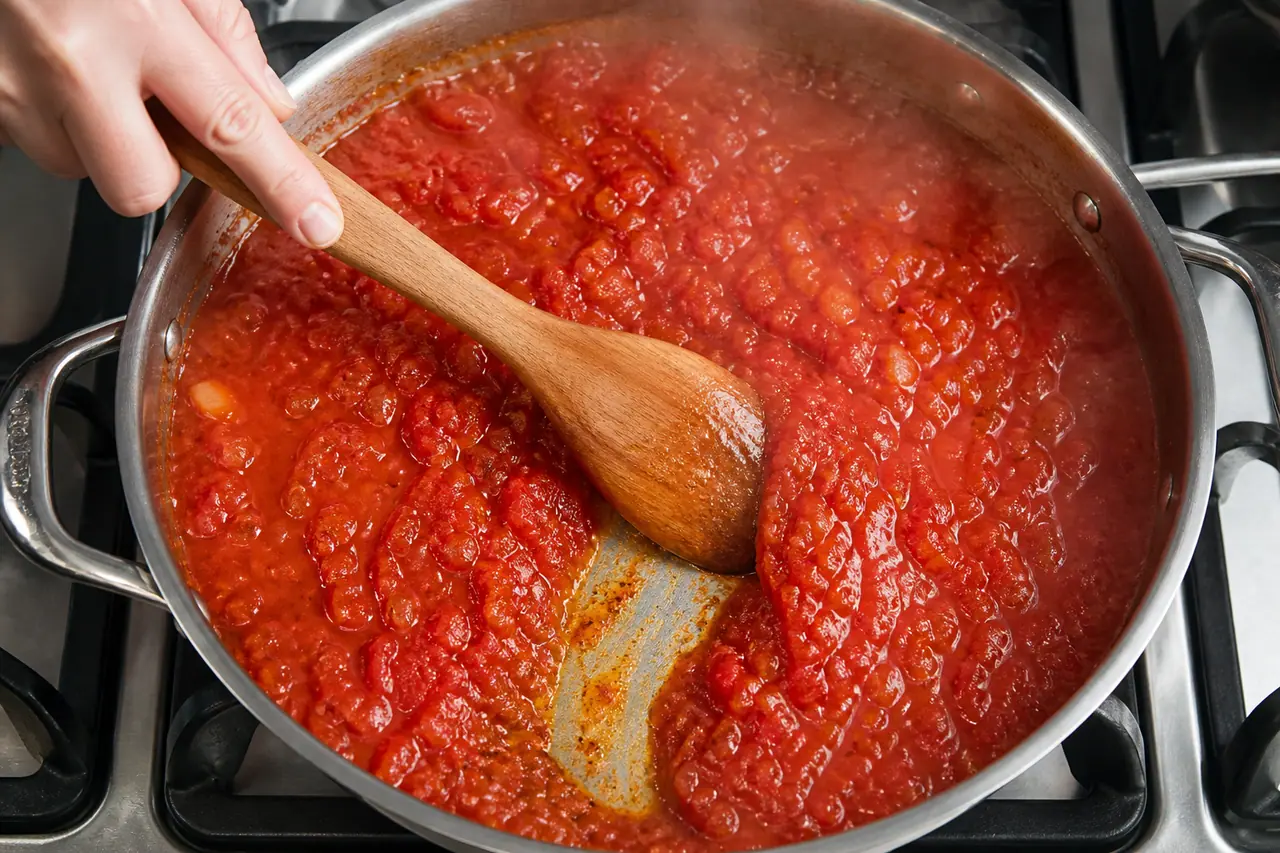
The wide pan reduced faster and tasted more like tomato. The number is not a universal cooking measurement; it is a repeatable check for my kitchen. Surface area changes the sauce before the ingredients do.
Source: Maren Ashby's kitchen test, 2026-08-27
What is in the tin besides tomato
A 400 g tin is a mix of fruit and liquid. The liquid is useful at the start because it carries the tomato through the pan, but it is not the part you want to taste at the end. If the lid is on, steam condenses and returns. If the pan is crowded, the tomato warms but never reduces with much purpose. That is why a sauce can look busy and still taste unfinished. You can see onion, garlic and herbs, yet the base remains diluted. Once I started judging the steam coming off the pan, rather than counting minutes, my sauces became more consistent. A broad shimmer means the heat is working; a quiet red pool under a lid means the water is staying put.
Whole, chopped and crushed tomatoes behave differently. Whole tomatoes release liquid slowly as they break down. Chopped tomatoes expose more surface area. Crushed tomatoes thicken sooner, though brands vary. I use whole tomatoes when I want control and crushed ones when the weeknight has already got away from me.
Three things that make the flavour fuller
- Brown the onion first. Pale onion gives sweetness, but a few golden edges give the sauce a savoury base. Do not add tomatoes while the onion is still releasing raw water.
- Cook the garlic briefly. Thirty seconds in the oil is enough. Burnt garlic brings bitterness that no tomato can hide.
- Add fat near the end. Olive oil stirred into a reduced sauce softens sharpness and carries aroma. It cannot rescue a sauce that is still watery.
Salt and acidity are separate jobs
Salt makes tomato taste more like itself. Add some when the tomatoes go in, then correct at the end because reduction changes the balance. Sugar is not a default tomato ingredient. If a spoonful tastes sharp, cook it longer first. A little butter or olive oil may round it out. If it still tastes harsh, the tin may be more acidic than the last one you bought.
Acid is not always the enemy. A small splash of red wine vinegar or lemon at the end can make a dull sauce taste alive, but it should be a final adjustment. Adding it early gives the pan another sharp note to reduce and can leave the sauce tasting aggressive.
When the tin is not the problem
If a sauce tastes metallic, check the can and the pan before blaming the tomato. Do not store leftovers in an opened metal tin. Move them to a clean covered container, and follow the storage guidance from USDA FSIS on leftovers.
If the flavour is thin but pleasant, keep reducing. If it is bitter, look for scorched garlic or onion stuck to the bottom. If it is sour and watery, the pan likely needs time. Each problem has a different fix, which is why adding sugar to every tomato sauce never works for long.
A reliable 20-minute method
Warm two tablespoons of olive oil in a wide pan. Cook one finely chopped onion over medium heat until the edges turn golden, about seven minutes. Add two sliced garlic cloves for half a minute. Add a 400 g tin of crushed tomatoes, a pinch of salt and chilli if you want it. Bring it to a proper simmer, then leave the pan uncovered for 12 minutes.
At that point, drag a spoon through the middle. If the line closes instantly, give it another three minutes. If it stays open, turn off the heat and stir in a tablespoon of olive oil. That sauce will cover 250 g of pasta without pooling at the bottom of the bowl.
For a fuller dinner, spoon the sauce over the traybake in harissa roast chicken, or fold chickpeas through it and serve with bread. Tinned tomatoes are at their best when the pan lets them become more than tomato-flavoured water.
Questions
Should I add sugar to tinned tomato sauce?
Why does my tomato sauce taste bitter?
Should I cover tomato sauce while it cooks?
Do canned tomatoes need to be cooked?
More guides
All guides →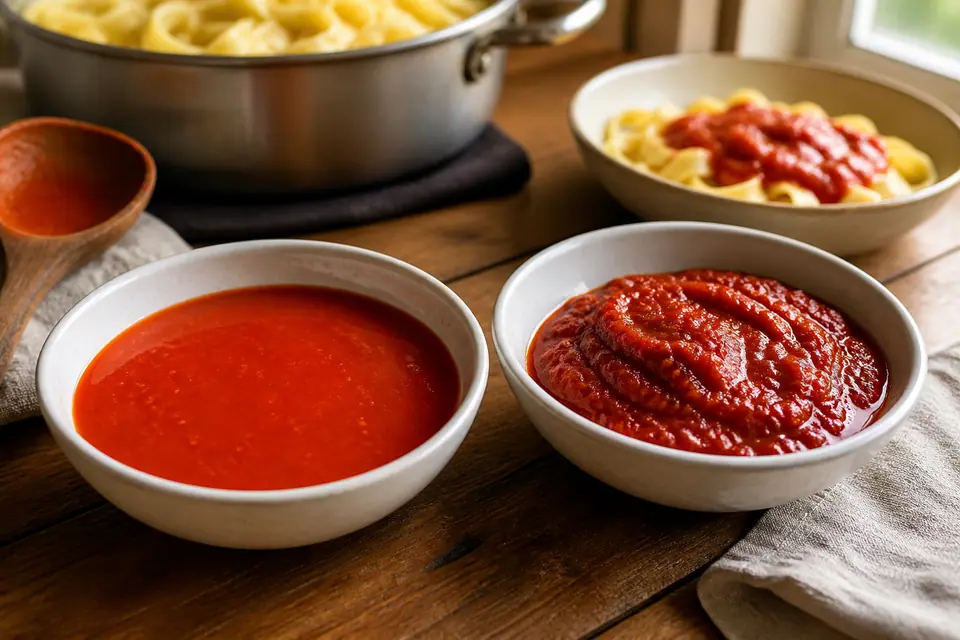
Why passata can taste flat straight from the carton
Flat passata usually needs concentration rather than more herbs. Reduce it in a wide pan, season in stages and finish with fat after the water has gone.
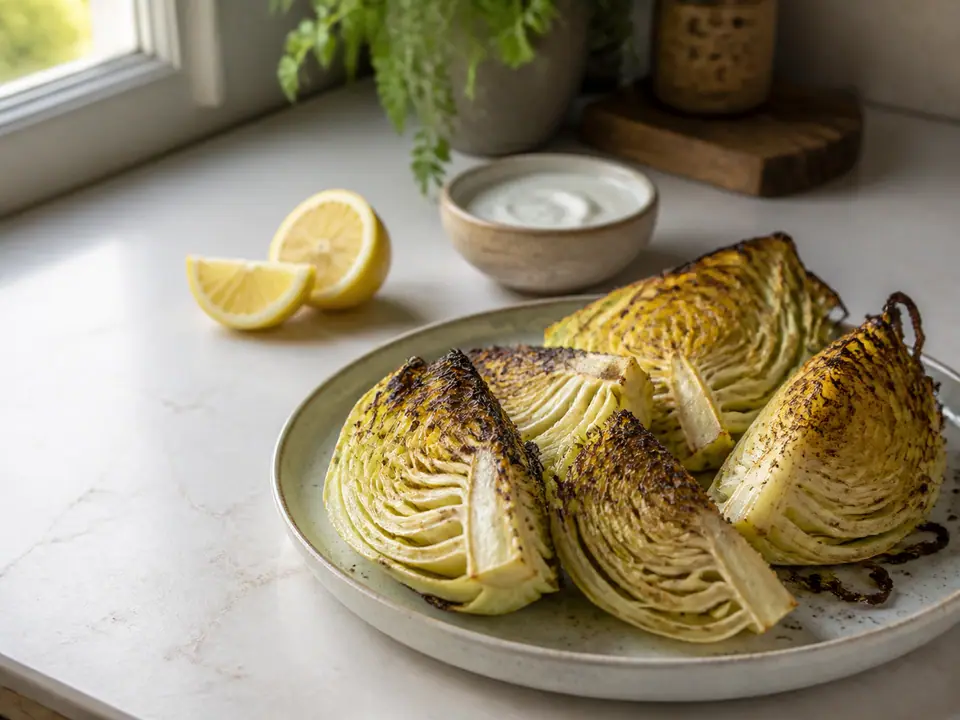
Why cabbage gets sweeter when its edges char
Charred cabbage is not burnt cabbage. A dry cut face and enough heat turn the edges savoury and sweet while the thick rib stays juicy.
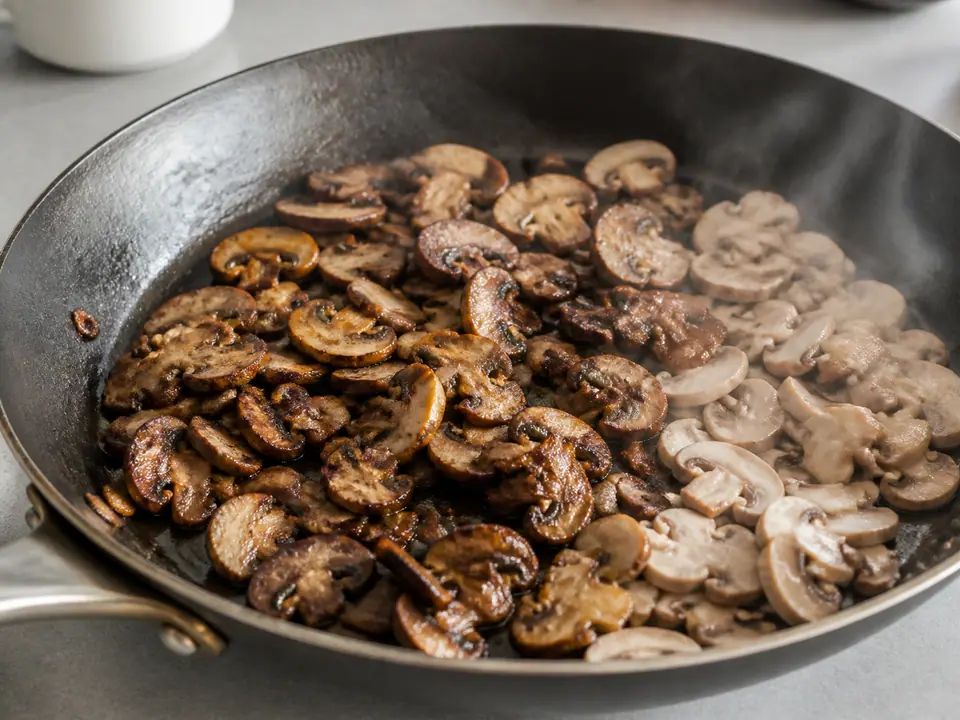
Why mushrooms steam instead of brown
Mushrooms release a surprising amount of water. Give them a dry surface, a wide pan and time before seasoning if you want colour instead of a grey simmer.