Ramps taste like spring garlic with a wild green edge
Also called wild leeks, wild garlic
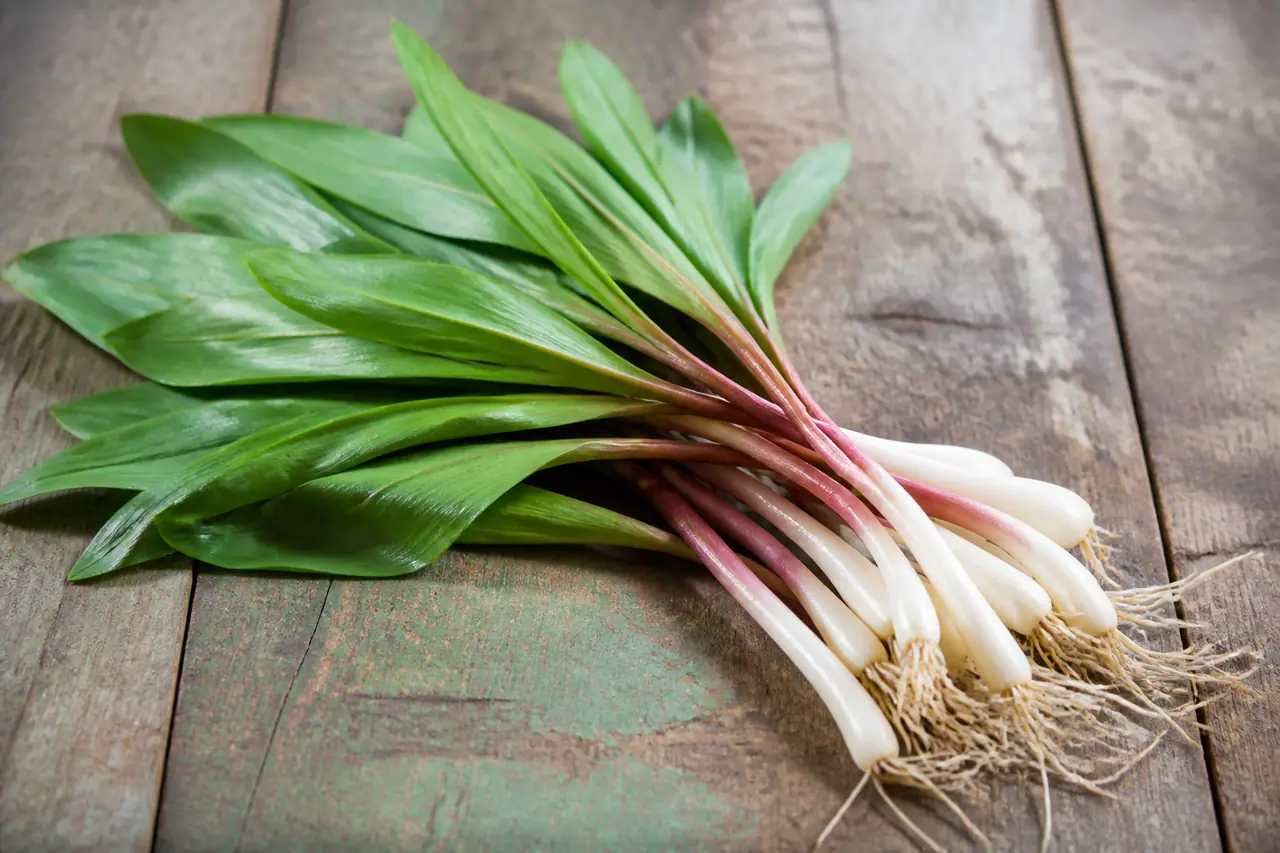
Ramps are seasonal wild alliums with a tender white bulb, purple-tinged stem and broad green leaves. Use them quickly, wash them carefully and let their short season guide the menu.
The numbers
| Nutrient | Amount | % RI |
|---|---|---|
| Calories | 45 kcal | — |
| Water | 86 g | — |
| Carbs | 9 g | — |
| Fibre | 3 g | 11% |
| Protein | 2.5 g | 5% |
| Vitamin C | 30 mg | 36% |
| Potassium | 300 mg | 15% |
Source: USDA FoodData Central, raw green onion and garlic records used as an allium comparison; ramps vary · % RI against EU adult reference intakes.
Buying and keeping
What to look for at the shop, and how to make it last once it is home.
How to pick
- Choose ramps with bright, firm leaves and clean white bulbs with no slime.
- The stems should be crisp, not collapsed, and the leaves should not have large brown patches.
- Smaller plants are often tender; larger bulbs may have a stronger, more mature flavour.
- Avoid bunches with a sour smell or roots that feel soft and wet.
- Buy ramps from a reliable grower or forager because wild harvesting needs local knowledge and care.
How to store
- Wrap ramps loosely in a damp towel and refrigerate them as soon as possible.
- Use the leaves first because they lose freshness before the bulbs do.
- Keep washed ramps very dry before storage; excess water speeds up slime and decay.
- Blend extra ramps into a pesto or compound butter and freeze in small portions.
- Do not keep fresh ramps for weeks. Their best flavour is usually within a few days of purchase.
Best months
If you have none
Swaps that hold up, with what changes when you use them.
A short season worth noticing
Ramps are wild alliums that arrive for a brief spring window. They look like small leeks with broad leaves and sometimes a purple blush on the stem. Their flavour sits between garlic, onion and leafy greens: direct when raw, sweeter after a quick saute and mellow when folded into butter or cream.
Because the season is short, ramps are often sold with roots and a little woodland soil attached. Buy them from a trusted source and follow local harvesting rules. Wild plants should be identified with certainty, and responsible harvesters leave enough of the plant behind for the patch to return. Treat the ingredient as seasonal rather than expecting it all year.
Clean the bulb and leaves
Trim the roots and remove any loose outer skin. Rinse the white bulb, stem and underside of the leaves under cold water. Grit can hide where the leaf joins the stem, so open that fold with your fingers. Dry the ramps carefully. A salad spinner works for the leaves, while a towel helps dry the bulb and purple stem.
Separate the leaves from the bulbs when the recipe needs different timing. The leaves wilt in seconds and can finish a pasta or soup. The bulb and stem can take a little more heat and are good sliced into a pan with butter. Keep the leaves whole for wrapping, or chop them finely for pesto.
Use heat with restraint
Raw ramps can be sharp, so taste before adding a whole bunch to a salad. A little salt and lemon soften the bite. For cooking, saute the chopped bulbs and stems briefly, then add the leaves at the end. They should turn bright and tender, not brown and dry. A hot pan is useful, but the cooking window is short.
Ramps are excellent in scrambled eggs, beans, pasta, potatoes, compound butter and green sauces. Blend the leaves with oil, nuts and cheese for pesto, or fold them through softened butter and freeze portions for later. If you preserve them, keep the flavour balanced with acid and salt rather than trying to make a small spring bunch carry an entire jar.
The closest year-round ideas
Green garlic is the closest fresh substitute, while mature garlic supplies a stronger bulb flavour. Spring onions bring the green crunch, and leeks give a softer cooked base. None is identical, which is part of the reason ramps are worth using when they appear.