Roast it, simmer it, fold it into grains or let it stain a warm sauce
Beetroot can carry dinner in roasted wedges, lentils, soup, pasta or grains. Pair its earthy sweetness with acid, beans, yogurt or a salty finish.

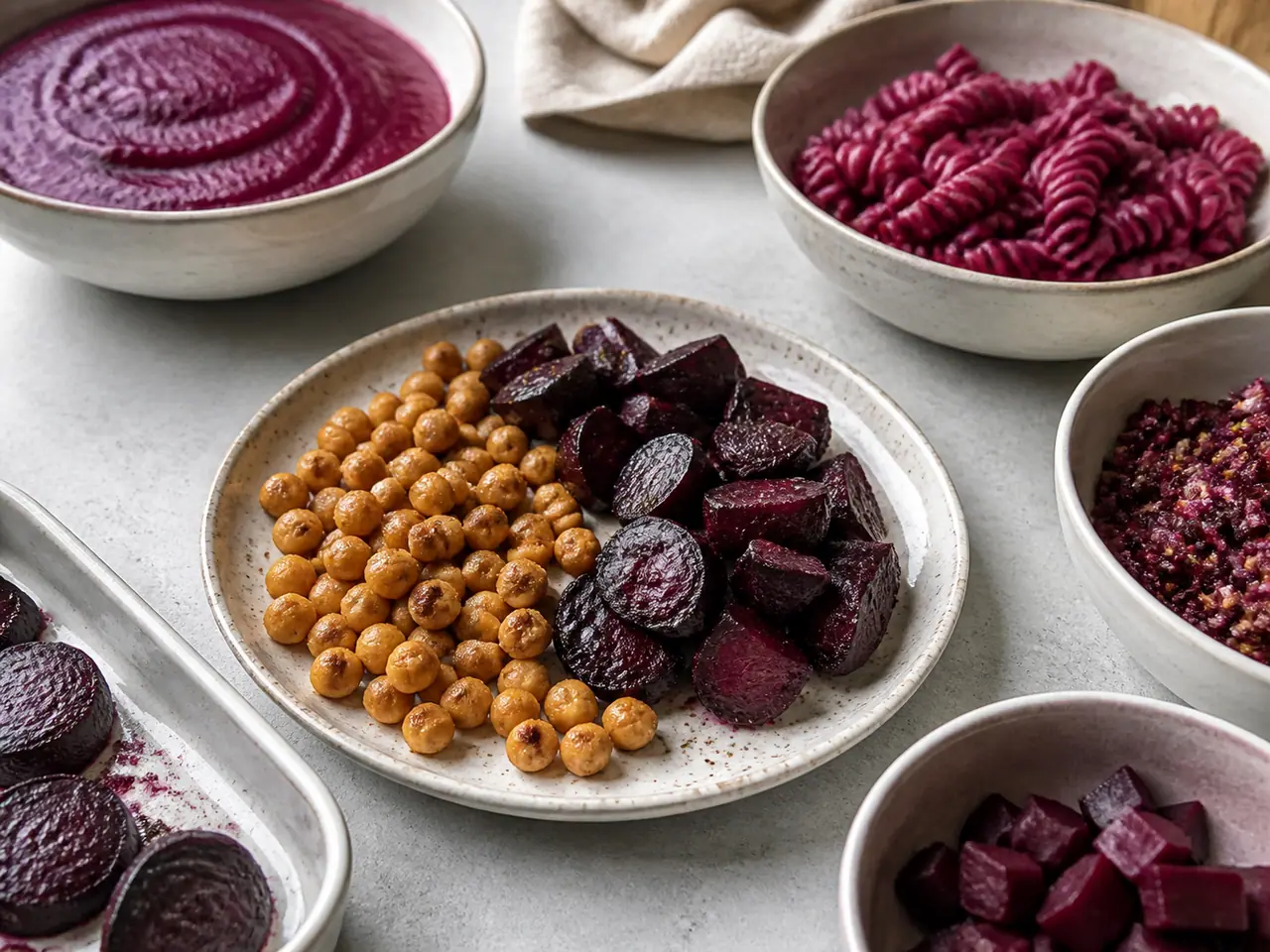
Beetroot does not have to be a cold salad waiting beside dinner. It can become the centre of a warm plate when the rest of the meal gives its earthy sweetness a sharp or creamy counterpoint. I use beans, lentils, yogurt, pasta and grains to make the root feel substantial.
The colour is part of the fun, but the texture decides the route. Roast firm wedges, simmer older roots, grate raw beetroot for a late crunch or fold cooked pieces through grains after the heat is off. These five ideas use one batch without repeating the same bite.
1. Roasted beetroot with chickpeas
Roast thick beetroot wedges with chickpeas, cumin and oil until the edges catch. Finish with lemon yogurt or tahini and serve with flatbread.
Keep beetroot and chickpeas in one layer so the chickpeas crisp instead of steaming in red juice. Add the creamy finish after the tray rests.
2. Beetroot and lentil bowls
Simmer lentils with onion and stock, then add roasted or boiled beetroot in the last few minutes. Spoon into bowls with herbs, yogurt and vinegar.
The lentils supply the savoury base. Beetroot can stay in chunks so the bowl has a clear sweet-earthy note rather than becoming one purple puree.
I keep one piece aside so I can compare it with the next batch.
3. A quick beetroot soup
Cook onion, beetroot, potato and stock until tender, then blend all or part of the pot. Add lemon, dill or yogurt at the end.
Use older sound beetroot here because the blender makes a coarse centre less noticeable. Taste after blending; soup often needs more acid than expected.
The clock helps, but the surface gives the better signal.
4. Beetroot pasta with soft cheese
Grate cooked beetroot into a skillet with garlic, pasta water and soft cheese. Toss through pasta and finish with walnuts or toasted seeds.
Keep the beetroot slightly chunky so the sauce has movement. The pasta water loosens the cheese, while lemon stops the colour from tasting heavy.
That small pause saves more food than a rescue at the end.
5. Warm beetroot grain bowl
Warm grains with beans or greens, then fold in beetroot after the heat is off. Add pickled onions, yogurt and a sharp dressing.
Adding beetroot late keeps some shape and stops the whole pan turning wet. It also means leftovers can be stored in separate colours and textures.
The next step works better when the excess moisture has somewhere to go.
Use one batch wisely
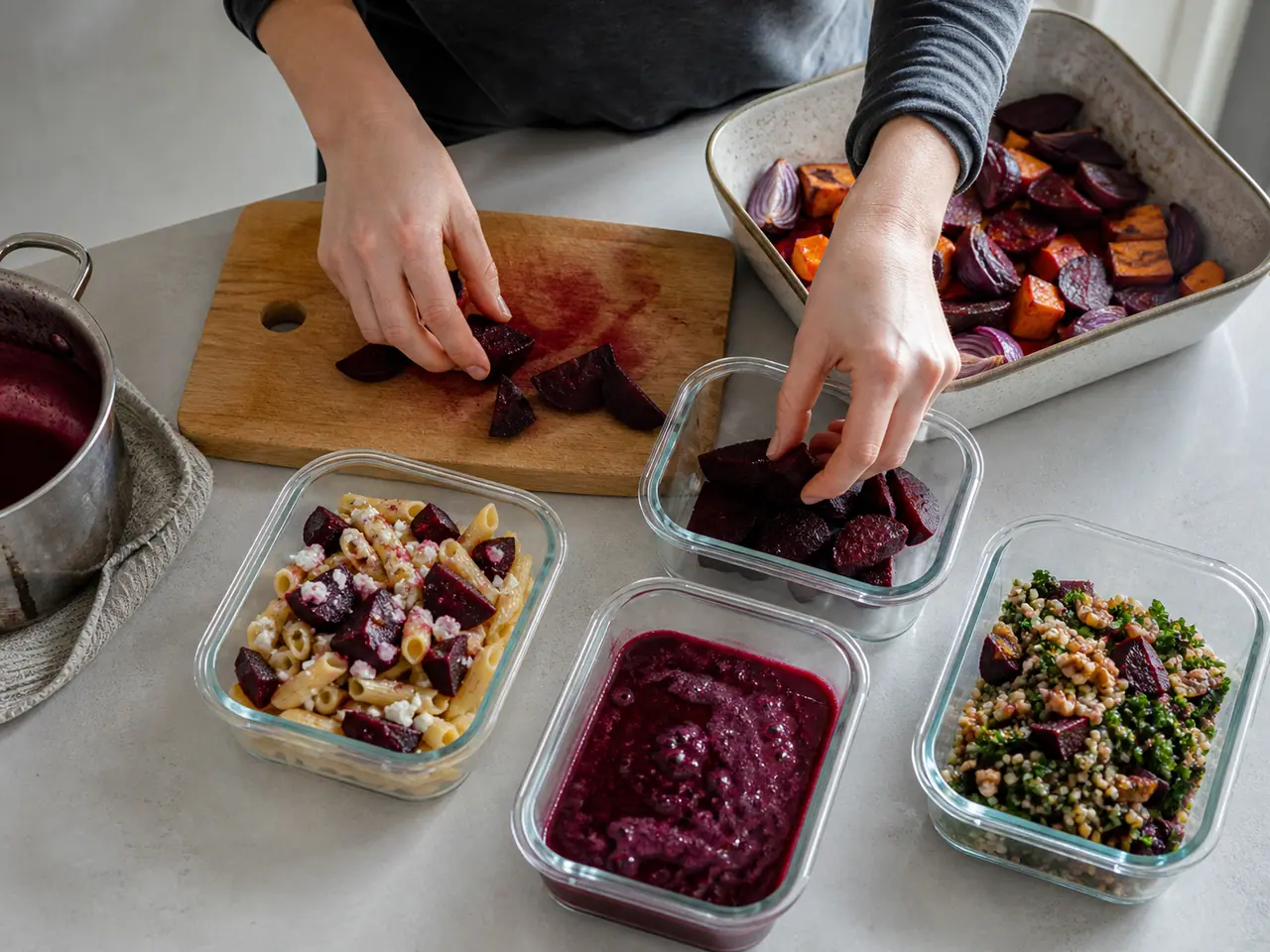
Cook a batch of beetroot whole, cool it and divide it by condition. The tender centre can be sliced for bowls; softer pieces can go into soup; a firm root can be grated raw the next day.
Keep the dressing and pale ingredients separate until serving. Beetroot is generous with colour, so let one part of dinner carry it deliberately.
I keep one piece aside so I can compare it with the next batch.
The five ideas are routes, not a demand to buy five separate sets of ingredients. I keep one filling base, one sharp finish and one contrasting texture in the kitchen, then change the shape of the beetroot. Beans can become a sauce, grains can become a bowl and bread can become a plate. That is how one shop trip stays flexible without producing five versions of the same dinner.
Use the freshest pieces where the beetroot is visible: a topping, salad, roast edge or late finish. Send softer sound pieces into soup, sauce or a covered skillet where time is useful. I sort the leftovers by condition rather than by recipe. The next dinner then starts with a sensible question: what needs heat today, and what can wait?
The finishing ingredient should solve the final gap. Acid wakes up a heavy pan, yogurt cools a browned edge, seeds add dry crunch and an egg makes a vegetable dinner last. I taste before adding all four. A short ingredient list feels more generous when every part has a clear job and the main beetroot still tastes like itself.
A flexible list works because each idea has a different texture and timing. Keep one route quick, one route hearty and one route that uses softer pieces, then choose between them after looking at what is in the bowl. Add the main ingredient late when you want it to stay distinct, or earlier when you want it to melt into the sauce. Leftovers should have a planned second shape: grains become a bowl, roasted pieces become soup and a sharp dressing can turn yesterday's tray into lunch. The goal is variety without another full shop.
For the quality and storage details behind my kitchen observations, I use the University of Minnesota beet growing guide alongside the timed test described above.
The practical verdict
Beetroot becomes dinner when it has a filling partner and a clear contrast. Roast it with chickpeas, simmer it with lentils, blend it into soup or fold it through pasta and grains.
Cooked beetroot is the most convenient starting point, but raw grated beetroot can give a warm bowl the crunch it needs.
Questions
What can I make with beetroot for dinner?
What flavours go with beetroot?
Can beetroot be the main vegetable?
How do I use cooked beetroot leftovers?
More guides
All guides →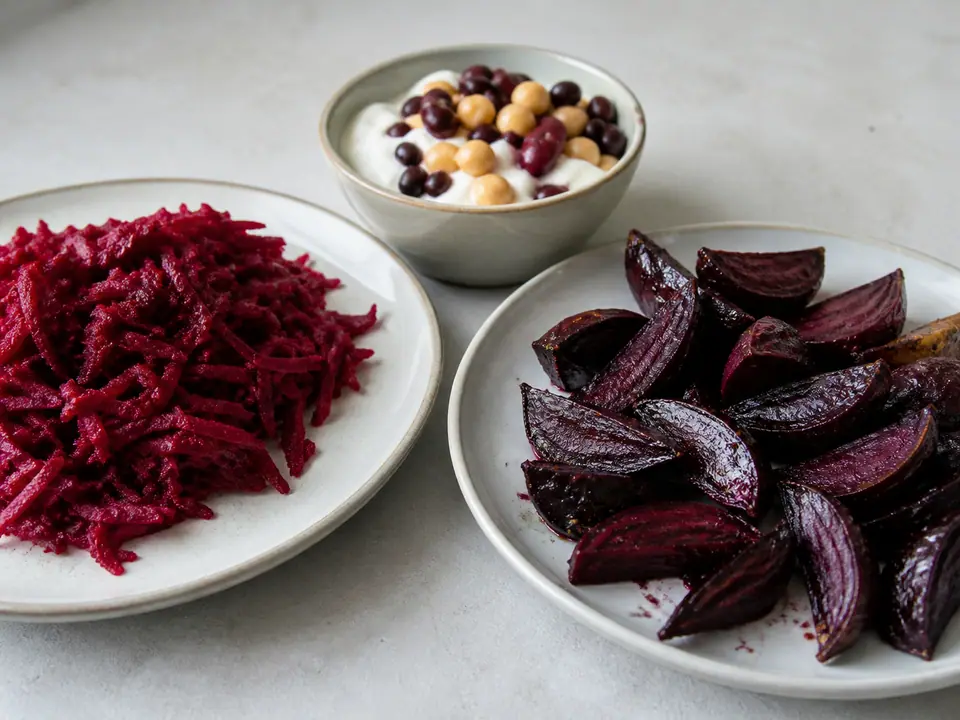
Raw vs cooked beetroot: which is more useful?
Raw beetroot is useful when you want crunch and colour. Cooked beetroot is easier to eat, easier to season and better when the root needs to carry a warm dinner.
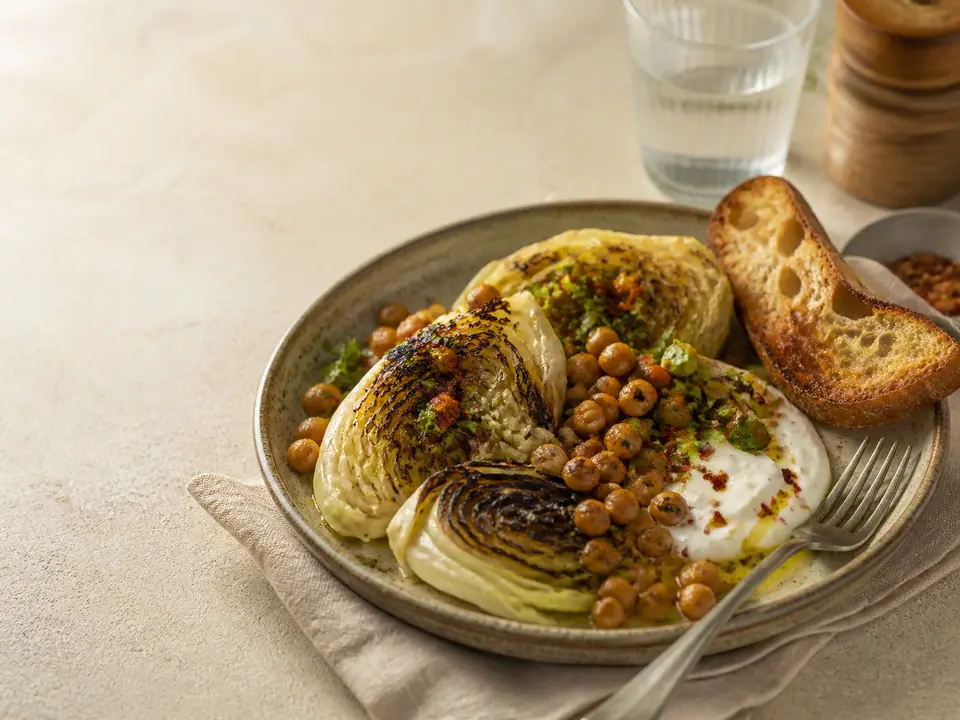
5 cabbage dinners that are not boiled cabbage
A cabbage head can become a roast wedge, a noodle-like skillet, a bean dinner, a chicken tray and a crisp topping without a pot of boiling water.
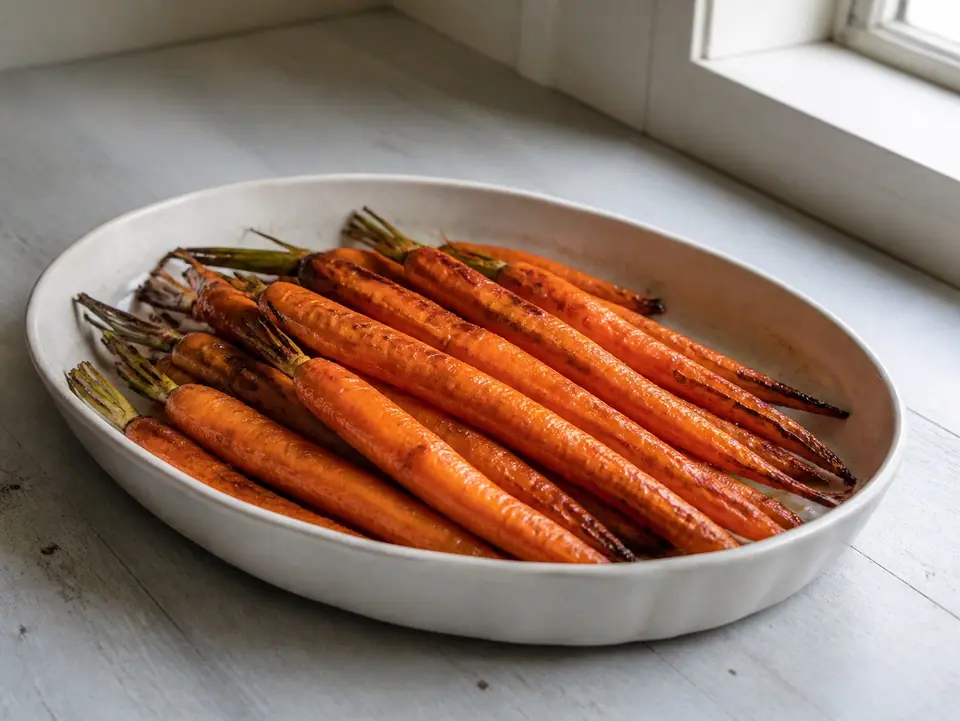
Why carrots taste sweeter after roasting
Roasting drives off water and browns the carrot surface, so its natural sweetness becomes more noticeable. The cut and tray space decide how far it goes.