The best tofu crust is a dusting, not a white blanket
A thin, even dusting of cornstarch gives tofu a crisp shell. Too much leaves powdery patches and makes the coating fall off in the pan.

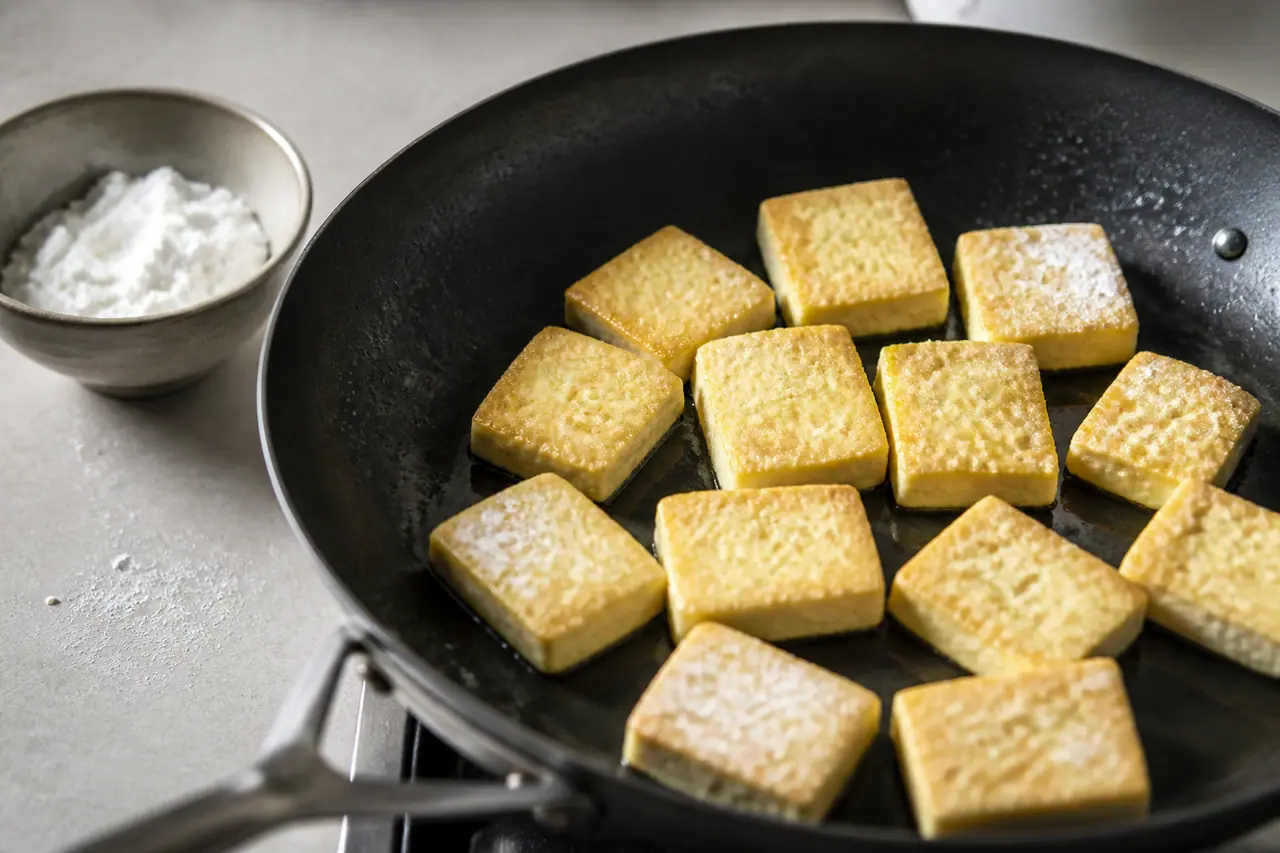
Cornstarch is useful on tofu because it turns a damp surface into a dry one that can brown in oil. The mistake is treating it like breading. Tofu does not need a thick white jacket. It needs a light film that fills the rough edges, stays attached and cooks into a thin shell. If you can still see the shape and colour of the tofu before it reaches the pan, the amount is probably close.
I tear pressed tofu into bite-size pieces, sprinkle over the starch and toss with my hands. Then I shake each piece once as it goes into the skillet. That extra second removes loose powder and stops the bottom of the pan filling with floury crumbs. The crust becomes more even and the oil stays clean enough for a final glaze.
Dry tofu before adding starch
Cornstarch cannot make a wet block dry all the way through. Press the tofu in a tea towel, then pat the cut or torn surfaces. The pieces should feel cool and matte. If they look shiny, more starch will stick in lumps rather than in a fine layer.
A matte edge matters more than a precise spoon measure here.
Use a bowl with enough room to toss without crushing the tofu. A sealed container encourages the starch to settle in one spot. A shallow tray is good for thin slices, while a bowl is better for rough pieces. Add the starch in two small additions instead of one large pile so you can stop when the surfaces are covered.
Let the coated pieces sit only long enough to heat the pan.
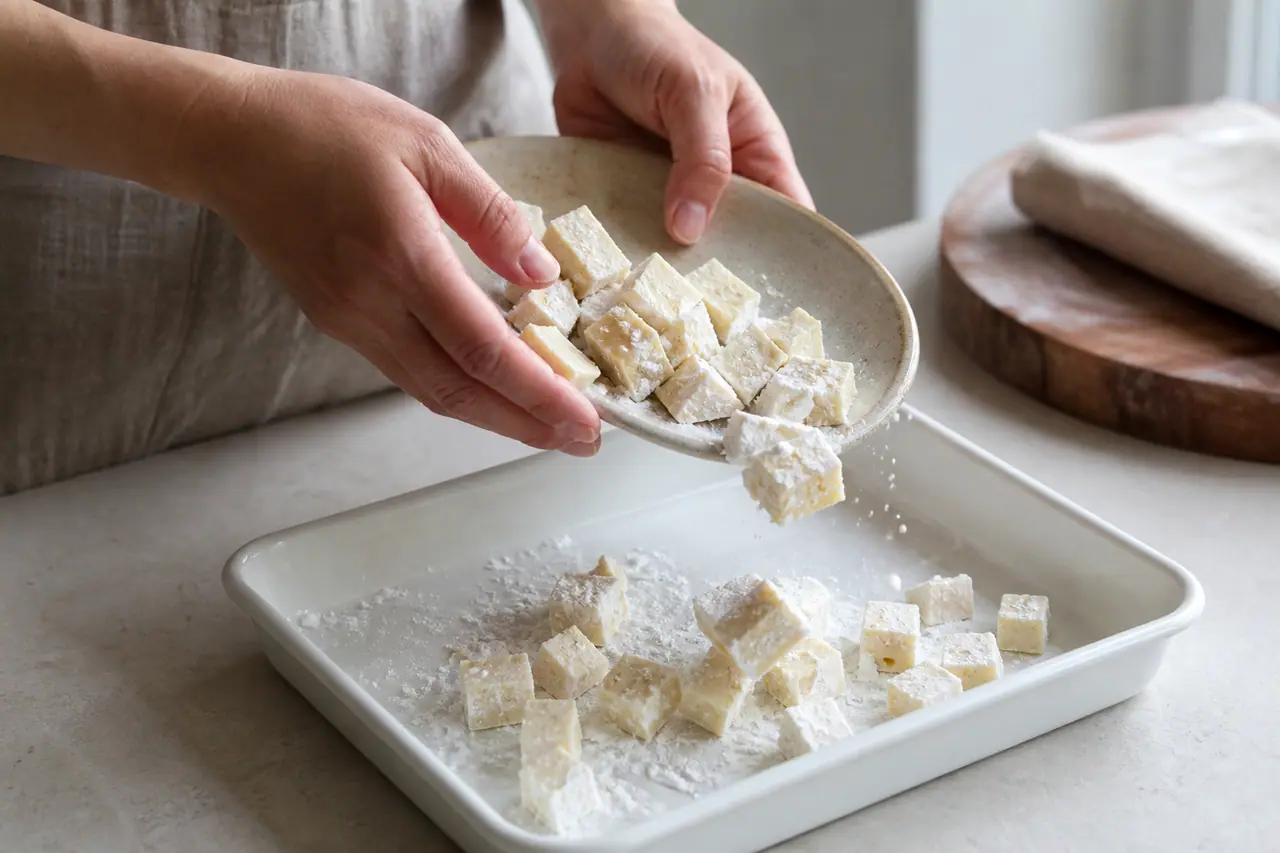
What the right amount looks like
A good coating is almost translucent at the edges. You see the tofu underneath, and the starch sits in the cracks rather than forming a separate layer. Rub two pieces together gently. If powder comes away in a cloud, there is too much loose starch. If the surface is still glossy, add a pinch more and toss again.
Extra-firm tofu with a firm press needs less starch than soft firm tofu. Large torn pieces need a little more than thin slices because their irregular surfaces hold more water. The exact spoon measure matters less than the visual check. Coating is a response to moisture, not a fixed rule that ignores the block in front of you. A dry block may need only a trace, while a wetter one accepts more, but neither should look buried. The pan will reveal the difference as soon as the first side begins to brown.
Season around the coating
Salt, white pepper and garlic powder can go into the starch when the tofu will be served dry. Keep wet ingredients such as soy sauce, vinegar and chilli oil for the end. A wet marinade makes the starch patchy and can turn the bowl into a sticky paste before the tofu has browned.
For a soy glaze, fry the tofu until the crust is set, then pour the sauce around the pieces rather than directly over the top. Toss for only a few seconds. This is how the chilli oil version keeps its fragrant topping separate from the crust. The sauce should cling lightly, not soak the tofu.
Choose starch by the texture you want
Cornstarch gives a familiar crisp shell and is easy to find. Potato starch tends to make a more delicate, craggy crust. Tapioca starch can be springier and slightly chewy at the centre. Plain flour browns, but the coating is softer and more bready. You can test a new starch with one piece first, because the pan will tell you more than a packet description.
Do not mix several starches just to use up packets. The important parts are dry tofu, a light coat and enough oil to reach the surface. A clever blend cannot save pieces that are wet or crowded. For a fast dinner, the simple cornstarch method is usually the most predictable.
The shell is only useful if it survives serving
Dust the tofu lightly, brown it in an open pan and add liquid at the last moment. Keep cucumber, yogurt or tahini beside the rice rather than pouring them over the crust. The same rule makes tofu with cucumber yogurt work: the cold part meets the hot shell on the fork, where it can stay distinct.
When you are unsure, under-coat the first piece and test it. It should brown cleanly, with no raw white line where the starch has gathered. Add a little more to the remaining tofu only if the surface needs it. That test saves a whole batch from a thick, floury coating and teaches you how wet the packet really was. Next time, the visual check will be quicker.
Questions
How much cornstarch do I need for tofu?
Why is my tofu coating powdery?
Can I season cornstarch for tofu?
Can I use flour instead of cornstarch?
More guides
All guides →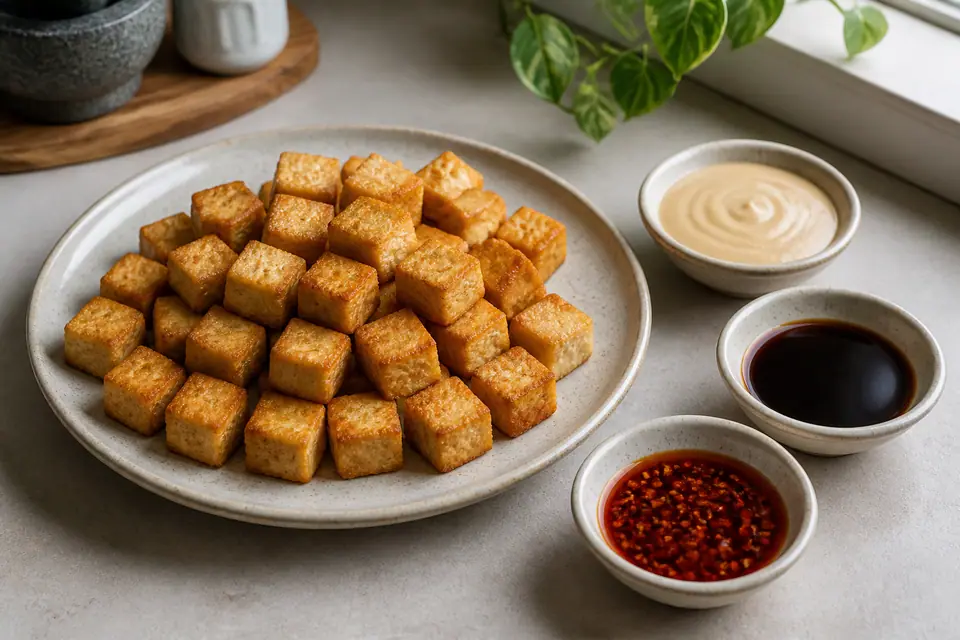
Tofu sauces that stay crisp
Crisp tofu lasts longer when the sauce is thick, added late or served underneath. Build contrast with cucumber, lemon, tahini or chilli oil at the table.
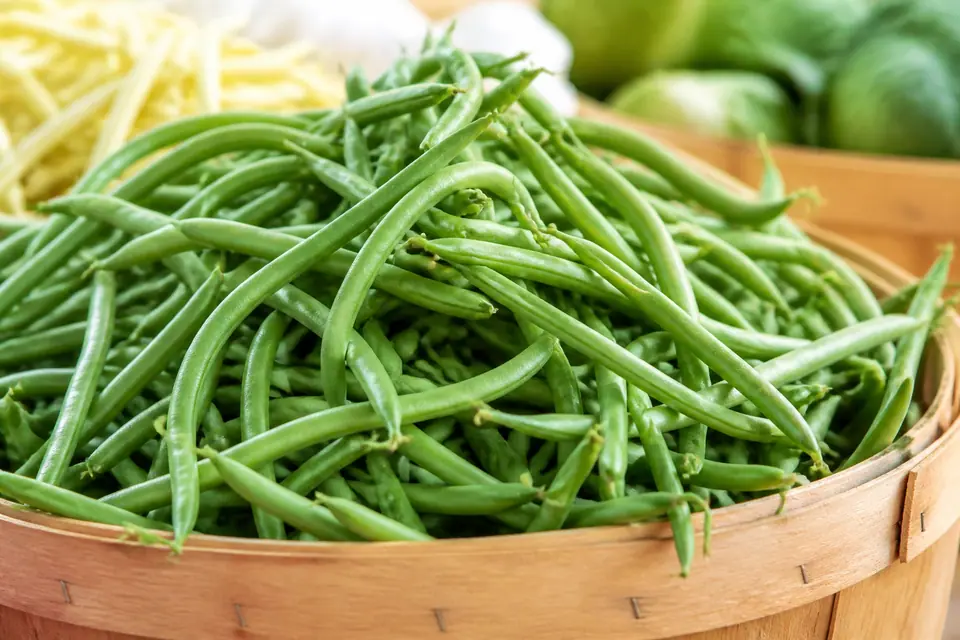
How to choose green beans that still snap
Fresh green beans are smooth, bright and firm, with a clean snap and no swollen seed bumps. A flexible limp pod is usually a thirsty older pod, not a tender one.
Plant proteins, ranked by what you actually eat
Most protein rankings quietly compare dry lentils to cooked tofu. Measured the way food reaches the plate, the order changes.