Sauce the bowl, not the tofu crust
Crisp tofu lasts longer when the sauce is thick, added late or served underneath. Build contrast with cucumber, lemon, tahini or chilli oil at the table.

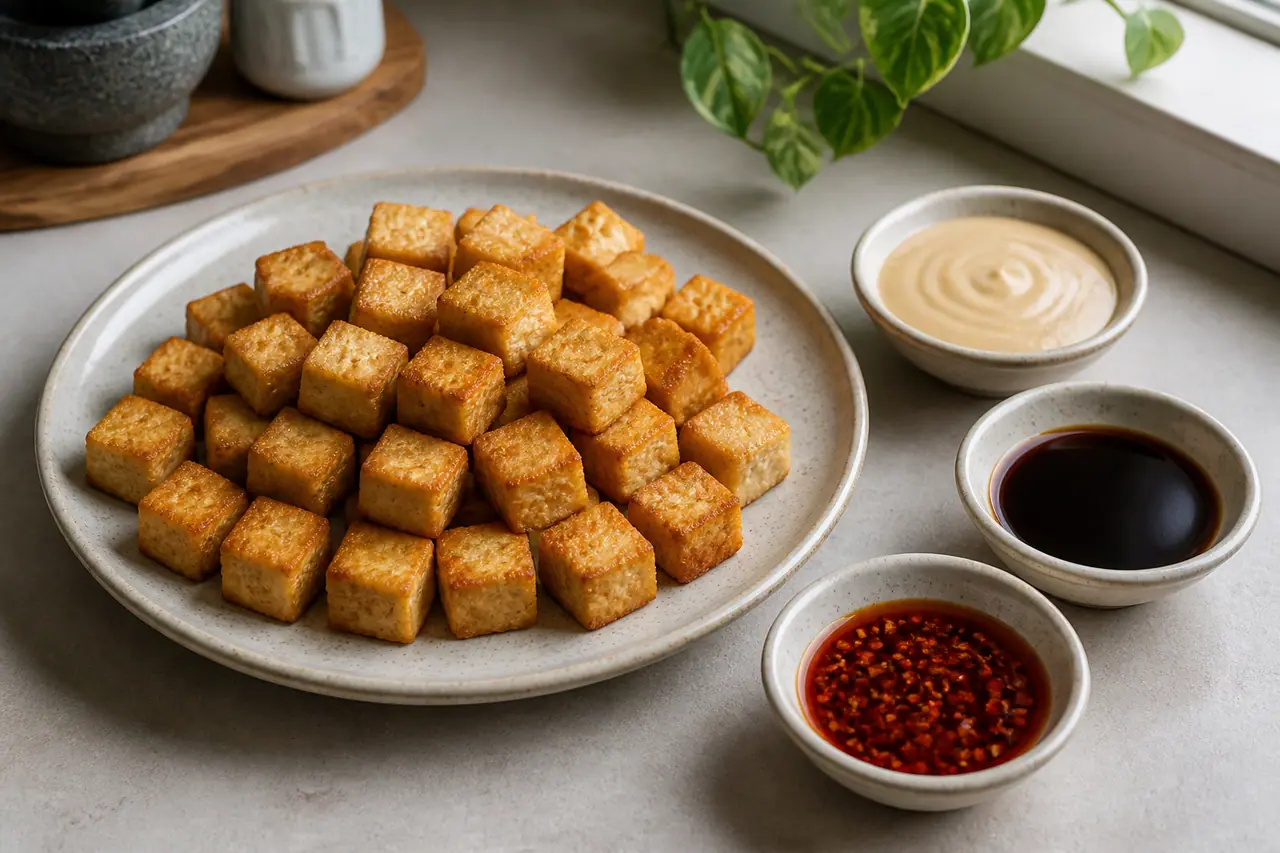
A crisp tofu crust and a good sauce want opposite things. The crust wants dry heat and air; the sauce wants contact and time to soak in. Put them together too early and the shell softens before dinner reaches the table. Keep them in separate jobs and the bowl gets both flavour and texture.
My useful options are a short soy glaze, a thick tahini dressing, a lemony yogurt sauce or chilli oil served by the spoon. None needs to cover the tofu completely. Put sauce under the rice, beside the tofu or at the table, then let each bite combine as you eat.
A glaze belongs in the final minute
For a soy glaze, mix soy sauce with rice vinegar, ginger and a little sweetener. Fry the tofu until both sides have a dry crust, then pour the mixture around the edge of the pan. Toss for a few seconds and take the skillet off the heat. The hot metal reduces the liquid while the short contact keeps the shell from collapsing.
Keep the glaze short and hot, then taste the tofu plain.
Do not simmer the tofu in the glaze. That makes a shiny piece, but the shine is moisture sitting where crunch used to be. If you want more sauce, reduce the mixture in a small pan and spoon it over the rice. The tofu only needs enough to carry flavour between its edges.
A small bowl of sauce is easier to control than a wet skillet.
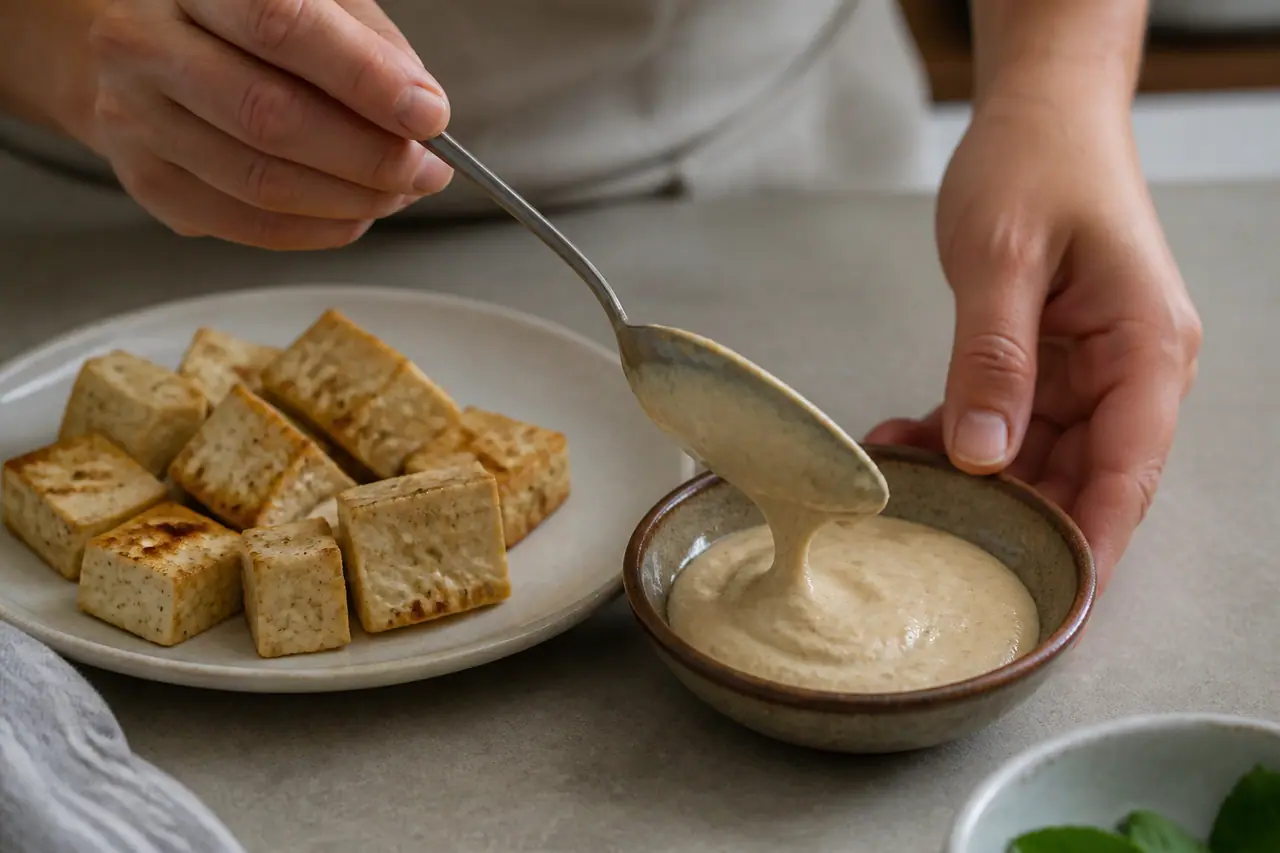
Thicken tahini slowly
Tahini becomes thick when acid meets it, then loosens as cold water is whisked in a little at a time. Start with lemon juice and a pinch of salt, then add water by the teaspoon. Stop when the dressing falls from the spoon in a slow ribbon. A runny sauce travels under the tofu and wets the rice before you have taken a bite.
Keep the tahini under or beside the rice. It gives the crisp pieces somewhere creamy to land without coating every surface. The tahini dressing tofu bowl uses the same idea with cucumber: fresh water, creamy sauce and dry tofu stay visible as separate parts.
Cold sauces need a barrier
Yogurt, cucumber and lemon make a cool sauce, but cucumber releases water as it sits. Stir the yogurt with lemon and garlic first, then fold in cucumber shortly before serving. Spoon it into the bowl beside the tofu rather than over it. The cold sauce stays thick and the crust stays warm.
A barrier can be as simple as rice. Put the sauce on one side of the grains, tofu on the other and cucumber at the edge. It is easier to control than a single mixed bowl, and leftovers can be stored in their own containers instead of becoming one soft mixture.
Chilli oil should stay fragrant
Chilli oil is most useful after the heat is off. A hot skillet can make the spices taste bitter and the oil can loosen the crust before it reaches the table. Spoon it over the rice, add a little to the cucumber or leave it in a small dish for people to choose. The chilli oil tofu recipe keeps the topping out of the frying pan for exactly this reason.
Fresh lemon, rice vinegar and herbs are also better as finishing ingredients. They bring brightness without requiring a wet marinade. Taste the tofu plain once before dressing it. The sauce should sharpen what is there, not hide a crust that never browned.
Keep the last bite worth saving
Brown the tofu first, finish a glaze quickly and serve thicker dressings beside the crust. Add fresh cucumber and herbs at the end. These small separations let the bowl stay interesting past the first bite, whether it is a lemon and herb tofu dinner or a simple plate of rice and leftovers.
A sauce should make the meal easier to eat, not create another problem for the pan. Mix only what you need, taste it before it meets the tofu and save a little on the side. If the dressing is too sharp, add water or oil in small amounts. If it is too thin, reduce it before serving. Those adjustments are easier in a bowl than after a crisp crust has gone soft.
Questions
How do I keep sauced tofu crispy?
Can I marinate tofu and still make it crisp?
What sauce goes with tofu and cucumber?
Can I reheat sauced tofu?
More guides
All guides →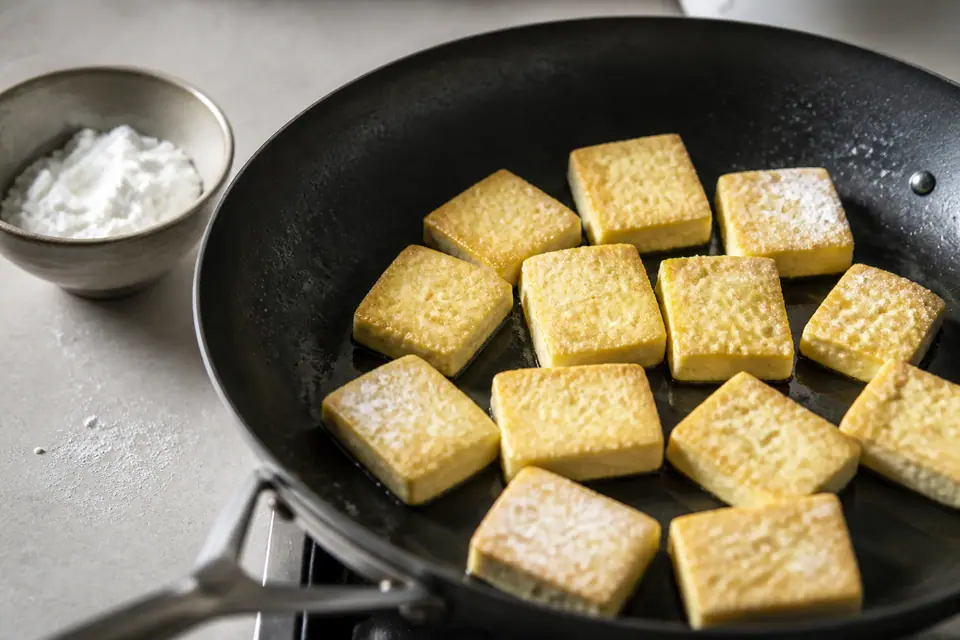
Cornstarch on tofu: how much coating is enough
A thin, even dusting of cornstarch gives tofu a crisp shell. Too much leaves powdery patches and makes the coating fall off in the pan.
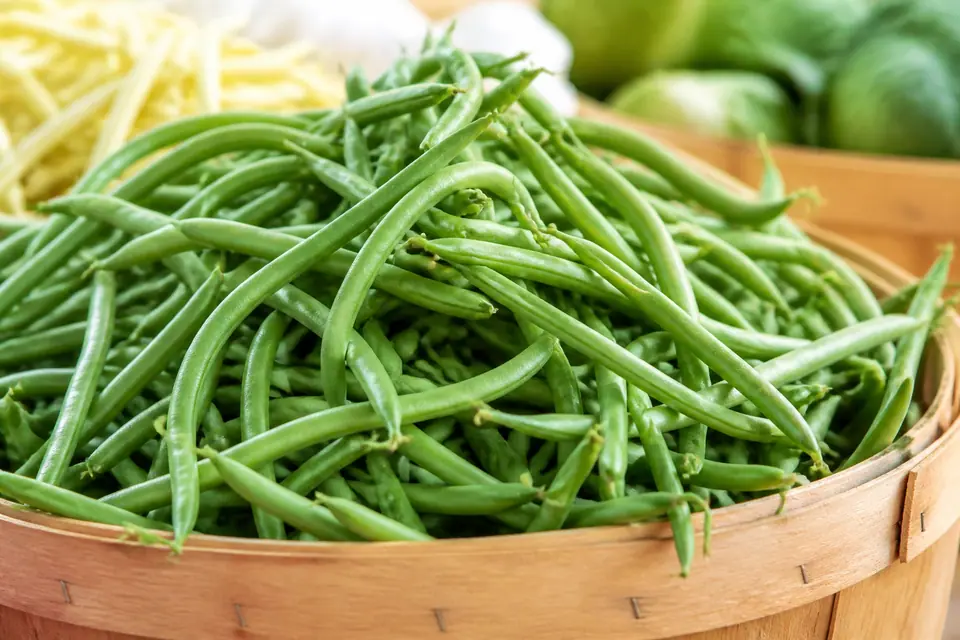
How to choose green beans that still snap
Fresh green beans are smooth, bright and firm, with a clean snap and no swollen seed bumps. A flexible limp pod is usually a thirsty older pod, not a tender one.
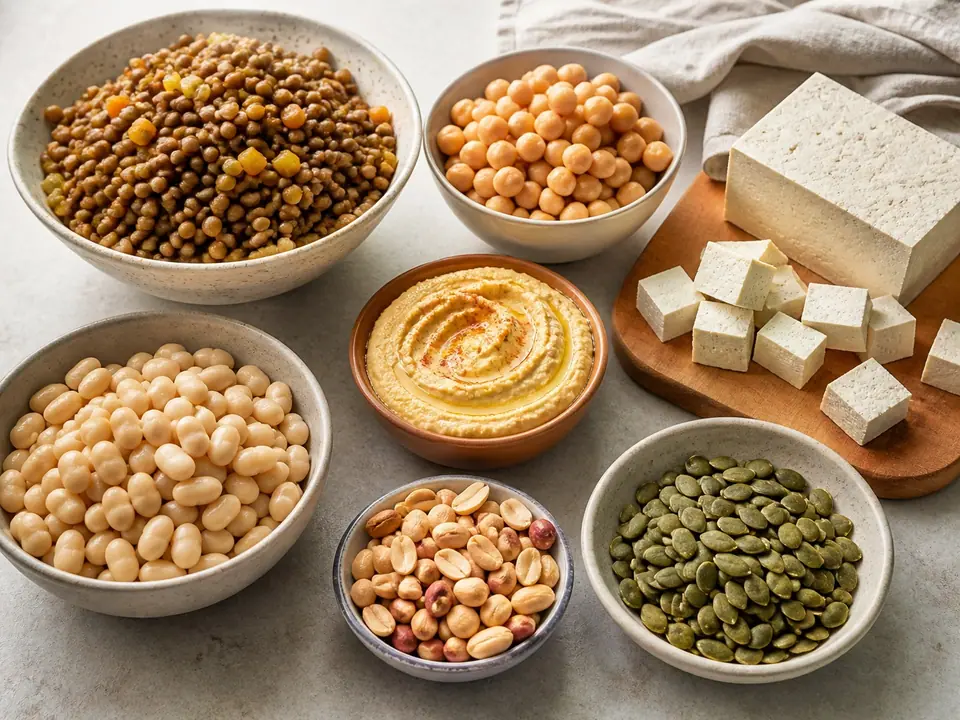
Plant proteins, ranked by what you actually eat
Most protein rankings quietly compare dry lentils to cooked tofu. Measured the way food reaches the plate, the order changes.