Choose the shape that suits the pan, not the prettiest head
Green cabbage is the sturdier all-rounder. Pointed cabbage is sweeter, quicker to soften and better when dinner needs tender leaves without a long braise.

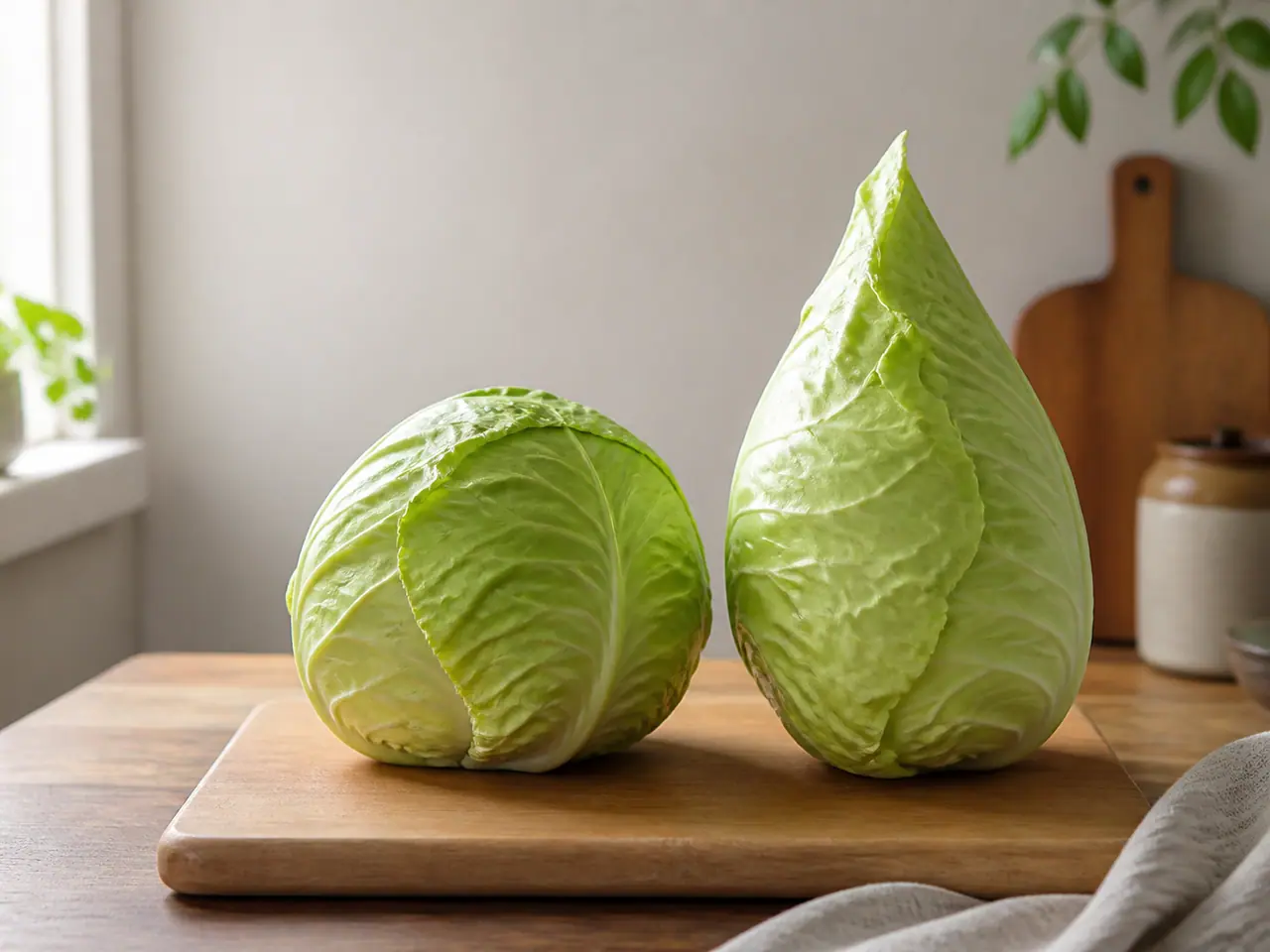
The green cabbage I buy for a slaw is not the same cabbage I want for a fast skillet dinner. A round green head gives me broad, sturdy leaves and a centre that can take heat. A pointed head, sometimes sold as sweetheart cabbage, is looser, sweeter and quicker to turn tender. I cut equal wedges from both and roasted them at 220°C fan. The green cabbage needed 31 minutes before its core softened; the pointed one was ready in 23, with thinner outer leaves catching colour first.
My verdict is practical. Buy green cabbage when you need a head that will last, hold a filling or feed several meals. Choose pointed cabbage for a quick roast, a soft stir-fry or a smaller shop where you do not want half a head sitting in the drawer. Neither is a better cabbage in every job. The shape tells you how to use it.
I make this choice with the dinner already in my head. A thick wedge needs a longer runway, while loose leaves want a quick flash of heat. That sounds obvious once the cabbage is on the board, but the shop is where the mistake happens. The two heads can sit beside each other looking equally fresh, even though one will still be firm when the rest of the meal is ready. I would rather buy the vegetable that fits the pan than spend twenty minutes trying to make a fast cabbage behave like a slow one.
The useful difference is the shape
Green cabbage grows into a compact round head with overlapping leaves packed tightly around a thick core. It gives you a firm cut face and pieces that stay recognisable after cooking. Pointed cabbage narrows at the top and usually has a looser leaf structure. The leaves are thinner, so heat reaches the middle faster. That difference is visible before you cook, and it predicts more than the shade of green.
At the market I lift both heads. A green cabbage can feel surprisingly dense because the leaves are packed close together. A pointed cabbage is often lighter for its size, but it should not feel hollow or limp. I check the base for a dry, firm cut and avoid wet patches between the outer leaves. A little leaf damage is fine; a sour smell or slippery fold is not.
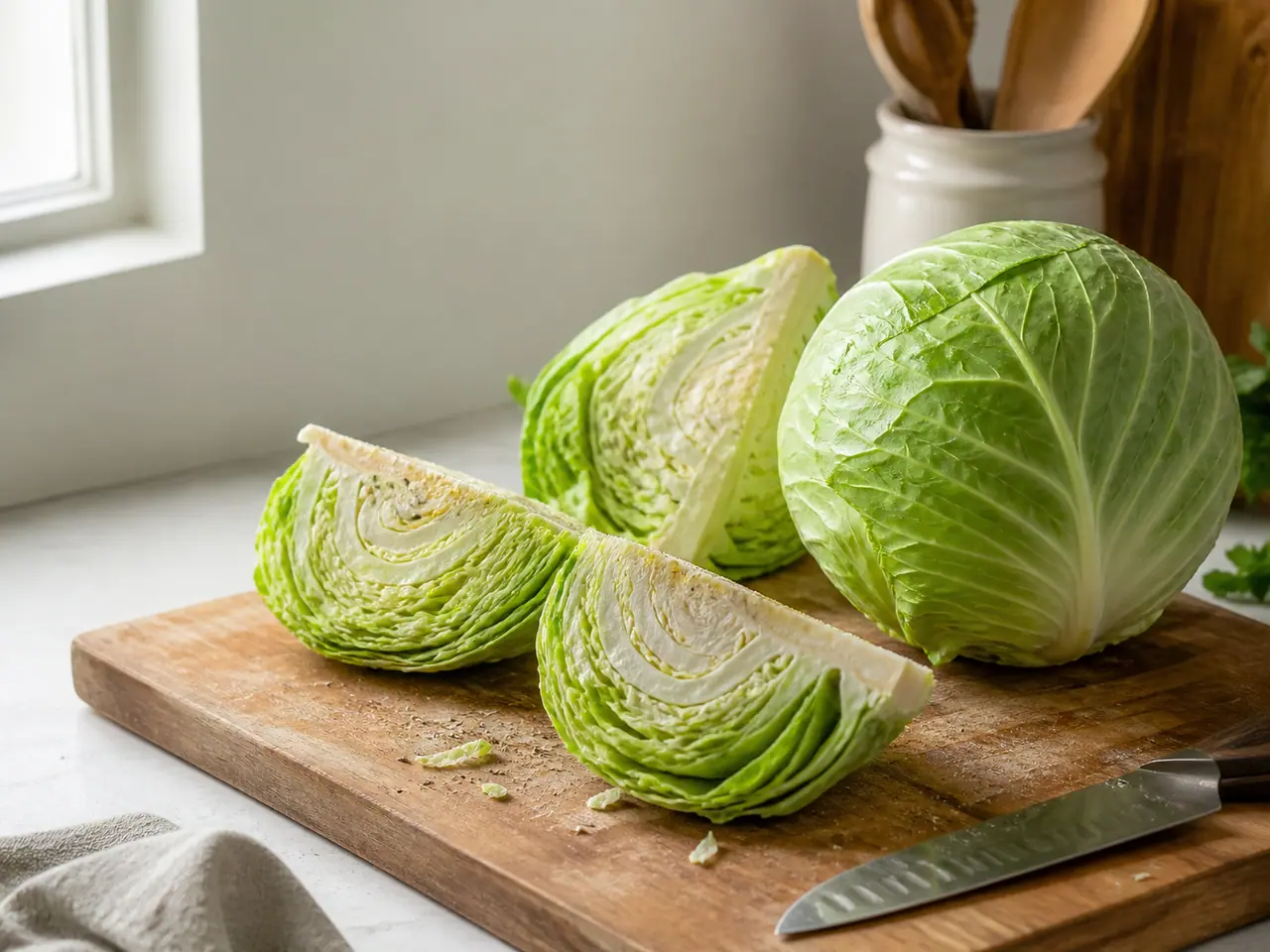
The cut faces are where I make the final choice. A pointed cabbage shows more loose folds and a narrower rib, so it cooks quickly but has less protection from the heat. The green wedge looks less delicate and takes longer to colour, yet it gives me a better piece to turn and dress. I do not correct that difference with a timer. I use the knife test and let the vegetable tell me which one is ready. I take the photograph as a reminder of the texture I am after, not as a decoration. The surface should show what the written method asks for: a dry cut, a browned fold, a firm curd or a leaf that has kept its shape. If the frame looks wet and crowded, I know the pan would have the same problem. If it looks pale but compact, I know the food may be ready for a different job. That is why I keep the vegetable visible while I cook. The cabbage should make sense before any garnish arrives.
My same-tray test
Two cabbages, one hot tray
Equal 350 g wedges, brushed with the same oil and roasted uncovered at 220°C fan.
Green cabbage
31
minutes
Pointed cabbage
23
minutes
✓ Faster to tender
The pointed cabbage softened eight minutes sooner. The green cabbage developed a deeper roasted edge and kept more bite near the stem, so the faster result is not automatically the better result.
Source: Maren Ashby kitchen test, 2026-08-28
I used the same wedge thickness because thin outer leaves can make a pointed cabbage look finished while the lower rib is still firm. The green wedges browned slowly at the cut face, then softened from the outside in. The pointed wedges had more exposed leaf folds, which caught oil and colour early. I turned both once. If I had crowded the tray, the comparison would have measured steam instead of cabbage.
For a pan of cabbage with beans or chicken, I prefer the green head. Its thicker ribs survive stirring and the leaves do not vanish before the rest of dinner is ready. For a quick side, pointed cabbage wins. It needs less time and its mild sweetness is easy to season with lemon, butter or chilli. A wide pan still matters. The best variety cannot brown if it is stacked three layers deep.
Where green cabbage earns its keep
Green cabbage is the head I want when I am planning leftovers. The outer leaves can become roasting wedges, the middle can be shredded for a skillet, and the tight centre can go into soup. Its structure gives me room to change direction. I can salt shreds for a slaw and still have crunch after twenty minutes, or cook thick wedges until the core is soft without turning the edges to threads.
It also behaves better around strong flavours. In the gochujang chicken with cabbage, the leaves need enough backbone to sit under the sauce without becoming wet confetti. I add the cabbage after the chicken has browned and keep the pan wide. Green cabbage absorbs the savoury juices while keeping a little resistance in the rib.
The decision becomes clearer when I imagine the cabbage after ten minutes in the pan. Green leaves are still folded and sturdy; pointed leaves are already soft at the tip. I do not treat that as a flaw in either one. It is a useful forecast of the plate. The cabbage has told me whether it wants to be the main roasted piece, a quick side or a soft layer under another ingredient.
Where pointed cabbage is the sharper choice
Pointed cabbage is more useful when the cooking window is short or the head will be eaten within a day or two. Its leaves fold around noodles, eggs or rice without the long simmer that green cabbage needs. I slice it from the tip down into ribbons, then stop when the core becomes too thick for the texture I want. The lower section can be cut into wedges for the oven.
Its sweetness shows best when the cut faces touch hot metal. I do not boil it first. That washes flavour into the water and leaves the thin leaves soft before they have taken on any colour. A little oil, a hot tray and space between the pieces gives a better result than a longer, gentler cook.
| If you are making | Buy | Why |
|---|---|---|
| Slaw for several days | Green cabbage | Tight leaves stay crisp after slicing |
| Fast roasted side | Pointed cabbage | Thin leaves soften sooner |
| Stuffed leaves | Green cabbage | Broad leaves hold their shape |
| One small meal | Pointed cabbage | A smaller head leaves less waste |
| Soup or braise | Green cabbage | The thick ribs take longer heat |
Source: Maren Ashby kitchen test, 2026-08-28
The shopping mistake I stopped making
I used to choose whichever cabbage looked largest for the price. That was a false bargain when I only needed two portions. The thick base went into the drawer, the outer leaves dried, and I eventually cut away more than I expected. Now I match the head to the meal. A large green cabbage is good value if I have soup, slaw and a roast planned. A pointed cabbage is often the sensible buy for one dinner because the usable portion is smaller and quicker to cook.
For either type, choose a head that feels firm for its size, with crisp leaves and no wet creases. Iowa State Extension gives the same basic direction: cabbage should be crisp, tightly packed and heavy for its size. I use that as a starting point, then choose the variety by the thickness of the cut I want on the plate.
How I would use the leftovers
Keep the remaining head whole until you know the next job. For green cabbage, I slice only what the pan can take and return the rest to the fridge. For pointed cabbage, I use the tender leaves first and save the denser base for a stir-fry. A sharp knife makes cleaner cuts, which means fewer bruised edges drying in the drawer.
The choice is not a contest between two labels. It is a small piece of planning. Buy the cabbage whose ribs match your heat and whose size matches your week. That is the cabbage that will taste best, because it is the one you are likely to cook while it is still fresh.
Questions
Is pointed cabbage sweeter than green cabbage?
Which cabbage is better for roasting?
Can I use pointed cabbage in slaw?
How do I choose a good cabbage?
More guides
All guides →
Cauliflower vs broccoli: which roasts better?
Cauliflower gives a more even roast and creamy centre. Broccoli browns faster and has better crisp tips, so the winner depends on the texture you want.
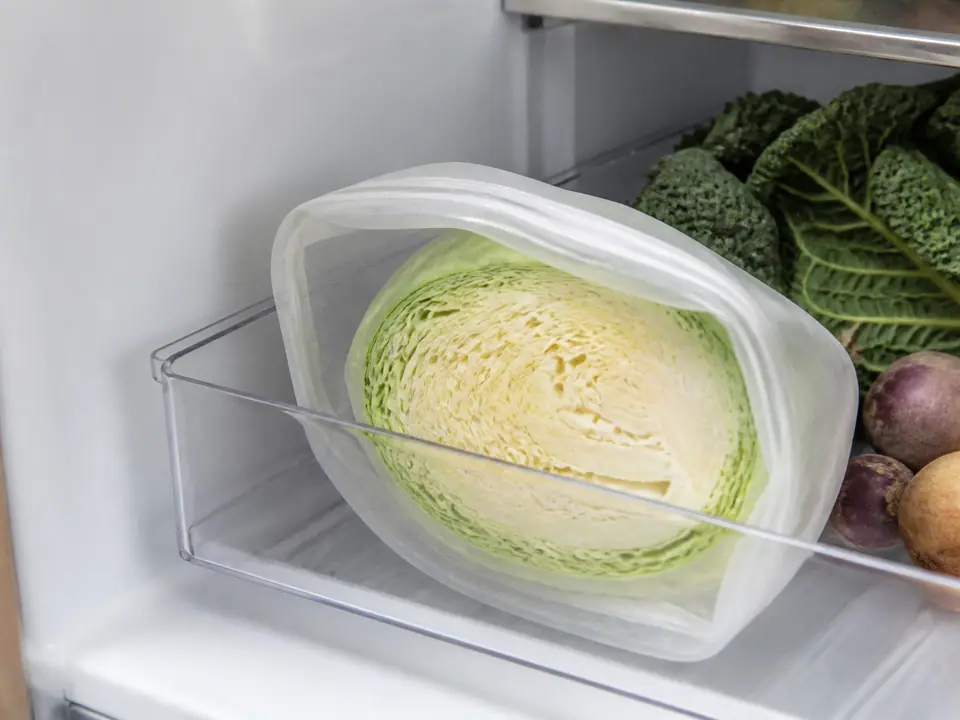
How to keep a cut cabbage fresh for a week
A cut cabbage can stay useful for a week when the exposed face is dry, covered and kept cold. Slice from the outside and leave the core intact.

How to choose carrots that are crisp, not rubbery
Firm carrots with a fresh stem end and smooth, unbroken skin are more likely to stay crisp. Rubberiness means water has already left the root.