Cut it last, or give the flesh a thin coat of acid
Aubergine browns quickly after cutting because its exposed enzymes meet oxygen. The best fix is cooking soon; lemon water buys you a little time.

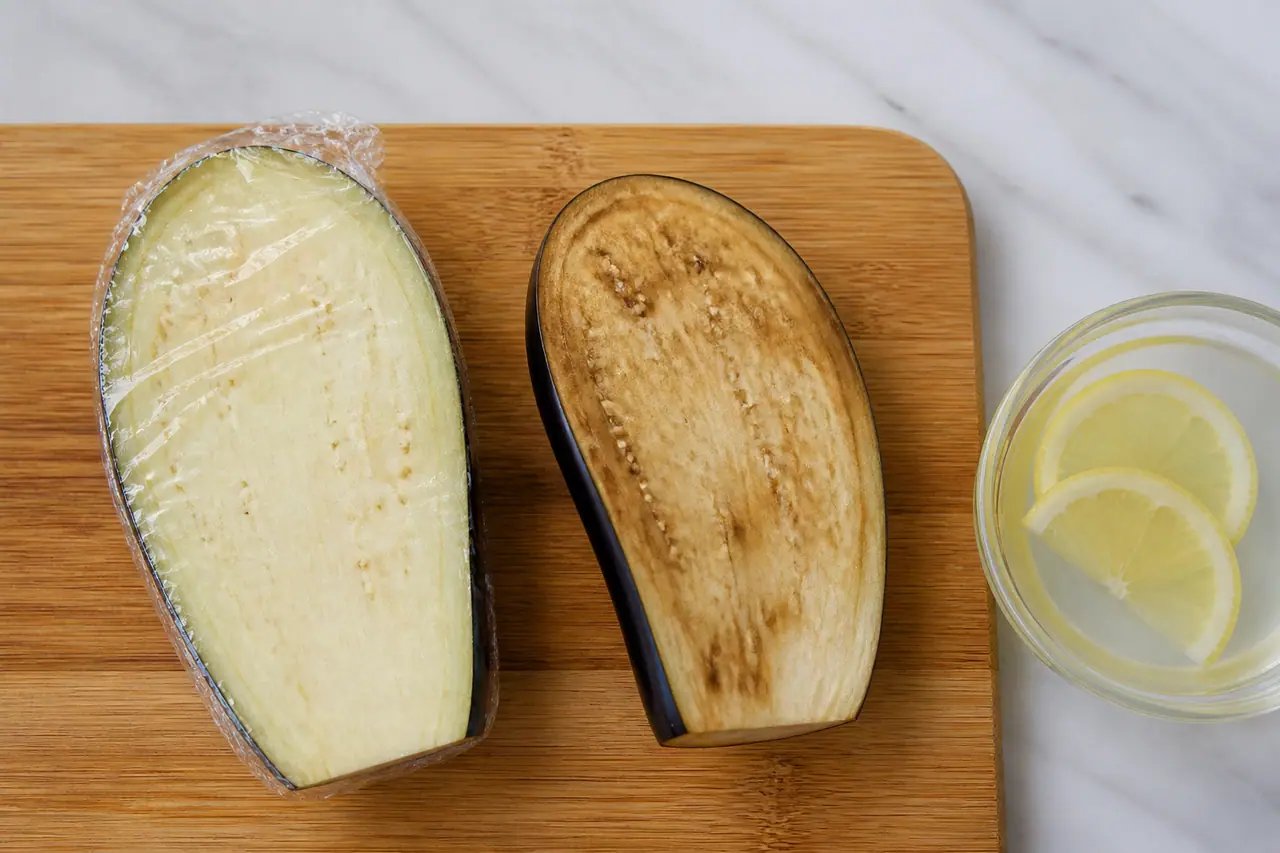
Cut aubergine goes brown because the pale flesh meets oxygen, not because it has suddenly gone bad. The change starts within minutes on a warm board. I cut one half and left it uncovered while brushing lemon water over the other; after 20 minutes, the protected face was still pale while the unprotected one had turned tan. The cleanest solution is still to cut aubergine last and cook it promptly.
If dinner is delayed, use a thin acid wash, press wrap directly against the cut face, and keep the piece cold for a short period. Do not soak it for hours. Waterlogged aubergine splutters, loses seasoning and can make the roasting tray steam. Browning is a quality issue before it becomes a safety issue.
What causes the colour change
Aubergine tissue contains enzymes that react when the cells are damaged and oxygen reaches the cut surface.
The exposed flesh changes from cream to tan, especially around the seed channels. Heat stops the reaction, which is why the colour disappears into a roast or stew. Until the pan is hot, air is doing the work.
The speed depends on the fruit and the cut.
A broad half has a lot of exposed surface, while a few thick cubes change more slowly. Warm kitchen air speeds it up. A cold aubergine from the fridge buys time, but I would rather use a knife at the start of cooking than plan around a long wait.
My 20-minute comparison
I used to cut aubergine first because it felt like the slowest job. The result was a board of tan halves waiting beside an unheated oven. Preparing the sauce and tray first changed the whole rhythm. By the time the knife is clean, the pan is ready and the pieces have somewhere to go. The colour stays lighter, the surface stays drier and I need less lemon water. Good mise en place here is less about neatness than about giving the flesh no idle time.
I cut one aubergine lengthwise and left one half on the board.
I brushed the other with one teaspoon of lemon water and covered the face with wrap pressed directly onto the flesh. After 20 minutes, the uncovered half was visibly brown around the seeds. The treated half stayed pale with a little moisture on the surface.
After roasting, I could not taste the small amount of lemon on the protected half.
I did taste the difference when I soaked a third piece in lemon water for an hour. It was wetter and took longer to colour. The short treatment works because it slows air contact, not because aubergine needs a bath.
| Method | Useful delay | Trade-off |
|---|---|---|
| Cut and cook immediately | Best texture | Needs timing |
| Lemon water brushed on | About 20–30 minutes | Surface must be dried |
| Wrap pressed to flesh | About 1–2 hours chilled | Can collect condensation |
| Salted and drained | Prep for frying | Changes seasoning and moisture |
| Submerged in water | Short emergency delay | Adds water and weakens browning |
Source: Maren Ashby prep comparison, 2026
The best order of work
Heat the oven or pan first, prepare the sauce, then cut the aubergine.
The less time the flesh spends on the board, the less colour you need to manage. If I am roasting, the tray is already hot before the knife goes through the fruit. The pieces move from board to brush to metal in under five minutes.
When a recipe asks for onions, herbs and aubergine, I cut the aubergine last even if it feels logical to prepare everything together.
Onion can wait. Exposed aubergine cannot. This small change has done more for the colour of my finished tray than any soaking trick.
How to use lemon without sour aubergine
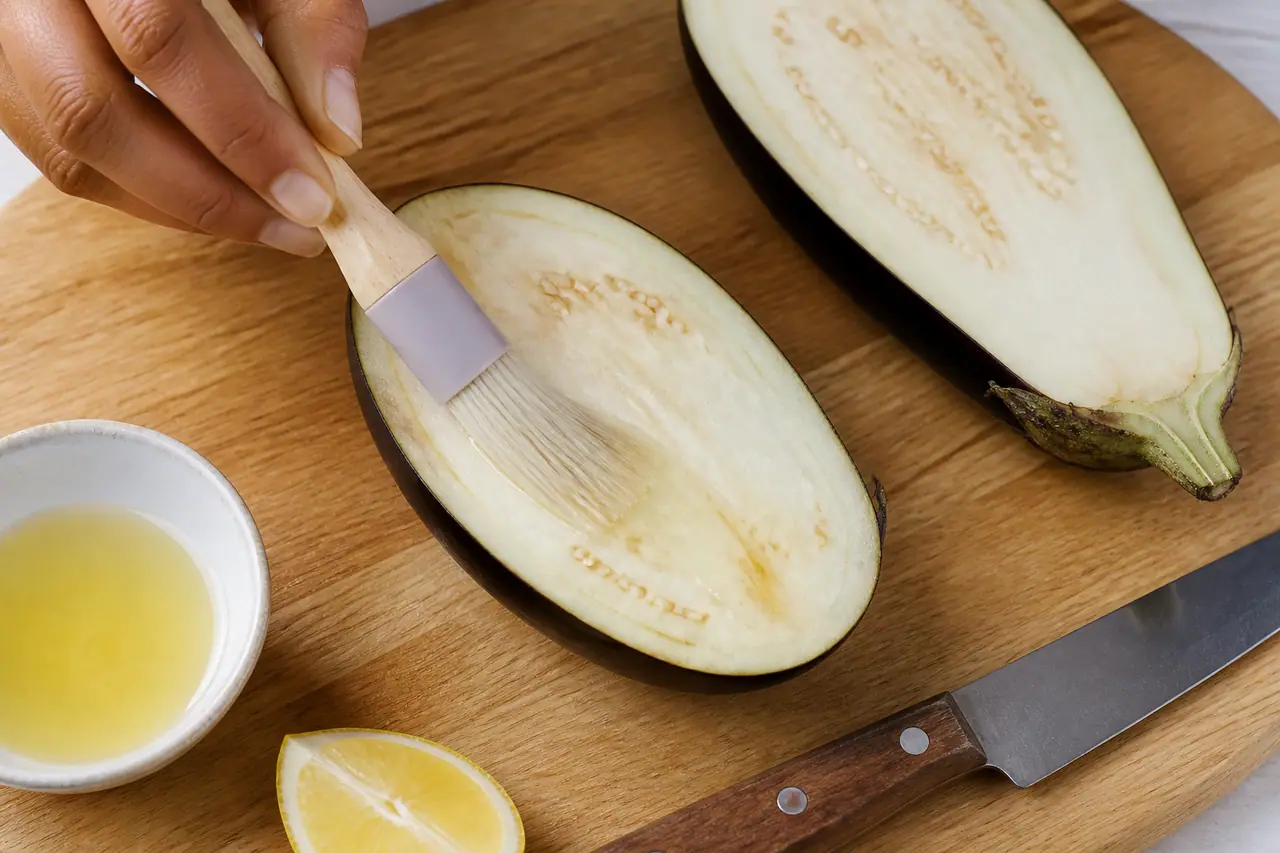
Mix one teaspoon of lemon juice with two teaspoons of water and brush it over the cut face.
You need a sheen, not a puddle. For a half, use a pastry brush or your fingertips. Cover and chill if the delay is longer than a few minutes. Before cooking, blot the surface so oil can make contact and the tray stays hot.
Vinegar works too, but its sharper smell is easier to notice.
I use lemon because it fits the final flavour of most aubergine dishes. If the recipe has a delicate cream sauce, use less acid and rely on wrap and timing. The protection should not announce itself in the finished food.
The practical verdict
Cut aubergine browns because its damaged cells meet oxygen.
Cook it promptly when possible. For a short delay, brush on a little lemon water, cover the cut face and keep it cold, then dry it before cooking. Do not soak it longer than the recipe needs.
When preparation can happen earlier
You can make a tomato sauce, cook grains and mix a tahini dressing hours ahead.
Leave the aubergine whole until the final stage. That small division of labour gives you the convenience of advance preparation without asking the cut flesh to stay pale on the board.
If the aubergine must be cut early, cover the face rather than drowning the pieces. Dry heat rewards a dry surface.
Questions
Why does aubergine turn brown after cutting?
Will lemon juice stop aubergine browning?
Can I leave cut aubergine in water?
Is brown aubergine safe to eat?
More guides
All guides →
Cauliflower vs broccoli: which roasts better?
Cauliflower gives a more even roast and creamy centre. Broccoli browns faster and has better crisp tips, so the winner depends on the texture you want.
How to keep courgettes from going limp
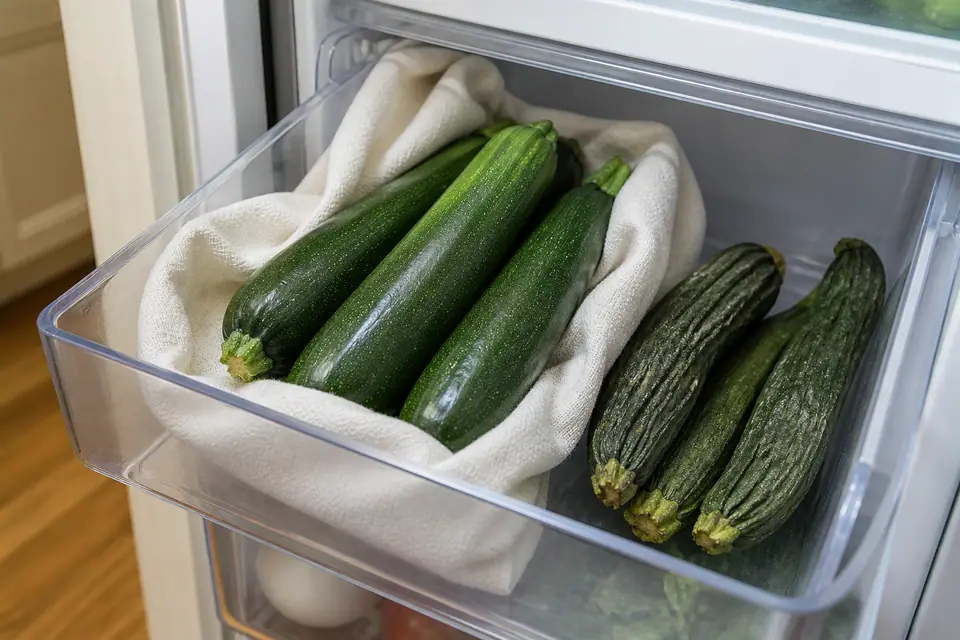
Courgettes go limp when moisture and cold air damage the skin. Store them whole, dry and loosely wrapped, then cut only what you need.

How to choose carrots that are crisp, not rubbery
Firm carrots with a fresh stem end and smooth, unbroken skin are more likely to stay crisp. Rubberiness means water has already left the root.