Trim what you need, then protect the cut ends
Trimmed leeks last better when they are dry on the surface, loosely wrapped and kept cold without sitting in trapped water.

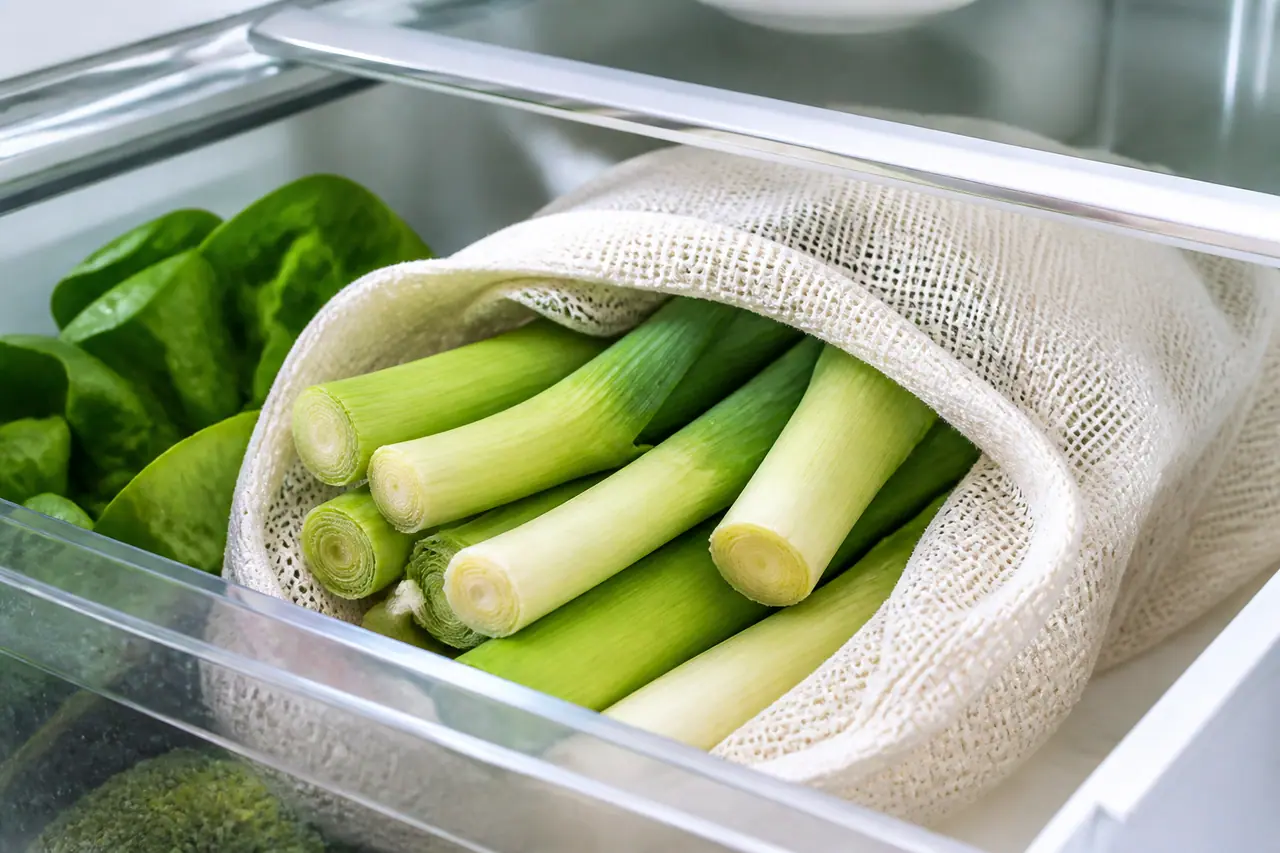
Trimming a leek is often the moment it starts to decline. The root is gone, the protective outer leaves are removed and the cut end begins losing moisture. If you wash the pieces, seal them wet and forget them in the back of the fridge, you get slippery edges before you get dinner.
The practical answer is to keep trimmed leeks cold, dry on the surface and loosely contained. Wrap them in a clean towel or place them in a breathable bag, then check the cut ends before using. If you can, wash them just before cooking. If you have already washed and sliced them, dry them properly and use them within a few days.
Trim only as much as the recipe needs
A whole leek has its leaves and root protecting the shaft. Once trimmed, more surface is exposed and the vegetable loses water faster. I used to cut every leek into neat sections on shopping day, then wonder why the ends felt tired by the weekend. Now I remove the root and any damaged outer leaf, keep the useful shaft as whole as possible and slice the rest when I start cooking.
If you know you need half a leek tomorrow, trim the half you will use and leave the other half intact. This is less tidy than meal-prep videos and keeps the vegetable in better condition. For a batch of soup, slicing everything at once is reasonable; just give the pieces a dry, breathable home.
Dry surface, high humidity, no puddle
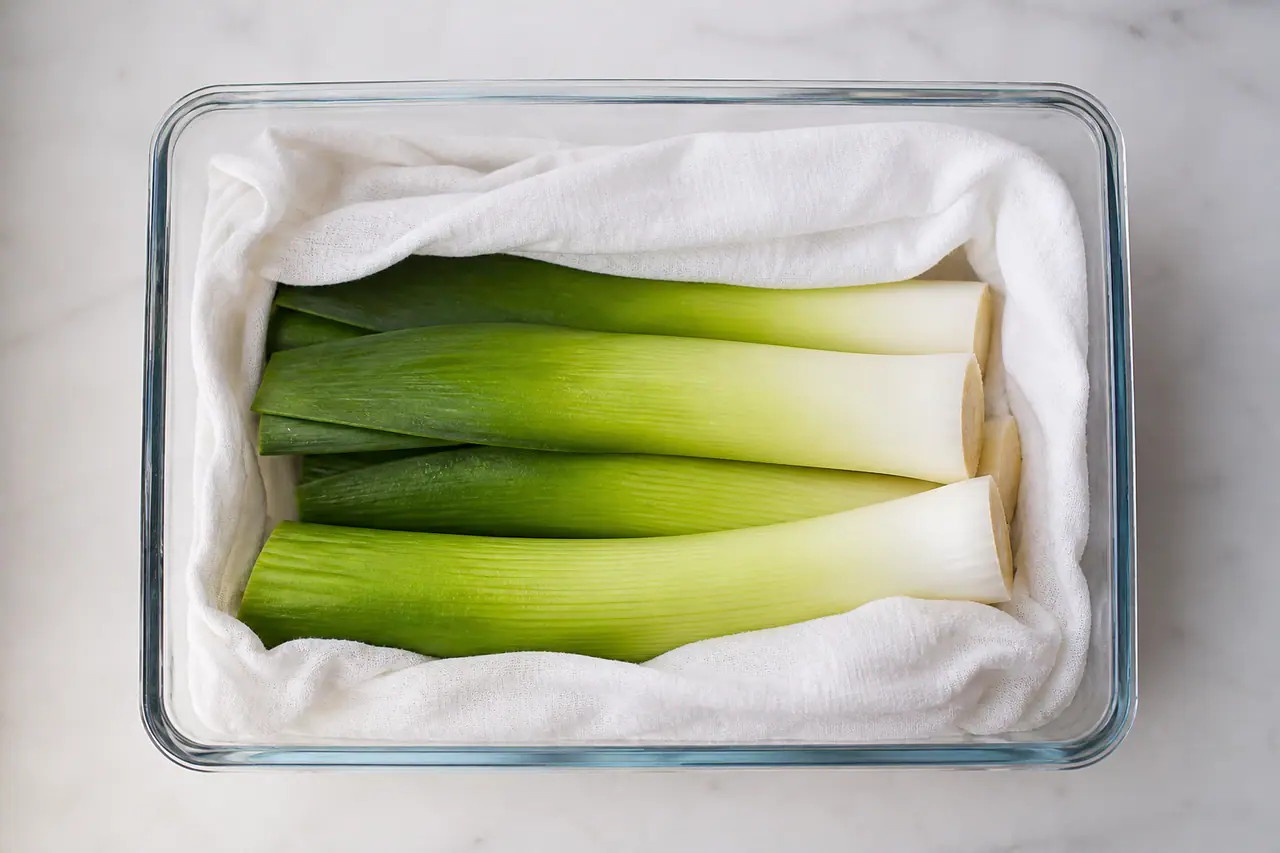
Leeks benefit from a humid fridge environment, but standing water is different from humidity. Water trapped against the cut end encourages soft spots and decay. After washing, drain the pieces well and blot them. A clean tea towel or paper towel can absorb the surface water before the leek goes into its bag or container.
I prefer a reusable produce bag or a container with the lid resting slightly ajar. A sealed box is fine for sliced leeks that are already dry, but check for condensation the next day. If the inside is wet, wipe it out and replace the towel. The USU leek storage guidance points to cold, humid conditions for quality; at home, that means the crisper drawer with moisture controlled rather than a puddle at the bottom.
A simple fridge routine
- Remove the root and any damaged outer leaf. Leave the dark tops on if they are still firm and you might use them for stock.
- If washing now, separate the layers, rinse away grit and drain until the pieces are no longer dripping.
- Wrap loosely in a clean dry towel or put into a breathable produce bag. Do not compress the leek into a wet sealed bundle.
- Store in the crisper drawer, away from fruit that may bruise or release strong aromas into the open cut surface.
- Use sliced or washed leeks within a few days and discard pieces with slime, sour smell or spreading soft spots.
How long is still useful?
There is no honest single number for every fridge. A whole firm leek can hold for much longer than a sliced, washed one. My kitchen rule is to cook trimmed pieces within three to four days and whole leeks within the week if they still feel firm. Treat those as quality targets, not a guarantee: a warm fridge, wet packaging or a bruised cut changes the result.
Look and smell before cooking. A slightly dry edge can be trimmed away. A slick surface, fermenting smell or soft centre is not a rescue situation. Food safety guidance is more useful than wishful timing, and the FoodSafety.gov cold storage chart is the right reference for cooked dishes made with the leek, rather than for a raw vegetable with no universal date label.
The cut end tells you what happened
Freshly trimmed leek should look moist but not wet, with layers that still hold together. A dry papery edge is usually a small quality loss; a translucent slippery edge means moisture has been trapped too long. Keep the vegetable loosely wrapped, check it before cooking and let the recipe decide whether to wash now or later.
The best storage system is the one that makes the next meal obvious. Label a container with the date and the recipe, keep the dark tops beside it if they are destined for stock, and do not let a half-used leek become a mystery bundle in the drawer.
Questions
Should trimmed leeks be stored in water?
Should I wash leeks before storing them?
How long do sliced leeks last in the fridge?
Can I freeze trimmed leeks?
More guides
All guides →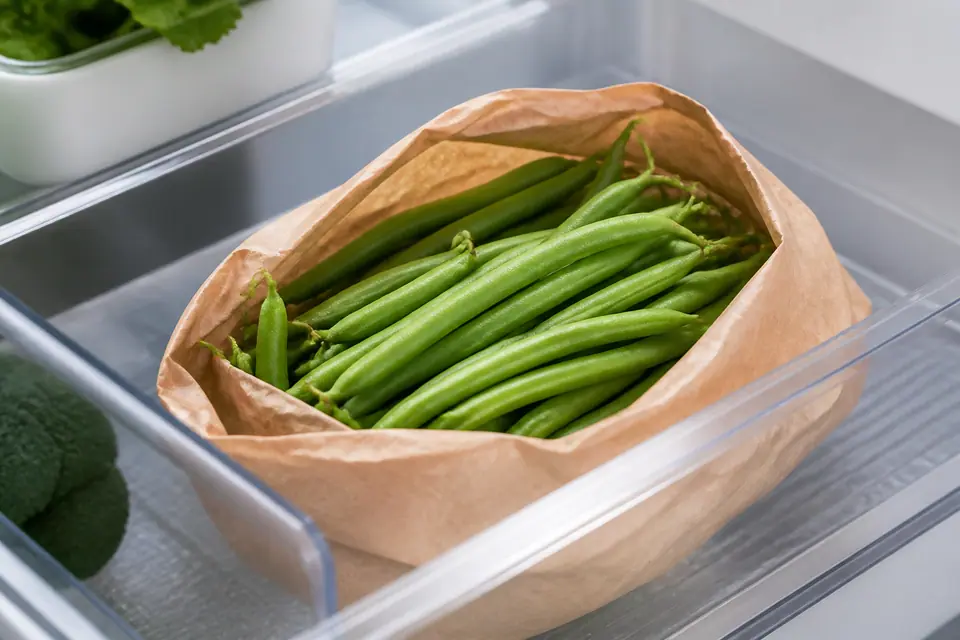
How to keep green beans crisp in the fridge
Green beans lose crispness through water loss but decay quickly when stored wet. Keep them unwashed, cool and loosely contained, then rinse just before cooking.
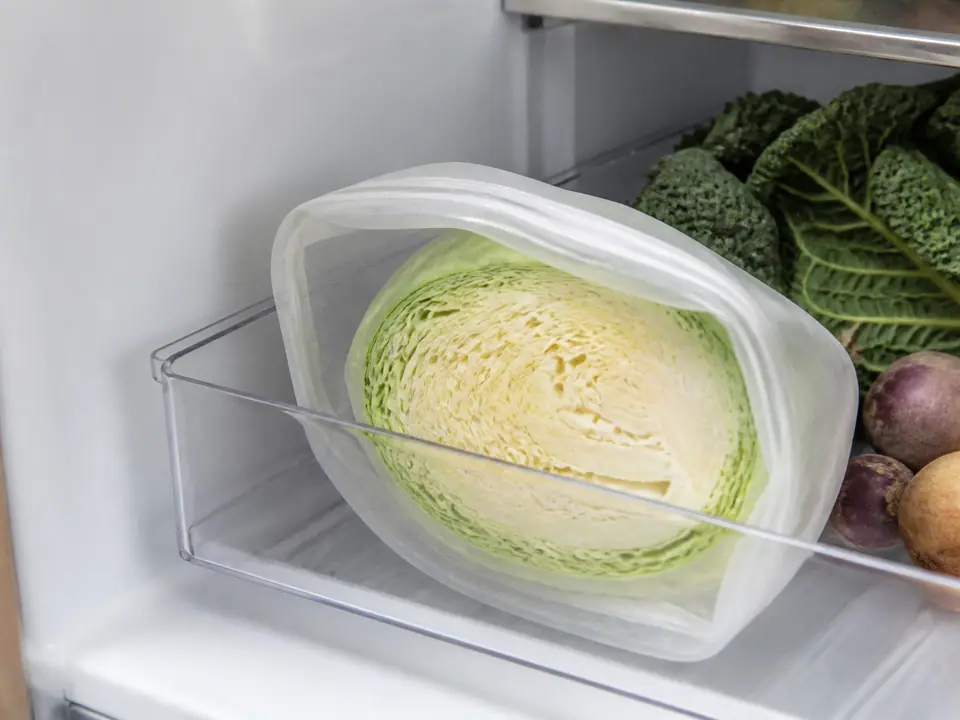
How to keep a cut cabbage fresh for a week
A cut cabbage can stay useful for a week when the exposed face is dry, covered and kept cold. Slice from the outside and leave the core intact.
How to choose leeks with the most usable white part
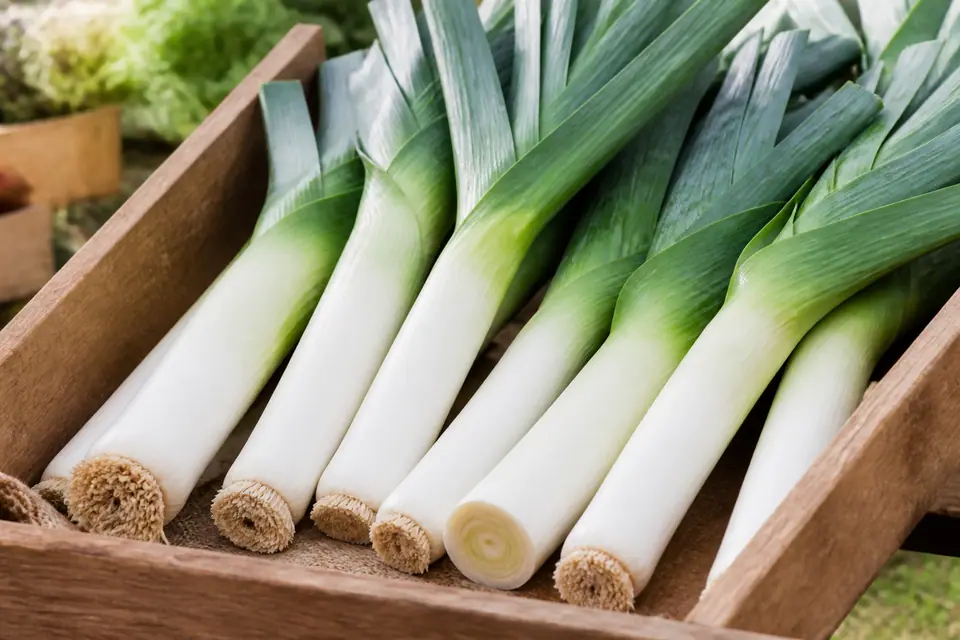
The best leek for dinner is firm and heavy for its size, with a generous white-to-pale-green shaft and crisp leaves rather than a huge green top.