A tea towel and a heavy pan are enough to press tofu
You can press tofu with a tea towel, plate and heavy pan. The aim is a drier surface, not a perfectly flat block or a long kitchen project.

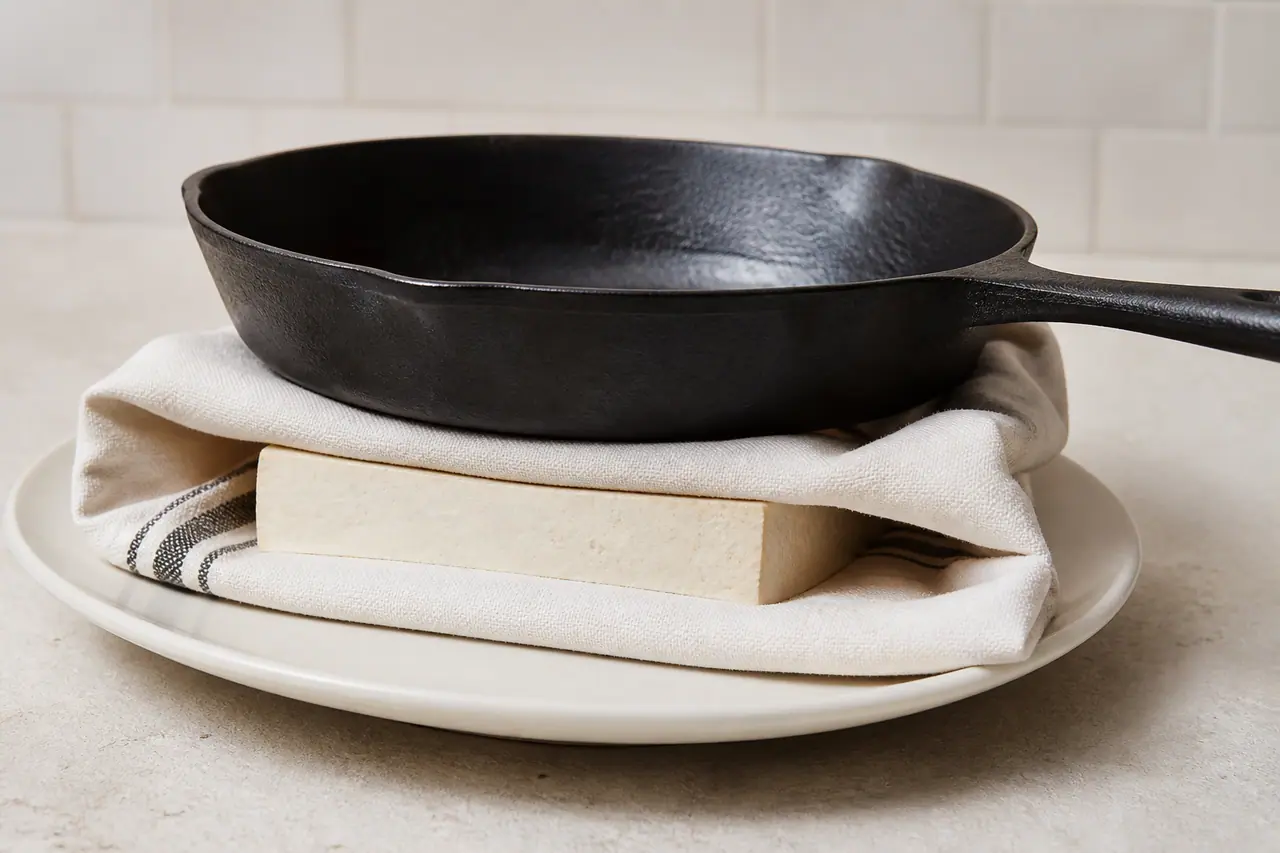
A tofu press is a tidy tool, but it is not a requirement for a crisp dinner. The block only needs a little pressure and a route for the water to escape. A clean tea towel catches the liquid, a plate spreads the weight and a heavy pan provides enough force while you chop vegetables or make a dressing.
I press extra-firm tofu for about ten minutes when I am frying it, and longer when the block feels particularly wet. The goal is not to make tofu dry like bread. It is to remove the slick film that makes starch slide and turns a hot pan into a steamer. Stop when the towel is damp and the tofu feels firmer at the edges.
Use a stable stack
Drain the packet and place the tofu on one half of a clean tea towel. Fold the towel over the top, then put the bundle on a plate or a small tray with a rim. The rim catches water and keeps the work surface dry. Put another plate or chopping board on top, followed by a saucepan, skillet or a few cans.
A stable stack matters more than the heaviest pan in the cupboard.
The stack should feel firm but not precarious. If the weight rocks, it presses one corner and leaves the rest untouched. A flat pan is better than a tall jar, and a cutting board is easier to lift than a single plate when you are ready to check the block. Keep the stack away from the edge of the counter because water makes plates slide.
The towel should feel damp, not waterlogged, before you start cooking.
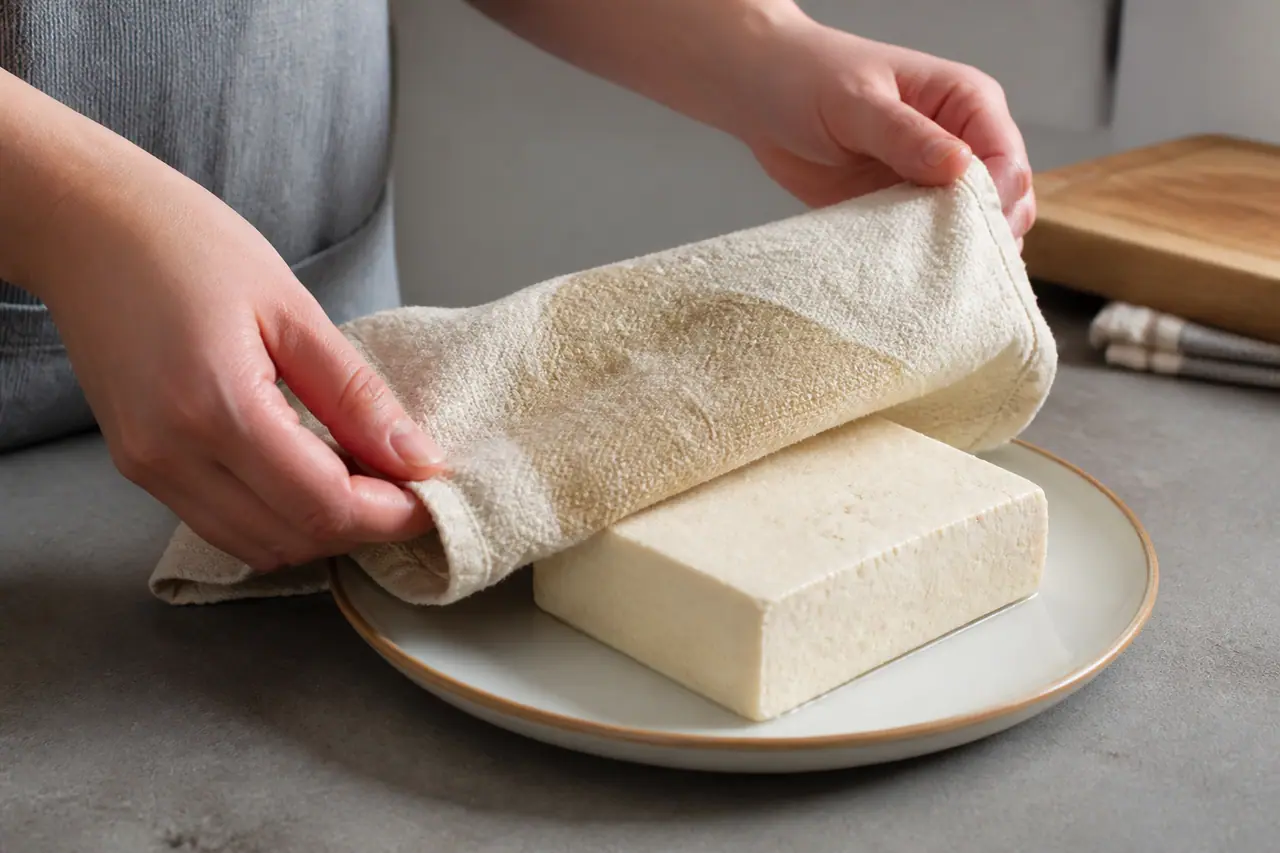
How long is long enough
For a quick skillet meal, ten minutes is a useful starting point. The tofu will feel less slippery and the towel will have a damp patch. If the block is soft or you want a very firm crust, change the towel and press for another ten minutes. More time helps, but it should not become a ritual that delays dinner.
Cutting or tearing the tofu before pressing gives the water more edges to leave, but it also makes the pieces fragile. I press the block whole for a bowl, then tear it just before coating. For thin slices, press the slab whole so it does not break under the weight. The shape you need at the end should decide when you cut it. Keep the block broad while it is under pressure, then choose the final shape after the towel has done its job.
Different tofu needs different pressure
Extra-firm tofu can take a heavier pan and a little more time. Firm tofu needs less weight because its softer structure can split at the sides. Silken tofu should not be pressed this way at all. Drain it gently and use it where a creamy texture is wanted.
If the tofu comes vacuum-packed and already feels dense, a thorough pat with the towel may be enough. If it is sitting in a lot of liquid, pressing earns its place. The packet is not a reliable guide because brands hold different amounts of water. Feel the surface and judge the towel. You should be able to lift the block without leaving a wet shine on your fingers. That small test is more useful than an exact timer, especially when two brands have been stored in different amounts of liquid.
Pressing is not seasoning
Do not pour soy sauce over the tofu while it is under the weight. The liquid will replace the water you are trying to remove and can make the surface salty before the inside has any flavour. Press first, coat second, and glaze in the final minute of cooking.
The pressed block is ready for crispy tofu with cucumber and tahini, where the dry crust gives the creamy dressing something to contrast with. It also works in a freezer base, although the fresh cucumber and dressing should stay out until reheating is finished.
The useful result is simple
Wrap, weigh, wait and feel the surface. A tea towel method takes less space than a dedicated press and leaves no special tool to store. Once the tofu feels matte, get it into the hot pan or oven before it has time to collect more moisture. The press is only the quiet first step; the crust comes from what happens next.
There is no prize for a bone-dry block. If the tofu has stopped dripping and the outside no longer shines, it is ready. Pressing for another hour will not replace a hot pan, and excessive pressure can flatten the shape you wanted. The useful result is a block that can take starch, oil and a turn without falling apart. That is enough preparation for dinner, and it leaves the rest of the work where it belongs: in the heat.
Questions
What can I use instead of a tofu press?
How long should I press tofu?
Can I press tofu overnight?
Should I press silken tofu?
More guides
All guides →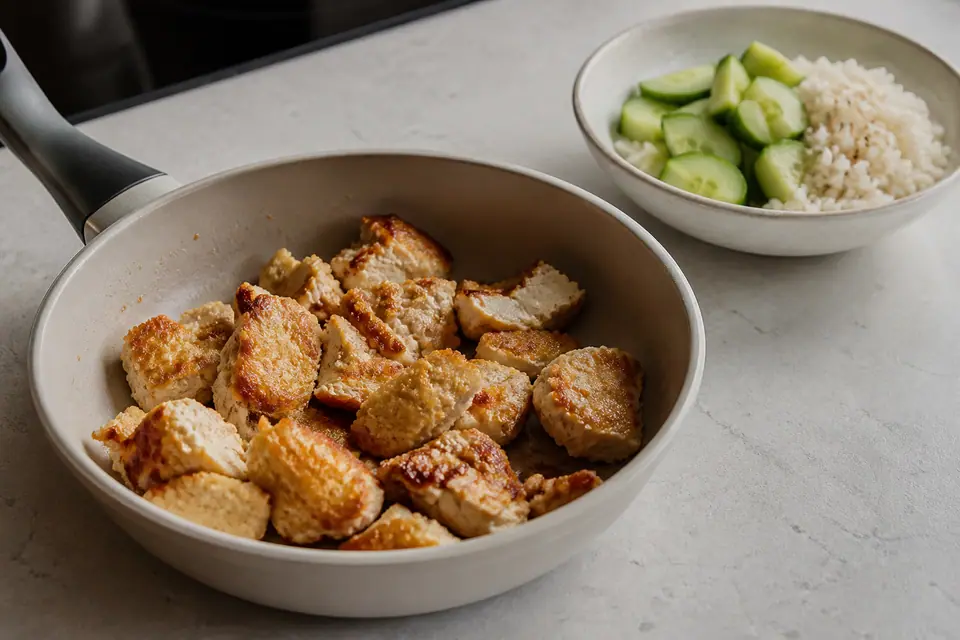
Firm vs extra-firm tofu: which crisps best?
Extra-firm tofu is the reliable choice for crisp edges and turning. Firm tofu can still work when you press it gently, use larger pieces and avoid overhandling.

5 dinners for a bag of carrots
Roast carrots with beans, blend them into lentil soup, fry them with rice, fold them through pasta or build a spiced traybake around them.
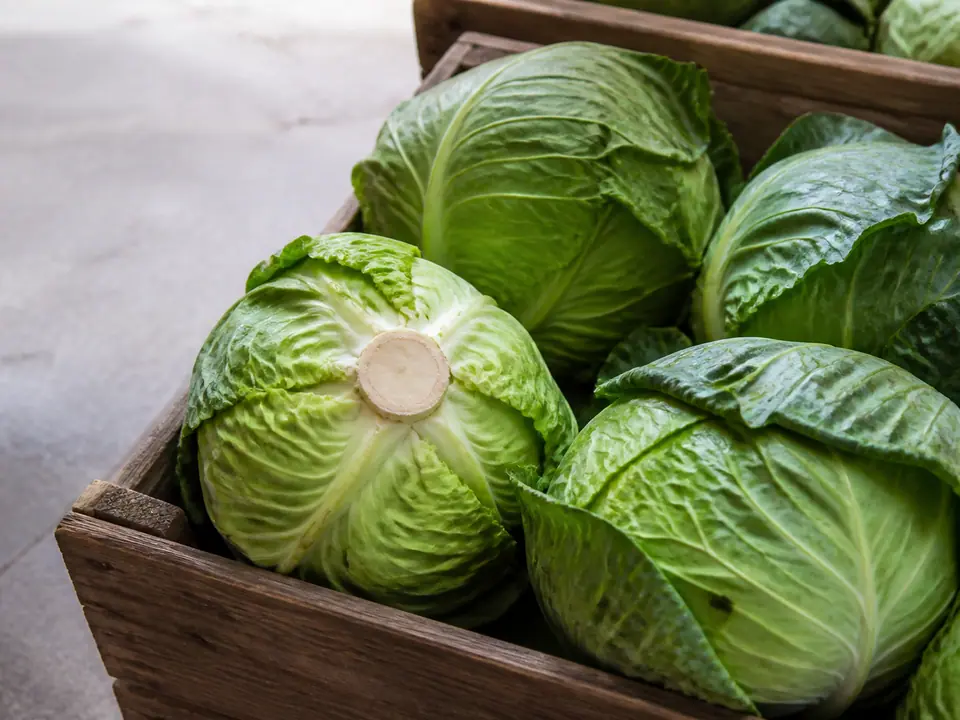
How to choose a cabbage that will stay crisp
A crisp cabbage feels dense, has tightly packed leaves and a dry cut base. The shop test takes less time than rescuing a wilted half later.