Dried wins on texture and cost. Tinned wins on Tuesday.
Dried are about a quarter of the price and hold their shape better. Tinned take four minutes. The honest answer is that you want both.

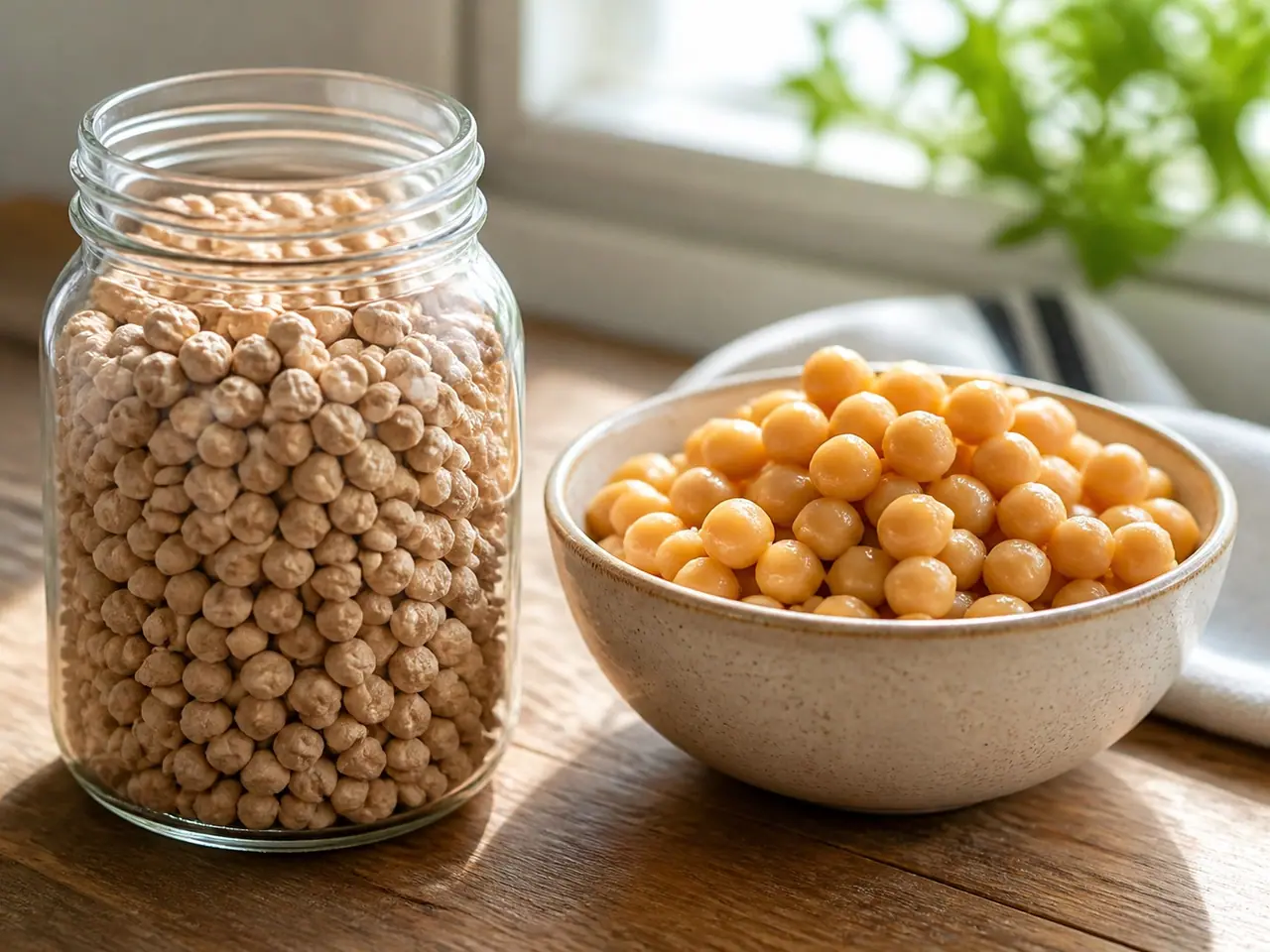
Recipe writers are dogmatic about this, almost always in favour of dried.
The gap is real. It is also smaller than the evangelism suggests, and in several dishes it disappears completely. Curtis spent twelve years buying pulses for a grocery chain and still keeps four tins in the cupboard, which tells you most of what this piece concludes before you read it.
Hands-off time before you can cook
Dried roughly doubles in weight once cooked, so any comparison has to be made after cooking — and the waiting is the real cost.
Tinned
0
minutes of waiting
✓ Faster
Dried
600
minutes of waiting
Nine hours of soaking and an hour of simmering, against opening a tin. Dried wins on cost and on texture; tinned wins on the only axis that matters at seven in the evening.
Source: Timed from the method on this page: 9 h soak, 60 min simmer
Where dried genuinely wins
- Texture. You control the endpoint. Tinned chickpeas are cooked to a single softness decided by a factory, and it is softer than ideal for salads or roasting.
- The cooking liquid. An hour of simmering leaves you with a light, savoury broth. That is free stock, and it is better than the water in a tin.
- Salt. You decide. Tinned varies from 0.2 g to 1.2 g of salt per 100 g between brands.
- Big batches. Cooking a kilo takes no more attention than cooking 250 g.
Where tinned wins outright
- Any weeknight. Four minutes from cupboard to pan, no planning the night before.
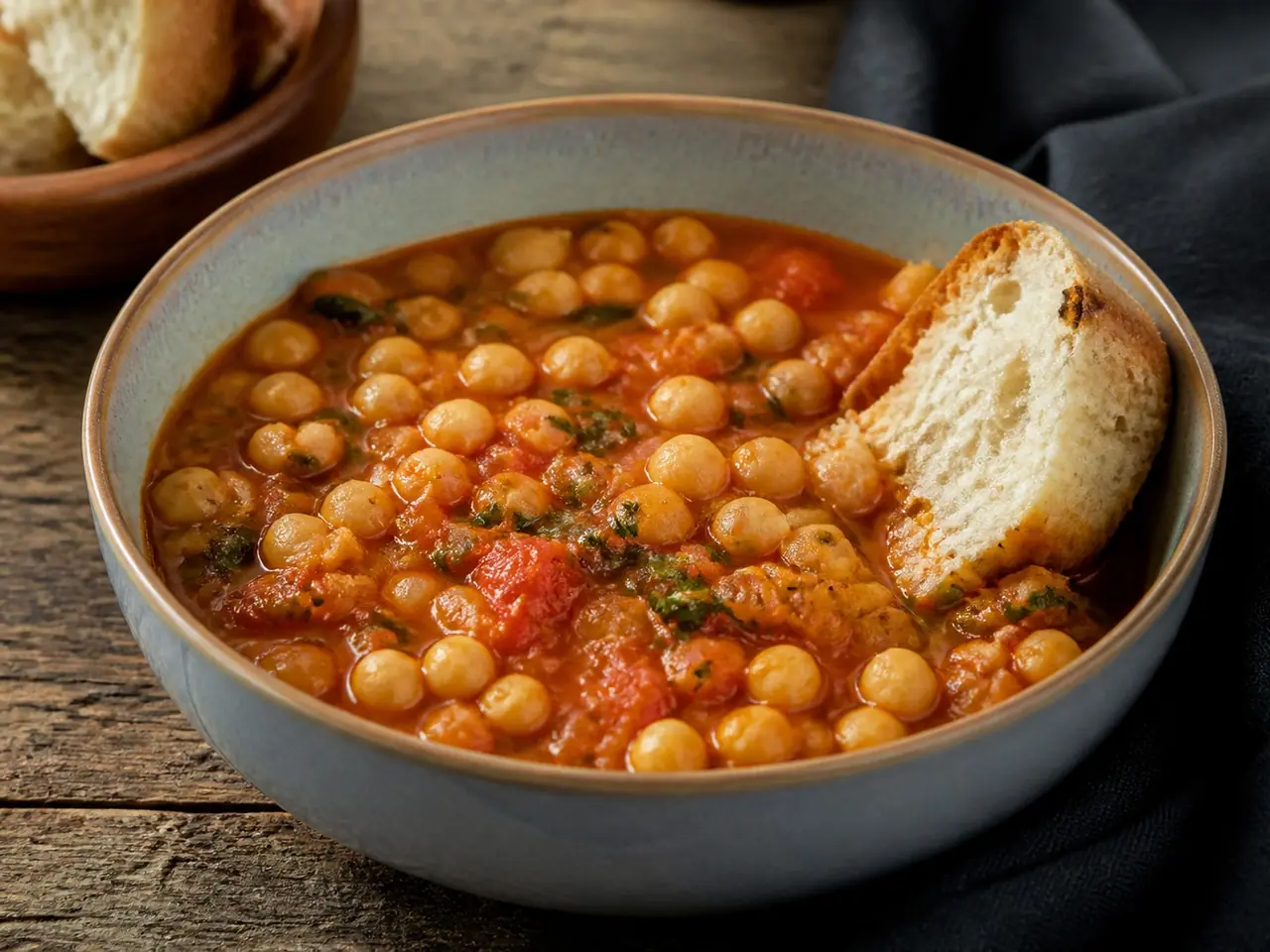
- Hummus. You want them falling apart, which is exactly what tinned already are.
- Old stock risk. Dried chickpeas that have sat in a warehouse for years never fully soften. A tin has no such failure mode.
| Dried | Tinned | |
|---|---|---|
| Hands-off time | 9 h soak + 1 h simmer | None |
| Hands-on time | ~5 min | ~4 min |
| Texture control | Full | None |
| Salt control | Full | Brand-dependent |
| Shelf life | 2 years for good texture | Years |
Source: Times measured with a timer; the rest observed while cooking both
What the price gap actually buys you
Three pounds thirty per cooked kilo, against nine hours of soaking and an hour of simmering.
For a household eating pulses twice a week, that is somewhere around four pounds a month. Worth having, and not worth reorganising your evenings around. The stronger argument for dried has never been the money; it is that you control the texture, and texture is the thing a tin cannot give you.
How old is too old
Dried chickpeas do not spoil in any way you can see. They just stop softening.
Past roughly two years the seed coat and the starch have changed enough that no amount of boiling gets them all the way tender, and you end up with a pot of gravel and a ruined dinner. There is no date on most bags that tells you this, which is the single best argument for buying from a shop with turnover rather than a supermarket that stocks one bag a season.
Aquafaba, and why the tin liquid is not waste
The viscous liquid in a tin of chickpeas whips like egg white. It is starch and dissolved protein, and it holds air well enough to make a meringue, a mayonnaise, or the foam on a sour cocktail.
The liquid from home-cooked chickpeas works too and is better seasoned. Freeze it in an ice cube tray. Two cubes is roughly one egg white.
The bicarbonate shortcut
A quarter teaspoon of bicarbonate of soda per litre of soaking water raises the pH and breaks down pectin in the cell walls. Chickpeas soaked this way cook in roughly two thirds of the time and come out creamier. More than a quarter teaspoon and they go mushy and taste faintly of soap.
Questions
Do I have to soak dried chickpeas?
Is one more nutritious than the other?
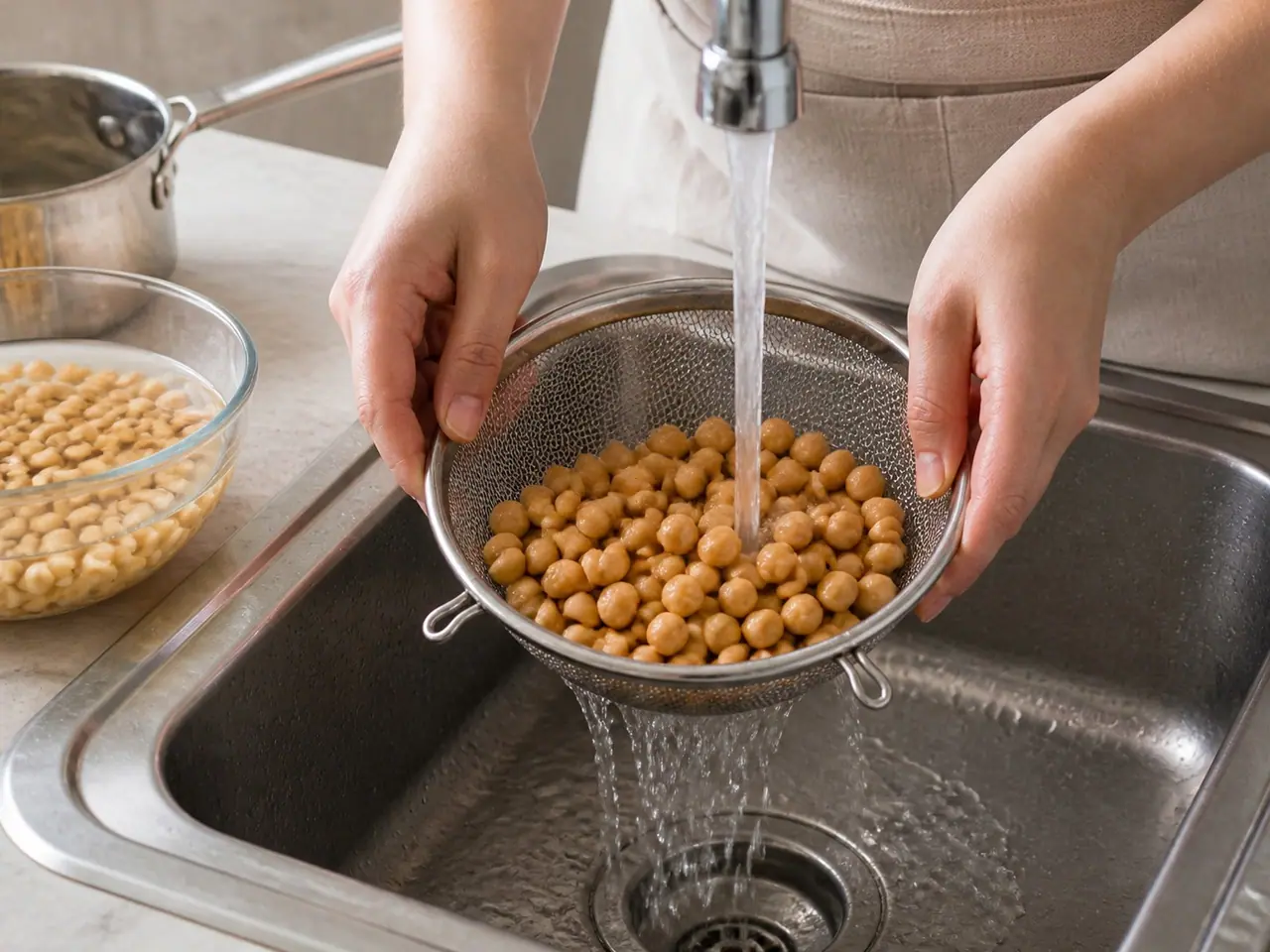
Should I rinse tinned chickpeas?
Why do mine stay hard even after soaking?
How much dried equals a tin?
More guides
All guides →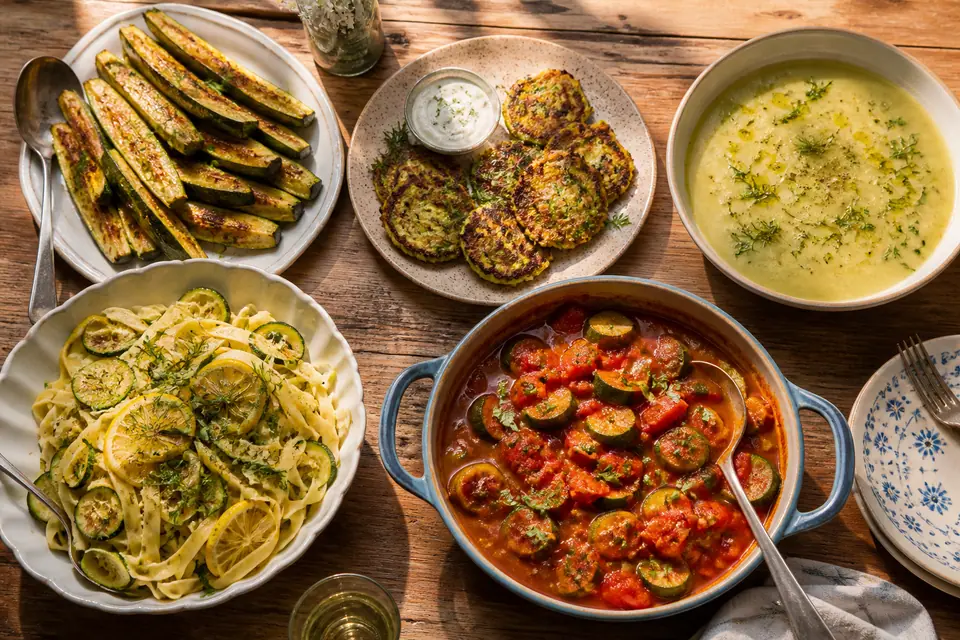
5 dinners for too many courgettes
A pile of courgettes needs different textures, not five versions of the same saute. These dinners use roasting, grating, blending, ribbons and stewing.
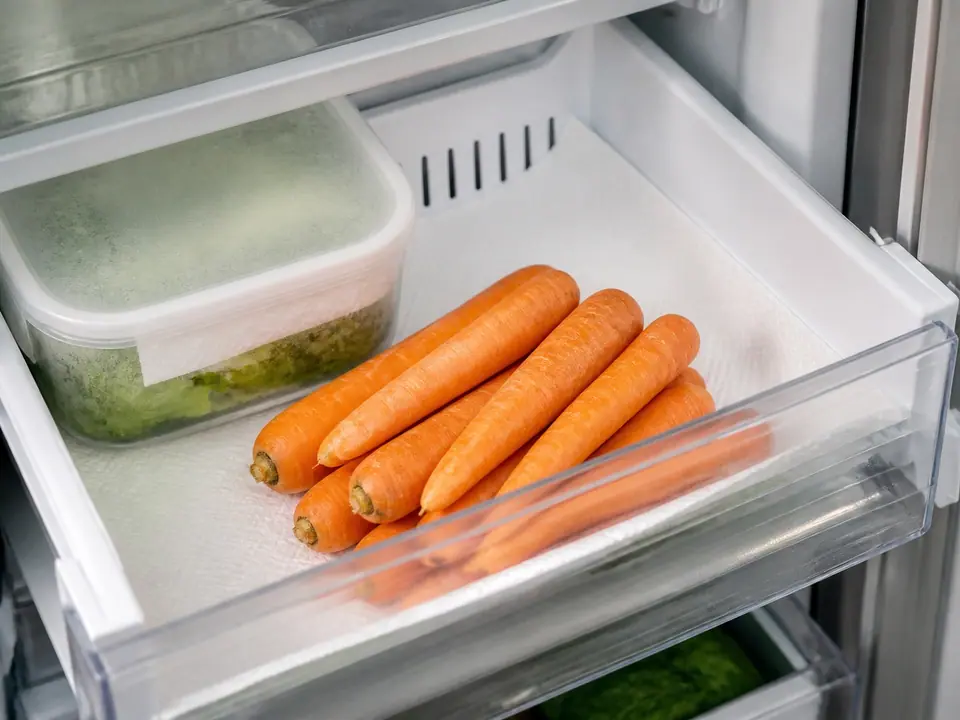
How to keep carrots fresh for weeks
Cut off carrot tops, keep the roots cold in a breathable container and control moisture. A dry towel inside the drawer helps, but a wet one needs changing.
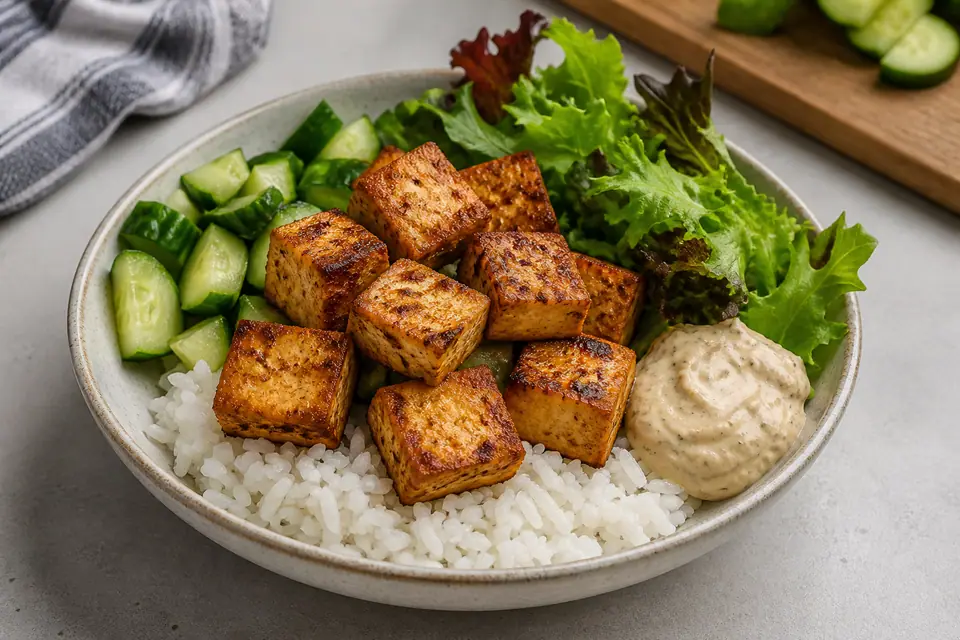
How to build a filling tofu bowl
Build the bowl around crisp tofu, then add a base, a fresh vegetable and one strong sauce. Texture and portion balance make simple ingredients feel complete.