The water was always inside the squash
A watery courgette pan is usually a heat and spacing problem, not a bad vegetable. Dry the cut surface, use a wide pan and wait before turning.

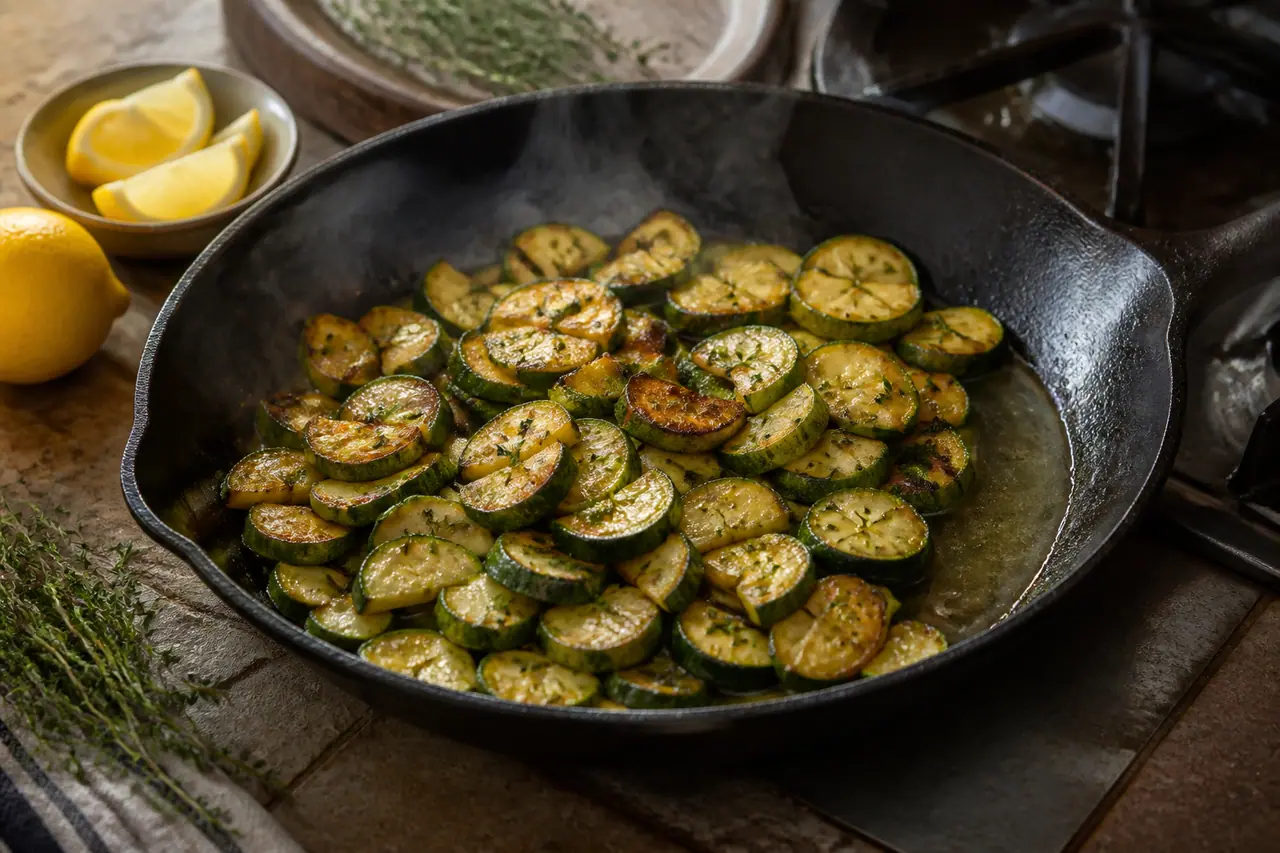
The puddle at the bottom of a courgette pan is not a mystery and it is not fixed by stirring harder. Courgettes are mostly water, held in soft plant cells that break as the cut surfaces heat. In my 28 cm skillet, 500 g of sliced courgette gave off 92 g of liquid when I cooked it in one crowded layer. The same weight, split into two batches, browned before the water could collect.
The useful answer is to treat courgette like a quick-cooking vegetable, not like an onion that can sit in a covered pan. Use high heat, a broad surface, dry pieces and a single layer. Salt at the end if you want colour. If dinner needs soft courgette, add a splash of water on purpose and call it a braise; the unhappy middle ground is a cool pan full of oil and pale slices.
What the pan is doing
Heat reaches the outside of each slice first.
The skin tightens, the cut faces soften and water moves out of the cells. A dry skillet can evaporate that moisture. A crowded skillet cannot. Once the slices touch, steam sits between them, the surface temperature drops and browning pauses. More oil does not solve it because oil cannot replace the missing space.
The shape matters too. Thin rounds have more exposed cut surface for their weight, so they look wet quickly.
Thick batons release water more slowly and give the pan a chance to colour one face. That is why a tray of wedges can roast well while a heap of coins turns soft. Same vegetable, different ratio of surface to centre.
The three-minute test
I learnt this the hard way with a pan of small coins meant for toast. The first batch looked dry and browned, so I tipped the second batch into the same skillet without waiting for the surface to recover. The pan filled with steam and the finished courgettes tasted boiled even though no water had been added. Now I check the metal between batches. If a drop of water disappears at once, the heat is ready. If it sits and shivers, I wait another minute before the vegetables go in.
For a fair comparison, I used 300 g of half-moons, 2 cm thick, in a hot skillet with one teaspoon of oil.
After three minutes without moving them, the first side had pale gold patches and the pan was still dry. When I turned the pieces, their cut faces steamed for a minute, then coloured. The batch took seven minutes in total.
I repeated it with 600 g in the same pan.
At three minutes there was no browning and a clear film of water covered the base. At seven minutes the pieces were tender but grey. The extra time did not restore the roasted taste because the surface had spent the important part of cooking below browning temperature. Crowding costs flavour, not only minutes.
| Move | What I see | What to do |
|---|---|---|
| Crowd the skillet | Clear water, pale pieces | Cook in batches |
| Cover the pan | Fast softening, no crust | Cover only for a deliberate braise |
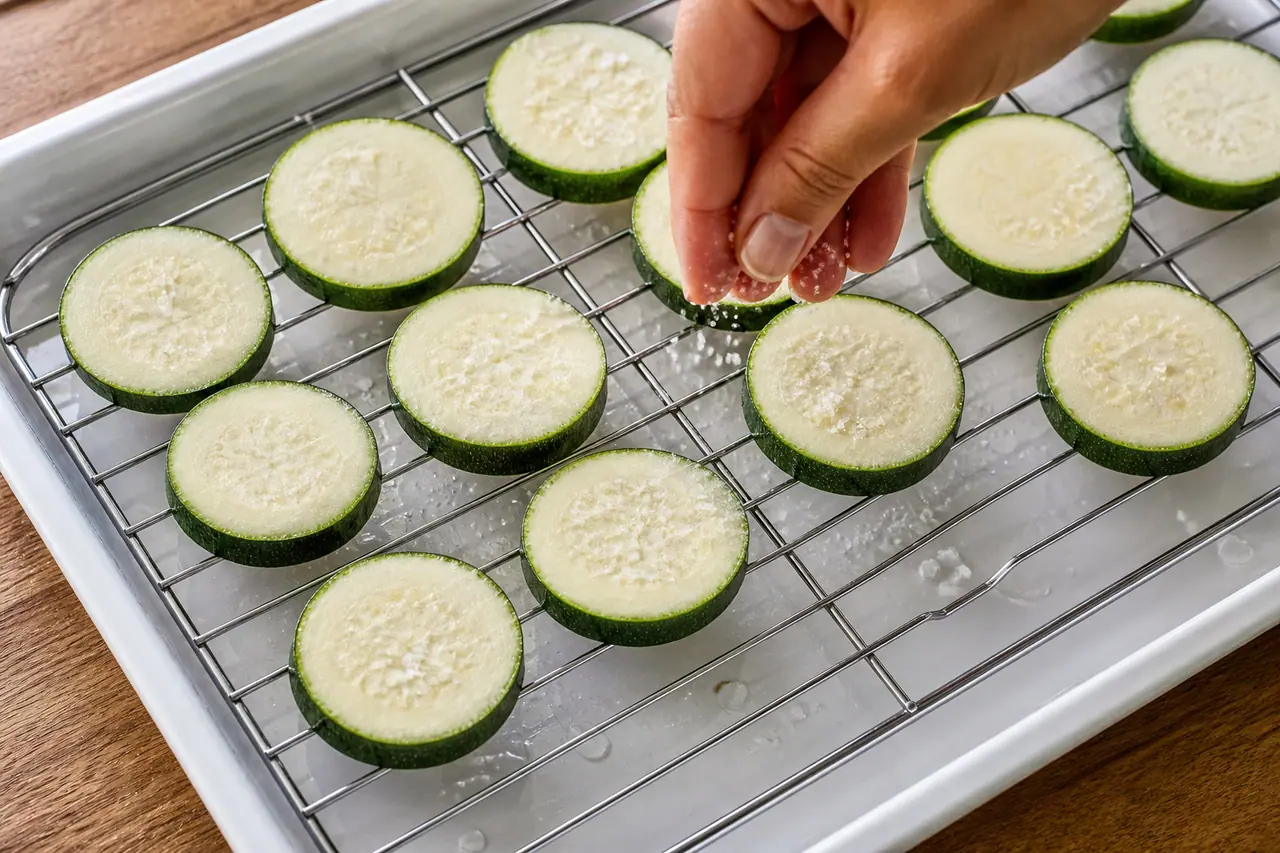
| Salt early | More surface moisture | Salt after the first turn |
| Use thin slices | Tender before browning | Use thicker pieces |
| Turn at once | No contact colour | Leave the first side alone |
Source: Maren Ashby skillet test, 2026
A method that gives you a dry pan
Heat the empty skillet for two minutes, add the oil and wait until it shimmers.
Tip in dry courgettes in a single layer. If they hiss weakly, the pan is too cool or overloaded. Leave them untouched for three minutes, then turn with tongs. Add salt, pepper and garlic only after the first side has colour; garlic burns while the squash is still trying to dry.
If the pan is full, remove half before you add more oil.
I know that feels like creating another job, but it is faster than waiting for a litre of steam to escape. Cook the first batch until the edges are bronzed, move it to a plate and repeat. Return everything with herbs or lemon at the end, when the heat can finish the flavour without drowning the crust.
When I want the water
Not every courgette pan should be dry.
For a soft pasta sauce, I cook the slices with onion over medium heat, add salt early and let them collapse. A splash of pasta water turns the released juices into a coating. For soup, I use the wet middle of a large courgette and do not pretend it will brown. The failure only exists when the intended dish needs both softness and a browned surface.
A lid has a job in that kind of cooking.
Cover for four minutes to soften the centre, remove the lid and raise the heat to reduce the liquid. Do not keep the lid on while hoping the water will disappear. It condenses on the lid and falls back into the pan, which is a neat way to trap the problem you meant to remove.
The short answer
Courgettes turn watery because their cells release moisture faster than a crowded or covered pan can evaporate it.
Dry the pieces, keep the pan wide, cook in batches and delay the salt. If you want softness, choose it deliberately and use the liquid as part of the sauce.
A word on frozen courgettes
Frozen courgette has already lost the contest for crisp edges.
Thaw it in a sieve, squeeze lightly and send it to soup, sauce or fritters. Do not put thawed pieces into the same pan test and blame your heat; ice damage breaks the cells before the skillet gets a chance.
Fresh courgette is the ingredient for a browned side. Frozen courgette is the ingredient for a soft one. Matching the expectation to the ingredient saves a lot of unnecessary oil.
Questions
Should I salt courgettes before frying?
Does salting and draining courgettes always help?
Why do my courgettes go soft instead of brown?
Can I fix courgettes that are already watery?
More guides
All guides →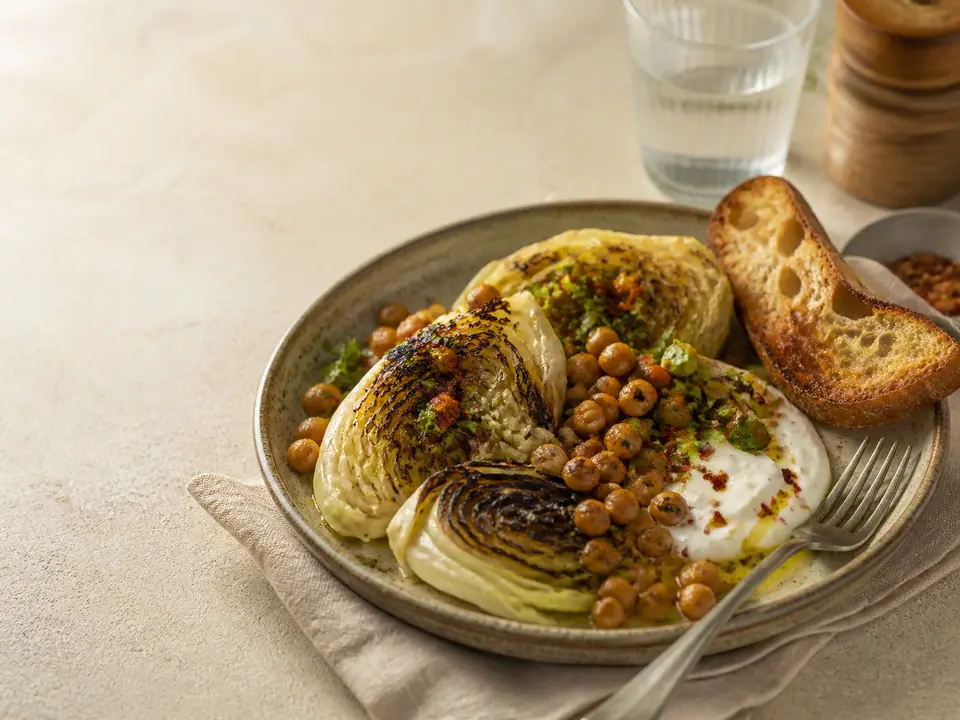
5 cabbage dinners that are not boiled cabbage
A cabbage head can become a roast wedge, a noodle-like skillet, a bean dinner, a chicken tray and a crisp topping without a pot of boiling water.
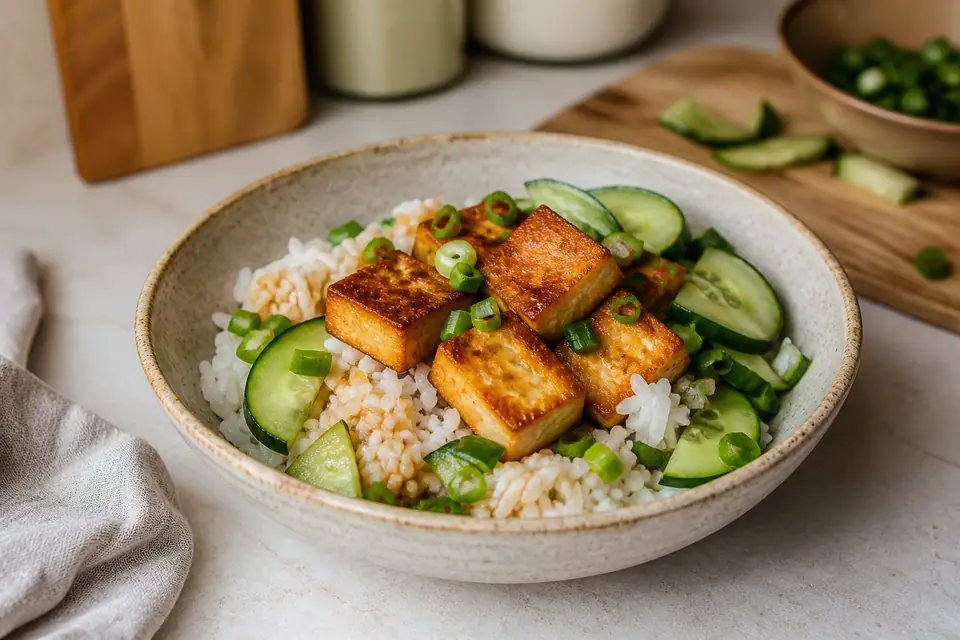
How to turn leftover rice into a crispy tofu bowl
Leftover rice gives a tofu bowl a head start. Warm the grains separately, crisp the tofu in a clear skillet and add cucumber after the heat is off.
How to keep cut aubergine from browning
Aubergine browns quickly after cutting because its exposed enzymes meet oxygen. The best fix is cooking soon; lemon water buys you a little time.