Raw paste tastes sharp. Cooked paste tastes built in.
Frying tomato paste removes its raw edge, concentrates its savoury flavour and coats the cooking fat before liquid is added. The colour in the pan tells you when to stop.

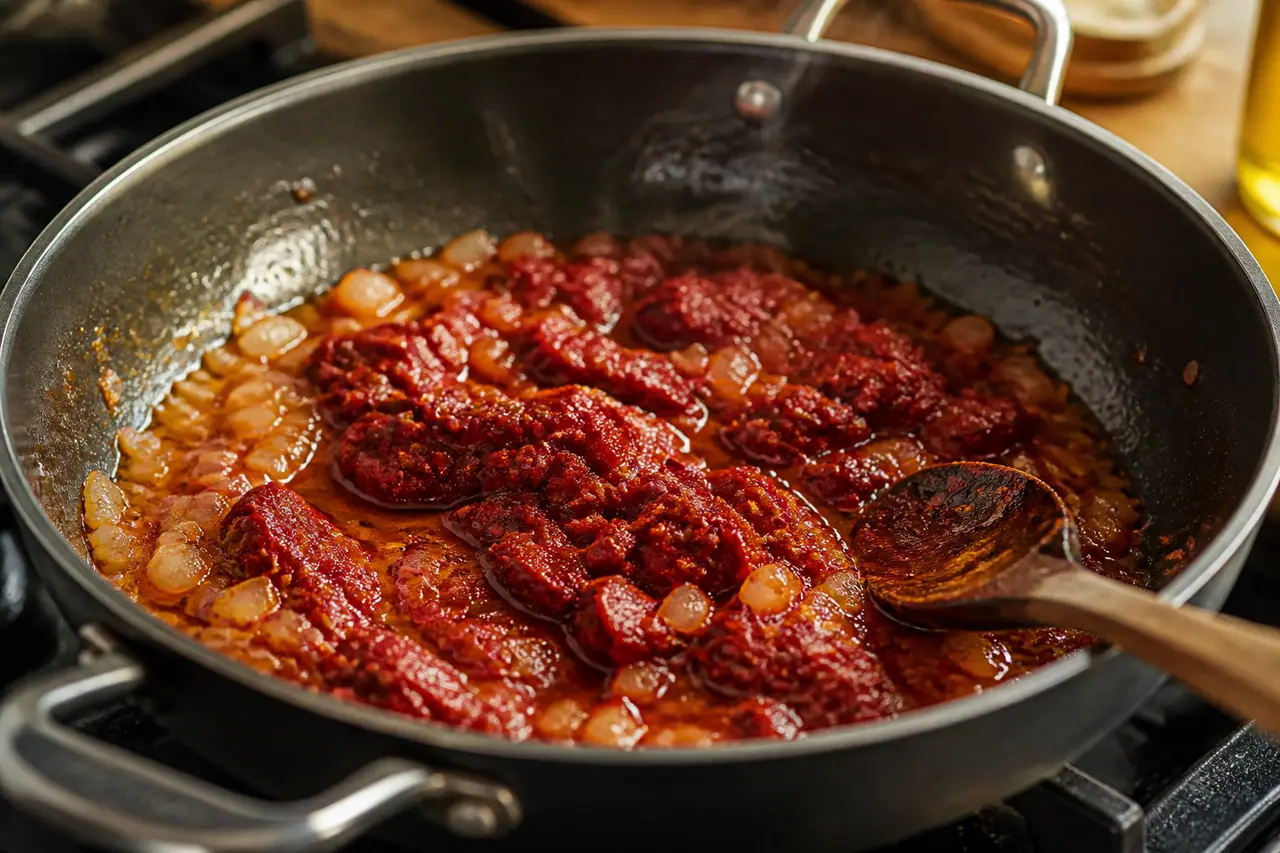
Tomato paste can make a sauce taste rich or strangely metallic, and the difference often comes down to what happens in the first minute after it hits the pan. Stir it into the onions and immediately add stock, and the paste keeps a raw, sharp edge. Let it fry in the oil until it darkens from bright red to brick red, and the flavour settles into the whole sauce. This is not a restaurant trick. It is a simple timing choice that works in a saucepan, a skillet or the bottom of a soup pot. The step is easy to miss because the paste looks finished before it has cooked, but concentrated ingredients need a little room to change before they are diluted.
I used to add tomato paste at the same time as the chopped tomatoes because it felt safer. It was not safer; it gave the paste no chance to change. Now I make a clear space in the oil, fry the paste there and watch the colour. The pan tells me more than a fixed cooking time ever did. That short pause is especially useful in a weeknight sauce, where the liquid and the paste otherwise arrive together and leave you trying to correct the flavour at the end.
The failure happens before the liquid arrives
Tomato paste is concentrated tomato with very little water. That density is why it carries so much flavour in a small spoonful, but it is also why a cold spoonful tastes intense and unfinished. When the paste lands in hot oil, the fat spreads around it and the heat drives off some of the remaining moisture. The tomato solids begin to brown, and their sharpness becomes more savoury and rounded.
If you add stock, wine or chopped tomatoes immediately, the pan temperature drops and the paste is diluted before that change can happen. The sauce will still cook, but the paste will taste like an ingredient added to the sauce rather than part of its foundation. You can rescue it with a longer simmer, but you cannot quite recreate the flavour of a paste that was toasted in the fat first.
Use the colour as your cooking clock
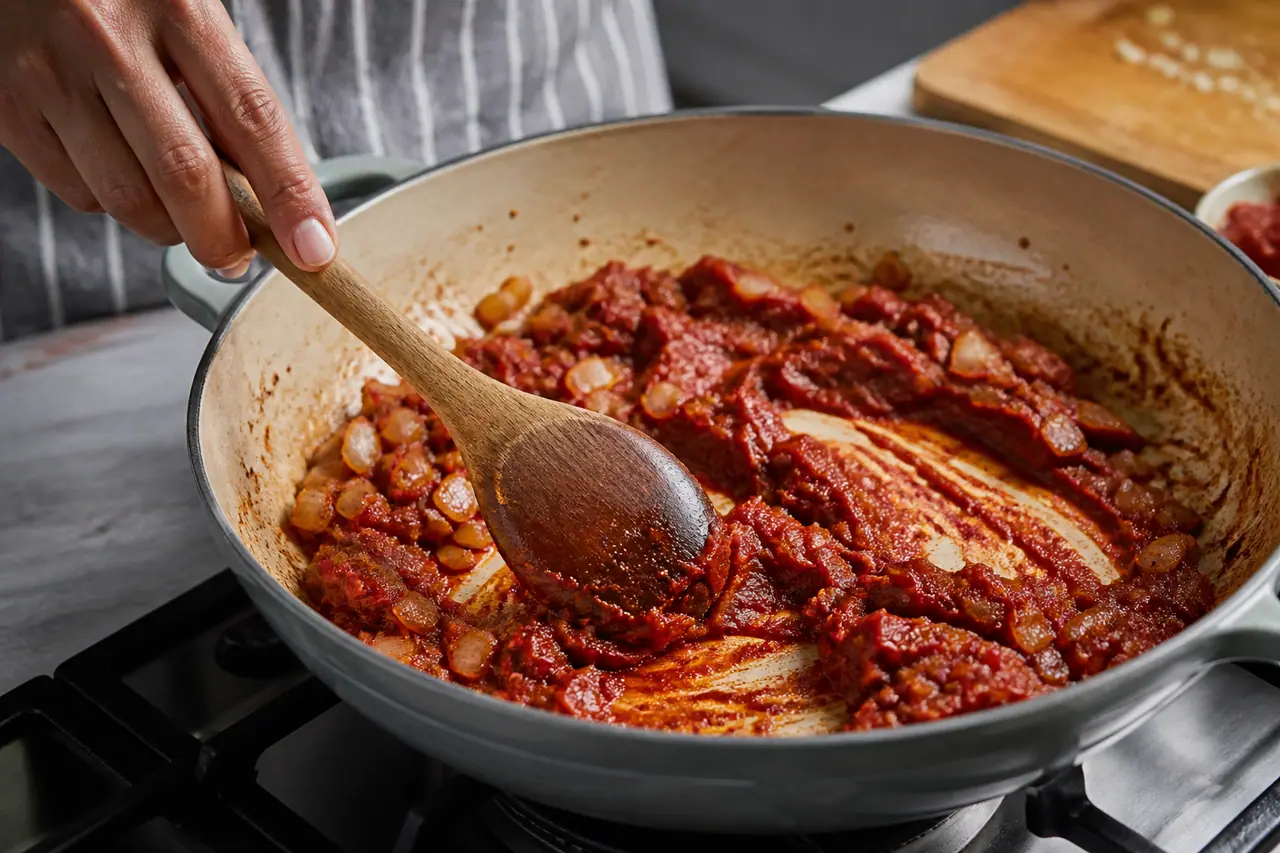
Bright scarlet paste is usually at the beginning. As it fries, it turns a deeper red and leaves a coloured film across the oil. The smell moves from raw tomato to something closer to roasted pepper and warm earth. That is the moment I start thinking about adding the next ingredient. You do not need to wait for the paste to become brown. Brown edges are a warning that the solids are moving from toasted to burnt. If the paste is spread in a thin layer, you can see that change clearly and stop while the flavour is deep rather than bitter.
The pan should sound gently active, not aggressively sizzling. If the paste catches in dry patches, add a small splash of water or oil and scrape the bottom. A wide pan gives you more control because the paste can be spread thinly. A tall narrow pot holds steam and makes the change slower, especially if the onions have released a lot of water.
| Stage | What you see | What to do |
|---|---|---|
| Just added | Bright red mound | Spread it into the oil |
| Ready | Deep red paste and orange oil | Add wine, stock or tomatoes |
| Too far | Black flecks or a burnt smell | Move to a clean pan and start again |
Source: Maren Ashby's stove test, 2026-01-07
Three places where the step pays off
In a tomato sauce, frying paste gives the finished liquid a stronger base before the tinned tomatoes arrive. In a lentil or bean stew, it helps the broth taste more complete without adding another stock cube. In a tray of roasted vegetables, a thin paste-and-oil coating clings to the cut surfaces and gives the edges a darker flavour. The technique is especially useful when the rest of the dish is mild: onions, carrots, white beans and a little water need that concentrated beginning.
It is less useful when the recipe is deliberately fresh and bright. For a raw tomato dressing or a quick salsa, the uncooked taste is part of the point. It is also easy to overdo in a delicate cream sauce. A little fried paste can add warmth, but a large amount will pull the dish towards a heavy red sauce even if the recipe did not intend to go there.
The verdict
Frying tomato paste changes the sauce because heat and oil turn a dense, raw ingredient into a savoury base. The goal is not to burn it or cook it for a precise number of minutes. Spread it thinly, watch for the deeper red colour, smell for the roasted note, and add liquid before the edges go dark. Once you make that pause part of your cooking rhythm, tomato paste stops tasting like a last-minute correction and starts doing the work of a proper foundation.
Questions
How long should tomato paste be fried?
Can tomato paste burn?
Should I fry tomato paste before adding onions?
Can I fry tomato paste in butter?
More guides
All guides →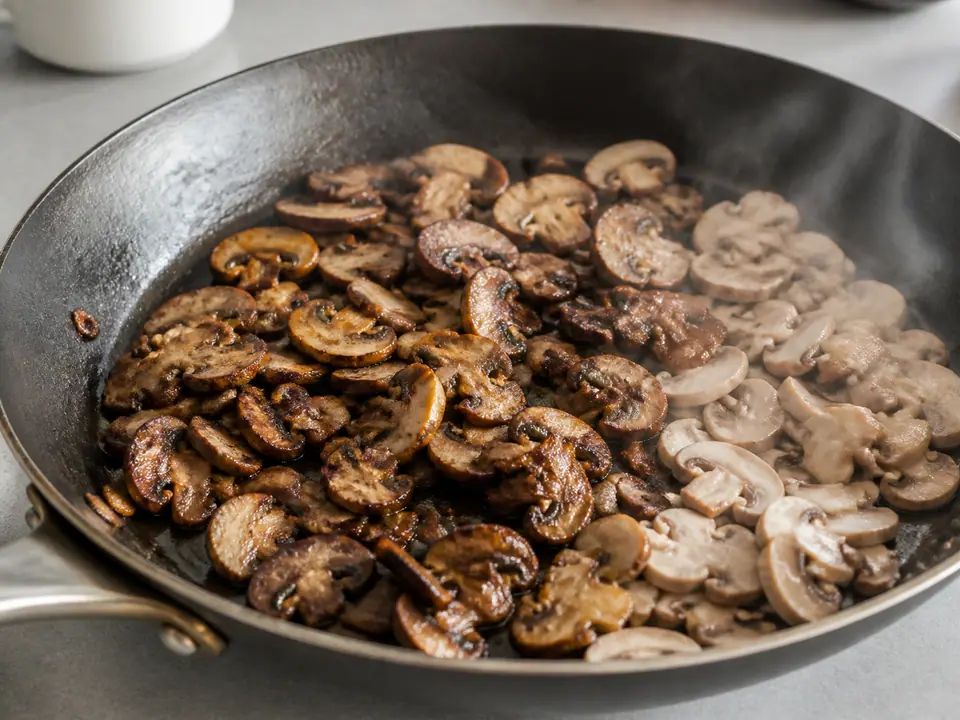
Why mushrooms steam instead of brown
Mushrooms release a surprising amount of water. Give them a dry surface, a wide pan and time before seasoning if you want colour instead of a grey simmer.
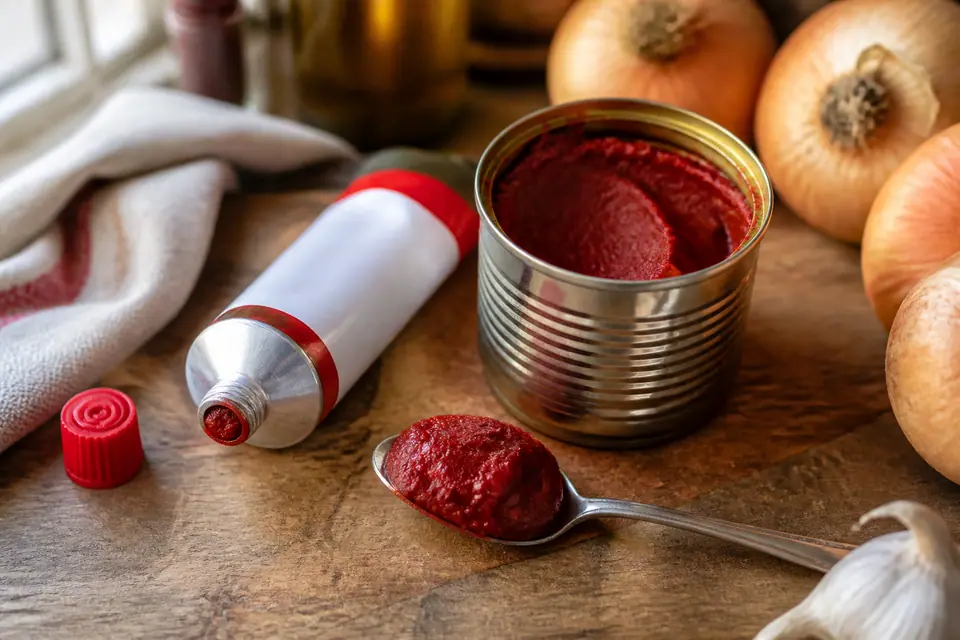
Tomato paste in a tube vs a tin: which is worth buying?
Buy a tube when you use tomato paste a little at a time. Buy a tin when you cook for a crowd or want the lowest cost per spoon.
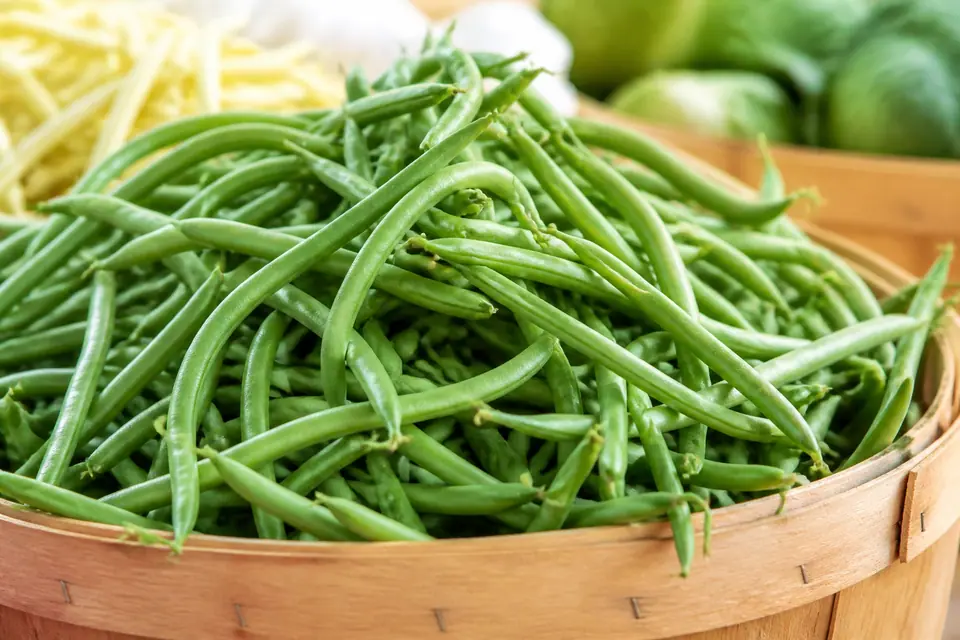
How to choose green beans that still snap
Fresh green beans are smooth, bright and firm, with a clean snap and no swollen seed bumps. A flexible limp pod is usually a thirsty older pod, not a tender one.