Tofu sticks when the pan is asked to dry wet food
Sticking usually comes from wet tofu, a cool pan, early turning or a thin pan surface. Fix the sequence and the crust releases on its own.

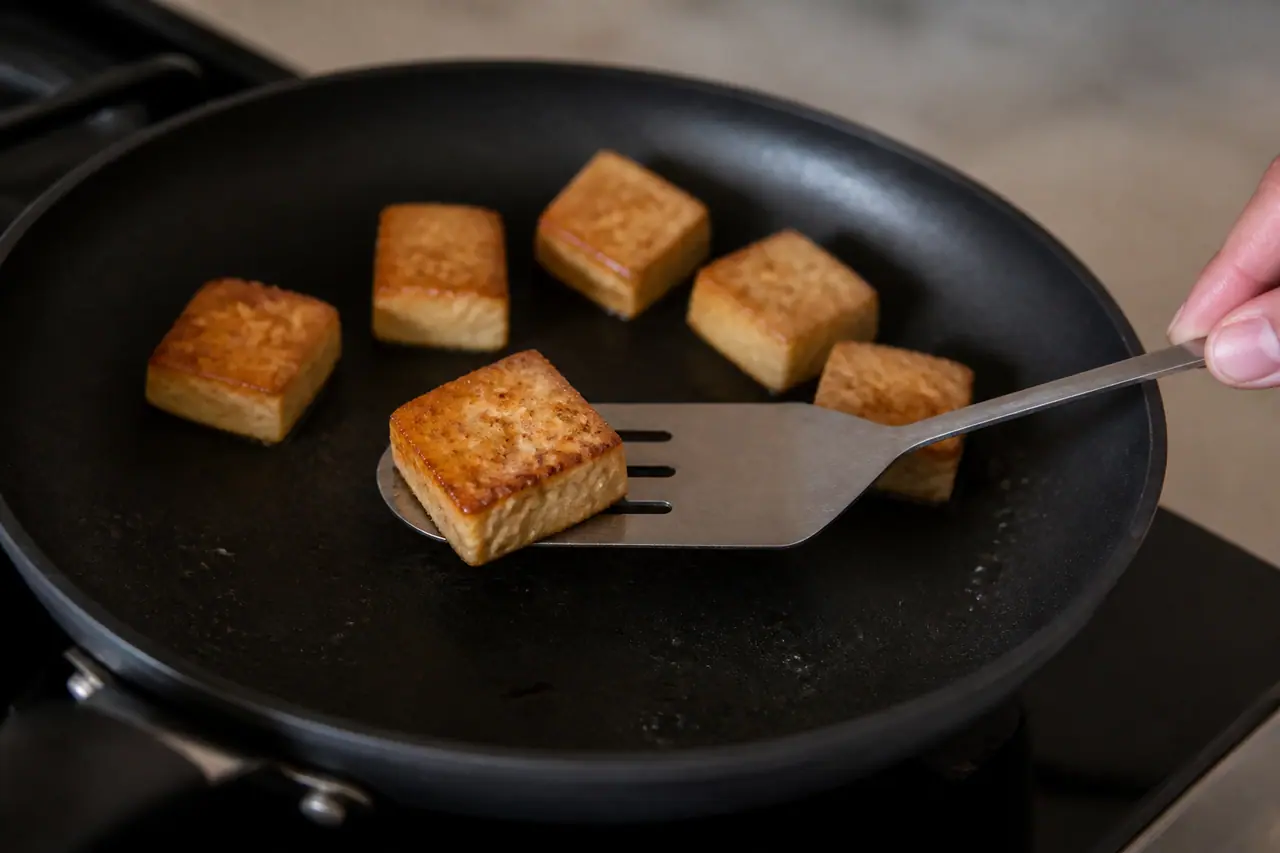
Tofu sticks for a predictable reason: the wet surface meets a pan that has not yet made a crust. The starch turns tacky, the protein grips the metal and the first attempt to turn the piece tears it apart. More oil sometimes hides the problem for a minute, but it does not fix the wet centre or the wrong timing.
There is a simple order that works in my kitchen. Dry the tofu, heat the pan, add enough oil to cover the contact points and leave the pieces alone. When the underside has browned, it will usually release with a gentle push. A stuck corner is a signal to wait, not an invitation to scrape harder.
The surface is wetter than it looks
Tofu can look drained while still carrying a film of water. That film steams when it hits the skillet and delays browning. Pat the block dry, then press it in a tea towel for ten minutes. Tearing the tofu exposes rough surfaces, so press those pieces lightly too if they feel glossy.
One browned edge tells you more than a loud sizzle.
Coat just before cooking. Cornstarch absorbs the last dampness and gives the oil a surface to brown, but it cannot sit on wet tofu for twenty minutes and remain dry. If you are cooking rice or chopping cucumber first, leave the tofu uncoated until the pan is nearly ready.
A clear gap between pieces matters more than another spoon of oil.
Heat the pan before the food
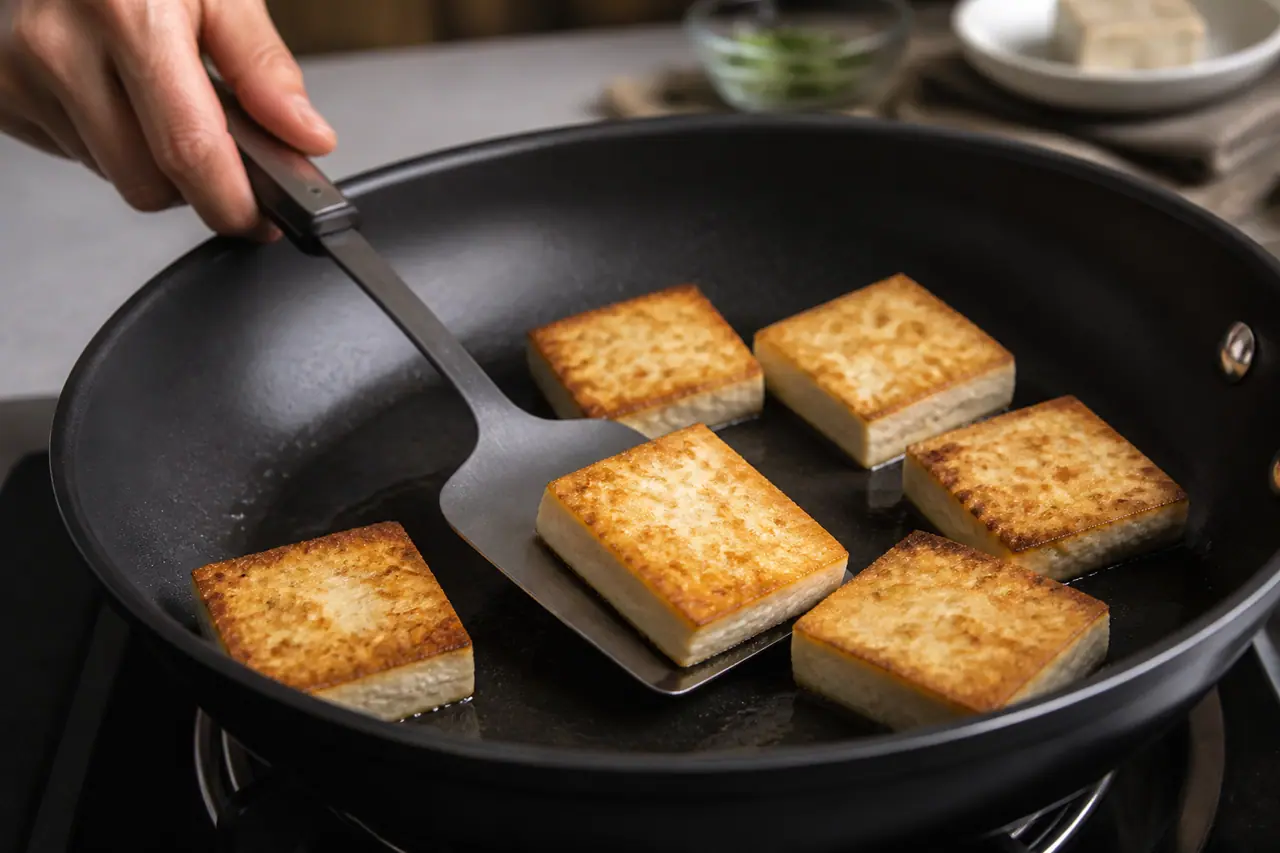
A cold skillet lets tofu sit in oil while it slowly warms and releases water. The coating becomes sticky before it has a chance to set. Heat the empty pan over medium, add the oil and wait until it moves easily across the surface. If the oil smokes, lower the heat and let the pan settle before adding tofu.
Non-stick is forgiving, especially for a first batch. Stainless steel can work, but the heat needs more attention and the crust must be properly browned before turning. A heavy pan holds heat well but may need a minute between batches. Wipe away loose burnt starch before the second round so yesterday's crumbs do not glue the next pieces down.
Heat and space decide the crust before any tool touches the tofu. The pan cannot brown pieces that are sitting in their own steam.
Do not crowd the pieces
Space is part of the cooking method. Tofu pieces touching each other trap steam, and steam keeps the sides soft. Use a skillet wide enough for one layer with a little metal visible between the pieces. If you have more tofu than space, cook two batches and return the first one at the end to warm through.
Size matters too. Very large pieces take longer to form a shell and are harder to turn without breaking. Rough bite-size pieces give you more browned edges and make it easier to check one without disturbing the rest. Keep the shapes irregular, but not so small that they dry out before the crust is ready. A small piece can be crisp quickly but is also easier to overcook, while a thick chunk needs patience before its middle feels tender. Keep the batch similar enough that one pan has one timing.
Wait for the release
For the first few minutes, tofu is attached to the pan while the starch sets. As the underside dries and browns, the contact becomes less sticky. Slide a thin spatula under one corner. If the piece resists, leave it for another minute. If it lifts and shows a golden base, turn it with confidence.
Do not flip each piece repeatedly. One turn is usually enough. Every extra movement knocks off coating and slows the pan. Add soy sauce or a glaze only after both sides have browned. Liquid is useful at the end, but it changes a crisp crust into a softer one if it arrives too early. When the crust is ready, the spatula should meet a firm underside rather than a wet layer. That small change in resistance is the best timing signal in the pan.
A clean release is built before the sizzle
Dry tofu and a hot, open pan solve most sticking. Add the pieces with room, wait for the crust and season after the turn. That sequence is the foundation of the one-pan tofu and rice dinner, where the tofu gets a dry window after the rice leaves the skillet. Once the crust has formed, the sauce can do its job without becoming glue.
The pan also needs a pause between jobs. If you cooked rice, wipe away wet grains and let the metal heat again before adding tofu. If you cooked vegetables first, remove loose liquid and browned crumbs that could catch. A clean, hot surface gives the new batch a fair start. Cooking is often less about adding another ingredient than removing the condition that caused the last batch to fail.
Questions
Why does tofu stick to my non-stick pan?
Should I oil the tofu or the pan?
Can I use stainless steel for tofu?
How do I clean stuck tofu from a pan?
More guides
All guides →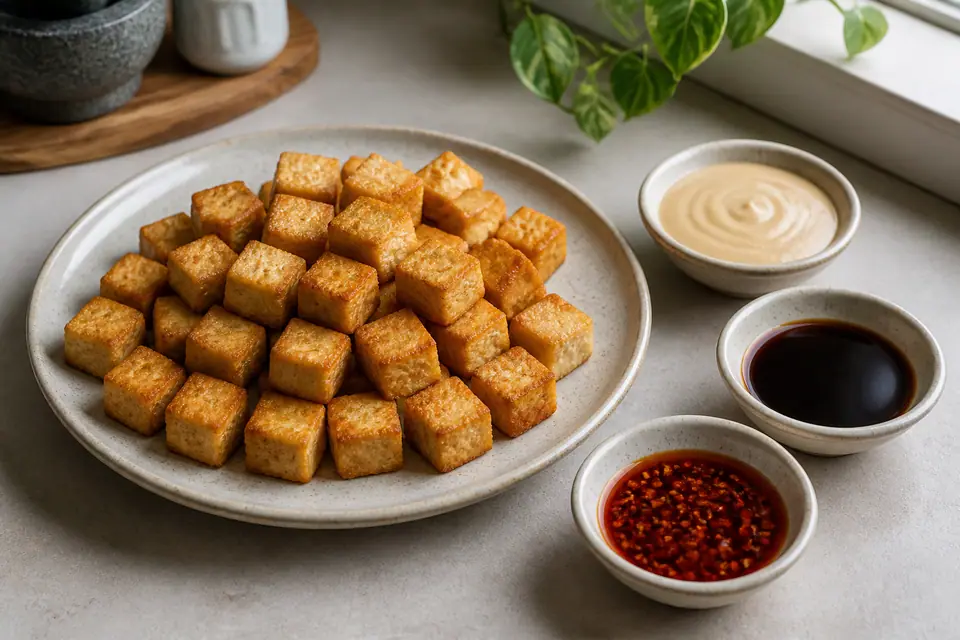
Tofu sauces that stay crisp
Crisp tofu lasts longer when the sauce is thick, added late or served underneath. Build contrast with cucumber, lemon, tahini or chilli oil at the table.
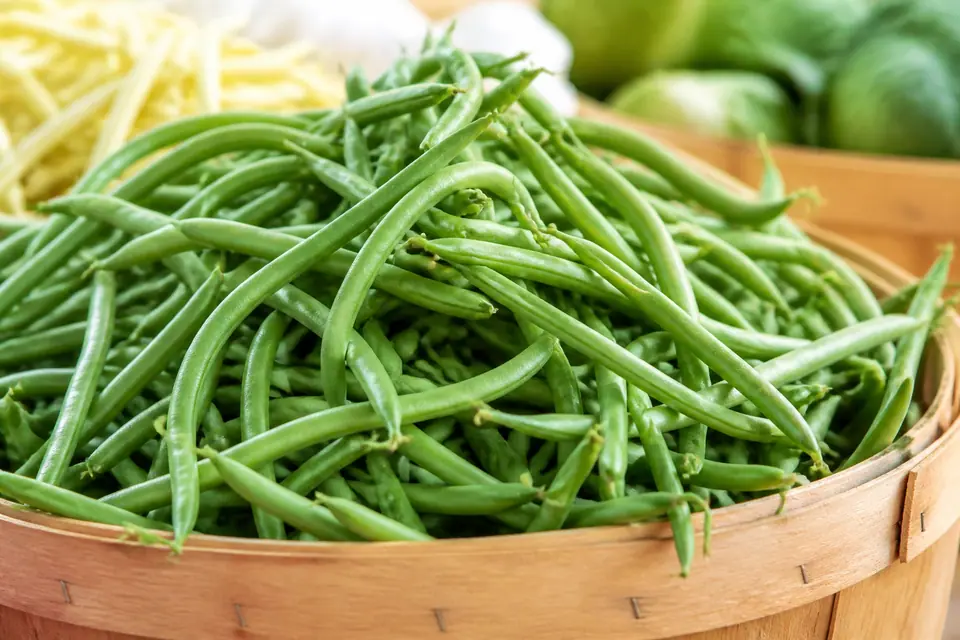
How to choose green beans that still snap
Fresh green beans are smooth, bright and firm, with a clean snap and no swollen seed bumps. A flexible limp pod is usually a thirsty older pod, not a tender one.
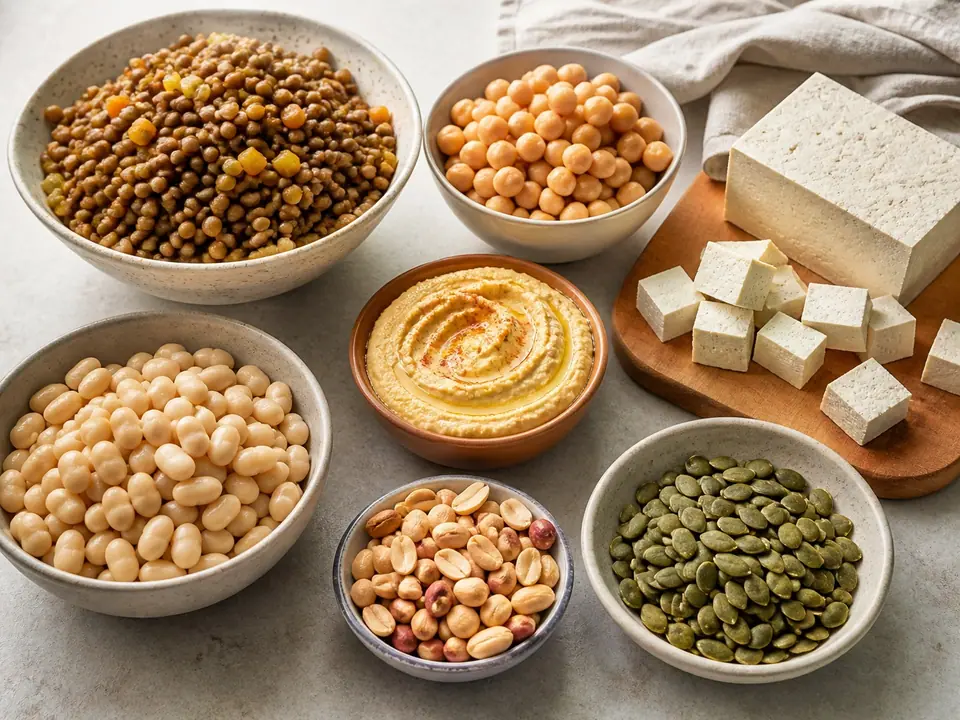
Plant proteins, ranked by what you actually eat
Most protein rankings quietly compare dry lentils to cooked tofu. Measured the way food reaches the plate, the order changes.