Zucchini, and why most of them are watery
Also called courgette, baby marrow
Ninety-five percent water, which is the whole problem and the whole opportunity. Salt it and it browns; skip that and it steams.
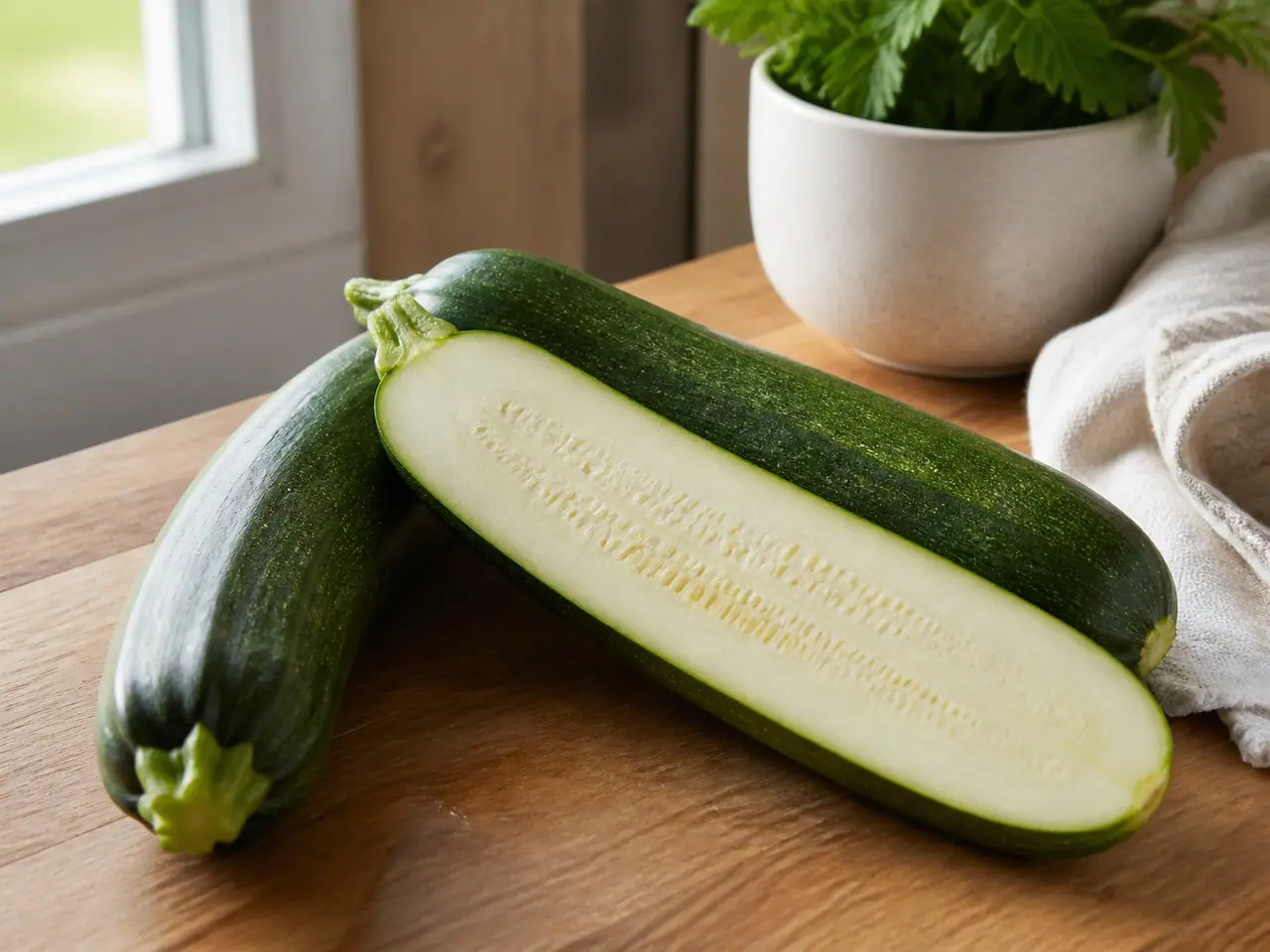
The numbers
| Nutrient | Amount | % RI |
|---|---|---|
| Calories | 17 kcal | — |
| Water | 94.8 g | — |
| Protein | 1.2 g | 2% |
| Carbs | 3.1 g | — |
| Fibre | 1 g | 4% |
| Vitamin C | 17.9 mg | 22% |
| Potassium | 261 mg | 13% |
Source: USDA FoodData Central, SR Legacy 169291 (squash, summer, zucchini, includes skin, raw) · FDC ID 169291 · % RI against EU adult reference intakes.
Buying and keeping
What to look for at the shop, and how to make it last once it is home.
How to pick
- Small and firm beats large and impressive. Past about 20 cm the seeds coarsen and the flesh turns spongy.
- It should feel heavy for its size. A light one has already lost water and will collapse in the pan.
- Skin taut and slightly matt. Glossy usually means waxed; dull and wrinkled means it has been sitting somewhere for a week.
- Press gently near the stem. Any give there is the first sign of age, and it shows up before the far end goes soft.
- The flowers, if you can get them still attached, mean it was picked that morning. That is as fresh as a courgette gets outside a garden.
How to store
- Fridge drawer, unwashed, in a loosely open bag. Four to five days.
- Never in a sealed bag. Trapped moisture turns the skin slimy within two days and there is no rescuing it.
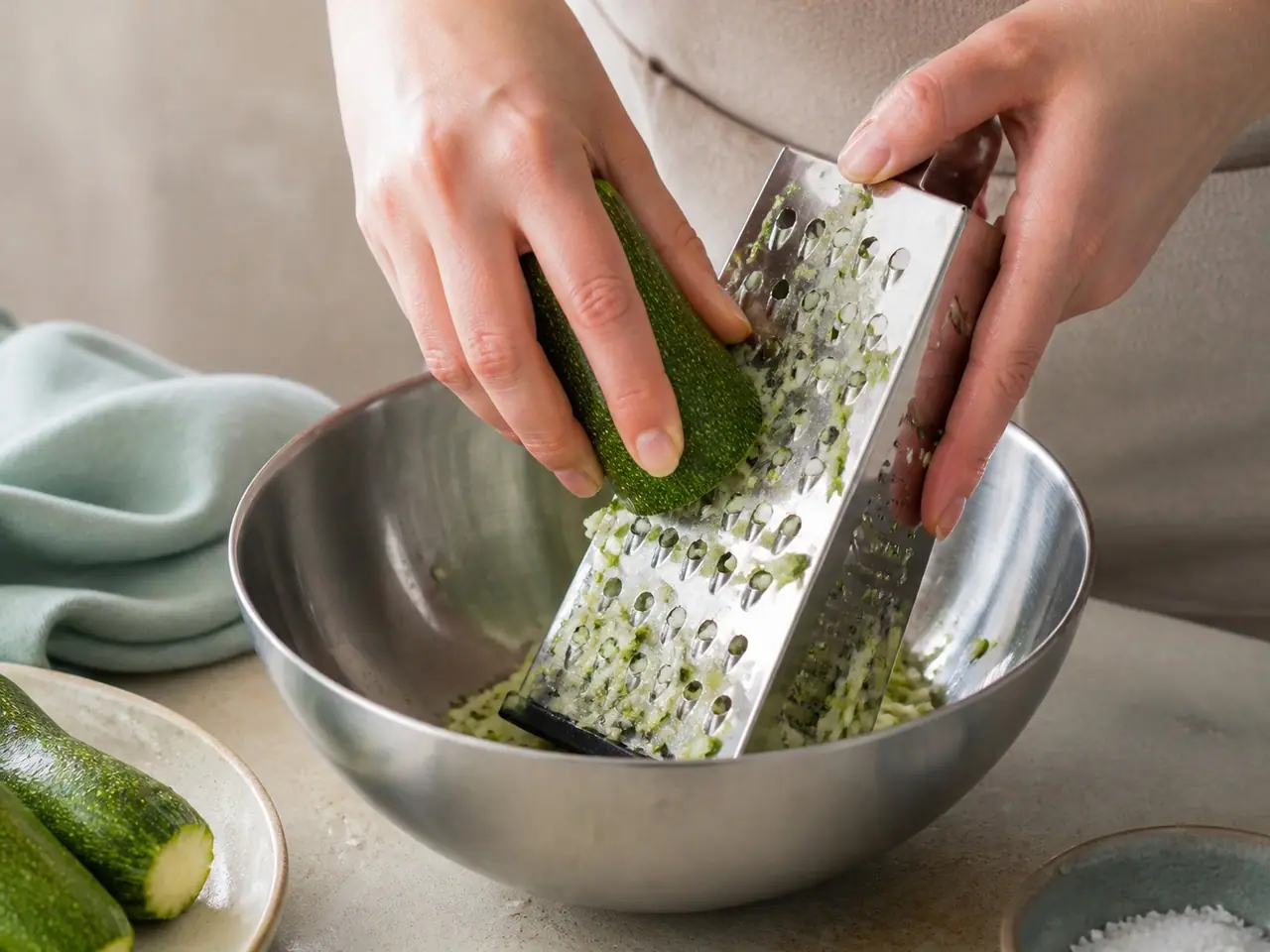
- Do not freeze it raw and whole. Grate it, salt it, squeeze it dry, then freeze in portions and it is ready for fritters months later.
- Keep it away from apples and bananas. Ethylene from those makes courgette go soft noticeably faster.
- A cut half keeps two days with the cut face pressed against clingfilm rather than loosely covered.
Best months
If you have none
Swaps that hold up, with what changes when you use them.
The salting question
Zucchini is 94.8 per cent water by weight. That single number explains almost every zucchini failure.
Put it in a hot pan and the water comes out faster than it can evaporate, the pan temperature crashes, and you get grey steamed batons instead of browned ones. The vegetable has not done anything wrong; there is simply more water in it than a domestic hob can deal with.
Salting first fixes it. Twenty minutes with a teaspoon of salt per 500 g pulls out a surprising amount of liquid, enough to see pooling in the bowl. Squeeze that out and what is left browns properly.
Large ones are not a lost cause
A marrow-sized courgette from someone’s garden is watery and bland in the middle and perfectly good around the outside.
Halve it lengthways, scoop out the seedy core with a spoon, and treat what is left as you would a smaller one. Stuffed and baked is the other honest answer, because a filling supplies the flavour the vegetable has stopped providing.
Grated, sliced, ribboned
- Grated for fritters and cakes. Always salt and squeeze first.
- Thick slices or batons for the grill and the oven, where high dry heat does the work.
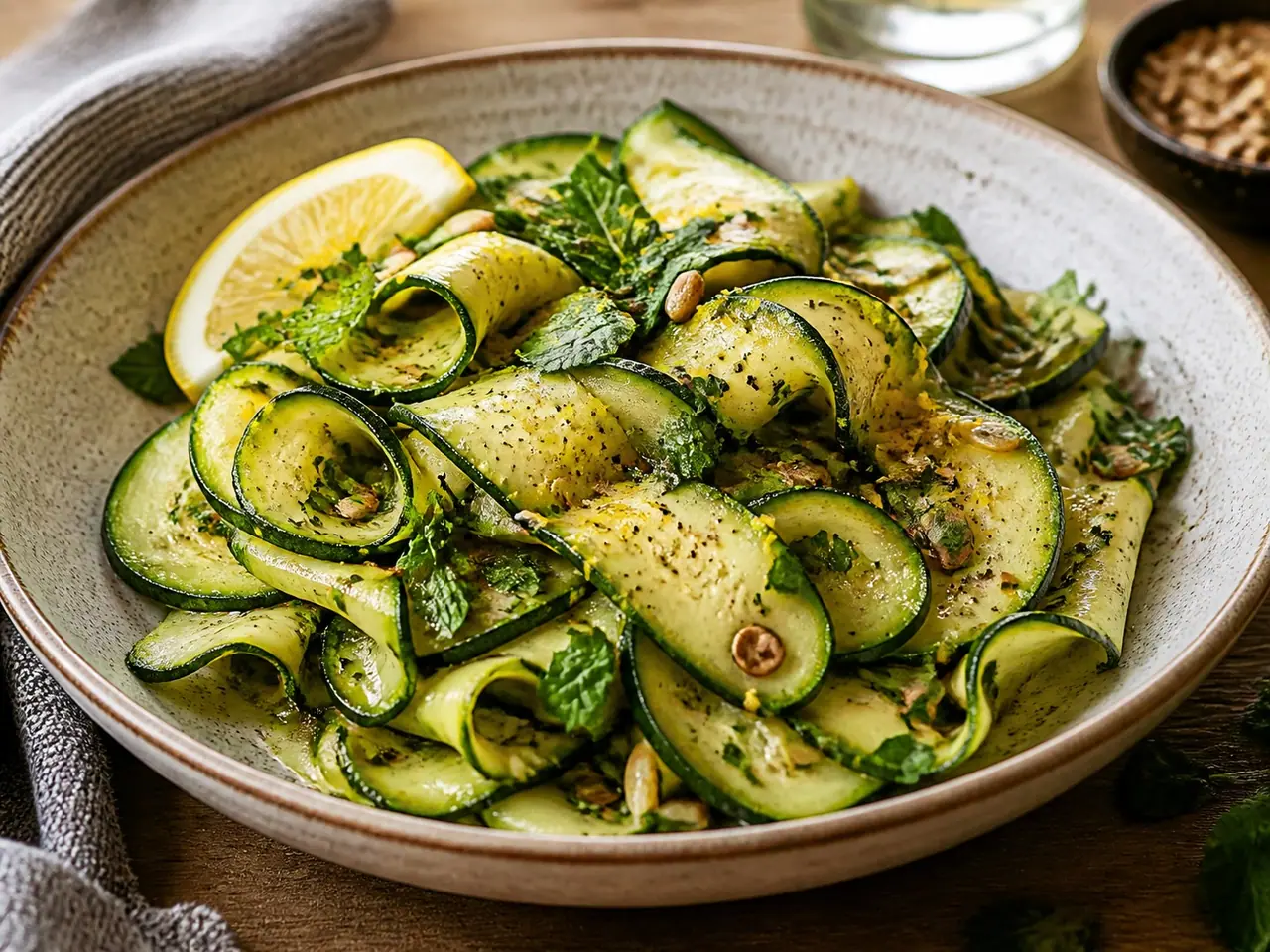
- Ribbons for eating raw, shaved thin enough to see light through, salted for ten minutes.
- Chunks for stews, added in the last fifteen minutes so they hold their shape.
Questions
Should I peel zucchini?
Why is my zucchini bitter?
Can I eat zucchini raw?
What is the difference between zucchini and courgette?
Can I substitute zucchini for cucumber?
Recipes using zucchini
2 on the site so far.
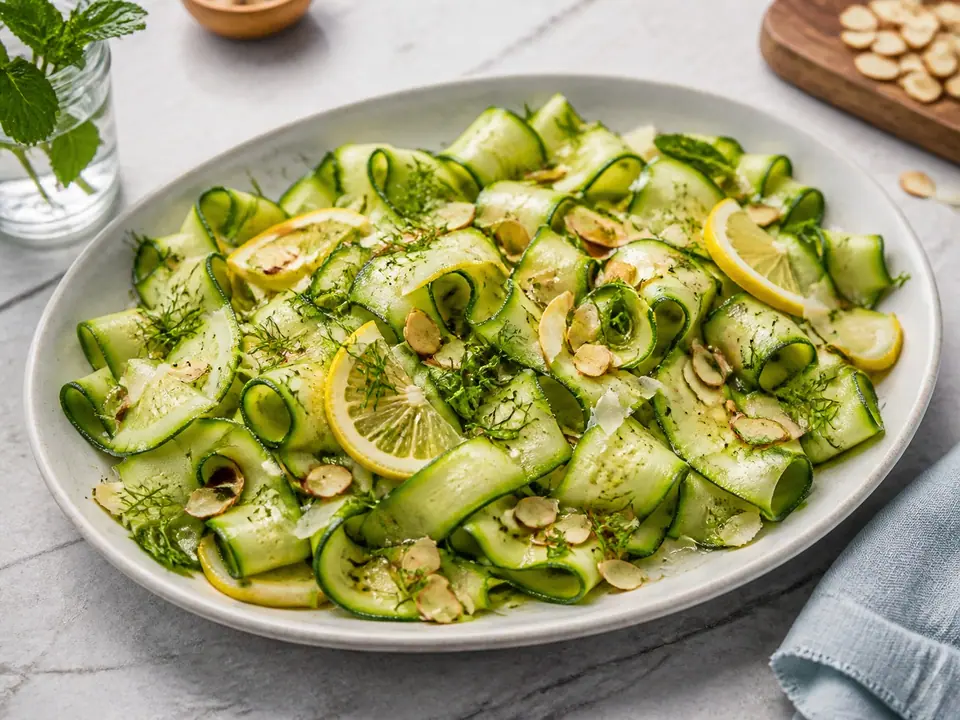
Zucchini ribbon salad with lemon
Raw zucchini is better than its reputation, but only if you shave it thin and give the salt ten minutes to work.
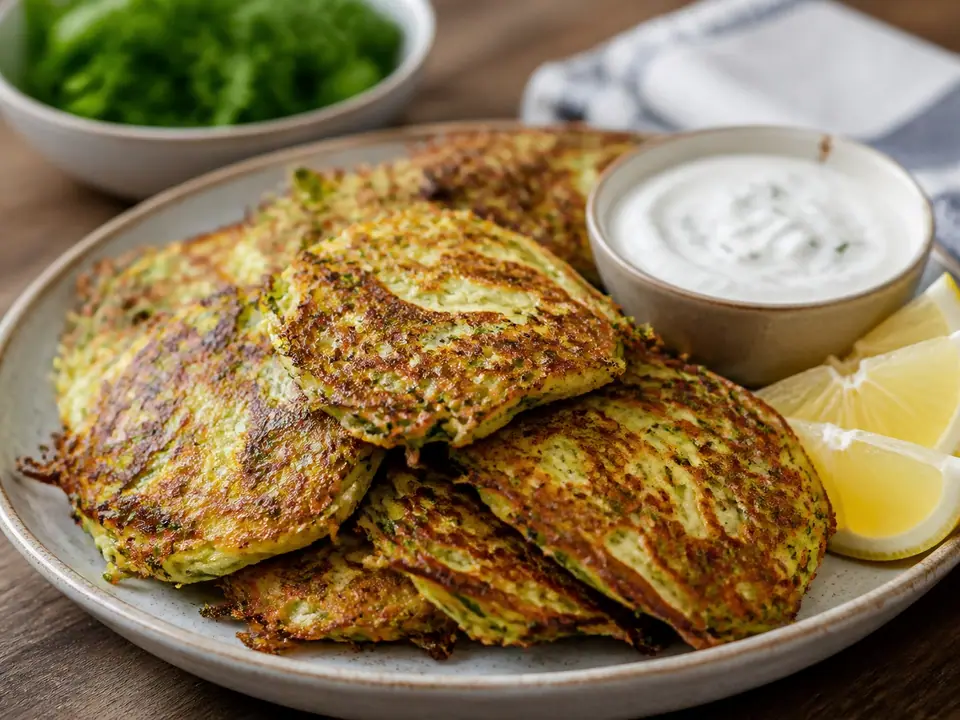
Zucchini fritters that actually hold together
Grated zucchini holds an astonishing amount of water. Get it out and you have crisp fritters; leave it in and you have green pancakes.
Guides about zucchini
All guides →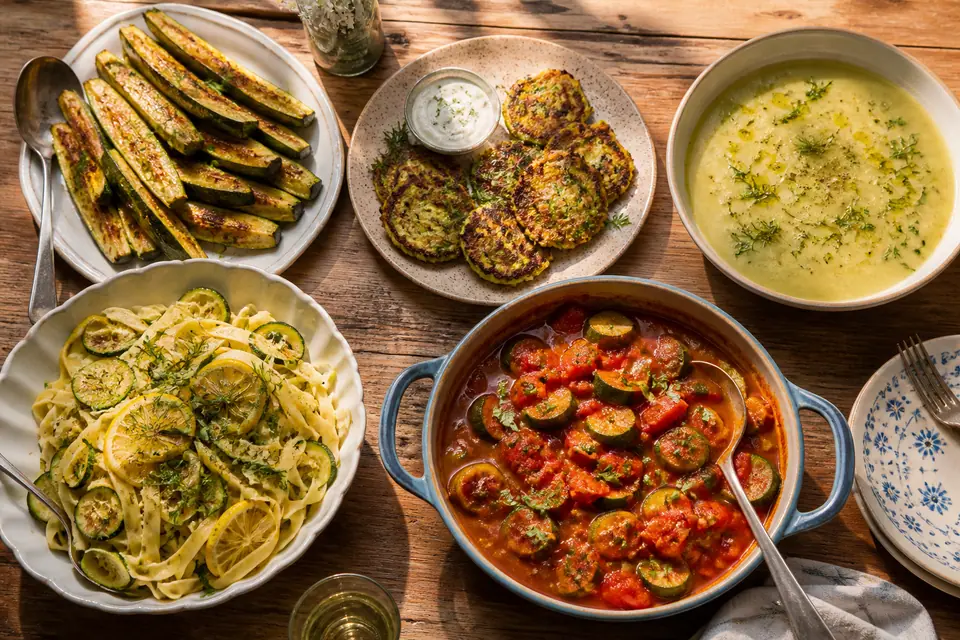
5 dinners for too many courgettes
A pile of courgettes needs different textures, not five versions of the same saute. These dinners use roasting, grating, blending, ribbons and stewing.
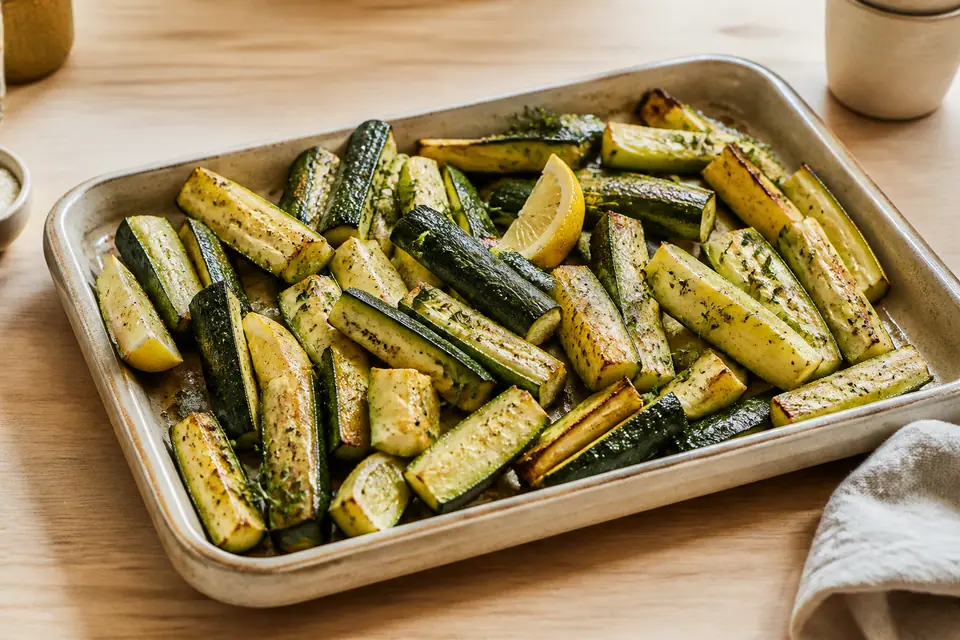
Courgettes vs zucchini: does the variety change how you cook it?
Courgette is the British name for zucchini. The useful difference is not the label but the variety, size and moisture inside the skin.
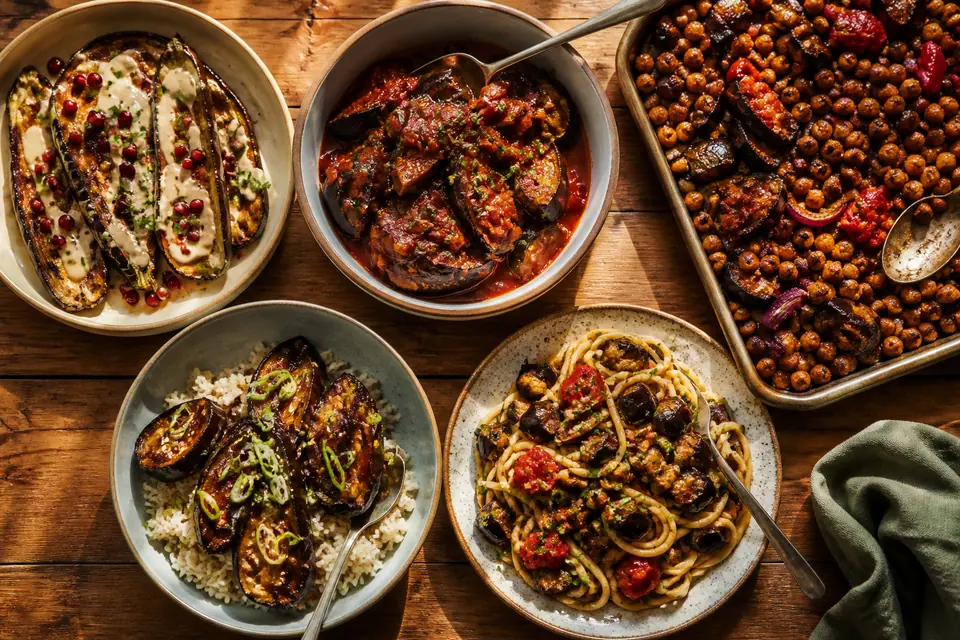
5 dinners that make aubergine the main event
Aubergine can carry dinner when it gets enough heat, a sharp finish and something with substance beside it. These five meals give it the main role.
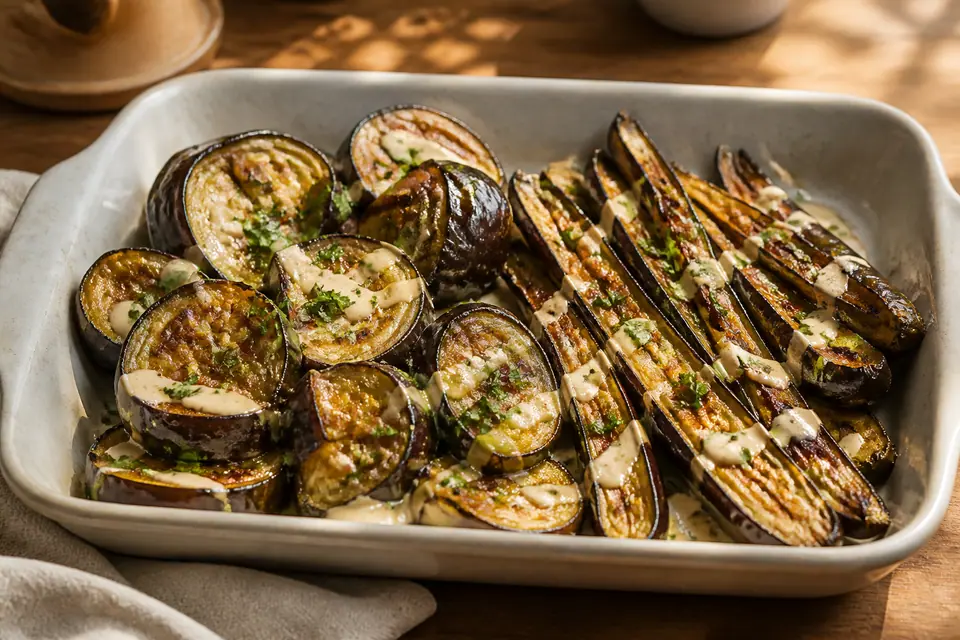
Globe vs long aubergines: which is better for roasting?
Long aubergines roast with more browned surface and fewer large seeds, while globe aubergines give thick soft flesh for halves and stuffing.