Let spinach wilt into eggs, beans, pasta, rice or soup while it still looks alive
Spinach can make dinner greener without becoming a wilted salad. Cook it with eggs, beans, pasta, rice or lentils and add it at the right moment.

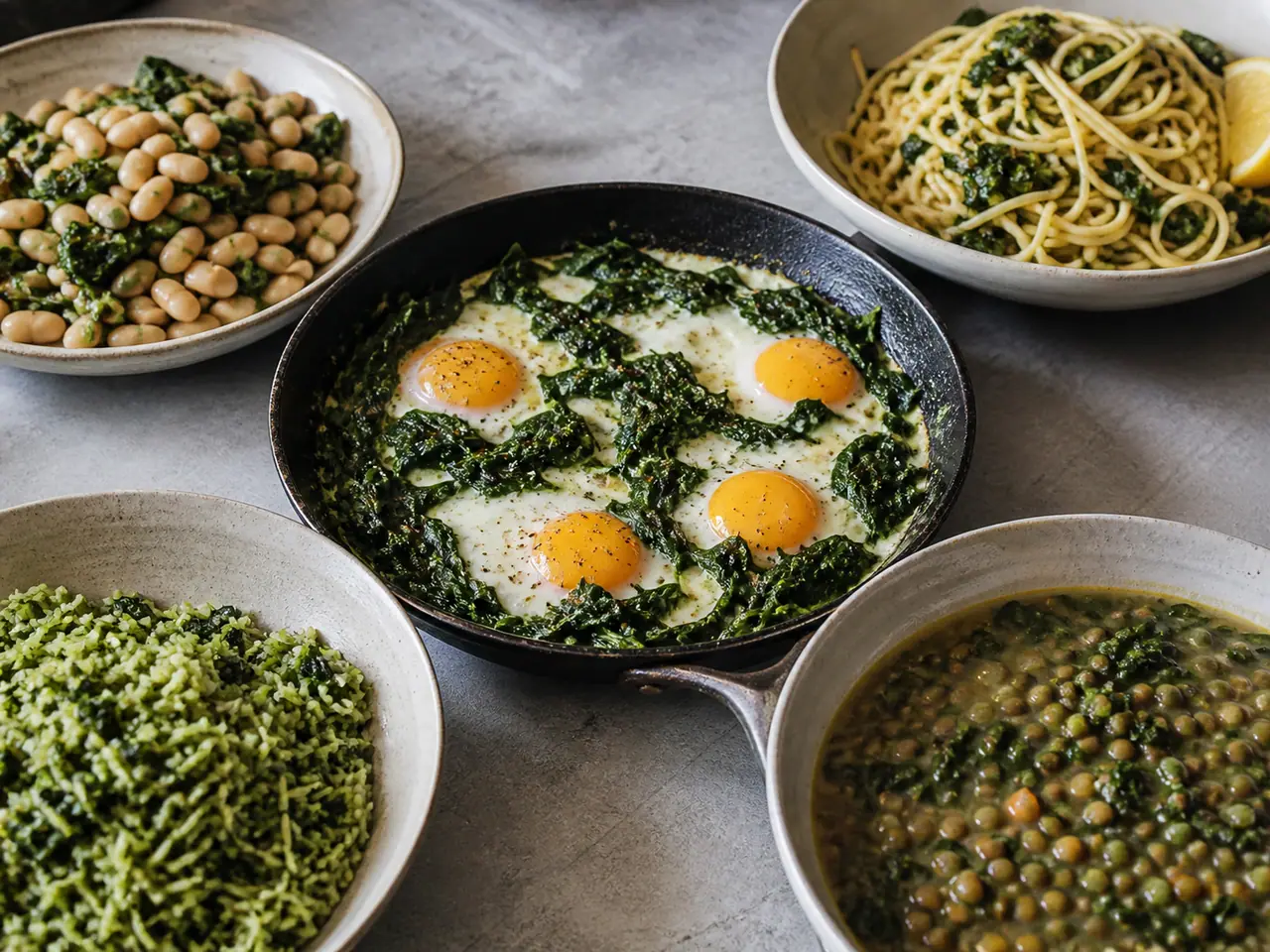
Spinach is often bought for a salad and then forgotten until the leaves look tired. I prefer giving it a hot job while it is still useful: fold it into eggs, stir it through beans, let it cling to pasta, mix it into rice or simmer it in lentil soup.
The timing matters. Baby leaves can join at the end; mature stems need the pan first. Dry the spinach when the sauce needs to stay thick, and buy one filling base so the leaves become dinner rather than a garnish.
1. Eggs with spinach and toast
Cook onion or garlic in a wide pan, add spinach in handfuls and let it fold down. Make wells, crack in eggs and cover until the whites set. Serve with toast and lemony yogurt.
This is the fastest rescue for a bag that has started to wilt. Keep the yolks soft and let them become the sauce. Mature stems go in before the leaves.
2. White beans with spinach
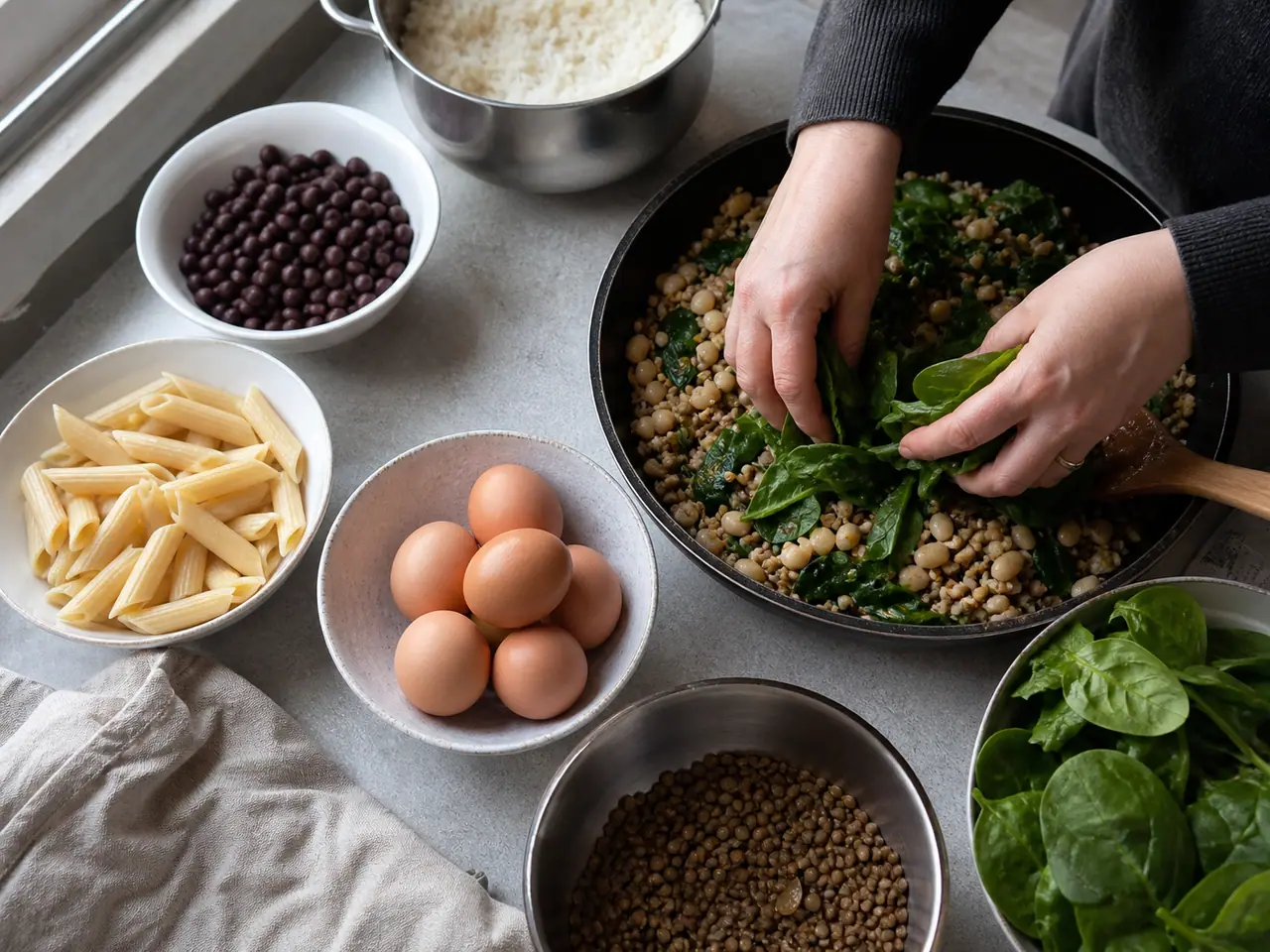
Warm white beans with tomato paste, cumin and a little stock. Stir spinach through at the end and cook until just tender. Finish with lemon and spoon over toast or rice.
Beans give spinach the weight it needs. Keep the pan uncovered so the sauce stays thick, and do not bury the greens under a litre of liquid.
I keep one piece aside so I can compare it with the next batch.
3. Lemony spinach pasta
Cook pasta, brown garlic in oil and add spinach to the skillet. Toss in the drained pasta with splashes of cooking water, lemon zest and cheese or toasted seeds.
Use less water than you think at first. Spinach releases some of its own, and a thin sauce makes the leaves slide away from the noodles.
The clock helps, but the surface gives the better signal.
4. Green rice with chickpeas
Warm cooked rice with chickpeas, onion and spices. Fold in spinach until the leaves collapse, then add herbs, yogurt or a sharp pickle at the table.
Cold rice keeps its shape better than fresh wet rice. Let the grains heat before the spinach arrives so the greens do not spend ten minutes steaming in a covered pan.
That small pause saves more food than a rescue at the end.
5. Quick lentil and spinach soup
Simmer red lentils with onion, carrot and stock until tender. Add spinach for the final few minutes, then blend part of the soup and finish with lemon or olive oil.
This route suits mature or slightly tired spinach because the broth gives the stems time. Add the leaves late enough to keep some colour.
The next step works better when the excess moisture has somewhere to go.
Make the bag work harder
Use the strongest leaves for the egg skillet or rice, and the softer sound leaves for soup or beans. Wash only what you need, dry it and cook the rest while it is still in good condition.
A bag of spinach shrinks dramatically, so add by the handful and judge the cooked pan. The greens should support the base, not turn the whole meal into a watery green paste.
I keep one piece aside so I can compare it with the next batch.
The five ideas are routes, not a demand to buy five separate sets of ingredients. I keep one filling base, one sharp finish and one crisp partner in the kitchen, then change the shape of the spinach. Beans can become a sauce, rice can become a bowl and bread can become a plate. That is how a single shop trip stays flexible without producing five versions of the same dinner.
Use the freshest pieces where the vegetable is visible: a topping, a salad, a toast or a late finish. Send softer sound pieces into soup, beans or a covered skillet where time is useful. I label the leftovers by condition rather than by recipe. The next dinner then starts with a sensible question: what needs heat today, and what can wait?
The finishing ingredient should solve the final gap. Acid wakes up a heavy pan, yogurt cools a browned edge, seeds add a dry crunch and an egg makes a vegetable dinner last. I taste before adding all four. A short ingredient list feels more generous when every part has a clear job and the main spinach still tastes like itself.
For the quality and storage details that sit behind my kitchen observations, I use the UC Davis spinach produce fact sheet alongside the timed test described above.
The practical verdict
Spinach does not need to sit beside dinner as a sad salad. Give it a warm base, a clear finish and only as much heat as the stems need.
My quickest choice is eggs and toast; my best waste-saving choice is lentil soup.
Questions
What can I make with a bag of spinach?
How do I use spinach before it goes bad?
Can spinach be the main vegetable in dinner?
When should spinach go into a recipe?
More guides
All guides →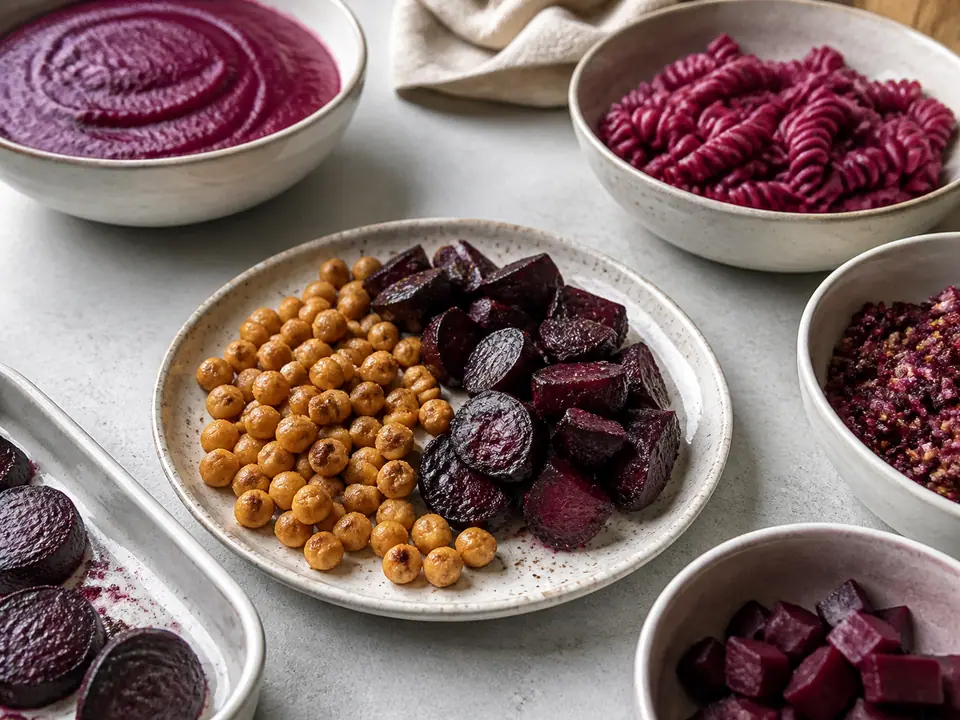
5 beetroot dinners beyond salad
Beetroot can carry dinner in roasted wedges, lentils, soup, pasta or grains. Pair its earthy sweetness with acid, beans, yogurt or a salty finish.
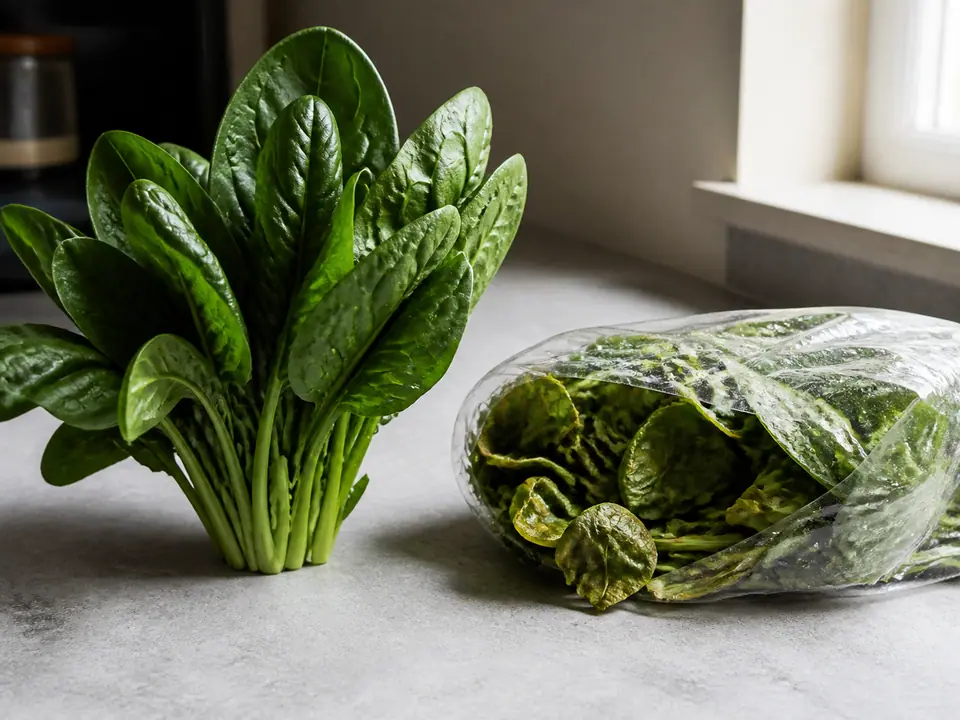
How to choose spinach that is not already tired
Fresh spinach leaves look green and upright, not yellow, collapsed or wet. Check the centre of the bag, where damage and condensation often hide.
Why carrots taste sweeter after roasting
Roasting drives off water and browns the carrot surface, so its natural sweetness becomes more noticeable. The cut and tray space decide how far it goes.