Look for upright green leaves, dry corners and no yellowing in the middle
Fresh spinach leaves look green and upright, not yellow, collapsed or wet. Check the centre of the bag, where damage and condensation often hide.

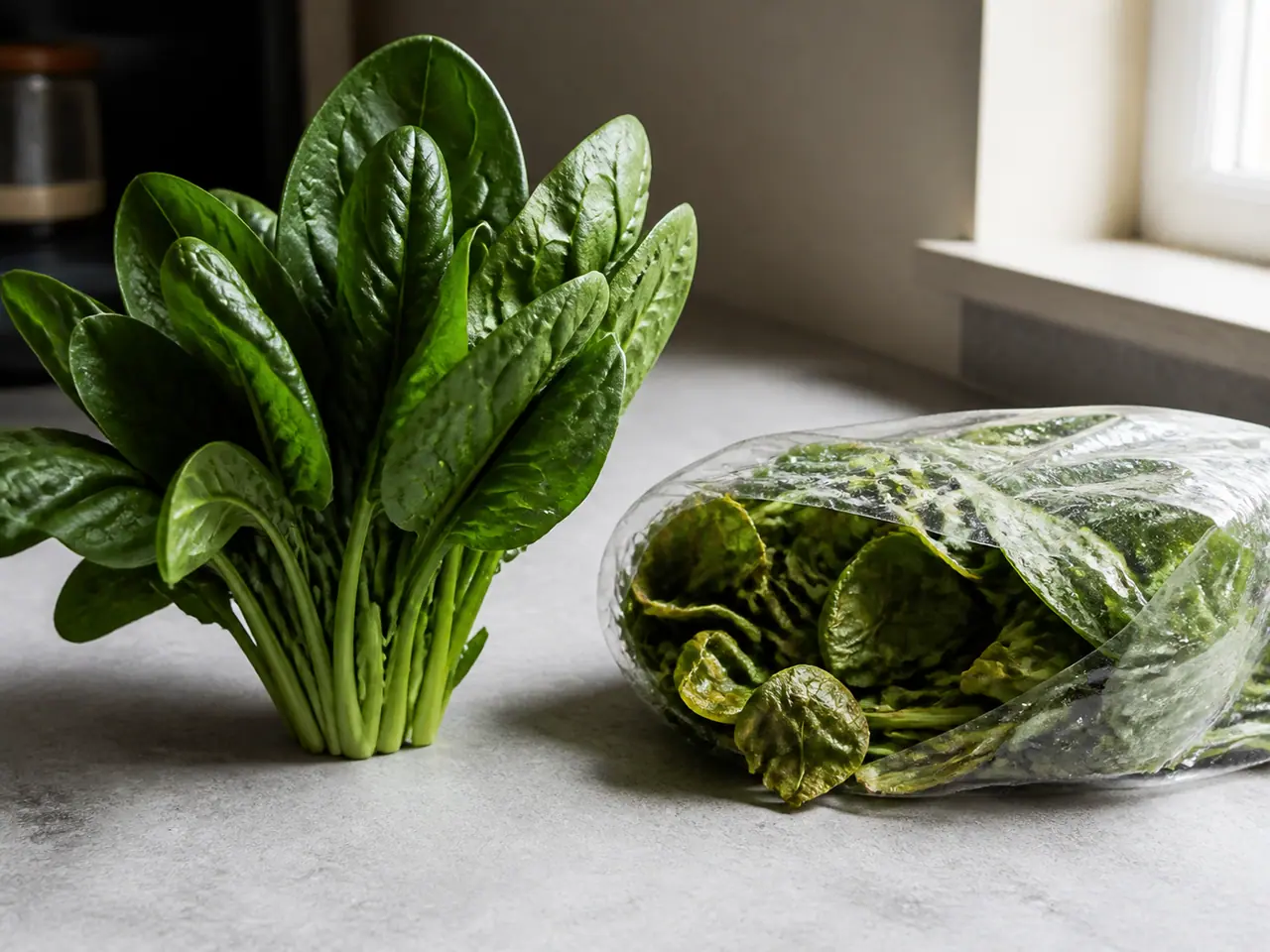
The freshest spinach in the shop is not always the bag with the brightest front leaves. I lift the pack, look at the middle and check whether the leaves stand up or slump into a wet green mat. Yellowing, crushed stems and trapped condensation are the signs that matter.
UC Davis describes good spinach as uniformly green, turgid and free from serious damage. That matches what I see at the counter. A few small marks are manageable; a warm, wet bag full of collapsed leaves is a short clock.
Green should be even
Young or mature spinach can vary in shade, but widespread yellow-green leaves show age or stress. I choose the bag where the colour is broadly even and the leaves still have shape.
One yellow leaf does not condemn the pack. I look at the proportion. If yellowing has reached the centre and the stems are wet, I choose another bag or plan to cook it that day.
Feel for lift and structure
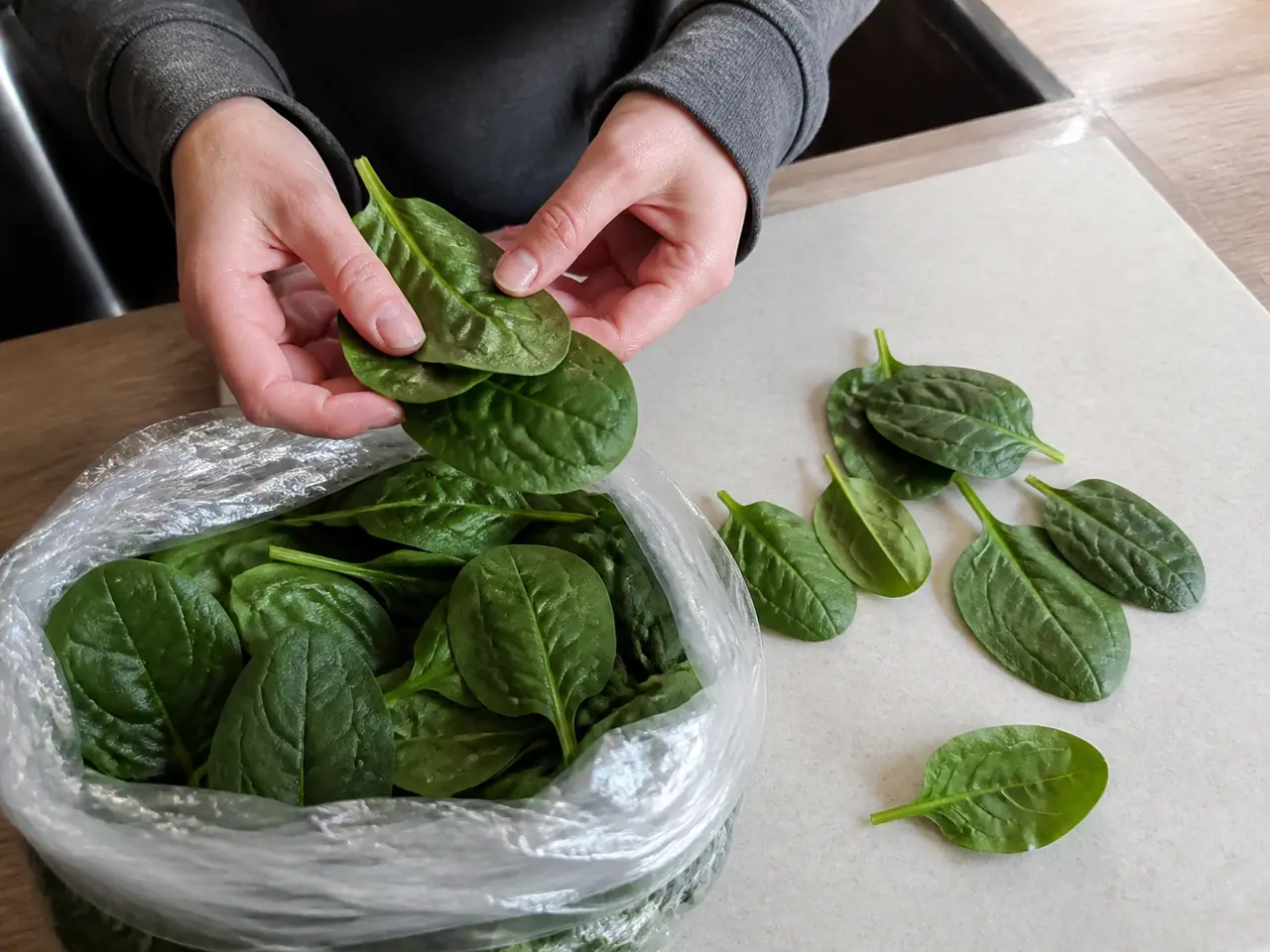
A fresh leaf has a little body when the bag moves. Tired spinach lies flat and clings to the plastic. The difference is obvious when two bags sit side by side.
Do not squeeze hard. Crushed petioles bruise quickly, and a bag that has been handled roughly may decay even if the leaves still look green.
I keep one piece aside so I can compare it with the next batch.
Check the hidden middle
Turn the bag over and inspect the bottom. Condensation, dark stems and compressed leaves often collect there. The front display can hide exactly what will fail first.
If the bag is opaque or fogged, I pick one with clearer packaging. Visibility is part of the value; I want to see the food I am buying.
The clock helps, but the surface gives the better signal.
Bunched spinach needs a stem check
For bunches, look at the cut roots and lower stems. They should not be slimy or crushed, and the leaves should not be yellow at the base.
A little soil is expected on a root bunch. Wash it at home, dry it well and use it sooner than a clean loose-leaf bag.
That small pause saves more food than a rescue at the end.
Buy by the dinner clock
If I am cooking tonight, a tender bag with a few tired edges can still work after sorting. If the spinach needs to wait, I choose the driest, most upright pack available.
Do not buy a large bag because it is cheaper if the meal is not planned. Spinach is highly perishable, so the bargain can become waste before the next shop.
The next step works better when the excess moisture has somewhere to go.
Make one quick test at home
Open the bag and smell it. Fresh spinach smells green and mild. A sour smell, slimy leaf or wet decay means the pack has crossed my discard line.
Remove one tired leaf immediately so it does not sit against the rest. Then use the strongest leaves raw or lightly wilted and cook the softer ones first.
I keep one piece aside so I can compare it with the next batch.
I take the shopping clue home and check it against the cut surface. The knife should confirm the hand test: firm flesh, a clean smell and no wet pocket hiding inside. If the first piece is sound but not as crisp as I wanted, I change the recipe to suit it. A chopped salad can become a cooked side; a neat sandwich filling can become soup or a pan sauce.
The best value is not always the lowest price per bag. I divide the price by the part I will actually use and by the number of meals the ingredient can carry. A smaller dry pack that gets cooked in time beats a large discounted pack that loses half its weight to slime or trimming. That calculation is especially useful for delicate spinach.
At the counter I avoid making a quality judgement from one dramatic specimen. I compare two or three pieces in the same display and look for the shared pattern: even colour, firm structure, clean ends and no trapped liquid. Once home, I keep the strongest pieces for the dish where texture matters and send the less handsome but sound pieces to a longer cook.
For the quality and storage details that sit behind my kitchen observations, I use the UC Davis spinach produce fact sheet alongside the timed test described above.
The practical verdict
Choose spinach that is green, upright and dry, with no broad yellowing or crushed wet stems. The centre of the pack tells the truth.
Plan to cook it soon. Spinach quality falls quickly once the leaves lose their structure.
Questions
How can I tell if spinach is fresh?
Should spinach bags have condensation?
Can I cook yellow spinach?
Is bunch spinach fresher than bagged spinach?
More guides
All guides →
How to choose carrots that are crisp, not rubbery
Firm carrots with a fresh stem end and smooth, unbroken skin are more likely to stay crisp. Rubberiness means water has already left the root.
5 dinners that use spinach without a sad salad
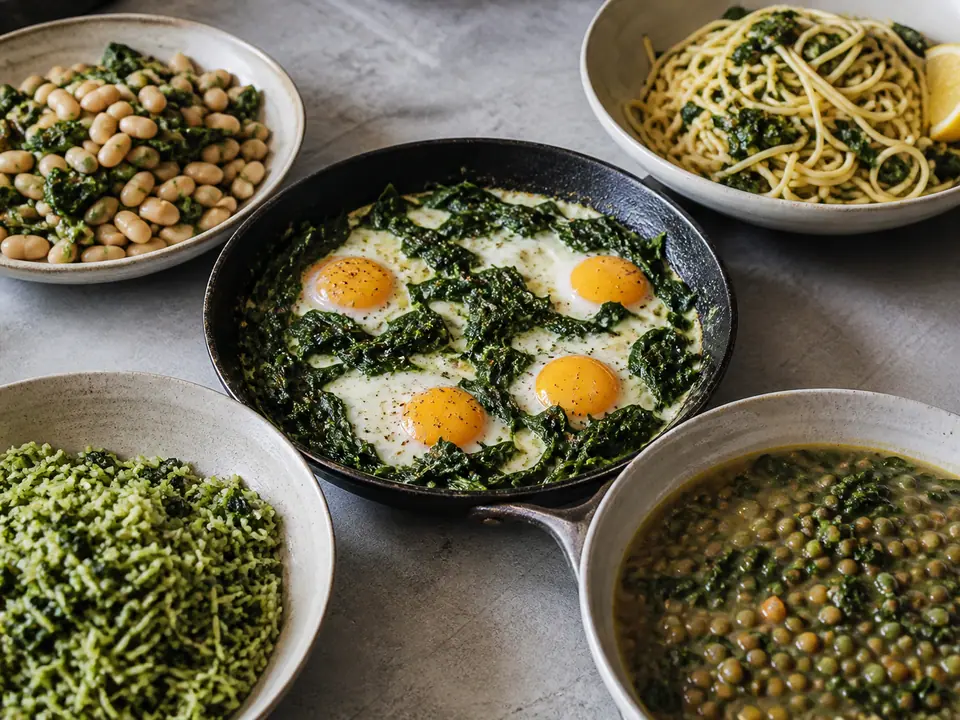
Spinach can make dinner greener without becoming a wilted salad. Cook it with eggs, beans, pasta, rice or lentils and add it at the right moment.

Cauliflower vs broccoli: which roasts better?
Cauliflower gives a more even roast and creamy centre. Broccoli browns faster and has better crisp tips, so the winner depends on the texture you want.