One cauliflower, five textures, no sad white side dish
Cauliflower becomes dinner when you give it a browned surface, a filling partner and a finish with contrast. Here are five routes from one head.

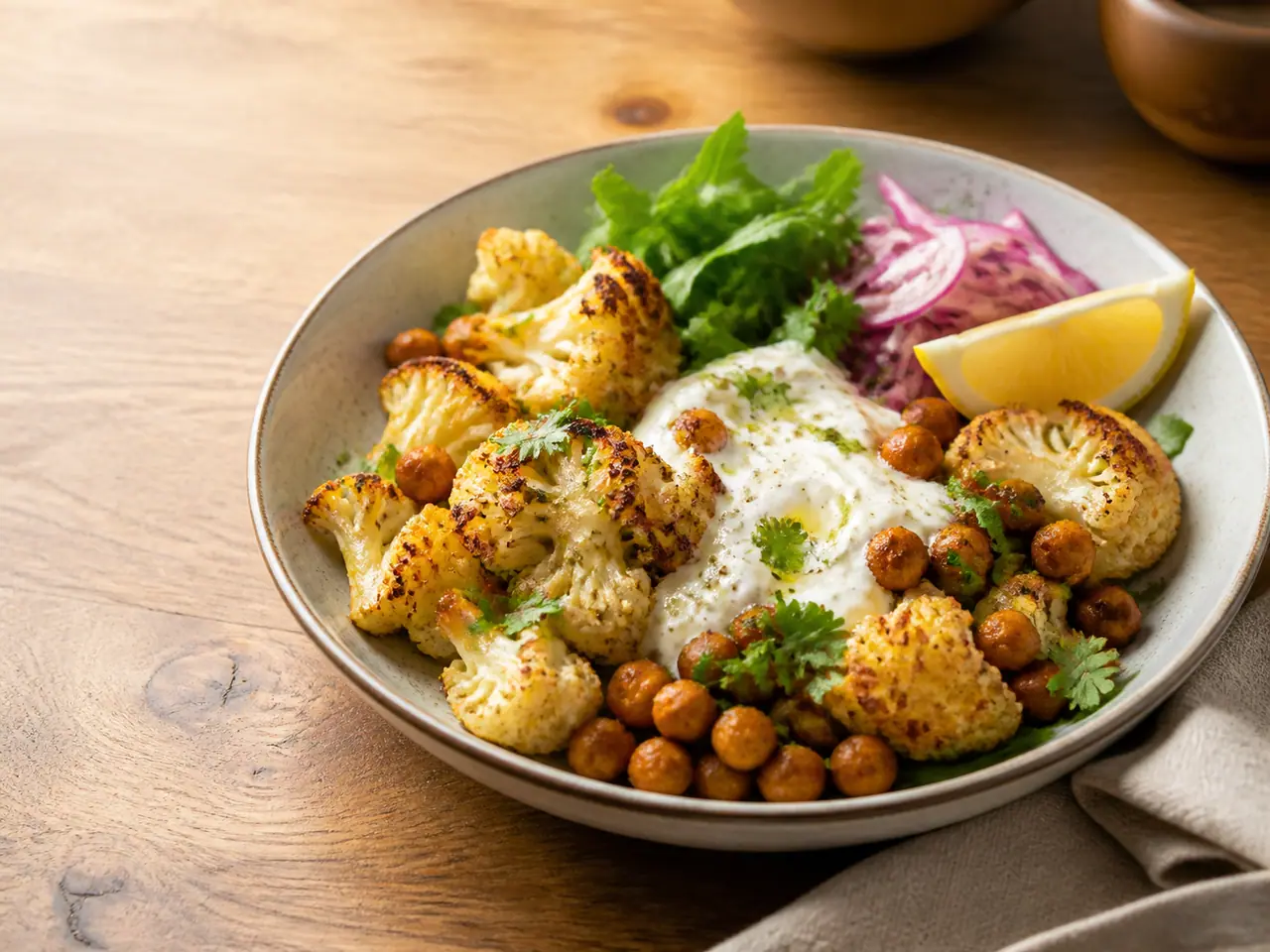
Cauliflower becomes a disappointing dinner when it is boiled until soft and left to carry the whole plate alone. Give it a hot surface, a sauce or a filling partner and the same head becomes five different meals. I use the curd, stalk and leaves, changing the cut so each part gets the texture it can actually deliver.
Start with the roast if the cauliflower is fresh and dense. Choose the curry or bean bowl when the head is a little past its crispest. Use the leaves whenever they are green and firm. None of these routes needs a complicated shopping list, and each has a clear rescue if the pan starts going wrong.
I plan cauliflower from the outside in. The freshest curd gets the hot tray because it can hold a browned edge. The stalk goes wherever a little extra chew helps. Leaves that are still green become the crisp part of dinner. This order makes one head feel larger without padding the plate with rice or bread. It also gives every piece a purpose, which is the difference between a leftover vegetable and a meal you meant to cook.
1. Roast cauliflower with chickpeas and yogurt
Cut a cauliflower into 4 cm florets and slice the stalk into coins. Dry everything, toss with oil, cumin and paprika, then roast at 220°C fan for 25 to 30 minutes. Add drained chickpeas for the last twelve minutes. Spoon yogurt over the hot tray and finish with lemon and chilli. The florets should be brown underneath and tender at the stem.
The failure mode is a crowded tray. Cauliflower releases water, and chickpeas cannot crisp in a puddle. Use two trays if the pieces are touching. I make the yogurt sharp with lemon so the creamy finish does not flatten the browned edges.
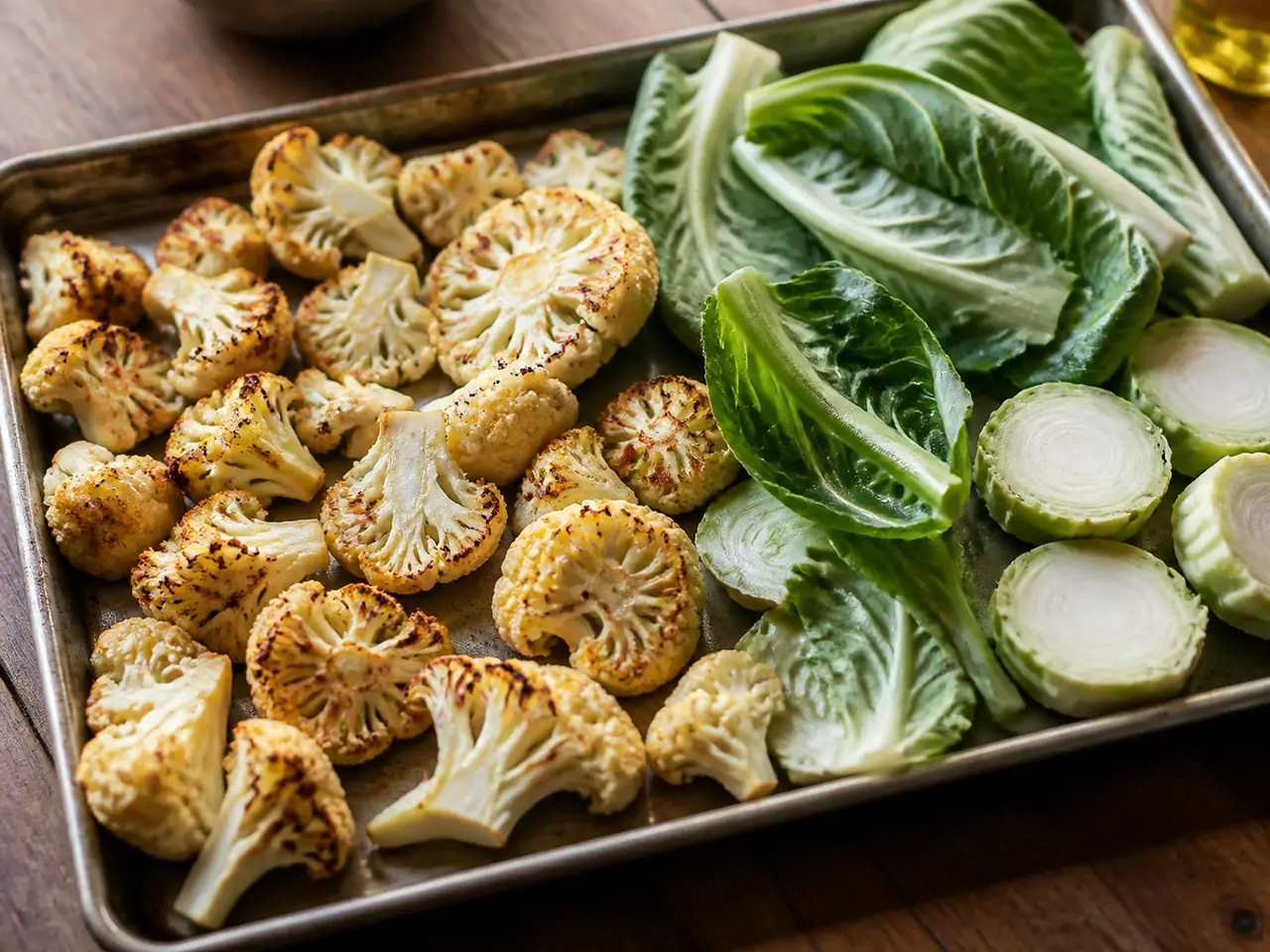
The stalk is my quiet test of whether the meal is using the head well. Peel the tough outside and the inside is crisp, mild and good for roasting or frying. The leaves give a thinner, darker bite. The curd carries the sauce. When all three parts appear on the plate in different forms, one cauliflower feeds more generously and the dinner has more going on than a bowl of soft florets. I take the photograph as a reminder of the texture I am after, not as a decoration. The surface should show what the written method asks for: a dry cut, a browned fold, a firm curd or a leaf that has kept its shape. If the frame looks wet and crowded, I know the pan would have the same problem. If it looks pale but compact, I know the food may be ready for a different job. That is why I keep the vegetable visible while I cook. The cauliflower should make sense before any garnish arrives.
2. Coconut cauliflower curry with greens
Brown cauliflower florets in a wide pan first, then remove them while you cook onion, garlic and curry spices. Add coconut milk and return the florets with a handful of greens. Simmer uncovered until the sauce coats the cauliflower. The browned curd gives the curry more depth than adding raw florets directly to the liquid.
I use smaller pieces here than for roasting because they need to finish in the sauce. Keep the lid off once the cauliflower is tender. A covered curry becomes thin and the florets lose their edges. Serve with rice or flatbread, and use a squeeze of lime at the end.
The meal works because the cauliflower is allowed to have more than one texture. Roast pieces should resist at the centre. Curry pieces should soften into the sauce. Rice should stay separate. Leaves should crisp. I do not cook all the parts in one pot and hope the finish sorts itself out. I cut first, assign each part a job and add moisture only where the dish needs it.
3. White bean and cauliflower skillet
Cook sliced onion in olive oil, add tomato paste and let it darken slightly, then add cauliflower, white beans and stock. Cover for five minutes to soften the thick stems, uncover and cook until the liquid is almost gone. The beans thicken the pan while the cauliflower keeps enough shape to feel like a vegetable, not puree.
This is my best use for a head with a few dry tips. I trim the grey edge and cut the firm centre into smaller pieces. The skillet forgives uneven beauty, but it does not forgive too much stock. Add enough to steam the core, then let the pan reduce.
4. Cauliflower rice with egg and crunchy toppings
Pulse florets in short bursts until they look like coarse rice. Dry the pieces if they feel wet, then cook them in a hot wide pan with oil for five to seven minutes. Add beaten egg or leftover chicken, then finish with toasted seeds, herbs and a sharp sauce. The point is a dry, separate texture, not steamed cauliflower mush.
Do not fill the blender or food processor to the top. Work in small batches so the florets break into pieces instead of turning into paste. I cook the stalk separately, diced small, because it gives the pan a good chew and stops waste.
5. Crisp cauliflower leaves and cheese toast
Slice fresh cauliflower leaves into ribbons and roast them with the small florets that fall from the head. Put the crisp pieces over toast with white beans, grated cheese or a fried egg. The leaves become thin and crunchy at the edges, while the thicker ribs stay tender. A drizzle of lemon keeps the toast from feeling rich.
This dinner is useful at the end of the week because the leaves often look tired before the curd does. Remove yellow or wet sections and use the green firm parts. I do not boil them first. Dry heat is what gives the leaves a reason to be on the plate.
Pick the route by the cauliflower
| Your cauliflower is | Use it for | Why |
|---|---|---|
| Dense and fresh | Roast with chickpeas | Curd holds and browns well |
| A little dry at the tips | Bean skillet | Sauce carries the trim |
| Small florets and stalk | Cauliflower rice | Fine cuts cook quickly |
| Fresh green leaves | Crisp leaf toast | Leaves add texture |
| You want leftovers | Coconut curry | Sauce reheats without drying |
Source: Maren Ashby kitchen test, 2026-08-28
A good cauliflower does not have to be perfect for every job. The firm centre is best for roasting; the trimmed pieces can go into curry or a skillet. If the head smells strong before cooking or feels slimy, it is not a recipe problem. Choose another vegetable or discard the affected part.
How to make one head feed more than two
Use the stalk instead of discarding it. Peel the tough outside and slice the tender centre. Roast the leaves if they are fresh. Save the small crumbs for cauliflower rice or soup. The head looks modest on the cutting board, but the edible parts add up when you change the cut rather than treating every piece as a floret.
I plan the week backwards. Freshest pieces become roast wedges. Midweek pieces go into curry or beans. Leaves and trims finish as rice or toast. That order keeps the best texture for the meal that needs it and turns the less perfect pieces into something deliberate.
My favourite starting point
Roast cauliflower with chickpeas and yogurt is the best first dinner because it shows what the vegetable can do. It is browned, filling and easy to adjust. If the tray gives you pale, soft pieces, do not add more sauce immediately. Spread them out, turn up the heat and let the surface dry. A little patience changes the dish more than another topping.
My verdict
Cauliflower becomes dinner when the method gives it a job. Roast it for a browned centre, curry it for leftovers, fold it through beans for a pantry meal, fry it as rice for speed, or crisp the leaves over toast to use the whole head. The vegetable is not boring. A pot of water is only one way of treating it.
Questions
What can I make with one cauliflower for dinner?
How do I make cauliflower filling?
Can I use cauliflower leaves?
Why is my cauliflower dinner watery?
More guides
All guides →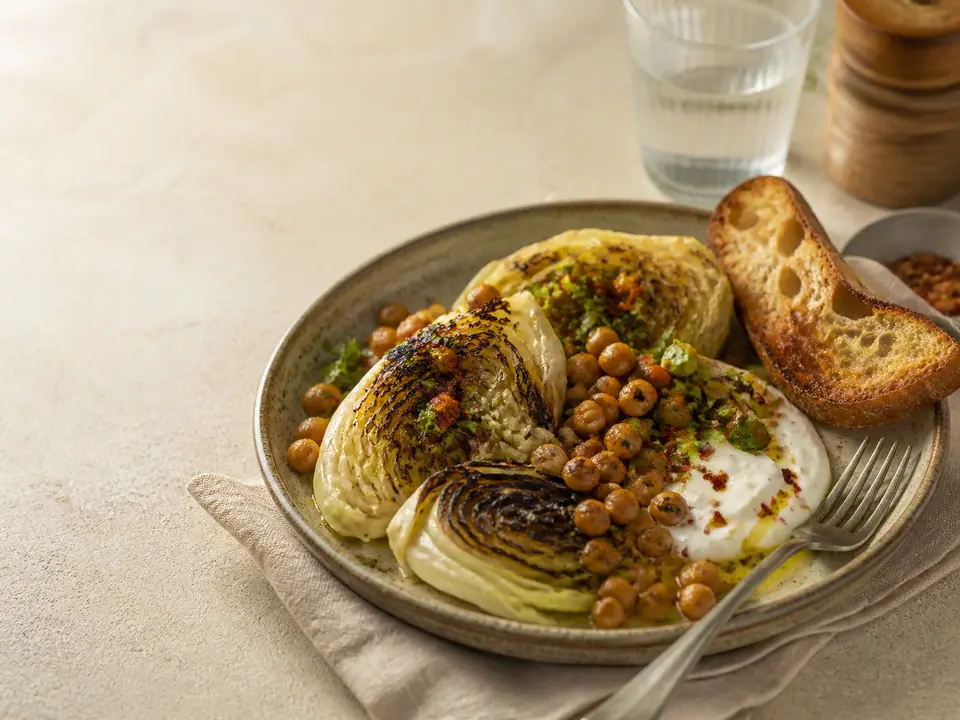
5 cabbage dinners that are not boiled cabbage
A cabbage head can become a roast wedge, a noodle-like skillet, a bean dinner, a chicken tray and a crisp topping without a pot of boiling water.
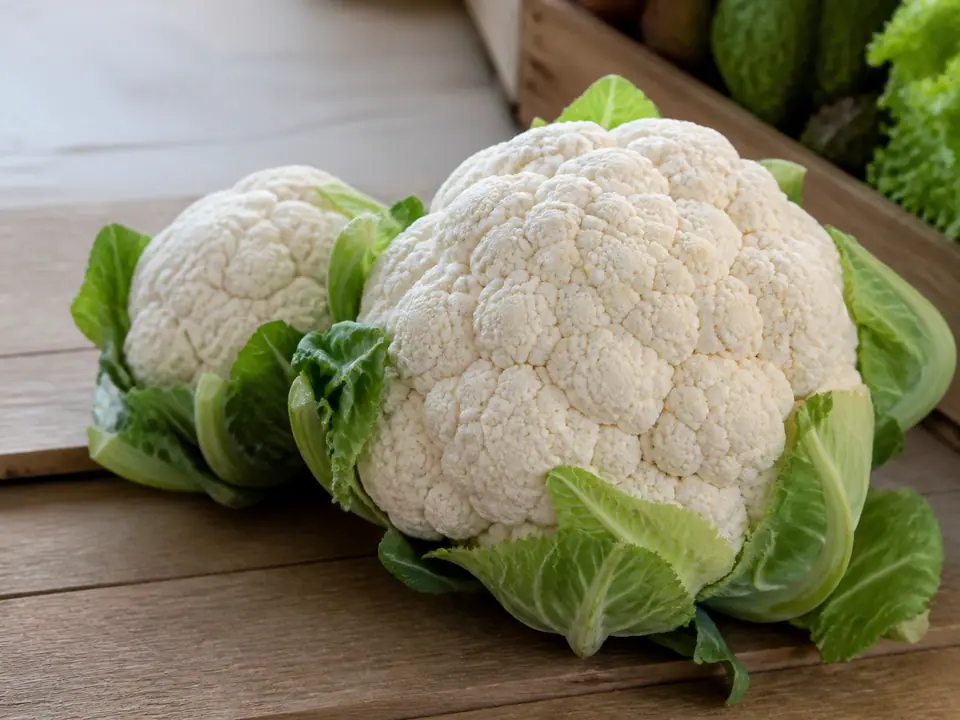
How to choose a dense cauliflower with fresh leaves
A good cauliflower feels heavy for its size, has a tight white curd and fresh leaves around a dry base. The leaves are the quickest freshness clue.
Why courgettes turn watery in a pan
A watery courgette pan is usually a heat and spacing problem, not a bad vegetable. Dry the cut surface, use a wide pan and wait before turning.