Fine beans cook fastest; runner beans need a little more attention
Fine beans are the easier choice for quick, even cooking. Runner beans have more character and a broader texture, but their width means you need to cut and test them carefully.

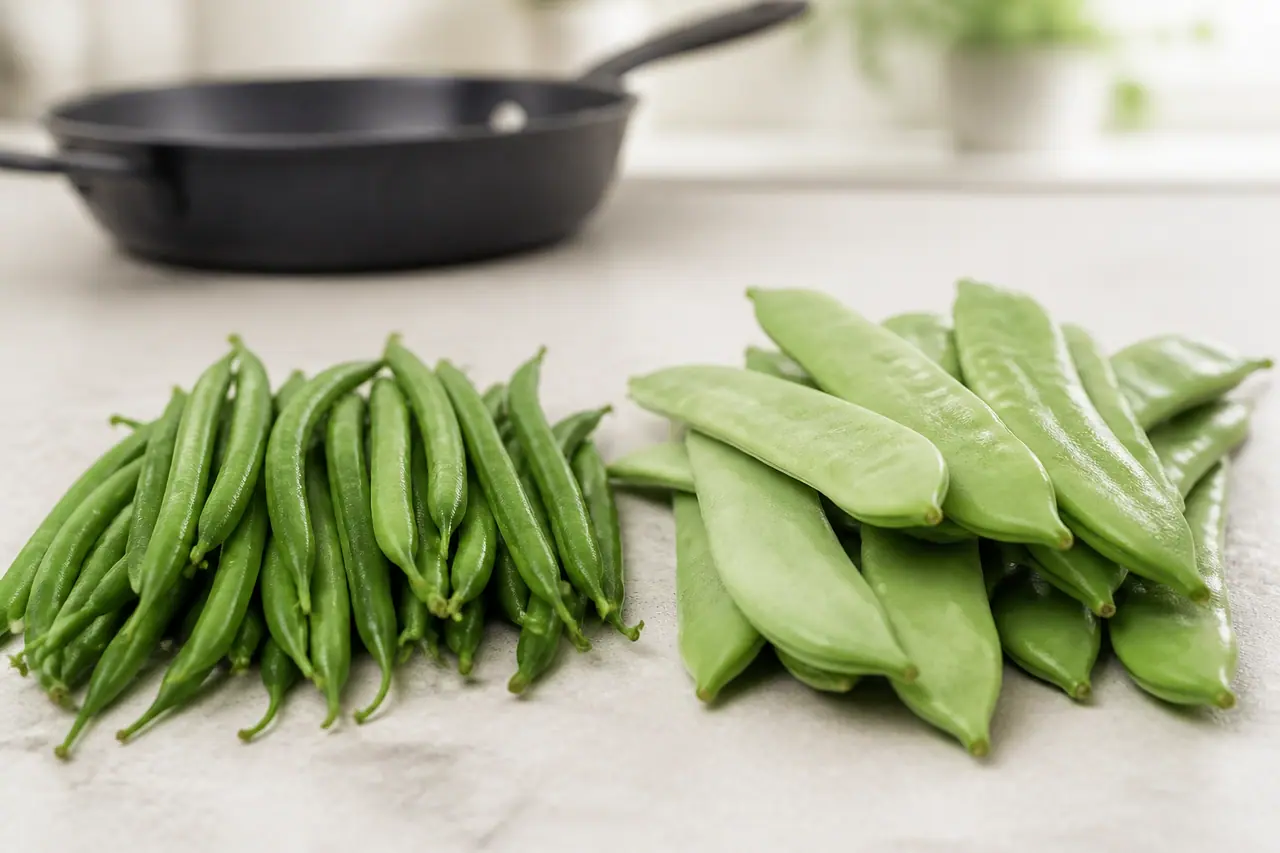
Fine beans are the calm option. They are slender, close in size and ready for a hot pan after a short trim. Runner beans are broader, flatter and more variable: one section can be tender while the thick edge of the next still has a little resistance. If I need a neat salad or a quick side, I buy fine beans. If I want a bean with more presence and a generous cut surface, I buy runners and give them a little more care.
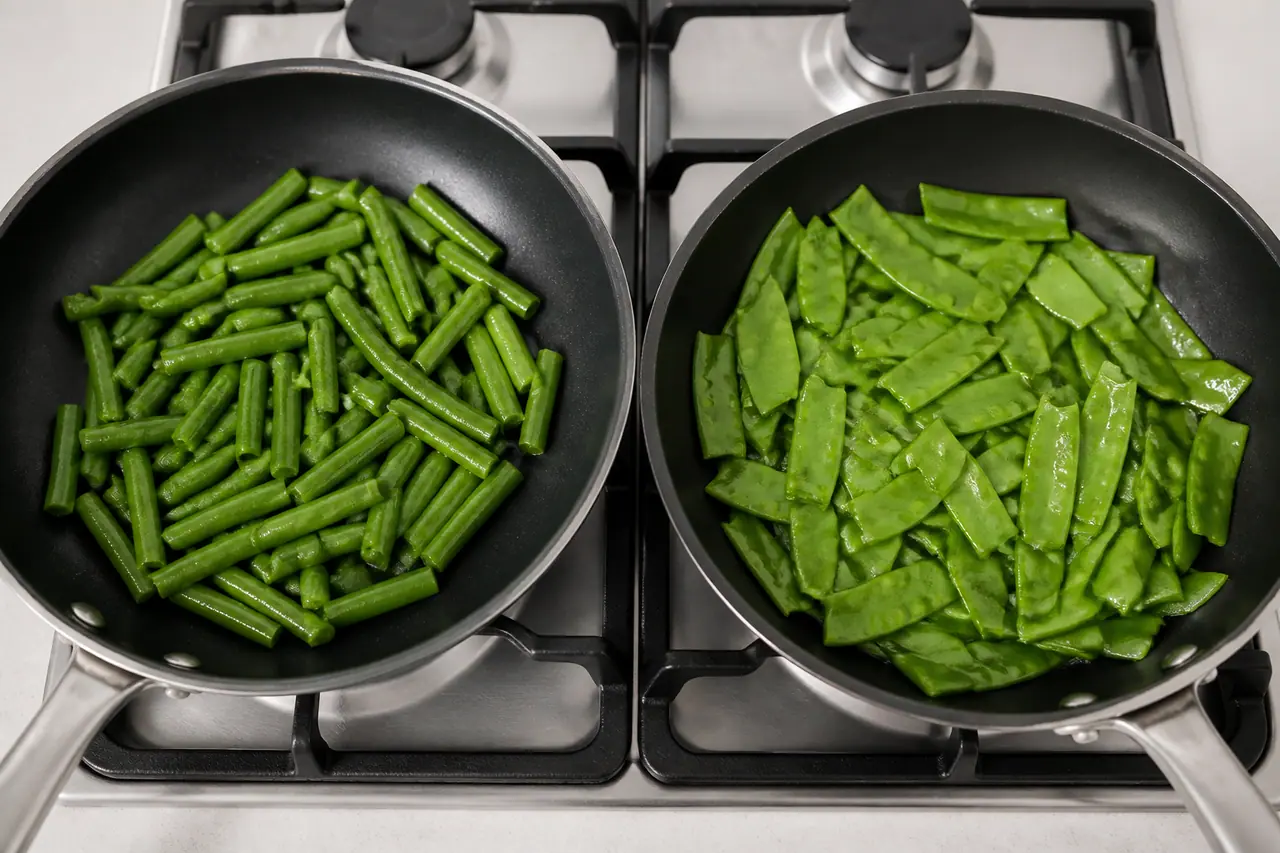
That is the useful verdict. Fine beans cook more evenly because their pods are narrow and usually similar in thickness. Runner beans can be just as good, but they need to be sliced on an angle, checked by texture and not dumped into the pan as one large handful. I cooked both in boiling water, then finished them in oil, and the fine beans reached crisp-tender at the same moment. The runners gave me more variation, but also a meatier bite.
Which bean is easier to cook evenly?
Same pan, same boil, trimmed and tested at the point of tenderness.
Fine beans
Quick and consistent
✓ More even cooking
Runner beans
Broad and more variable
Fine beans win for even cooking. Runner beans win when you want a wider, more substantial bite and are willing to cut them carefully.
Source: Maren Ashby's kitchen test, 2026-08-26
Fine beans are forgiving because the pod is narrow
Fine beans, often sold as haricots verts, have a thin pod and small seeds. Their narrow shape gives heat less distance to travel, so the outside and centre become tender at nearly the same time. That makes them useful for quick sautés, salads and trays where you want every piece to have the same bite.
The UC Davis snap bean guide describes a good bean as bright, tender but firm and easy to snap. That test applies well to both types, but the fine bean usually reaches it with less slicing and less guesswork.
Runner beans need a better cut
Runner beans are easy to make tough if you leave them whole or cut them into thick coins. Remove the ends, pull away any string if the variety has one and slice the pods diagonally into strips. The thinner pieces expose more surface to heat and make the width less of a problem. I prefer long diagonal cuts because they keep the bean recognisable while reducing the distance from the pan to the centre.
They also reward a two-stage cook. Boil or steam until just tender, drain well, then finish in a hot pan with oil, garlic or lemon. If you cook them from raw in a crowded skillet, the outside can char before the inside softens. Fine beans can tolerate that treatment more easily; runners need room and a little steam.
Choose by the dish, not by the name
- For a composed salad: fine beans give a tidy, uniform bite and look good left whole or cut into short lengths.
- For a warm side with sauce: runner beans hold a broader surface for butter, tomato, yogurt or a sharp vinaigrette.
- For roasting: either works, but cut runners thinner and keep fine beans in one layer so they blister rather than steam.
- For a mixed vegetable pan: fine beans are easier to coordinate with other quick-cooking vegetables; add runners earlier or blanch them first.
The fair timing test
To compare beans properly, I trim both, cut the runners into diagonal strips and cook each type in plenty of boiling water. I start tasting after three minutes, then every minute. The target is not soft. It is a pod that bends, gives a little at the centre and still has a clean snap when bitten.
Fine beans normally reach that point first. Runner beans can catch up if sliced thinly, but the thickest pieces set the pace. This is why a recipe that says “cook until tender” is more helpful than a rigid time: the market bundle is not a machine-made set of identical pods.
The verdict
Fine beans are the dependable choice when even cooking is the question. Runner beans are not difficult; they are simply broader and less uniform, so the cut and the pan matter more. Pick fine beans for a quick green side, runners for a more substantial bite, and let the bean's width decide how much time you give it.
Questions
Are fine beans the same as green beans?
Do runner beans need to be peeled?
Which beans are better for a salad?
Can I cook fine beans and runner beans together?
More guides
All guides →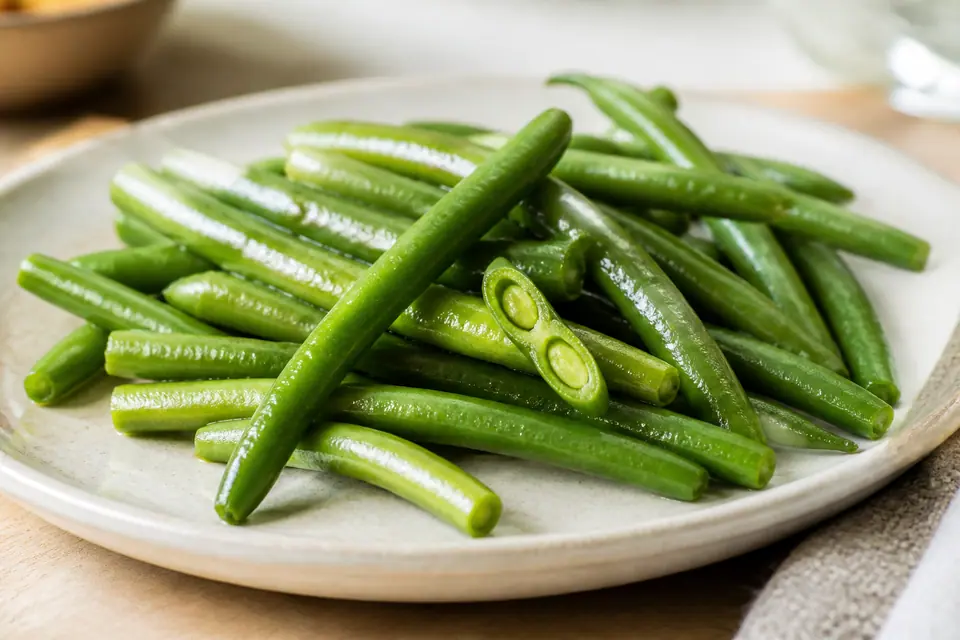
Why green beans go squeaky when they are undercooked
That squeaky bite means the bean is still too firm for the dish. Give it more heat and moisture, then stop as soon as the pod bends and the centre loses its raw resistance.

How to choose carrots that are crisp, not rubbery
Firm carrots with a fresh stem end and smooth, unbroken skin are more likely to stay crisp. Rubberiness means water has already left the root.
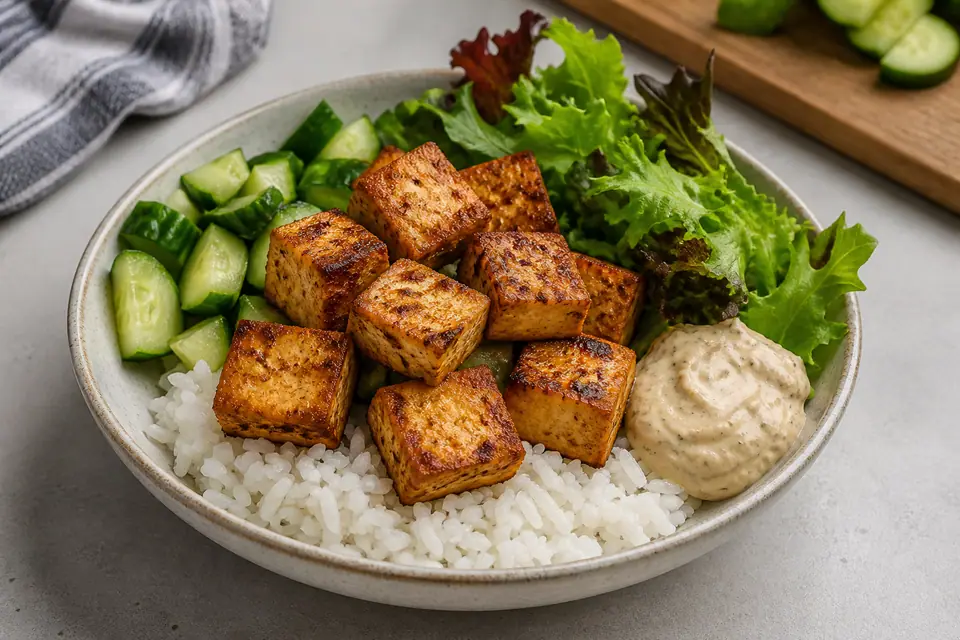
How to build a filling tofu bowl
Build the bowl around crisp tofu, then add a base, a fresh vegetable and one strong sauce. Texture and portion balance make simple ingredients feel complete.