A fresh cap tells you more than a glossy skin
A young aubergine feels dense, has taut skin and a green cap that has not dried out. These checks matter more than choosing the darkest colour.

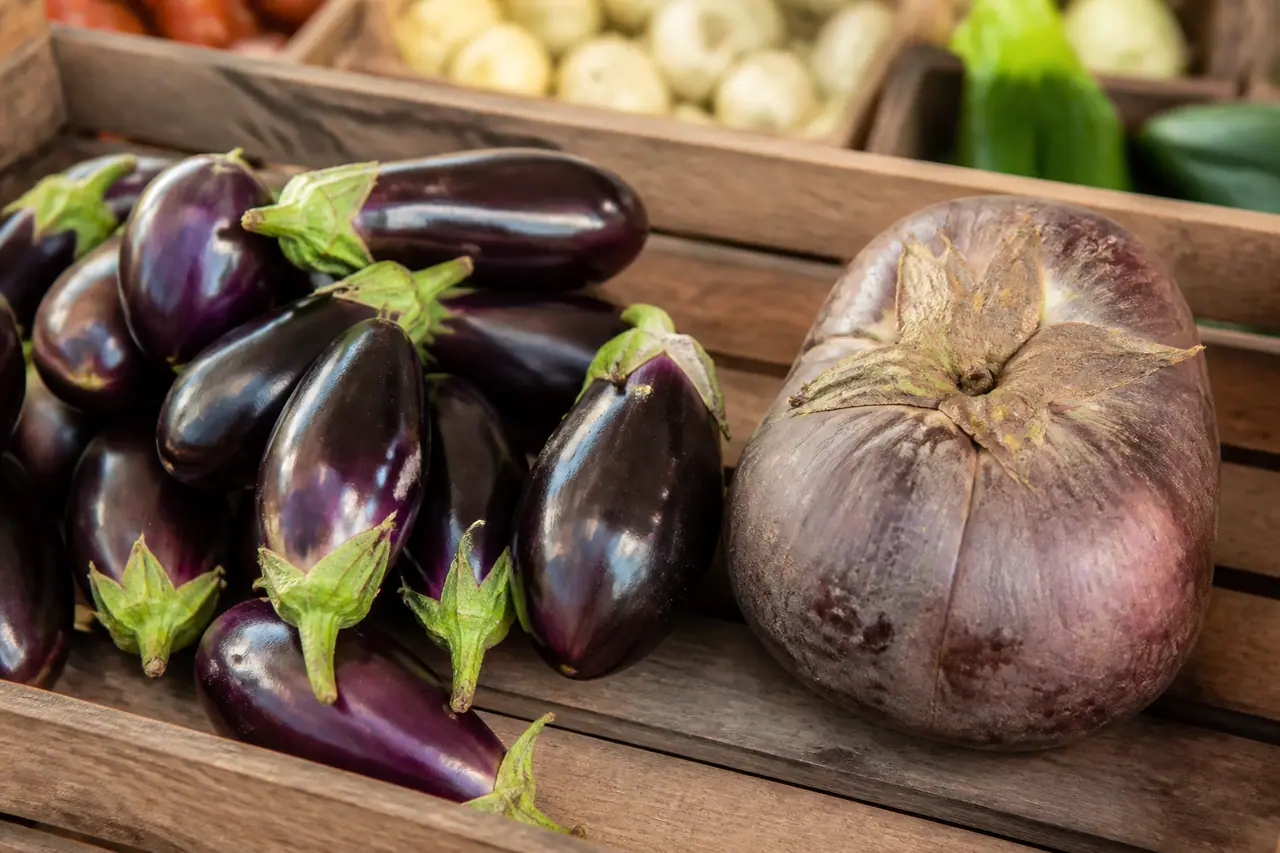
The aubergine I want is dense, springy and still attached to a green cap. Gloss alone is not enough. I have brought home beautiful purple fruit that felt hollow and cooked into a mass of large seeds, while a smaller matte one with a few scuffs became silky in the oven. In a simple shop test, the best clue was weight for size followed by the cap, not the shine of the skin.
Young aubergine cooks well because the flesh is compact and the seed structure is fine. You do not need to identify the exact variety. Lift it, press it gently and look at the top. The checks take ten seconds, and they stop you paying for a large vegetable that will lose a third of itself to trimming.
The three checks at the crate
First, lift the aubergine. It should feel heavy for its size, with no hollow rattle or strangely light middle.
Second, press the skin with one finger. It should give slightly and spring back. A permanent dent means bruising, ageing or both. Third, inspect the cap. Fresh green leaves and a firm stem suggest it was harvested recently; dry brown edges suggest it has been waiting.
I do not reject a small scratch or a faded patch of colour.
Aubergines rub against crates, and cosmetic marks do not always reach the flesh. I reject wet spots, deep cuts and skin that feels loose. The damaged area lets moisture in and turns soft faster than the rest of the fruit.
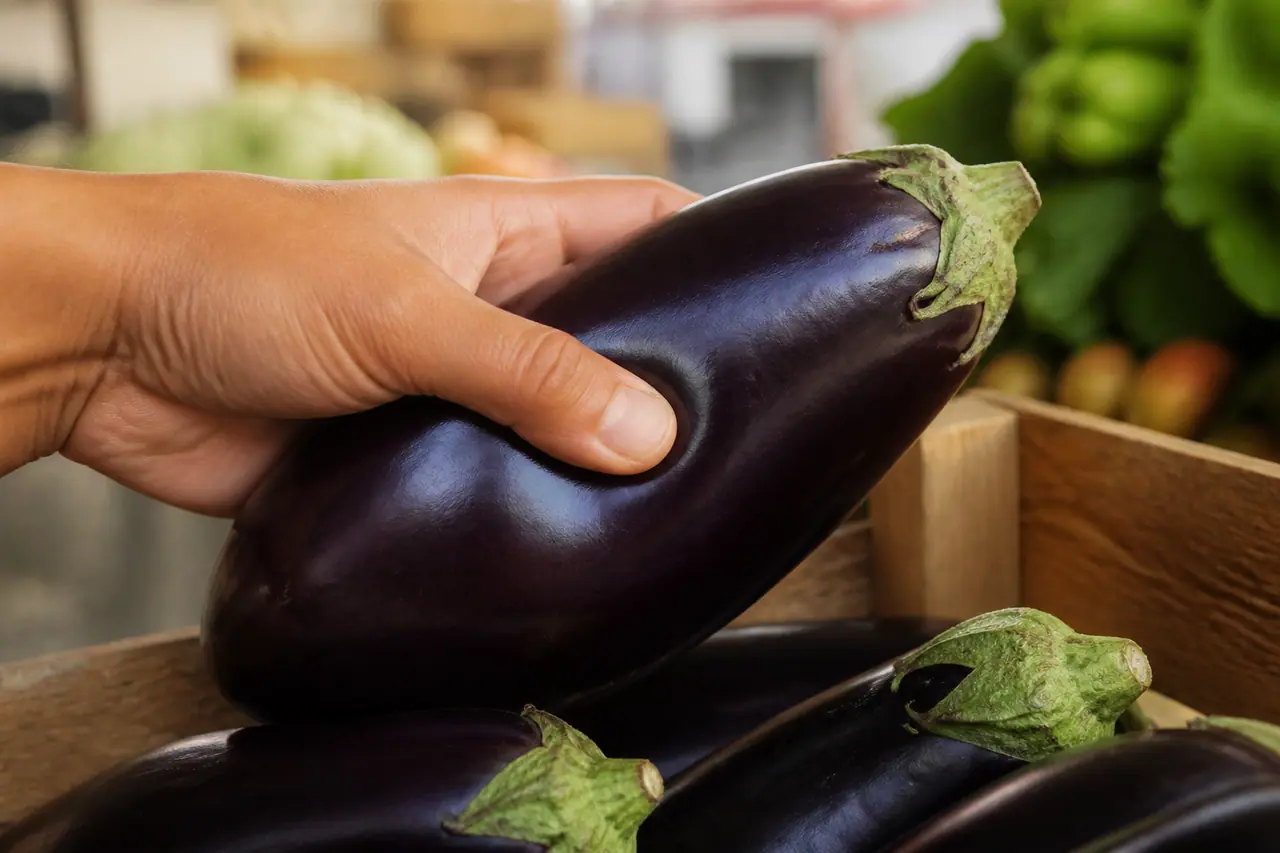
Size is a clue, not a rule
A young aubergine usually has a tight relationship between the skin and the flesh. When I cut one open, the centre looks compact rather than cottony, and the knife meets steady resistance instead of sliding through a loose sponge. I do not expect every seed to be invisible. I want the inner flesh to look moist and pale, with no broad brown channels. That small inspection changes the recipe before the oven is involved.
Small and medium aubergines often have finer seeds, but a large young fruit can still roast beautifully.
I choose a size that suits the dinner. For a split-and-stuff preparation, I want a broad globe with enough flesh to hold a topping. For slices, wedges or a quick pan, I prefer a slimmer fruit that feels dense.
The problem is oversized fruit that has been left to mature too long.
It may feel heavy because it contains water, but the centre can be spongy. If the cap is dry and the skin has lost its tension, the extra grams are not useful. A smaller fruit with a fresh cap gives you more usable flesh per minute of cooking.
| Look at | Young and useful | Older or damaged |
|---|---|---|
| Weight | Dense for its size | Light or hollow feeling |
| Skin | Taut and springy | Loose, wrinkled or dented |
| Cap | Green and fresh | Brown, dry or collapsing |
| Ends | Dry and firm | Wet or sunken |
| Colour | Alive, any variety | Dull with soft patches |
Source: Maren Ashby market test, 2026
What seeds tell you in the kitchen
Fine pale seeds are not a problem. They soften as the aubergine cooks and disappear into a stew or puree.
Large brown seeds can add a firmer, sometimes bitter texture, particularly in a quick roast where the centre has not had time to collapse. I do not scoop every seed from a good fruit; I trim only a loose, dark or watery core.
If you cut into an aubergine and find a broad spongy channel, change the plan.
Slice around it for a tray, or use the flesh in a sauce. Trying to roast thick pieces from that centre can leave you with greasy edges and a coarse middle. A small adjustment on the board is cheaper than adding oil and time to rescue the pan.
The cap and the stem are worth the look
The green cap is the part people skip because the purple skin is prettier.
It gives me the fastest freshness clue. I want leaves that sit close to the fruit and a stem that is not shrivelled. A dry cap does not prove the flesh is bad, but it lowers my confidence enough that I choose another if the basket offers one.
Do not pull the cap off in the shop.
A gentle look is enough. At home, store aubergines dry and use them soon. They dislike long cold storage, and the good texture you selected at the market will not improve while it waits.
My buying verdict
Choose an aubergine that feels heavy but not hollow, has taut skin, a green cap and no wet damage.
Small or medium is usually the safest size for a quick roast, while a broad globe earns its place when you need a filling vessel. Freshness beats variety every time.
Storage after the shop
Use aubergines within a few days when you can.
Keep them dry and out of direct sunlight, but do not leave them forgotten in the coldest part of the fridge for a week. Their texture is best when the cap is still fresh and the skin has not started to loosen.
If dinner moves, change the plan rather than forcing the fruit to wait. A young aubergine can become a stew tomorrow, but it cannot become younger in the drawer.
Questions
How can I tell if an aubergine is young?
Should an aubergine be hard or soft?
Are aubergine seeds safe to eat?
Which size aubergine is best?
More guides
All guides →
How to choose a cabbage that will stay crisp
A crisp cabbage feels dense, has tightly packed leaves and a dry cut base. The shop test takes less time than rescuing a wilted half later.

5 dinners for a bag of carrots
Roast carrots with beans, blend them into lentil soup, fry them with rice, fold them through pasta or build a spiced traybake around them.
Why cauliflower can smell strong when it is overcooked
Cauliflower contains sulfur compounds that become more noticeable with prolonged wet cooking. Shorter, hotter cooking keeps the smell quieter and the texture firmer.