Look for tomato on the back, not promises on the front
Passata varies from thick puree to pourable tomato water. Check the ingredient list, packaging and texture clues before you pay more for a carton.

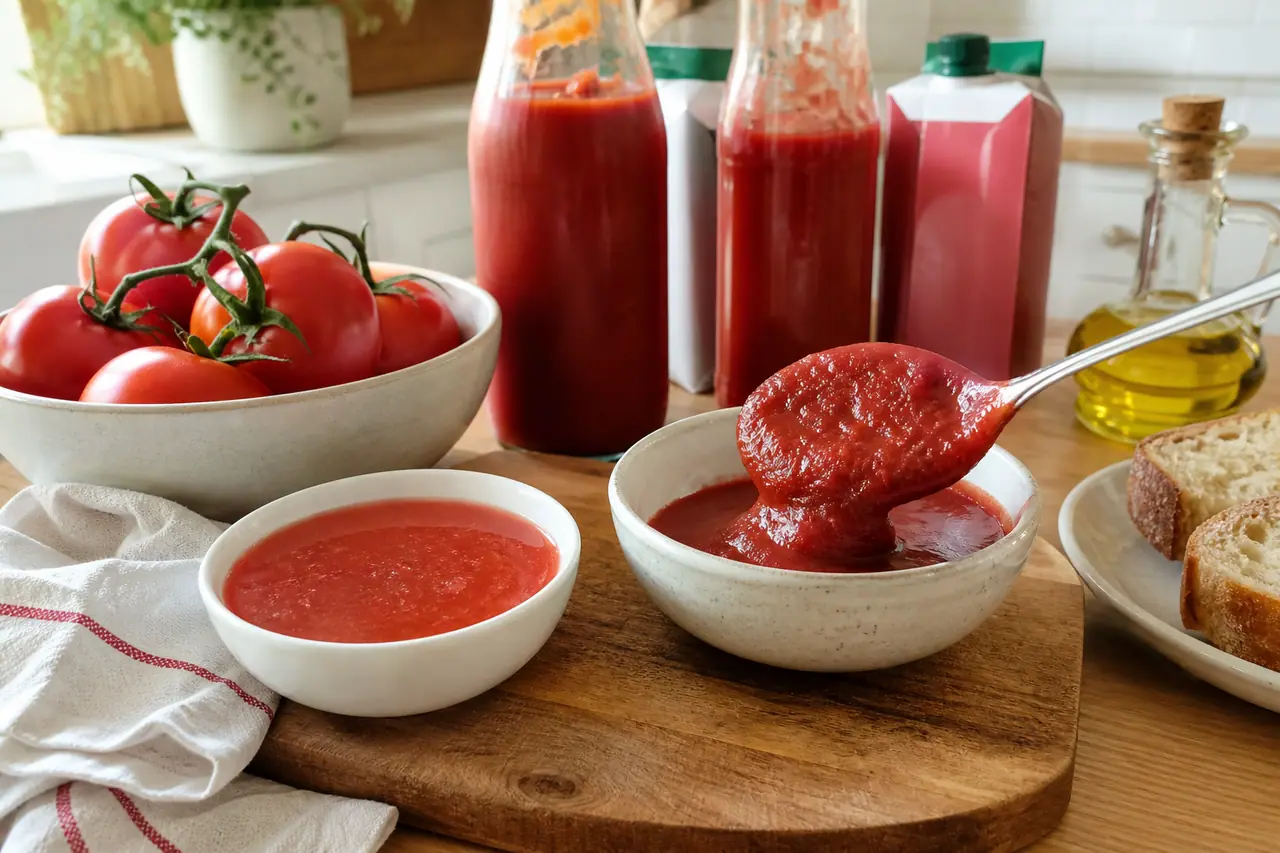
A carton can look expensive, rustic or Italian and still pour like tomato-coloured water. I have bought all three. The quickest way to avoid it is to ignore the front until you have checked the ingredients and decided what the sauce needs to do. The carton that works for soup may be a poor choice for pizza, where extra water can soften the dough before it cooks. A carton that seems too thick for soup can be excellent for eggs because it holds the wells in place. Thickness is useful only in relation to the meal. Think of the pack as a shortcut you are buying. A thicker passata buys less reduction time. A plain passata buys seasoning control. A flavoured passata buys convenience but removes some room for your own garlic, herbs or chilli. The right purchase is the one that pays for the job you need done.
Passata is strained tomato puree, but the thickness, salt and added ingredients vary. Buy a thin one knowingly for soup or a long braise. For pasta, pizza or baked eggs, choose the carton that gives you enough tomato body without requiring half an hour of reduction.
| Look at | Good clue | Caution |
|---|---|---|
| Ingredient list | Tomato, juice or puree, salt | Long list of flavourings |
| Texture through pack | Thick puree moves slowly | Very loose carton |
| Salt | Enough to season in stages | High salt with no room to reduce |
| Pack size | Matches your next meal | Large pack that will linger open |
| Price | Compare per 100 g | Premium label without better body |
Source: Maren Ashby's passata shelf and pan comparison, 2026-08-27
Read the ingredients in order
The ingredient listed first makes up the largest share of the product. For plain passata, you want tomato to lead. Salt and acidity regulator are common. Basil, garlic or chilli can be useful when you want that flavour, but they make the carton less flexible and can burn or clash with your recipe. I prefer to buy plain when I am planning more than one meal from the pack. It lets me take the sauce toward lemon and herbs for fish, smoked paprika for beans or chilli and garlic for pasta without having to fight a flavour that was already added at the factory. A plain label gives the cook more room.
Do not confuse tomato puree with tomato concentrate. Concentrate is useful in small amounts, but it is a different product. Passata should pour. A carton that has been thickened with starch may behave differently in a sauce, so read the label if a smooth, tomato-only base matters to you. The word puree is used differently across markets, so I check the pack size, ingredient order and opening instructions together. If the carton is meant for a quick sauce, I want to know whether it needs a long reduction before it reaches the pan. The five minutes spent reading it is cheaper than rescuing a thin pizza with extra cheese.
The shake test is not a lab test
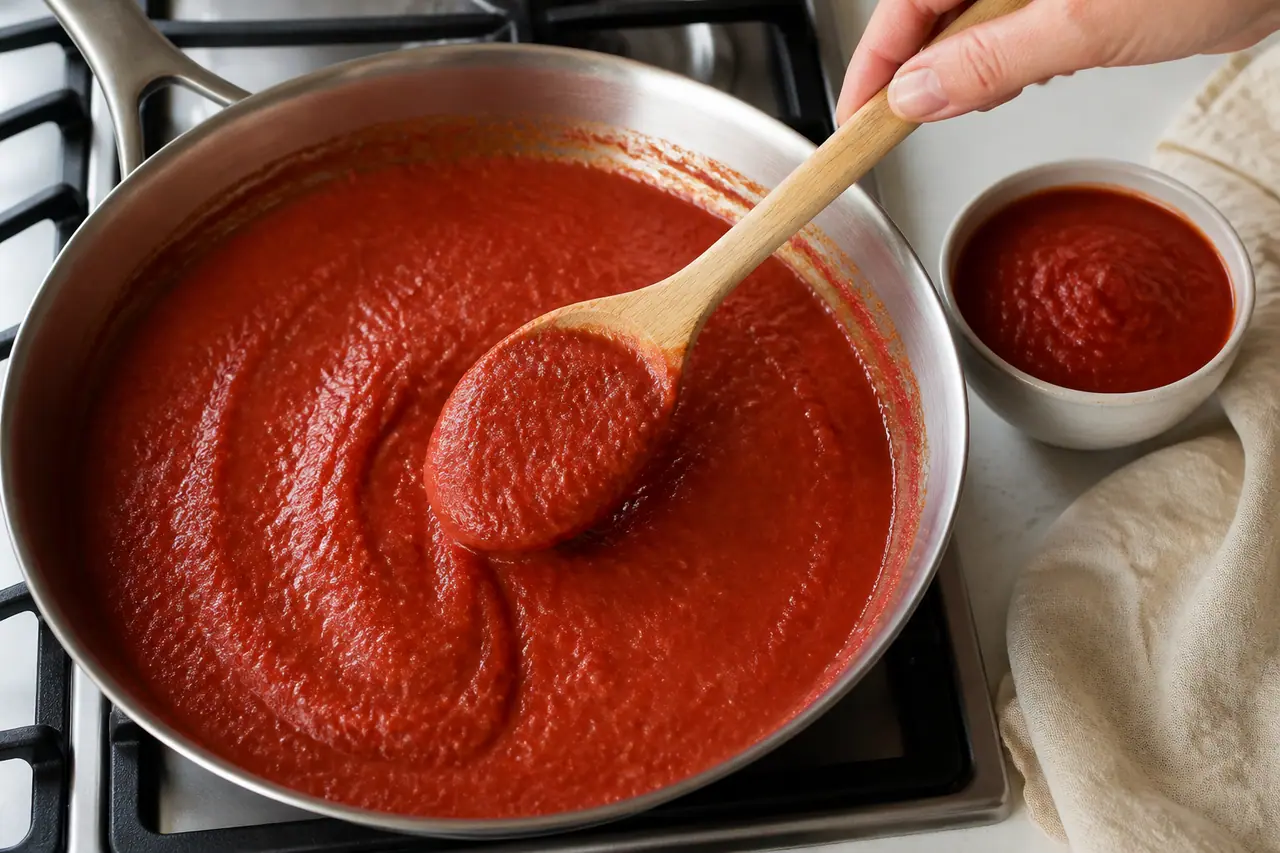
Before opening, a carton that sloshes like a drink is likely to need more reduction than one that moves slowly. This is a rough kitchen clue, not a quality standard. Packaging, temperature and air space all affect the sound. Still, it has helped me spot a thin carton when I am buying for a ten-minute sauce. I use it as a reason to compare two packs, not as proof that one is better. A thick carton can be bland, and a loose carton can become excellent after a long simmer. The shelf test narrows the guess; the first pan decides whether I buy the brand again.
Glass bottles let you see the colour and separation, but colour is not thickness. A dark red passata can still be thin. If the product is refrigerated, keep it cold as directed. If it is shelf-stable, store it in a cool cupboard and follow the label after opening.
Match thickness to the dinner
- Fast pasta: choose a thicker passata or plan for a wide pan and a 15-minute reduction.
- Pizza: a thick, plain puree helps you spread a thin layer without soaking the dough.
- Soup: a thinner passata is fine because stock and vegetables will join it.
- Baked eggs: avoid an over-salted carton because the sauce reduces under the lid and the eggs add no seasoning.
- Stew: choose for flavour rather than thickness; the long cook and beans will change the texture.
How I compare two cartons at home
I pour two tablespoons of each into separate cold pans, warm them side by side and taste them before seasoning. I look for a clean tomato flavour, an even texture and enough body to coat a spoon after a short simmer. Then I compare the price per 100 g, not the shelf price. I write the result on a small note in my cupboard when a carton earns a repeat purchase. A brand that works for pasta may not work for pizza, but the record stops me from relying on the front label the next time I shop. It also shows which cartons become useful after freezing, because some split more than others once thawed.
The winner is the one that suits the job. A thin, mild passata may be good value for soup. A thicker carton is worth more for pizza because it saves flour, time and a wet centre. Product quality is not a single ranking; it is a match between the food and the pan.
| If the carton is | Use it for | Change in method |
|---|---|---|
| Thin and mild | Soup or long braise | Reduce or add less stock |
| Thick and plain | Pizza or quick pasta | Shorter reduction |
| Salted and flavoured | A matching recipe | Season at the end |
| Very concentrated | Sauce base | Loosen with pasta water |
Source: Maren Ashby's passata comparison, 2026-08-27
What to keep in the cupboard
I keep one plain passata for smooth sauces and one tin of crushed tomatoes for meals that need texture. That pair covers pasta, pizza, soup and stews. If you have only passata, use the guide to fix a flat carton with heat and reduction.
Once opened, follow the label and move leftovers to a clean covered container. The storage guide for passata after opening has the portioning method. A good purchase still needs a good landing place in the fridge.
Questions
What should be in plain passata?
How do I know if passata is thick?
Is passata better in a glass bottle?
Can I use flavoured passata?
More guides
All guides →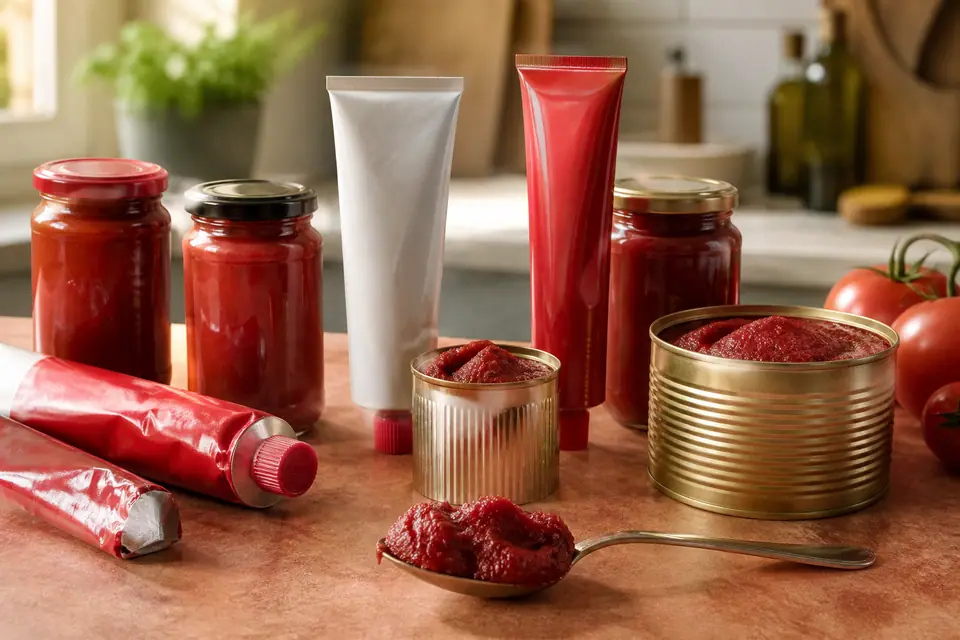
How to choose tomato paste with the deepest flavour
Look for dense paste, a short ingredient list and a package you can finish. The biggest flavour gain still comes from frying it properly.
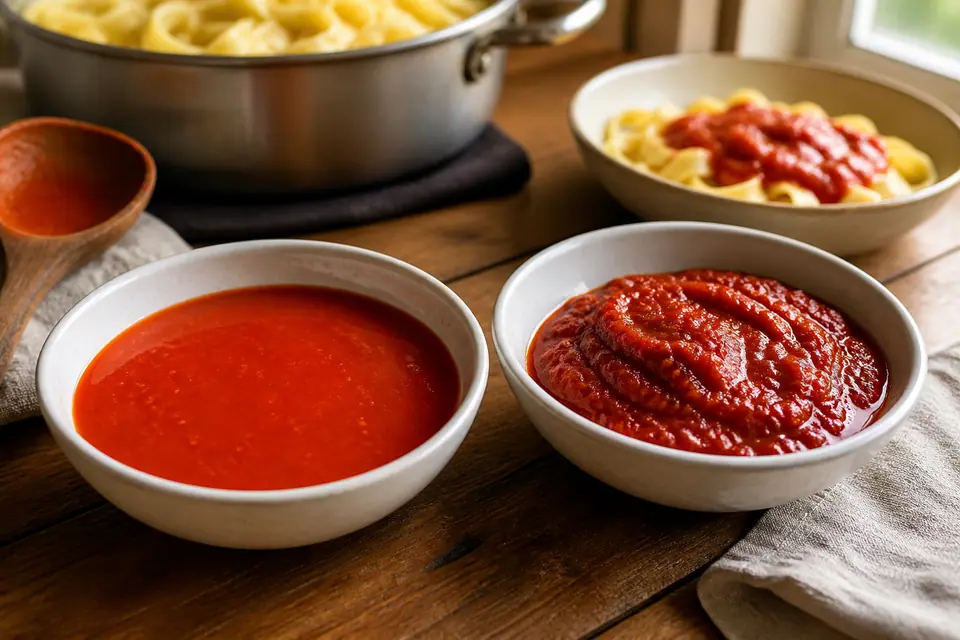
Why passata can taste flat straight from the carton
Flat passata usually needs concentration rather than more herbs. Reduce it in a wide pan, season in stages and finish with fat after the water has gone.

Cauliflower vs broccoli: which roasts better?
Cauliflower gives a more even roast and creamy centre. Broccoli browns faster and has better crisp tips, so the winner depends on the texture you want.