Crispy tofu needs a dry surface, not a deep fryer
Crispy tofu comes from removing surface water, using a thin starch coating and leaving gaps in the pan. Deep-frying is optional, not the requirement.

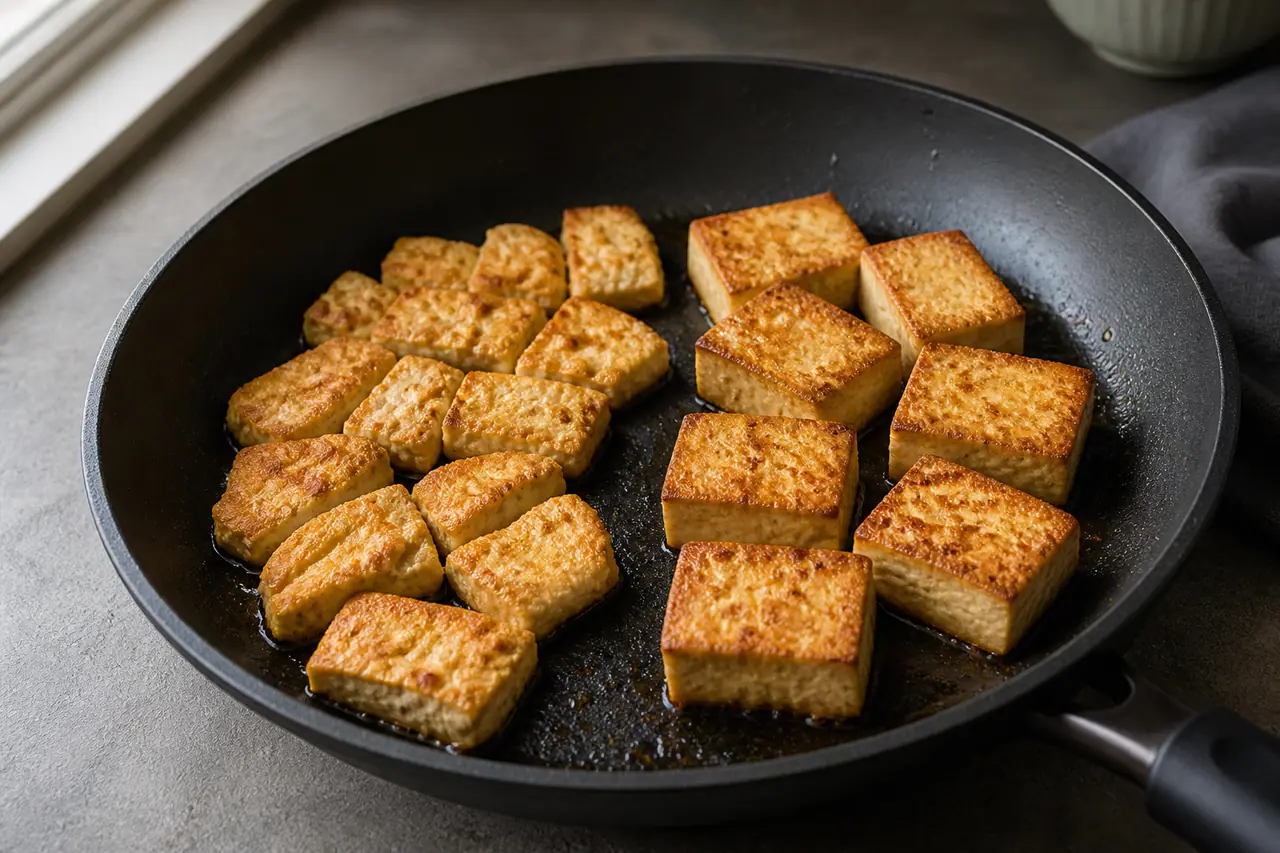
Tofu does not need a vat of oil to develop a good crust. It needs less water on the outside, a coating thin enough to cook through and a pan with space between the pieces. Once those three things are in place, a tablespoon or two of oil is enough for browned corners and a firm shell. The inside can stay soft while the outside does the useful work of carrying sauce and contrast.
I use a skillet when I want tofu quickly and an oven when I am cooking a larger batch. Both methods start the same way: press the tofu, tear it rather than cutting neat cubes, and coat it immediately before it hits the heat. The rough edges catch oil better than smooth blocks, and the uneven shapes make the finished bowl feel less like a row of identical cubes.
Start with the right tofu
Extra-firm tofu is the easiest choice because it carries less loose water and survives turning. Firm tofu can work, but it needs gentler handling and more space. Silken tofu belongs in a sauce or a soft scramble here; it will not hold a starch shell in a hot skillet.
One dry corner is enough to test the whole batch.
Open the packet, drain it and wrap the block in a clean tea towel. Press it under a pan or a board while you prepare the rest of dinner. You are not trying to squeeze every drop from the middle. The useful target is a surface that feels matte rather than slippery. If the towel is soaked, change it once and press again.
Let the tofu finish drying before any glaze reaches the pan.
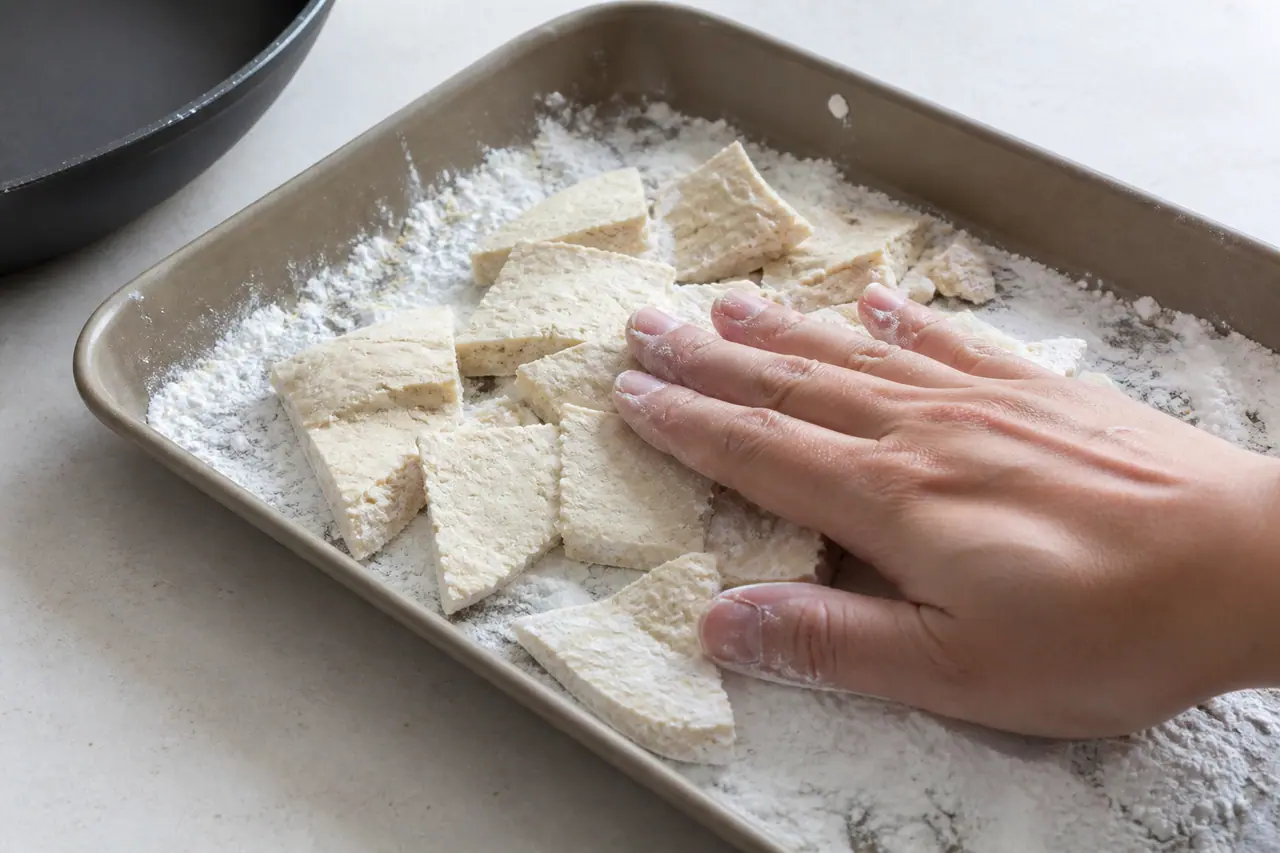
Use a thin starch coat
Cornstarch gives the most brittle crust, while potato starch makes a lighter, slightly rough shell. Use enough to dust the torn pieces, not enough to bury them. Heavy patches stay powdery inside and fall off when the sauce arrives. Toss the tofu in a bowl, shake off the excess and get it into the pan before the coating absorbs the moisture it was meant to protect.
Seasoning can go in two places. Add a little salt or pepper to the starch if the tofu will be eaten mostly plain. Add soy sauce, tamari or a dressing after the crust has formed. Wet seasoning at the beginning turns the coating into paste, especially in a crowded pan.
Give the pan a dry, hot start
Heat a wide non-stick or well-seasoned skillet before the tofu goes in. The oil should shimmer, not smoke. Put the pieces down with room around them and leave them alone for several minutes. Early turning is the usual reason the coating tears: the crust has not browned enough to release from the surface.
Turn the pieces only when the underside is golden and the edges look dry. A pair of tongs is useful for large pieces, but a thin spatula slides under a small corner without pulling the crust away. If the pan is full, cook in two rounds. The second batch is faster than trying to rescue steamed tofu.
Choose skillet or oven by the dinner
The skillet gives the deepest browning and lets you add a glaze at the end. Use it for a quick bowl such as crispy tofu with cucumber, lemon and herbs. The oven is calmer for a large batch. Spread the coated tofu on a metal tray, add oil and turn once halfway through cooking. It will be a little drier than skillet tofu, so pair it with a wet sauce at the table.
Do not cover either version while it rests. Trapped steam softens the bottom crust. Put the pieces on a rack if you need to wait more than a few minutes, and keep the sauce separate until serving. Crisp tofu and cucumber are friends because one is dry and hot while the other is cool and juicy. They should meet in the bite, not in the pan.
Crisp tofu is a timing problem
Press the block, coat it lightly, heat the pan and protect the space between pieces. Those small decisions do more than extra oil. Use the tofu in a rice bowl, tuck it into warm flatbread or serve it with the cucumber and soy dressing from the warm flatbread version. The crust will stay useful as long as the final liquid arrives at the table.
If the first batch is pale, do not throw it into sauce straight away. Give the pieces another minute in the open pan and check the underside. A little more browning usually helps. If they are already dry but not dark, the heat may be too low or the pan may be carrying too many pieces. Move them to a plate, heat the skillet again and finish in a single layer. That small reset is faster than trying to make a crowded pan behave.
Questions
Can tofu get crispy with little oil?
Is cornstarch needed for crispy tofu?
Why does my tofu turn soggy?
Is baked tofu as crisp as pan-fried tofu?
More guides
All guides →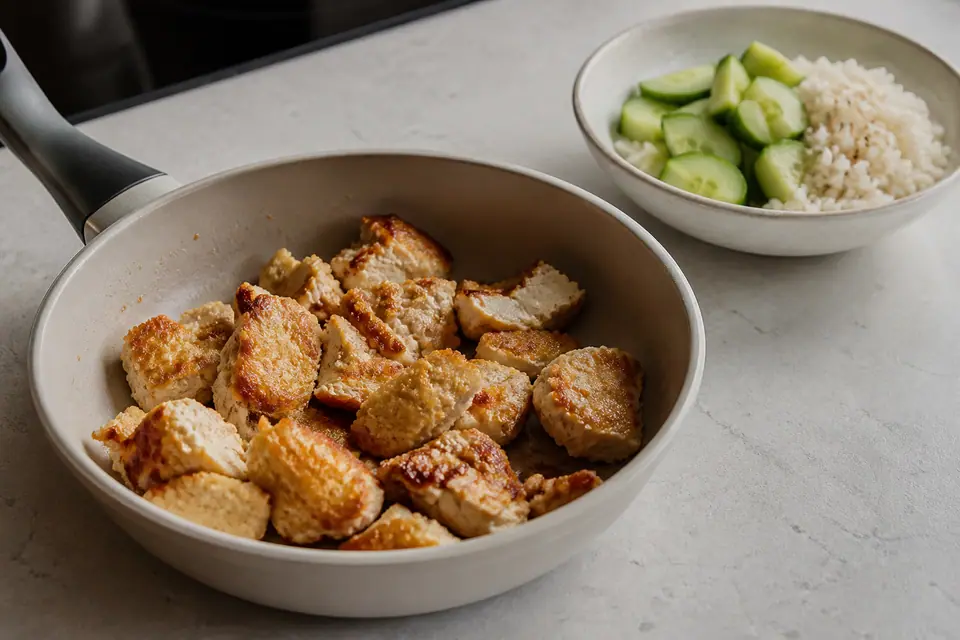
Firm vs extra-firm tofu: which crisps best?
Extra-firm tofu is the reliable choice for crisp edges and turning. Firm tofu can still work when you press it gently, use larger pieces and avoid overhandling.
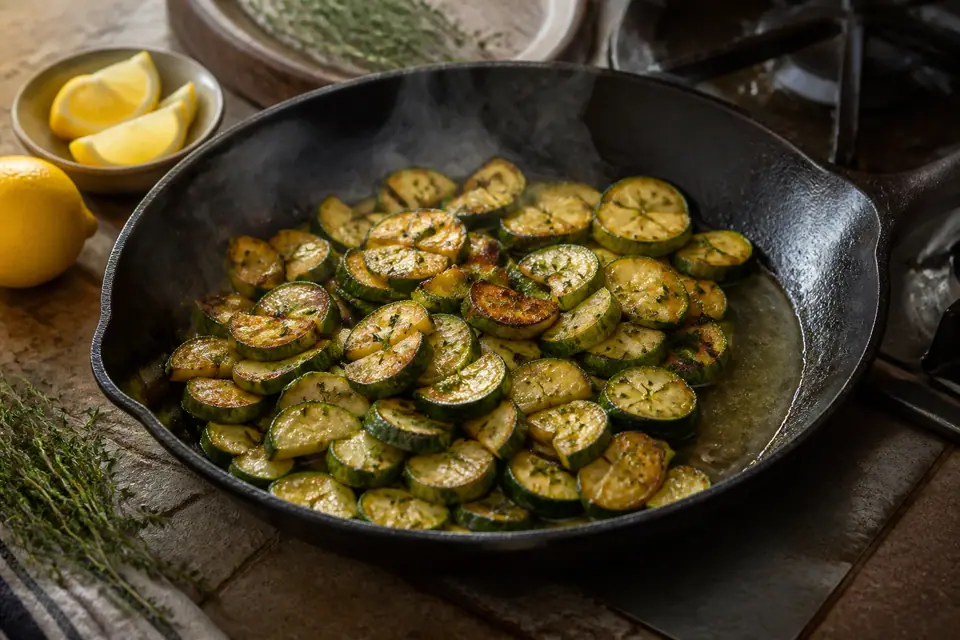
Why courgettes turn watery in a pan
A watery courgette pan is usually a heat and spacing problem, not a bad vegetable. Dry the cut surface, use a wide pan and wait before turning.
5 dinners that make leeks the point
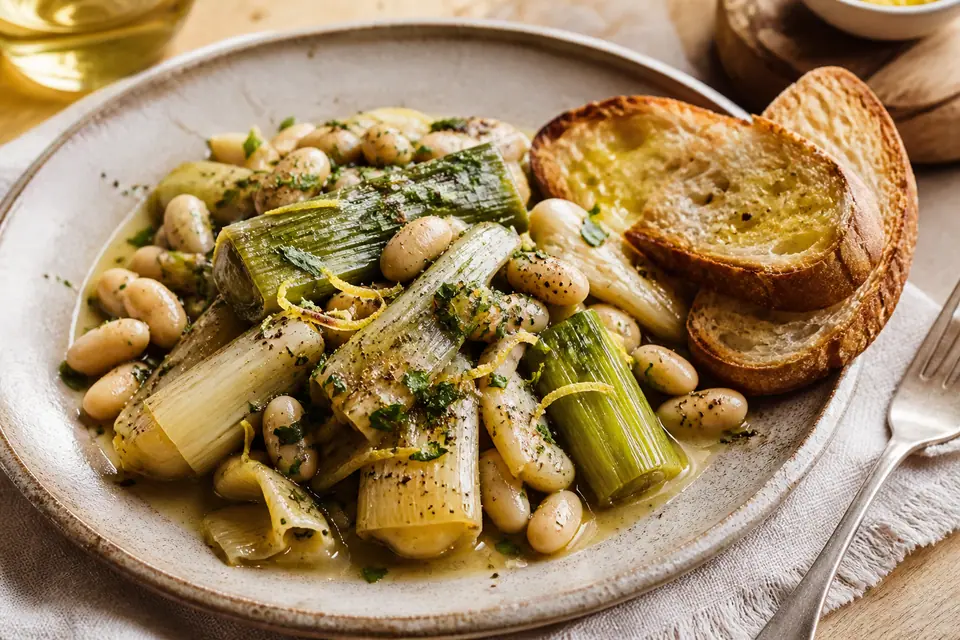
These five dinners use leeks as the vegetable you notice: slowly softened, browned, folded through pasta, layered into a gratin or paired with beans and lemon.