Cold, gentle handling and a dry lining buy spinach a few more good days
Spinach needs cold storage but hates a wet sealed pocket. Remove damaged leaves, use a dry lining and keep fruit such as apples and tomatoes away.

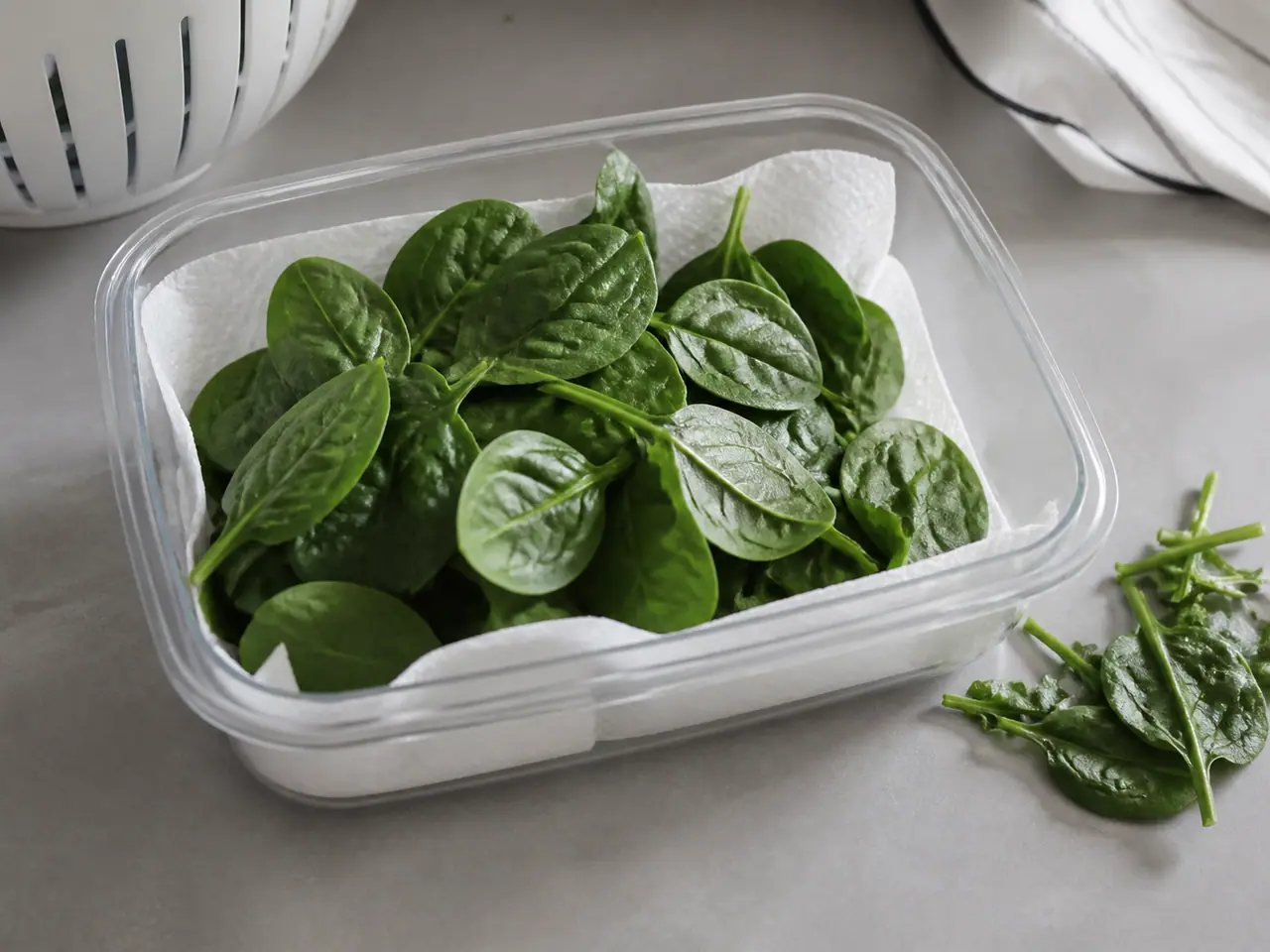
Spinach has a short life because the leaves are thin, tender and quick to bruise. I cannot make it last indefinitely, but I can stop one wet or damaged leaf from shortening the life of the whole bag. Cold storage, a dry lining and a quick inspection do most of the work.
The UC Davis fact sheet lists spinach as highly perishable and sensitive to ethylene from fruits and vegetables such as apples, melons and tomatoes. In a home fridge, that means I keep the greens visible and away from the ripest produce instead of burying them in the crisper.
Sort before storing
Open the bag when it arrives and remove leaves that are slimy, crushed or already yellow. One damaged leaf can spread moisture to its neighbours. Do not wash the whole bag unless you can dry it thoroughly.
Use the softest sound leaves first in soup, eggs or a sauce. Keep the strongest leaves for a later salad or quick wilt. Storage becomes easier when the fragile pieces are not hidden at the bottom.
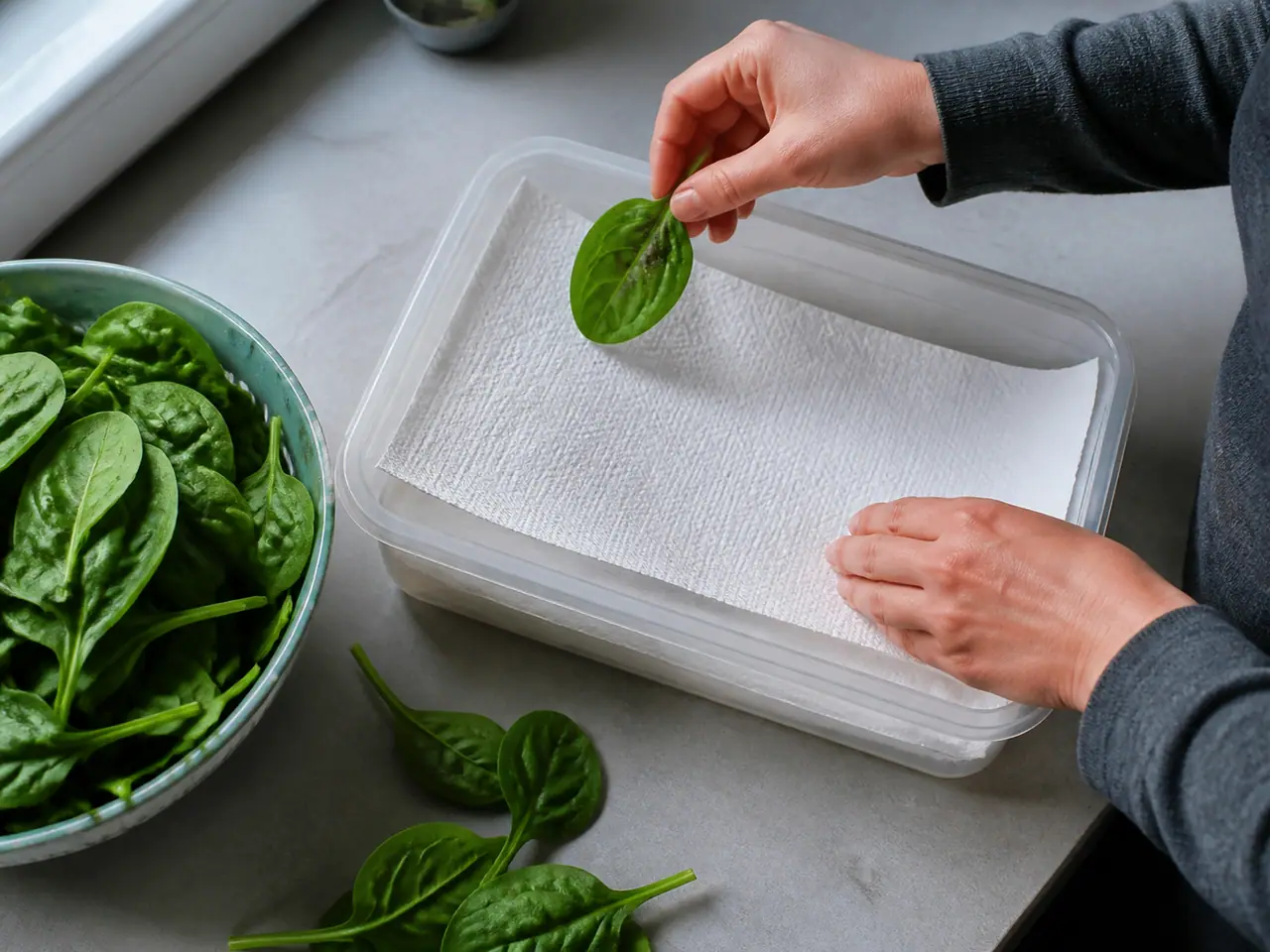
Use a dry lining
Line a loose container or the original bag with a clean paper towel. It catches droplets without pressing on the leaves. Check it each day and replace it if damp.
A wet towel has stopped protecting the spinach. Leaving it in place makes the container humid and cold at the same time, which is exactly the combination that encourages decay.
I keep one piece aside so I can compare it with the next batch.
Give the leaves room
Do not compress a full bag into a small tub. The leaves bruise under pressure and the bottom cannot breathe. A shallow container is easier to inspect and lets the weight spread out.
If the spinach is bunched, wrap the roots loosely and keep the leaves upright when possible. The goal is gentle support, not a tight parcel.
The clock helps, but the surface gives the better signal.
Keep fruit separate
Spinach is sensitive to ethylene, a ripening gas released by some fruit and vegetables. I keep it away from apples, ripe tomatoes and melons when the fridge allows.
This is not a reason to throw everything into different refrigerators. A little distance, a covered greens container and a cold shelf are practical enough for a home kitchen.
That small pause saves more food than a rescue at the end.
Wash close to the meal
Unwashed spinach stores better when the leaves are dry. Wash what you need, spin it well and cook it soon. If you buy prewashed leaves, still check for condensation and use a clean utensil.
For a planned meal tomorrow, I can wash the leaves in advance if they dry completely and go into a lined container. The rule is dry storage, not a ban on preparation.
The next step works better when the excess moisture has somewhere to go.
Know when to cook or discard
A leaf that is wilted but clean can go into a hot pan. A leaf with slime, sour smell or spreading decay is not a rescue project. Remove it and inspect everything around it.
Spinach does not improve with a long wait. Once the bag looks tired, make soup, eggs or pasta the same day instead of hoping the fridge will restore its structure.
I keep one piece aside so I can compare it with the next batch.
Storage works best when it has an exit plan. I write the meal in my head before I put the spinach away, then place the most fragile pieces where I will see them first. A container can slow water loss and condensation, but it cannot improve a tired leaf, bruised cap or soft fruit. Visibility is part of freshness because forgotten food gets no useful second chance.
If I need to prepare ahead, I separate the parts that like different conditions. Dry pieces stay apart from dressing, sliced stems stay apart from tender leaves and a wet towel gets replaced rather than left as padding. This takes less room than a complicated storage system and gives me a clear signal when the batch needs cooking.
I use a short inspection before every meal: smell, surface, firmness and any liquid at the bottom. A sound piece that has wilted can often be cooked, drained or trimmed. Slime, mould, sour smell and spreading decay are a different category. No storage trick is worth carrying those signs into a finished dish.
For the quality and storage details that sit behind my kitchen observations, I use the UC Davis spinach produce fact sheet alongside the timed test described above.
The practical verdict
Keep spinach cold, dry and visible. Remove damaged leaves, line the container with something dry and separate the greens from ripening fruit when you can.
The best storage plan still ends with a meal. Cook the soft leaves first and protect the crispest ones for last.
Questions
How do I keep spinach fresh in the fridge?
Should spinach be washed before storing?
Why does spinach go slimy?
What fruit should be kept away from spinach?
More guides
All guides →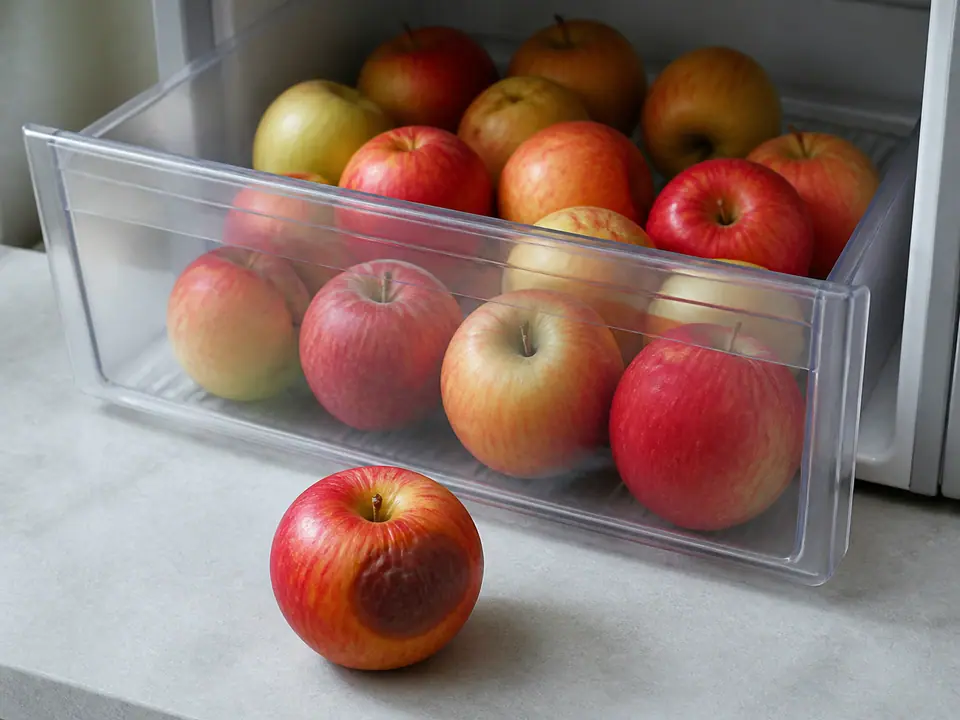
How to keep apples crisp for longer
Apples keep their crunch best when cold, protected from bruises and checked for soft fruit. Store them loose or in a breathable bag and remove damaged pieces early.

5 dinners that use spinach without a sad salad
Spinach can make dinner greener without becoming a wilted salad. Cook it with eggs, beans, pasta, rice or lentils and add it at the right moment.
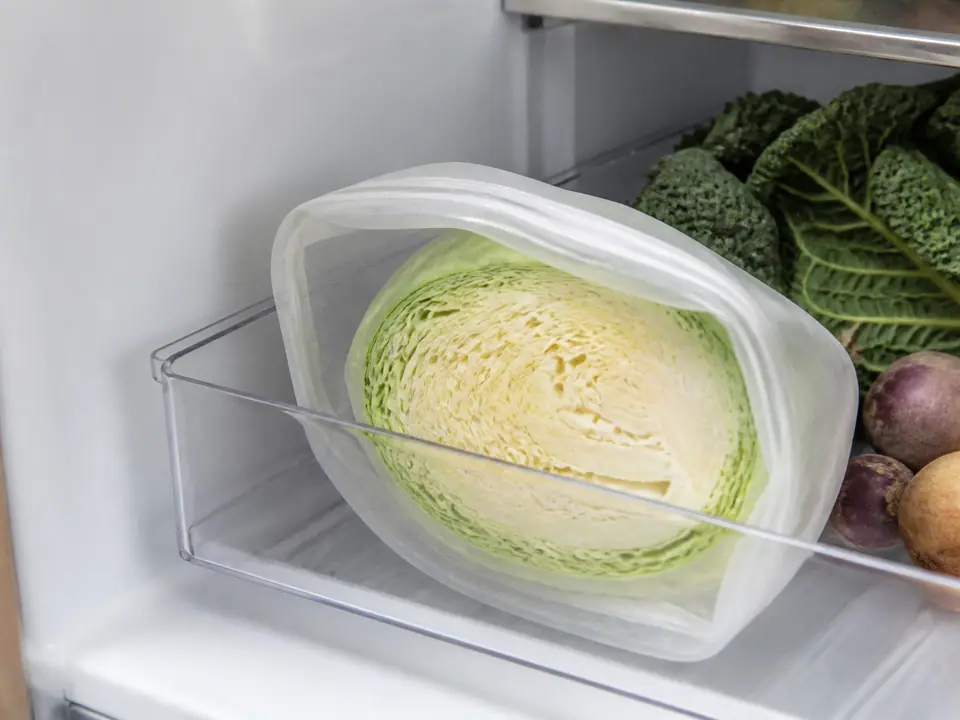
How to keep a cut cabbage fresh for a week
A cut cabbage can stay useful for a week when the exposed face is dry, covered and kept cold. Slice from the outside and leave the core intact.