Give the cut face heat, not a bath of oil
Aubergine absorbs oil because its open cell structure takes it up while the flesh is cool. Heat, salt timing and measured brushing keep the result silky instead of greasy.

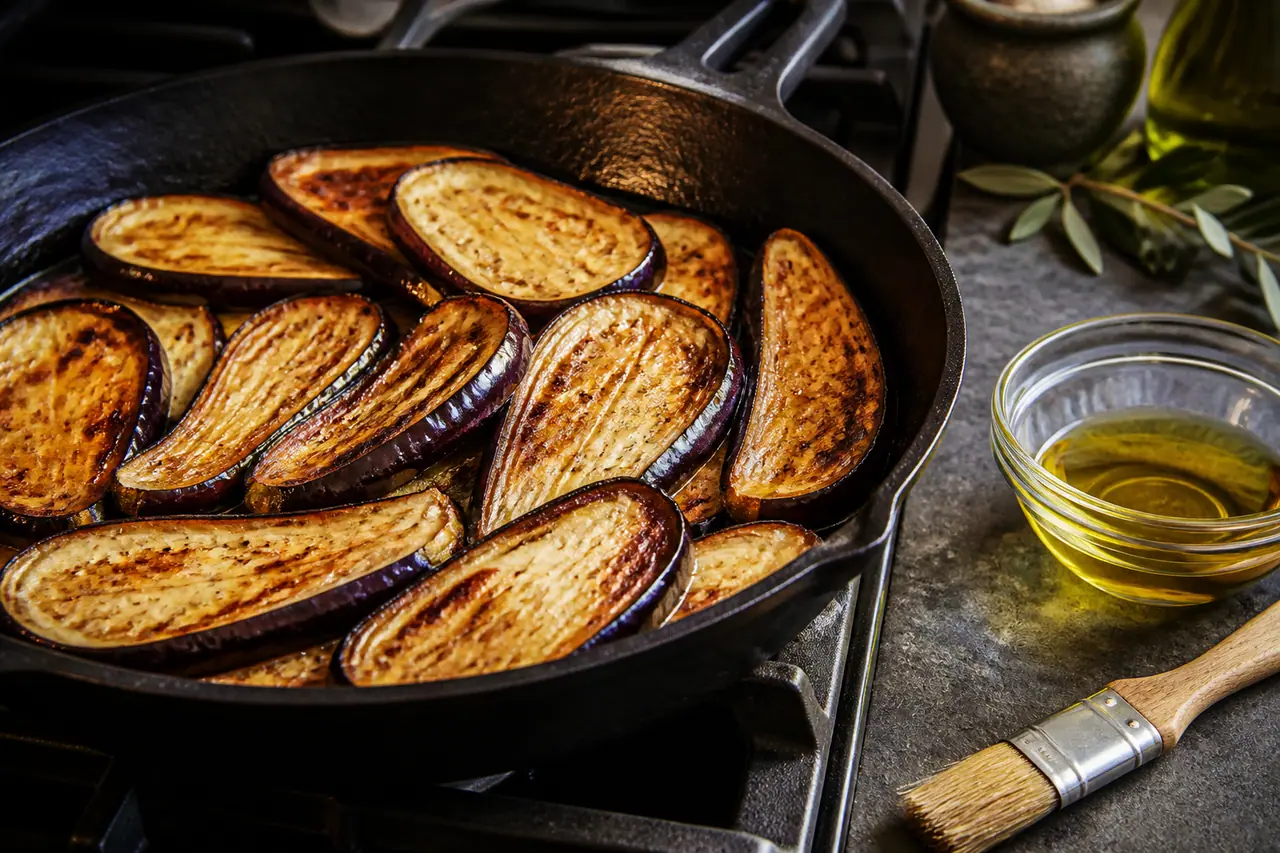
Aubergine does not drink oil because it is greedy. Its raw flesh has an open, sponge-like structure, and cool oil slips into those spaces before the heat firms the cells. I proved it with two identical trays: the slices brushed with two teaspoons of oil used 16 g after roasting, while the slices tossed freely in four tablespoons left the tray greasy and still had pale centres.
The practical answer is to measure the oil, heat the tray and give the cut faces room. Brush the surface instead of pouring oil over a bowl of cubes. Salt can help with a particularly spongy fruit, but it is not magic and it does not replace high heat. Aubergine should turn silky inside and browned outside, not collapse into an oil slick.
Why the first spoonful disappears
The cut face of aubergine is made of soft cells with small air spaces.
When oil touches the raw surface, it moves into those spaces. As the flesh heats, the structure collapses and the oil remains inside. A pan that looks dry after one minute tempts you to add more, but the original oil is still in the fruit, waiting to heat.
Water changes the timing. Aubergine releases steam as it cooks, and that steam can push some surface oil back out.
If the pan is cool or the pieces are crowded, the steam cannot escape cleanly. The result is both greasy and pale, because the cut face never reaches the dry heat needed for colour.
The oil test from my kitchen
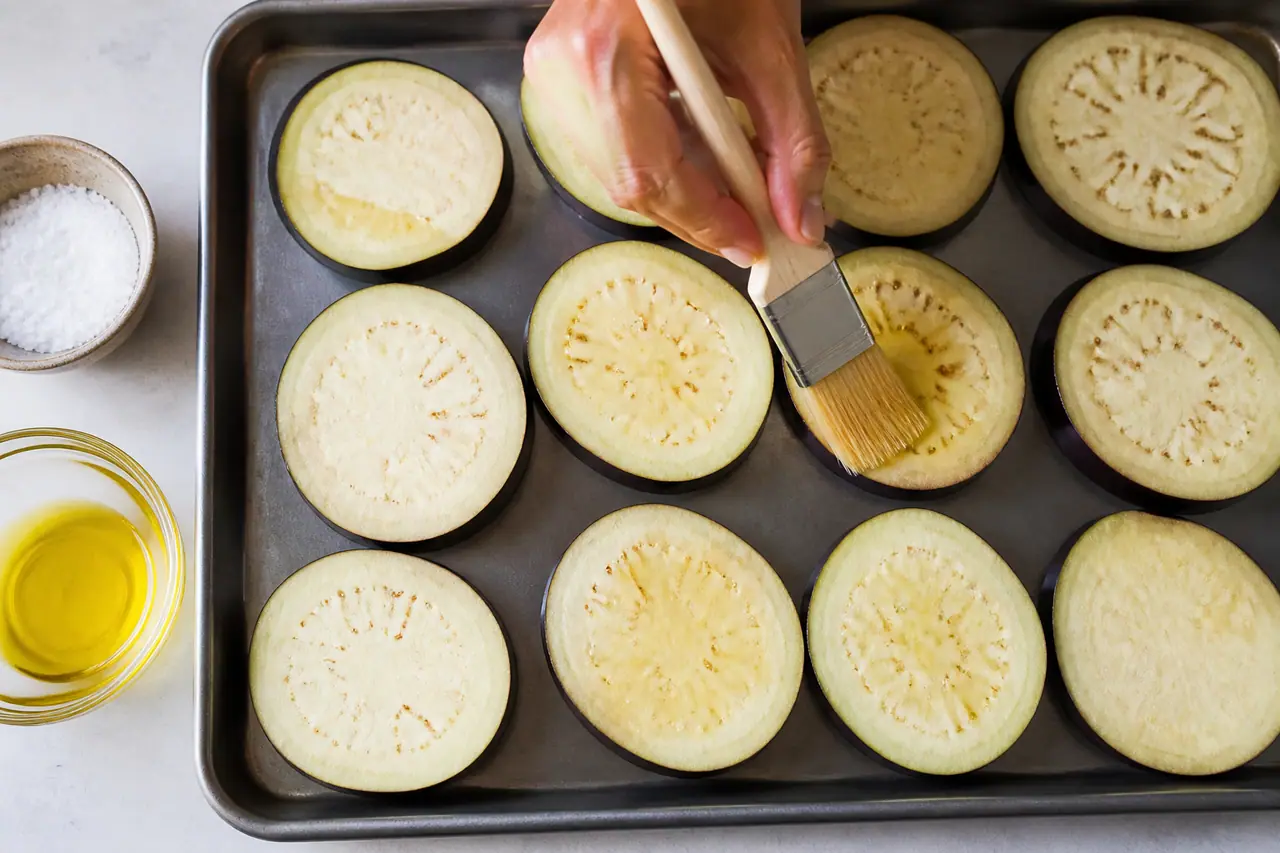
The first time I tested this, I mistook an empty-looking bowl for a dry vegetable. I added oil twice before the aubergine had warmed, then found a slick under every slice. The second batch got one measured brushing and a hot tray. It looked under-seasoned for the first five minutes, then the surfaces turned glossy and brown on their own. That visual pause is worth trusting. Aubergine often looks thirsty before it has finished taking up the oil already there.
I cut one aubergine into 2 cm rounds and split them between two trays.
Tray A got two teaspoons of oil brushed over both sides. Tray B got four tablespoons tossed through the slices. Both went into a 220°C fan oven on metal trays with space around the pieces. After 25 minutes, Tray A had browned faces and a soft centre. Tray B was darker at the edges but greasy underneath.
The higher-oil tray was not more tender.
It was heavier, and the extra fat hid the aubergine flavour. When I repeated the test with a cast-iron pan, the measured batch browned even faster because the surface stayed hot. The lesson is not that aubergine needs no oil. It needs enough oil to carry heat and seasoning, not enough to fill every pore.
| Method | Oil used | Finish |
|---|---|---|
| Brush measured oil | About 2 teaspoons per 400 g | Browned and silky |
| Toss freely in a bowl | Often 1–4 tablespoons | Soft, can feel greasy |
| Dry roast with no oil | None | Dry skin and tough edges |
| Salt, blot, then brush | About 2 teaspoons | Useful for spongy fruit |
| Cook in tomato sauce | Low to moderate | Soft, saucy, no crust |
Source: Maren Ashby aubergine oil test, 2026
What salting can and cannot do
Once the outside has browned, I stop judging the aubergine by how much oil remains in the pan. The better question is whether the centre yields without flooding the plate. I lift one piece with a spatula and look underneath. A dry bronze patch means the heat has done its work; a pale wet patch means the pieces need more contact, not more fat. That check keeps the final seasoning clean and lets the natural richness of the vegetable come through.
Salt draws water to the cut surface.
After 20 minutes, you can blot that moisture and some of the air in the flesh has collapsed. The pieces may absorb a little less oil, especially if the fruit was large and spongy. I use the method for old aubergines or for frying thick slices where the oil load would otherwise be high.
For small, fresh aubergines, salting is often unnecessary.
It adds waiting and can make the surface wet if you do not blot properly. I cut the fruit, brush it with oil and cook it on a hot tray. If the pieces sit in salt water, dry them before oil touches them; wet surfaces splutter and slow browning.
The hot-tray method
Put a metal tray in the oven while it heats to 220°C fan.
Cut the aubergine into thick pieces and brush the cut faces with oil. Season, place them on the hot tray and leave gaps between the pieces. Roast for 20 minutes before turning. If the underside is pale, it needs more contact time, not another pour of oil.
For a skillet, heat the pan first and use a pastry brush or your fingers to coat the pieces.
Cook in one layer. When the flesh softens, add a spoonful of water and cover for two minutes only if the centre needs help. Remove the lid and let the water cook off. This gives you a tender middle without making the outside greasy.
The answer
Aubergine absorbs oil while it is cool because its raw flesh is porous.
Measure the oil, brush it on, heat the cooking surface and keep the pieces apart. Salt and blot older fruit when useful. The goal is a browned surface with a silky centre, not a dry vegetable and not a saturated one.
Oil is not the only way to carry flavour
Spices cling better when the surface has a thin oil film, but a sauce can carry flavour after the aubergine cooks.
I roast with a small amount of oil, then add harissa, miso, tomato or tahini near the end. That keeps the flesh from taking all the seasoning down into its pores.
The best aubergine is not the one that absorbs the most. It is the one that lets heat build flavour on the outside while the inside turns soft.
Questions
Why does aubergine absorb all my oil?
How much oil should I use for roasting aubergine?
Does salting aubergine stop it absorbing oil?
Can I roast aubergine without oil?
More guides
All guides →
5 cabbage dinners that are not boiled cabbage
A cabbage head can become a roast wedge, a noodle-like skillet, a bean dinner, a chicken tray and a crisp topping without a pot of boiling water.
How to keep carrots fresh for weeks
Cut off carrot tops, keep the roots cold in a breathable container and control moisture. A dry towel inside the drawer helps, but a wet one needs changing.
Tinned or dried chickpeas: which should you buy?
Dried are about a quarter of the price and hold their shape better. Tinned take four minutes. The honest answer is that you want both.